REVIEW · FUKUSHIMA PREFECTURE
Fukushima Hope Tour with Licensed Guide & Vehicle from Iwaki
Book on Viator →Operated by Japan Guide Agency · Bookable on Viator
Hope has a route—and you can follow it. This Fukushima Hope Tour is built for understanding, with a licensed local English-speaking guide and a day that mixes hard history with visible recovery. I especially like the professional, serious approach and the way your tour money is folded into donations for affected areas. One possible drawback: the schedule is intense, and some stops can feel a bit too time-tight if you want to linger and read everything slowly.
You’ll visit places connected to the 2011 earthquake, tsunami, and Fukushima Daiichi nuclear disaster, with a stated safety limit that the radiation level where you go does not exceed 0.05 mSv per hour. One big rule to know up front: you’re not allowed to enter Fukushima Daiichi itself, so plan for learning through museums, archives, and carefully chosen viewpoints rather than an inside-the-plant visit.
In This Review
- Key things to know before you go
- A day of learning, not a box-checking tour
- Getting from Iwaki: private vehicle, fixed time, and an English-speaking guide
- Safety rules you should understand before you plan your questions
- Stop-by-stop: what each place teaches you
- The Iwaki start and National Route 6 context
- TEPCO Decommissioning Archive Center: progress you can actually visualize
- Michinoeki Namie: where revitalization shows up in daily life
- Namie-machi Ohirayama Cemetery: scale, from a high-ground view
- Ruins of Namie Machiritsu Ukedo Elementary School: destruction and the reason it’s taught
- The Great East Japan Earthquake and Nuclear Disaster Memorial Museum: the Hope Tourism entry point
- Futaba-machi (JR Futaba Station area): the reconstruction zones story continues
- Practical value: what you get for $929.50 per group
- Timing and the one drawback to plan around
- Who this tour is best for
- Should you book the Fukushima Hope Tour from Iwaki?
- FAQ
- Is entry to Fukushima Daiichi Nuclear Power Station included?
- What radiation limits are mentioned for this tour?
- Are admission tickets included for all stops?
- Is lunch included in the tour price?
- Where do you meet the guide and driver?
- Do you provide child car seats or boosters?
Key things to know before you go
- Licensed local English-speaking guide who can connect the dots between disaster impact and today’s rebuilding
- Donations included in the tour price, so your day of learning also supports recovery work
- Radiation limit stated for visited areas (no more than 0.05 mSv per hour) plus clear site restrictions like no entry to Fukushima Daiichi
- A mix of memory and everyday recovery: from TEPCO’s decommissioning archive to local spaces where people shop, eat, and rest
- Private vehicle from Iwaki with an 8-hour structure that includes travel time, which is great for focus but less great if you hate time pressure
A day of learning, not a box-checking tour
This tour is part of what’s often called Hope Tourism. The goal isn’t to shock you or overwhelm you with doom. It’s to help you see where the disasters hit, what changed after, and what revitalization efforts look like now. If you’ve only seen Fukushima through headlines, this kind of on-the-ground context can feel grounding in a way that a screen can’t match.
I like that the tour is built around real places rather than generic descriptions. You get a guided connection to the evacuation reality, reconstruction zones, and the long process after 3 disasters piled together: the magnitude-9.0 earthquake, the tsunami that followed, and then the Fukushima Daiichi nuclear power plant disaster that forced evacuations and left lasting impacts.
At the same time, I want you to enter with the right expectations. This is not a slow sightseeing circuit. It’s a focused day with multiple stops, each designed to teach something specific. The professionalism of the guide matters here, because you’re visiting sites where the details and the rules really do matter.
You can also read our reviews of more tours and experiences in Fukushima Prefecture.

Getting from Iwaki: private vehicle, fixed time, and an English-speaking guide
You meet your guide and driver in the Iwaki Station area (or at a preferred place near Iwaki Station). From there, you’ll travel about an hour to reach your first set of sites. The total duration is about 8 hours, and that includes travel time, so the day has a built-in pace.
Because it’s a private tour, you’re not sharing the vehicle with other groups. Only your group participates. That matters on a day like this. You can ask questions without holding up strangers, and your guide can shape explanations to your group’s tempo.
This is also a mobile-ticket experience, so you don’t have to fuss with paper. Pickup is offered, which helps if you want the day to feel smooth instead of logistically stressful. And yes, it’s English-friendly: the guide is a licensed local English-speaking guide.
A quick practical note: the tour price is listed as $929.50 per group (up to 3). That can be a good value if you have 2–3 people splitting the cost, and it’s easier to justify when you remember you’re paying for a private vehicle plus a licensed guide plus a donation component, all in one day. If you’re traveling alone, the cost per person is obviously higher, so you’ll want to be sure you truly want a guided, door-to-door day rather than going around by public transport.
Safety rules you should understand before you plan your questions
Fukushima is the kind of place where it’s normal to have safety questions before you arrive. This tour states two key points:
- The radiation level at places you’ll visit does not exceed 0.05 mSv per hour.
- You’re not allowed to enter Fukushima Daiichi Nuclear Power Station.
That combination tells you a lot about how the day is designed. You’re not being offered an inside look. Instead, you’ll learn through information centers, memorial sites, and carefully selected locations connected to recovery and decontamination processes.
If you’re sensitive to exposure concerns, this is the section where you’ll want to ask your guide to clarify what you’re seeing and where the boundaries are. The tour’s structure suggests the rules are taken seriously, and the guide’s job includes explaining both what you’re allowed to do and what those limitations mean.
Stop-by-stop: what each place teaches you
The day has a clear “from impact to recovery” flow. You start with context and then move through information and memorial spaces, ending back near Iwaki.
The Iwaki start and National Route 6 context
You begin by meeting at Iwaki Station, then head out for the drive (about an hour). The early stop includes areas along National Route 6, where you can see landscapes of buildings in areas tied to evacuation orders being lifted.
What makes this stop meaningful is that it’s not just a viewpoint. You’re also looking at evidence of decontamination work in designated zones. The tour is essentially teaching you how the evacuation story didn’t end at the moment orders changed—it continued through cleanup, management, and gradual return plans.
And here’s a practical tip: if you’re the kind of person who hates rushing, this is where you’ll feel the schedule most. There’s a lot to absorb quickly, so come ready to read in small bursts rather than expecting a slow, long walk-through.
TEPCO Decommissioning Archive Center: progress you can actually visualize
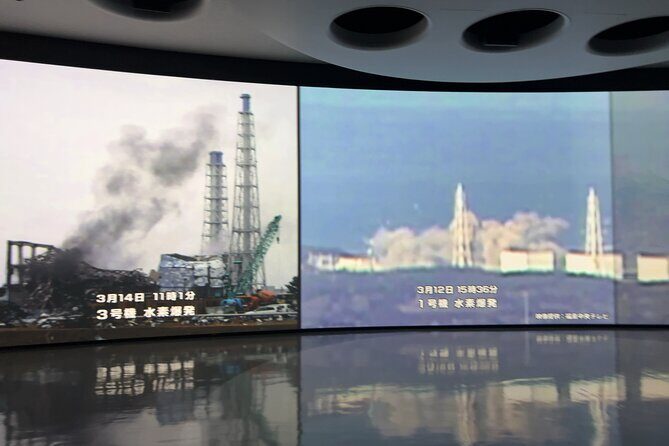
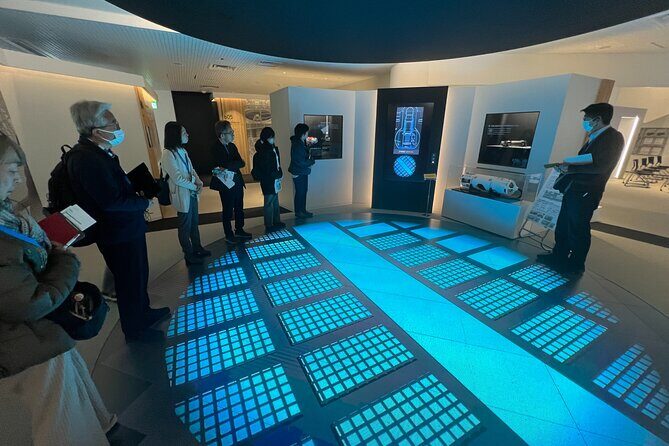
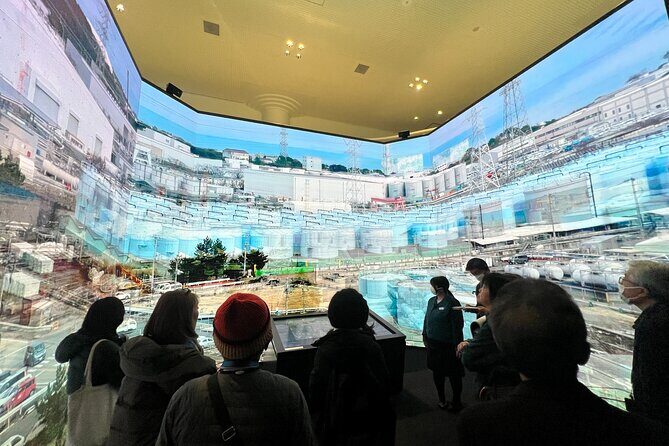
Next comes the TEPCO Decommissioning Archive Center, a free admission stop. Managed by TEPCO, it uses video and diorama displays to show the project record and ongoing decommissioning progress.
I like this stop because it turns a scary, abstract topic into something you can picture. You’re not just hearing about the disaster; you’re seeing how the long technical process is communicated to visitors. For many people, this is the first time Fukushima feels like more than a single news event—it becomes a continuing project with timelines, phases, and documented work.
Michinoeki Namie: where revitalization shows up in daily life
Then you move to Michinoeki Namie, a roadside station built as a symbol of town revitalization. The idea here is simple: this is a space supporting day-to-day life—shopping, eating, and resting.
This stop is free and it’s a helpful contrast. After memorial and disaster-linked locations, you get a different kind of evidence: people need infrastructure to rebuild routine. Seeing vegetables and seafood available, and a place designed for everyday use, helps you understand revitalization as something practical rather than only emotional.
Namie-machi Ohirayama Cemetery: scale, from a high-ground view
At Namie Town-run Ohirayama Cemetery, the setting matters. It’s located on high ground about 2 kilometers from the coast. From there, you can look toward the Ukedo district and the Pacific Ocean, and that view is meant to convey the huge scale of the tsunami’s reach.
A cemetery isn’t a place for casual touring. This stop is free, but it asks for respectful attention. It also gives you a geography lesson—where the coast is, how far inland the impact reached, and why so many lives were vulnerable once the waves arrived.
Ruins of Namie Machiritsu Ukedo Elementary School: destruction and the reason it’s taught
Next you go to the Ruins of Namie Machiritsu Ukedo Elementary School. The admission ticket for this stop is not included. This school building was partially destroyed by the tsunami, but it’s highlighted because no lives were lost thanks to fast thinking and evacuation efforts.
That detail is important. This is one of those stops where the message isn’t only grief—it’s also the value of emergency response and the choices people made in moments that will never fully feel normal to outsiders.
Even if you’re not a “ruins person,” this stop has a strong educational purpose: it shows how the disaster affected daily institutions and how outcomes sometimes depended on the speed and effectiveness of action.
The Great East Japan Earthquake and Nuclear Disaster Memorial Museum: the Hope Tourism entry point
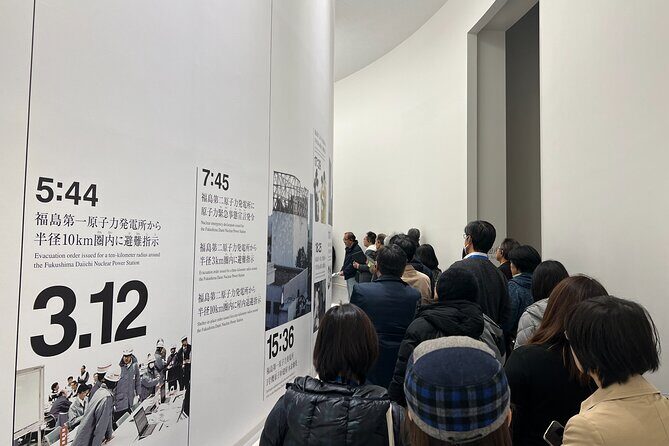
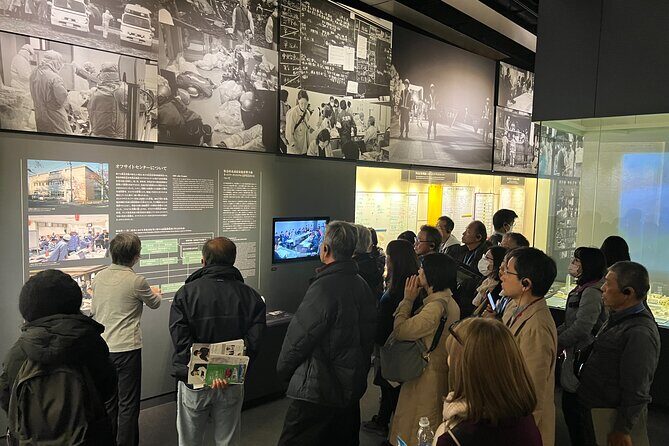
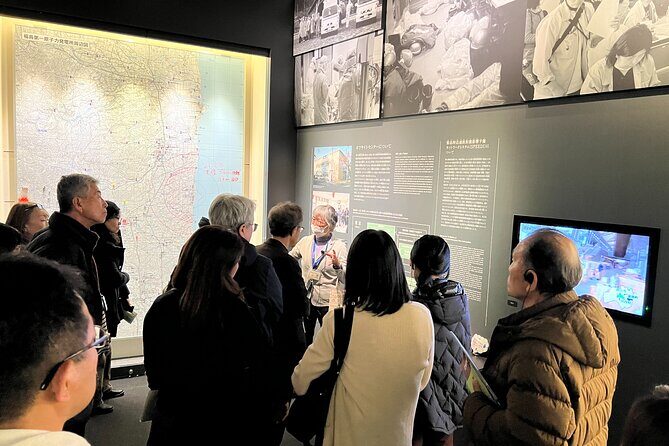
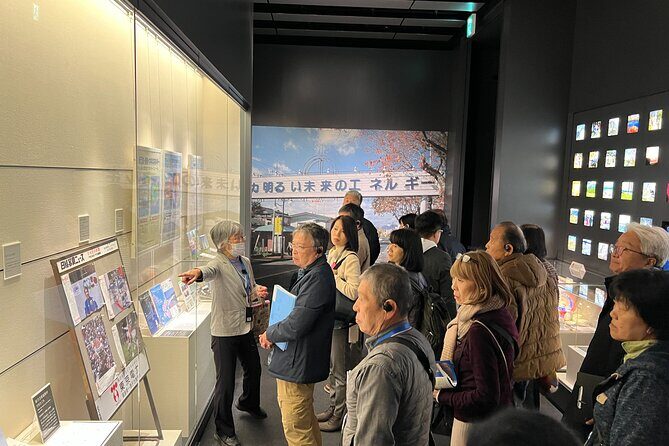
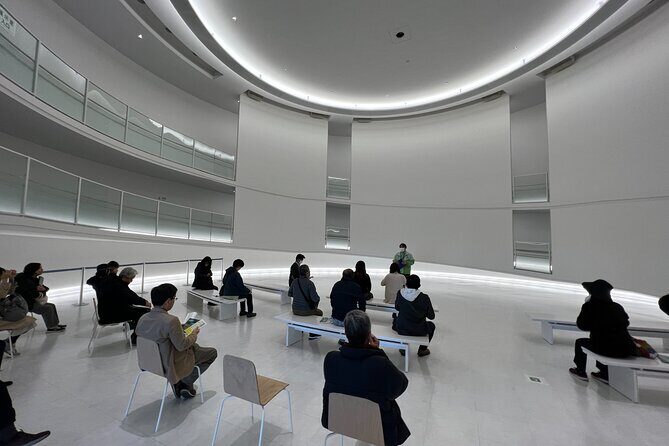
The tour then brings you to the Great East Japan Earthquake and Nuclear Disaster Memorial Museum, which is described as the entry point for Hope Tourism. Admission is not included for this stop.
This is the kind of place where you want your brain in “read and absorb” mode. The museum offers a wealth of resources—images and exhibits—to help connect the events to revitalization efforts from the immediate aftermath onward.
If you’re an impatient person, you might feel the schedule pressure here. But if you like understanding cause and effect, this stop is likely to feel like the heart of the day.
Futaba-machi (JR Futaba Station area): the reconstruction zones story continues
Finally, you head to Futaba-machi, centered around the JR Futaba Station area. This connects you to former special zones for reconstruction and revitalization, linked to the difficult-to-return zone and restricted residence history, with hope that evacuation orders will be lifted.
This stop helps you understand that “recovery” isn’t one milestone. It’s a sequence of administrative decisions, infrastructure changes, and gradual movement toward return. Even if you don’t fully track every term during the day, the guide’s explanations should help you place what you’re seeing into the bigger process.
Practical value: what you get for $929.50 per group
Let’s talk value in a non-hand-wavy way. The price is $929.50 per group up to 3 people. That means:
- If you fill all 3 seats, you’re effectively paying about $310 per person before any non-included tickets.
- If you go with only 1 other person, the cost per person rises, which can make self-guided travel more tempting.
But this tour bundles several things that are hard to replicate cheaply:
- A licensed local English-speaking guide
- A private vehicle
- A donation fee, since tour sales go to affected areas
- A route designed around sites tied to both earthquake and nuclear-disaster impacts
Also, the itinerary includes multiple free admission stops, which offsets some of the ticket costs elsewhere. The two stops that explicitly list tickets not included (the Ukedo elementary school ruins and the memorial museum) are exactly the kind of locations where budgeting a little extra tends to feel worth it.
One more value point: you’re not combining multiple tour groups. That keeps the schedule more controlled, and on a sensitive day, that usually makes the experience feel calmer and more respectful.
Timing and the one drawback to plan around
The tour runs about 8 hours, and the travel time is included. That means the day is structured, and you won’t get infinite time at each stop.
From past feedback, the big downside is that the timings can feel tight if you have high expectations and want to read and reflect more slowly. That’s not a “bad tour” signal. It’s just a reality of fitting many meaningful places into one day.
My advice if you want to reduce frustration:
- Treat the day like a guided course, not a slow museum afternoon.
- Bring water and plan to snack if you need energy, since lunch is not included.
- If you’re the type who loves taking notes, accept that you may have to do it in your mind and then sort it out afterward.
Who this tour is best for
This tour fits you if you want:
- A licensed English guide explaining what you see, not just pointing
- A day focused on the earthquake and Fukushima nuclear disaster aftermath with recovery context
- A private setting that helps you ask questions without feeling rushed by strangers
It’s also a good fit if you’re visiting Japan with only one day you can spare for Fukushima and you want to do it in an orderly, guided way from Iwaki.
If you prefer long free time, wandering at your own pace, or you dislike tight schedules, you may want to consider whether a multi-hour guided format matches your style.
Should you book the Fukushima Hope Tour from Iwaki?
I think you should book it if you’re comfortable with an intense, serious day and you want guided context for places tied to 2011’s earthquake, tsunami, and nuclear disaster. The combination of licensed local expertise, donation support, and a route that moves from impact to recovery makes it feel purposeful.
I’d skip it (or at least rethink the timing) if you strongly need slow pacing at each stop. The schedule is designed to cover a lot, and you’ll feel that.
And remember the rules: you’ll be learning from the sites allowed for visitors, with stated radiation limits for visited areas, and you’ll not be entering Fukushima Daiichi itself. If that still sounds like the right way to understand what happened and what’s happening now, this tour is a solid, grounded choice.
FAQ
Is entry to Fukushima Daiichi Nuclear Power Station included?
No. The tour states that you are not allowed to enter Fukushima Daiichi Nuclear Power Station.
What radiation limits are mentioned for this tour?
The tour states that the radiation level at places you will visit does not exceed 0.05 mSv per hour.
Are admission tickets included for all stops?
Not all of them. Some stops list free admission, while admission tickets are not included for Ruins of Namie Machiritsu Ukedo Elementary School and the Great East Japan Earthquake and Nuclear Disaster Memorial Museum.
Is lunch included in the tour price?
No. Lunch is not included, and you’ll also want to plan for other personal expenses.
Where do you meet the guide and driver?
You meet your guide and driver at Iwaki Station or at your preferred place near Iwaki Station.
Do you provide child car seats or boosters?
There are only a limited number of car seats and booster seats. Rear-facing car seats are not available, and you must contact the provider directly if you need them.