REVIEW · SHIZUOKA PREFECTURE
Full Day Tour to Mount Fuji in Spanish
Book on Viator →Operated by FUJICOOLTOUR · Bookable on Viator
Mt Fuji days can be hit or miss, but this one is built for chances. You start early in Mishima and spend the day hopping through the Fuji area with Spanish-speaking guides who explain what you’re seeing and why it matters.
I especially like how the pace stays friendly, with short visits that still feel meaningful, and how the group size is kept small so you’re not lost in a crowd.
The main thing to consider is simple: this is a good-weather-dependent plan. If clouds roll in or daylight is limited, the day’s focus can shift, and you may not get the classic Fuji views from every stop.
In This Review
- Key highlights before you go
- Morning Pickup at Mishima: an easy start for a long day
- Price and logistics: does $96.17 feel fair?
- Spanish-guided energy: what you’ll gain beyond the photos
- How the route adapts when Fuji hides
- Stop-by-stop: Shiraito Falls and Motosuko Lake
- Shiraito Falls: eruption-made waterfall, crystal water
- Motosuko Lake: the ¥1,000-bill view
- Stop-by-stop: Iyashi no Sato Nemba and Saiko Lake
- Saiko Iyashi no Sato Nemba: an ancestral town rebuilt
- Saiko Lake: film locations and a side of Aokigahara
- Stop-by-stop: Lake Kawaguchiko viewpoints, Oshino Hakkai, and Aokigahara
- Lake Kawaguchiko: where two extra spots matter
- Oshino Hakkai: ancestral town food and variety
- Aokigahara Forest: a place with heavy stories
- Stop-by-stop: Chureito Pagoda and Kitaguchi Hongu Fuji Sengen Jinja
- Chureito Pagoda: the Fuji symbol picture
- Kitaguchi Hongu Fuji Sengen Jinja: climbers’ shrine and starting energy
- Stop-by-stop: Yamanakako-mura and the Fugaku Wind Cave
- Yamanakako-mura: swans, koi, and bird life
- Fugaku Wind Cave: volcanic lava remains underground
- What’s actually included (and what you’ll need to plan)
- Who should book this Mount Fuji day tour
- Should you book FUJICOOLTOUR’s Mount Fuji full-day Spanish tour?
- FAQ
- Where does the tour start?
- What time does the tour start?
- How long is the tour?
- What places are included in the day?
- Is lunch included?
- What is included in the price?
- Do I need a weather check?
- How big is the group?
- What is the cancellation policy?
Key highlights before you go
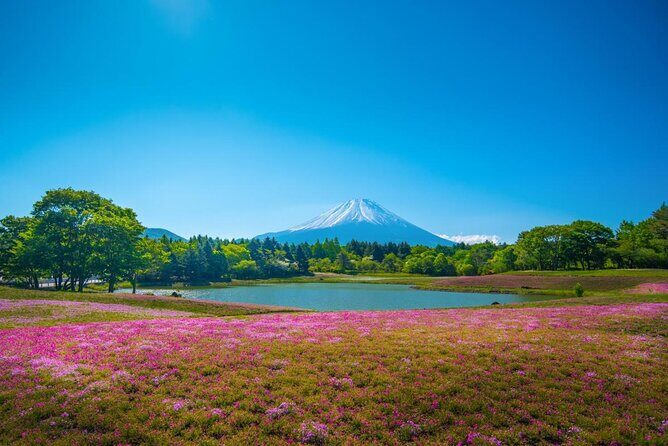
- Small group (max 9 travelers) for calmer timing and better attention at each stop
- Spanish-guided explanations from guides like Darío and Tito (plus team members such as Min, depending on the day)
- A lot packed into 10–11 hours without feeling like a rushed checklist
- Two paid admissions included at Saiko Iyashi no Sato Nemba and Fugaku Wind Cave
- Fuji spotting is planned, with route adjustments based on weather and daylight
- Photo-friendly viewpoints such as Chureito Pagoda and lakeside stops
Morning Pickup at Mishima: an easy start for a long day
Your day begins at the Tokai Bus Mishima Information Office (17-1 Ichibanchō, Mishima, Shizuoka 411-0036) at 8:00am. The meeting point is near public transportation, which matters in a place like Mishima where you might arrive by train and then need a smooth handoff to the tour bus.
This is a full-day outing, about 10 to 11 hours, and the best part is that you don’t have to manage transfers between sights. You just show up, get your mobile ticket ready, and focus on enjoying the Fuji region in one continuous loop.
Also, there’s a practical tone to how this tour runs: it’s described as time spent like friends, with conversation and humor, not a stiff lecture format. That’s a real comfort on a long day when you’d rather be relaxed than constantly “on.”
You can also read our reviews of more tours and experiences in Shizuoka Prefecture.

Price and logistics: does $96.17 feel fair?
At $96.17 per person, the value depends on how you compare it to doing things on your own.
You’re paying for several things at once:
- long-distance bus transfers from Mishima to multiple Fuji-area stops
- snacks and drinks included
- all fees and taxes covered
- two admissions included (Saiko Iyashi no Sato Nemba and Fugaku Wind Cave)
- a guided interpretation in Spanish, with help choosing timing and spots
What’s not included is lunch, so you’ll need to plan for food during the day. The upside? Because lunch isn’t bundled, you’re not stuck with a one-size-fits-all meal you might not like. On some days, the guide also chooses a lunch stop with a Fuji view, which is exactly the kind of “worth it” detail you hope for on a day trip.
If you want the cheapest option possible, DIY wins. If you want fewer headaches and more time enjoying the sights, this price is pretty reasonable for what you get.
Spanish-guided energy: what you’ll gain beyond the photos
This tour is explicitly in Spanish, and that changes the whole experience. It’s not just you looking at scenery; you’re getting explanations tied to culture, religion, and local life around Mt Fuji.
The names that come up with this team include Darío and Tito, and the experience is described as organized, friendly, and attentive. That shows up in a key way: the guides don’t only point at landmarks. They connect them to the people and stories behind them—so you’re not just collecting viewpoints.
I also like that the information is described as the right amount: enough to stay interesting, but not so heavy that you burn out before lunch. On a day that can be 10+ hours, that balance matters.
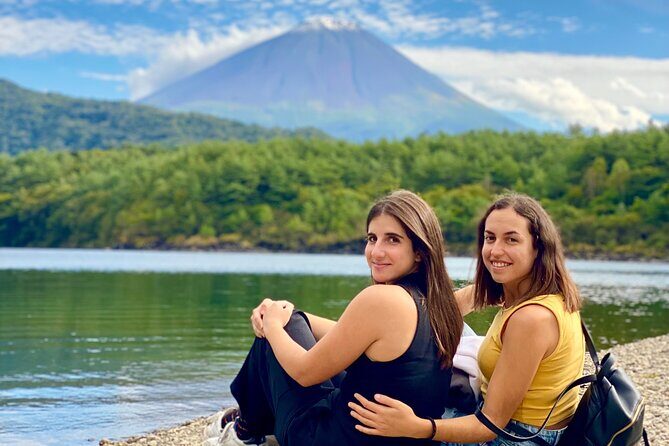
Finally, the group limit of up to 9 travelers helps. Smaller groups move with less friction, and it’s easier to stop for photos, ask questions, or get a quick explanation without shouting over a crowd.
How the route adapts when Fuji hides
A big reality of Mount Fuji is weather. That’s why this tour is built around a flexible mindset.
The itinerary can change depending on weather and daylight hours. In practice, that means you’re not locked into a single “must be here at exactly this time” vision of the day. Instead, the guide can aim for better viewing conditions and reduce time spent when views are clearly blocked.
So what should you do as a visitor? Keep your expectations realistic and treat each stop as part of the story, not only as a guaranteed postcard. If clouds roll in, you still get the waterfalls, lakes, shrines, towns, and volcanic sites. And if Fuji behaves, you’ll have multiple chances to see it.
Stop-by-stop: Shiraito Falls and Motosuko Lake

Shiraito Falls: eruption-made waterfall, crystal water
You’ll start with Shiraito Falls, a waterfall shaped by past eruptions of Mt. Fuji. The tour description highlights the clear water and the specific form of the falls, which is exactly what you want early in the day—something natural, beautiful, and not too far into the long drive.
Admission is free, and the stop is about 30 minutes. That timing is good. You get a chance to walk in, take photos, and watch the water without feeling trapped for a whole hour.
Tip for your morning energy: wear footwear you’re comfortable in if the ground is slick. Waterfalls often mean damp paths.
Motosuko Lake: the ¥1,000-bill view
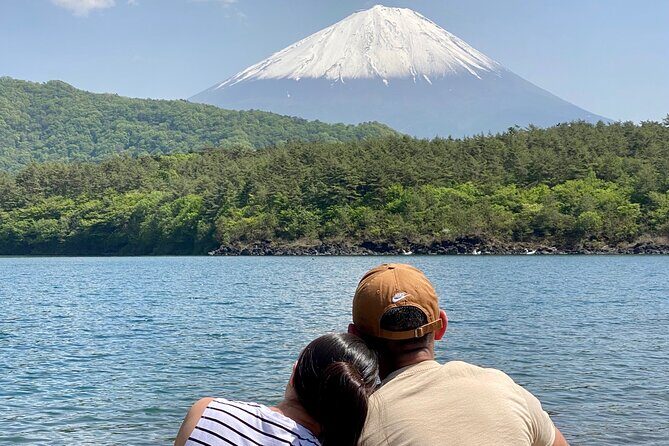
Next is Motosuko Lake, known for the landscape that appears on the back of the ¥1,000 bills. That little banknote connection is more than trivia. It gives you a mental anchor, so the stop feels less random and more like a real slice of Japanese visual culture.
This is another 30-minute stop with free admission. Don’t expect a long picnic hangout; think of it as a “take in the view, get the context, move on” moment.
Stop-by-stop: Iyashi no Sato Nemba and Saiko Lake
Saiko Iyashi no Sato Nemba: an ancestral town rebuilt
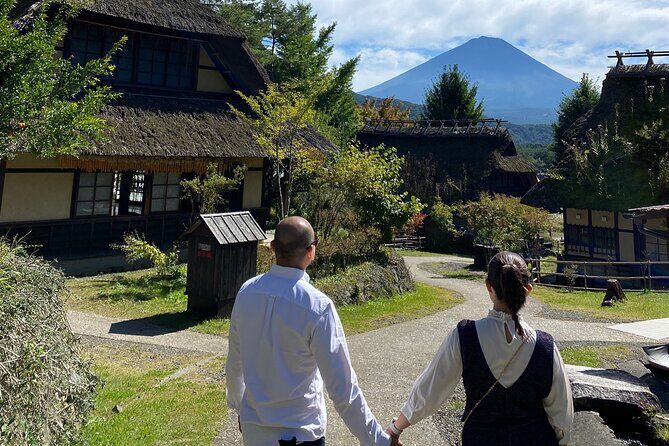
At Saiko Iyashi no Sato Nemba, you’ll see an ancestral village (Iyashi no Sato) that was destroyed and rebuilt over decades. The tour makes a strong point that you’re not just visiting buildings—you’re watching how communities recover and rebuild, tucked between the mountains.
This stop runs about 1 hour, and admission is included. One hour is the right length here because a town like this needs time to wander and observe details rather than just snapping one photo.
If you like slow moments within a fast day, this is one of the best places to let the guide’s explanation shape how you look.
Saiko Lake: film locations and a side of Aokigahara
Then you’ll head to Saiko Lake, described as a filming location and positioned on the side of the Aokigahara Forest. The connection to movies is fun, but the bigger value is the location: you start to understand how the Fuji region isn’t only about beauty. It’s also about human stories, forests, and the way landscapes are used in Japan—culturally and physically.
You’ll have about 30 minutes, admission free. Again, short and purposeful.
Stop-by-stop: Lake Kawaguchiko viewpoints, Oshino Hakkai, and Aokigahara
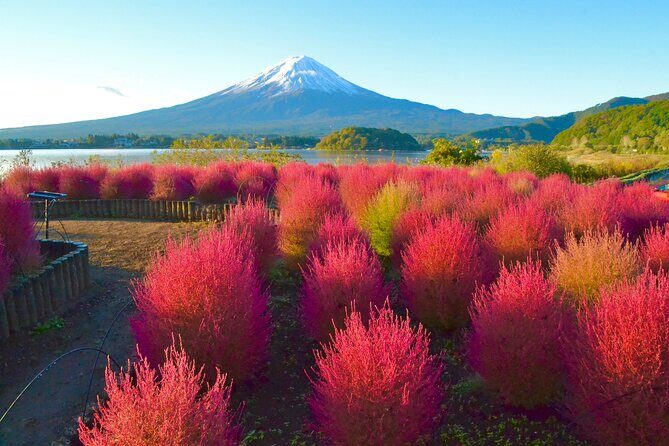
Lake Kawaguchiko: where two extra spots matter
At Lake Kawaguchiko, the tour description says there are two “hidden and beautiful” places the guide explores and then shares with participants. You’ll get about 50 minutes, admission free.
This is one of the stops that can feel most rewarding for photo lovers, because the guide isn’t only showing the most obvious spot. They’re trying to give you angles that feel more personal.
Practical note: lakeside light changes fast. If clouds drift, you might see different looks to the same area within minutes. Don’t overthink it—just enjoy the range and let the guide point.
Oshino Hakkai: ancestral town food and variety
Oshino Hakkai is an ancestral town where you’ll find variety in typical Japanese food. The stop is about 45 minutes with free admission.
This is your chance to slow down and do a bit of tasting. It’s also a useful break in a long day of walking and viewpoints. If you enjoy snacking and people-watching, Oshino Hakkai is the kind of stop that keeps the day from feeling mechanical.
Aokigahara Forest: a place with heavy stories
Then comes Aokigahara Forest, often called the forest of suicides. The tour description handles it in a sensitive way: it’s still a forest, but it carries sad stories and many accounts.
You’ll have around 45 minutes, admission free. If this topic feels heavy for you, it’s okay to approach it thoughtfully and keep your own boundaries. This stop can be emotionally intense even when it looks quiet and ordinary in the moment.
For me, the key point is how the guide frames the place: you’re not there for shock value. You’re there to understand context, then move forward.
Stop-by-stop: Chureito Pagoda and Kitaguchi Hongu Fuji Sengen Jinja
Chureito Pagoda: the Fuji symbol picture
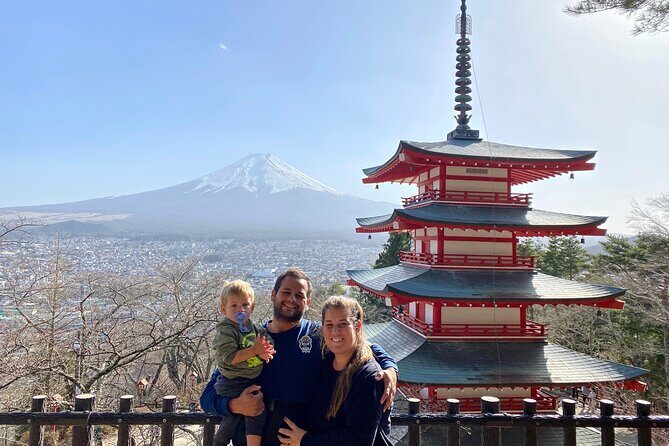
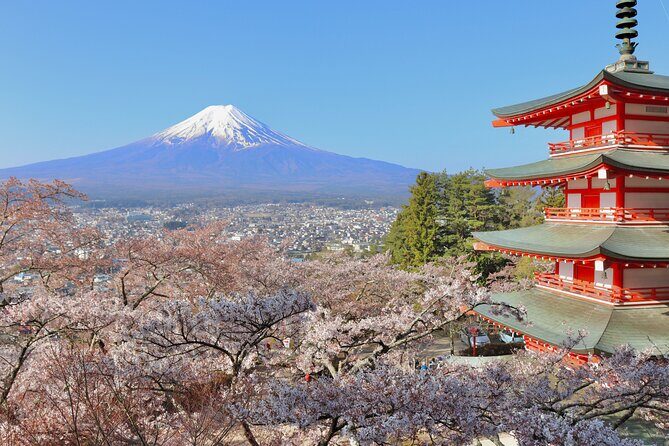
At Chureito Pagoda, you’ll get the classic view that shows up in lots of Japan guidebooks—linked to Fujiyoshida. This stop is about 45 minutes, admission free.
Is it touristy? Sure. But on a Mount Fuji day trip, you want at least one “icon shot,” and this is one of the most recognizable Fuji scenes. More importantly, it’s a great example of how Japanese religious architecture and mountain scenery work together visually.
Photo tip: try different angles and be patient for light changes. Even when Fuji is faint, the pagoda can still look strong.
Kitaguchi Hongu Fuji Sengen Jinja: climbers’ shrine and starting energy
Next is Kitaguchi Hongu Fuji Sengen Jinja, a shrine dedicated to Mt. Fuji and its climbers. The tour emphasizes that it’s a starting point—connected to the idea of climbing toward Mt. Fuji.
You’ll have about 30 minutes, admission free. Shrines are places where small details matter, so this timing works: enough for a respectful look and a few moments to absorb the atmosphere, not enough to feel stuck.
If you’re curious about Japanese religion and how it connects to geography, this is one of the more meaningful stops.
Stop-by-stop: Yamanakako-mura and the Fugaku Wind Cave
Yamanakako-mura: swans, koi, and bird life
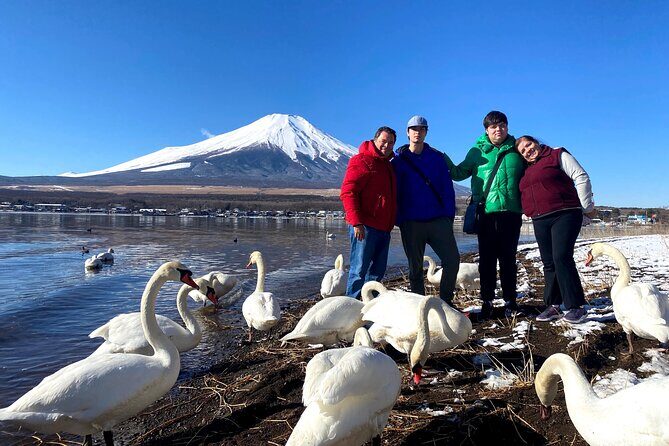
At Yamanakako-mura, you’ll be at the largest of the five lakes around Mt. Fuji. The tour highlights swans and koi in the water, plus other bird varieties—and you may be able to feed them.
Stop time is about 30 minutes, admission free. This is a nice reset after the heavier Aokigahara stop. It’s calmer, more relaxed, and naturally breaks up the day.
Because feeding animals isn’t listed as guaranteed, I’d treat it as a chance you might get rather than a sure thing—just follow what the guide says once you’re there.
Fugaku Wind Cave: volcanic lava remains underground
Finally, Fugaku Wind Cave is a natural underground formation created by centuries of Mt. Fuji volcanic activity. The tour description notes that it still keeps volcanic lava remains.
Admission is included here, and the stop is about 30 minutes. This is a great capstone because it brings you back to geology—the engine behind everything you saw above ground.
If you want a little variety from outdoors-only scenery, the cave is your indoor breather, and it gives the day a strong “why Mt Fuji looks like it does” ending.
What’s actually included (and what you’ll need to plan)
Included in the tour:
- Snacks
- Drinks
- All fees and taxes
- Admissions included for Saiko Iyashi no Sato Nemba and Fugaku Wind Cave
Not included:
- Lunch
That lunch gap is the only clear budget hole. Plan to buy it during the day, or bring a light option if that’s your style. If you’re picky about food, think ahead. Also remember you’re walking and standing at multiple sites over 10–11 hours, so snacks and hydration matter.
Pack for an all-weather day: you’re dealing with Japan’s mountain conditions and changing visibility. Even if it looks fine at 8:00am, it can feel different when you’re higher or closer to the water.
Who should book this Mount Fuji day tour
This is a good fit if:
- you want a Spanish-guided Mt Fuji day and don’t want to puzzle out buses yourself
- you like cultural context as much as views
- you prefer a small-group day rather than a big coach crowd
- you’re okay with a bit of flexibility because weather can change the plan
It might be less ideal if:
- you want total freedom to linger at every spot (this tour keeps stops at roughly 30–50 minutes each)
- you get stressed by day-to-day changes based on weather and daylight
Still, the overall reviews rating is extremely strong—4.9 with 98% recommended, which usually points to reliable timing and good guide communication.
Should you book FUJICOOLTOUR’s Mount Fuji full-day Spanish tour?
Yes, if your goal is to see a lot of iconic and meaningful Fuji-area places in one day without logistical stress. The combination of Spanish-speaking guides, small group size (up to 9), and purposeful stops—from Shiraito Falls to Fugaku Wind Cave—makes this feel like a complete day, not a rushed bus ride.
Book it especially if you care about learning. You’ll get more than scenery: you’ll understand the connections between shrines, ancestral towns, lakes, and volcanic history.
FAQ
Where does the tour start?
The tour starts at the Tokai Bus Mishima Information Office, 17-1 Ichibanchō, Mishima, Shizuoka 411-0036, Japan.
What time does the tour start?
It starts at 8:00am.
How long is the tour?
The duration is about 10 to 11 hours.
What places are included in the day?
You visit Shiraito Falls, Motosuko Lake, Saiko Iyashi no Sato Nemba, Saiko Lake, Lake Kawaguchiko, Oshino Hakkai, Aokigahara Forest, Chureito Pagoda, Kitaguchi Hongu Fuji Sengen Jinja, Yamanakako-mura, and Fugaku Wind Cave.
Is lunch included?
No. Lunch is not included in the tour.
What is included in the price?
The tour includes snacks, drinks, all fees and taxes, and admissions for Saiko Iyashi no Sato Nemba and Fugaku Wind Cave.
Do I need a weather check?
Yes. The experience requires good weather. If it’s canceled due to poor weather, you’ll be offered a different date or a full refund.
How big is the group?
The maximum group size is 9 travelers.
What is the cancellation policy?
You can cancel for a full refund up to 24 hours before the experience start time. If you cancel less than 24 hours before, the amount you paid is not refunded.