REVIEW · ISE JAPAN
Ise: Guided Geku and Naiku in the Sacred Pilgrimage Order
Book on GetYourGuide →Operated by DeepExperience, Inc. · Bookable on GetYourGuide
Ise Jingu can feel like a slow reset for your mind. On this guided Gekū and Naikū experience, I like that you get the meaning behind what you see: Toyouke-Ōmikami at the Outer Shrine, Amaterasu Ōmikami at the Inner Shrine, the Uji Bridge crossing, and the ritual logic that makes Shinto feel practical instead of mysterious. I also love how the guide helps you read the architecture and symbolism, including the idea of shrine renewal through shikinen sengū every 20 years. The only catch: you will be walking a lot through sacred grounds and historic streets, so comfortable shoes matter.
This is a private group tour in English with an expert local guide, timed for a full arc from the shrine forest to Oharaimachi. Guides like Henry and Mr. Kurata have stood out for how they explain rituals in a way that keeps you respectful and not lost, even if you are seeing Ise for the first time. If you want the absolute maximum secrecy or the most restricted worship areas, this tour is more about understanding and respectful viewing than chasing places that are intentionally not on display.
In This Review
- Key things that make this tour worth your time
- Why Ise Jingu’s mood changes as you move
- Outer Shrine Gekū: Toyouke-Ōmikami and the daily-life meaning
- Learning the 20-year renewal idea at shikinen sengū
- Inner Shrine Naikū: Amaterasu, Uji Bridge, and hinoki without nails
- What happens on the final segment before Oharaimachi
- Oharaimachi and Okage Yokocho: the food reward that fits the day
- Price and value: what $123 buys you here
- Who this private English tour suits best
- Practical tips so the day feels smooth
- Should you book this Ise Gekū and Naikū guided tour?
- FAQ
- FAQ
- How long is the Ise guided Gekū and Naikū tour?
- Is this tour in English?
- Is it a private group tour?
- What does the tour include?
- Where does the tour finish?
- Is there an option for train tickets from Nagoya?
- What should I bring?
- Where do I meet the guide?
Key things that make this tour worth your time
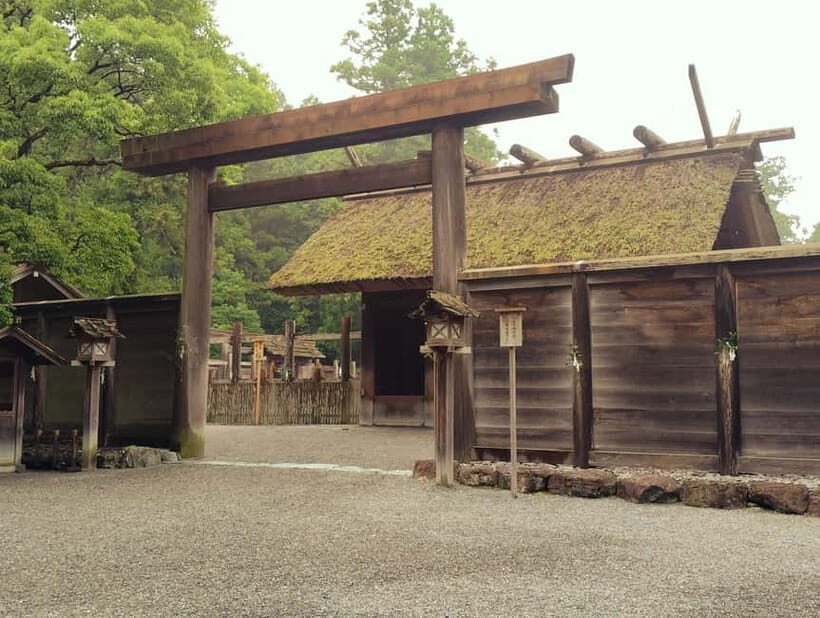
- Outer Shrine focus (Gekū): Learn why Toyouke-Ōmikami is tied to food, clothing, and shelter, not just worship.
- Inner Shrine orientation (Naikū): You’ll understand the role of Amaterasu Ōmikami and what the sacred space is designed to communicate.
- Uji Bridge to the forest sanctuary: The crossing and the hinoki cypress setting help you experience the transition from town energy to shrine hush.
- Shikinen sengū explained simply: Shrine rebuilding every 20 years, plus the idea of tokowaka, eternal youth and renewal.
- Oharaimachi stroll with real food rewards: Akafuku mochi, Ise uiro, and miso-glazed dango after prayer, when your senses are ready.
Why Ise Jingu’s mood changes as you move
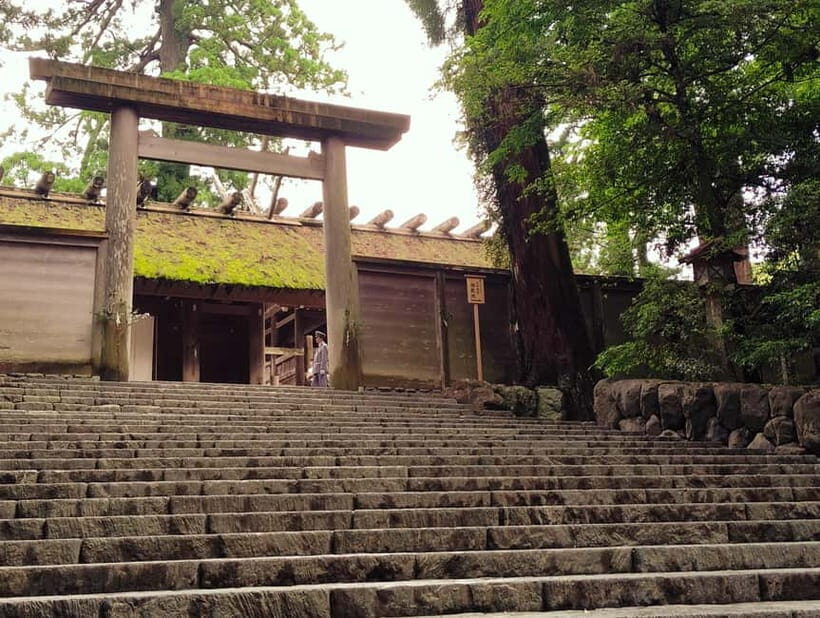
Ise Jingu isn’t one static sight. It shifts as you go—first toward the Outer Shrine, then through a strong visual and spiritual contrast as you approach the Inner Shrine. You’re not just looking at old buildings. You are watching a system of belief that connects nature, community, and continuity.
What I like about a guided format here is that it gives your eyes a job. When you know why someone would interpret gravel paths, trees, and timing as meaningful, the whole place starts to click. A good guide also keeps the experience respectful without turning it into a museum lecture.
In practice, you also get the rhythm right. The tour runs about 210 minutes to 6 hours, so it’s long enough to cover both shrines and still end in the streets where the day feels normal again.
You can also read our reviews of more tours and experiences in Ise Japan.

Outer Shrine Gekū: Toyouke-Ōmikami and the daily-life meaning
The tour begins at the Outer Shrine (Gekū), dedicated to Toyouke-Ōmikami, the deity of food, clothing, and shelter. That detail matters. It tells you Ise Jingu is not only about grand myths. It’s also about the ordinary foundation of living—what keeps a household healthy, warm, and fed.
The Outer Shrine setting is among towering cryptomeria trees, and that quiet dignity is part of the message. The place feels intentional: you slow down because the space asks you to. With a guide, you also learn to connect the symbolism to what you’re seeing instead of treating it as scenery.
This stop is designed to last around 1.5 hours in the schedule, which is helpful. If you try to do Ise too fast, you end up taking photos and forgetting what you learned five minutes later. Here, you have time to ask questions about rituals and what certain elements are meant to represent.
A practical consideration: if you want a totally unstructured experience, a guide can feel like a pace-setter. But if you want Ise to mean something beyond impressive gates and woodwork, the structure is a benefit.
Learning the 20-year renewal idea at shikinen sengū
One of the best parts of this tour is how it frames shikinen sengū, the tradition of rebuilding the shrine every 20 years. That sounds like a quirky fact until you understand why it exists. It’s less about replacing what is old and more about keeping spirit and practice continuous—generation after generation.
The tour also ties this to tokowaka, the concept of eternal youth and renewal. That might sound poetic, but you’ll feel the logic when you hear how renewal connects to continuity. Instead of treating religion as frozen in time, you see it as maintained life—supported by craft, community, and repeating dedication.
This is also where the tour’s value shows up. If you do Ise on your own, you might still notice the rebuilding tradition, but you may not connect it to what you’re standing inside of. With an expert guide, it becomes a lens for the entire visit.
Inner Shrine Naikū: Amaterasu, Uji Bridge, and hinoki without nails
Then you move to the Inner Shrine (Naikū), devoted to Amaterasu Ōmikami, the sun goddess and ancestral deity tied to the Imperial family. The atmosphere shifts again, and the tour helps you notice it rather than rushing past it.
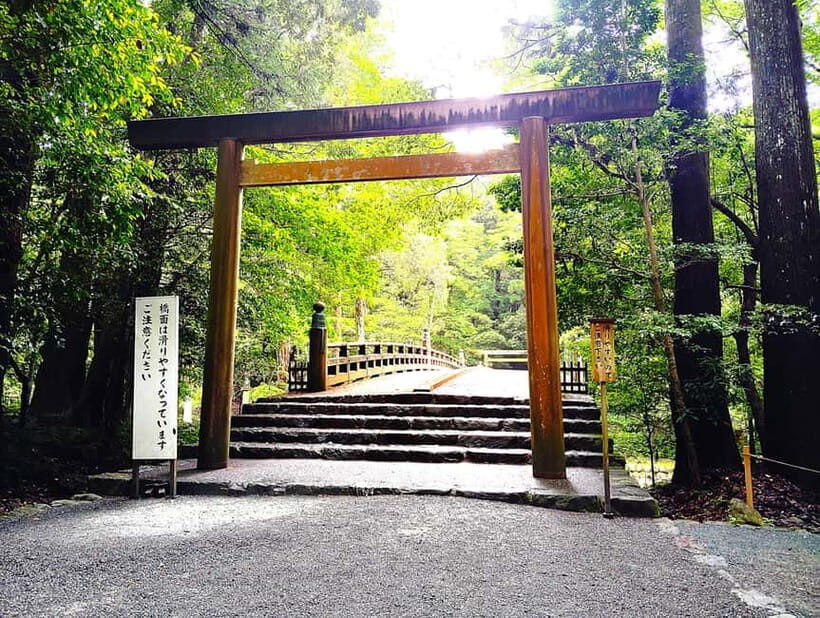
A key moment is crossing the Uji Bridge. It’s famous for a reason: the crossing feels like a threshold. Your attention tightens. You start walking slower, even if you didn’t plan to. This is the kind of physical experience that words alone can’t replicate.
From there, the schedule puts you into the sacred forest sanctuary. The tour emphasizes a very specific architectural detail: the main structures are associated with hinoki cypress, and the construction approach follows ancient principles, described here as being made without nails. That matters because it ties craft to spirituality. The environment and the building methods are part of the same statement.
You’ll also hear how the space has guided worship for more than two thousand years, and how the design supports continuity and national identity. Even if you only catch part of that explanation, you still end up with a stronger sense of why so many people treat this place as more than a tourist stop.
The Inner Shrine portion also takes about 1.5 hours in the tour flow. That length is smart. You get time for both viewing and understanding, without turning the experience into a photo sprint.
What happens on the final segment before Oharaimachi
After the core shrine areas, the tour shifts gears into the historic town streets, moving at a more relaxed pace. The schedule includes a shorter final walk segment—about 50 minutes—which is timed well for what you’re about to do next: snack, stroll, and let your brain cool down from the solemn mood of the shrines.
This is also where guides can make a practical difference. In Ise, you’re likely to feel a little overwhelmed by all the directions and signs. A guide helps you transition from sacred space to town space smoothly, so you don’t waste your energy figuring out what’s next.
If you’re the type who likes to understand the “why” behind everything, this is the part you might want to slow down. Ask how the town developed around pilgrimage rhythms, and you’ll start to see Oharaimachi as a supporting character, not just a place to buy snacks.
Oharaimachi and Okage Yokocho: the food reward that fits the day
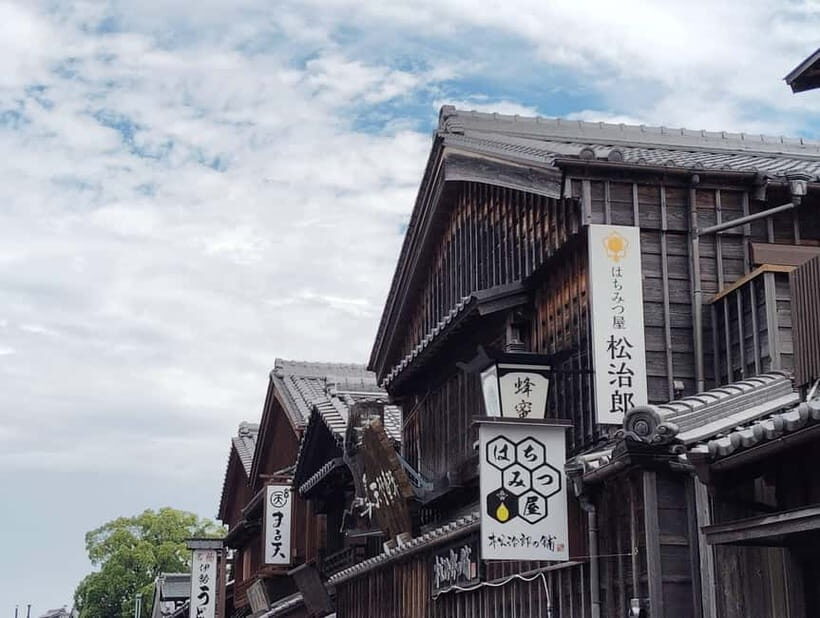
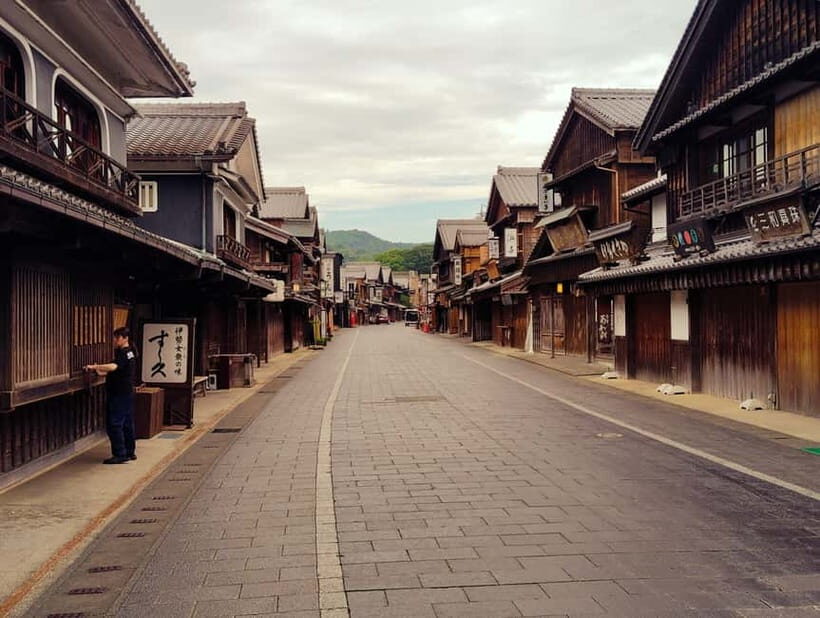
Ending at Oharaimachi (with the Okage Yokocho area as the finish point) is a smart move. You leave the shrines and immediately land in a preserved-feeling townscape with wooden facades and stone-like alleys that carry that old-pilgrim atmosphere.
This is also where the tour becomes sensory. You get traditional flavors that match Ise’s identity:
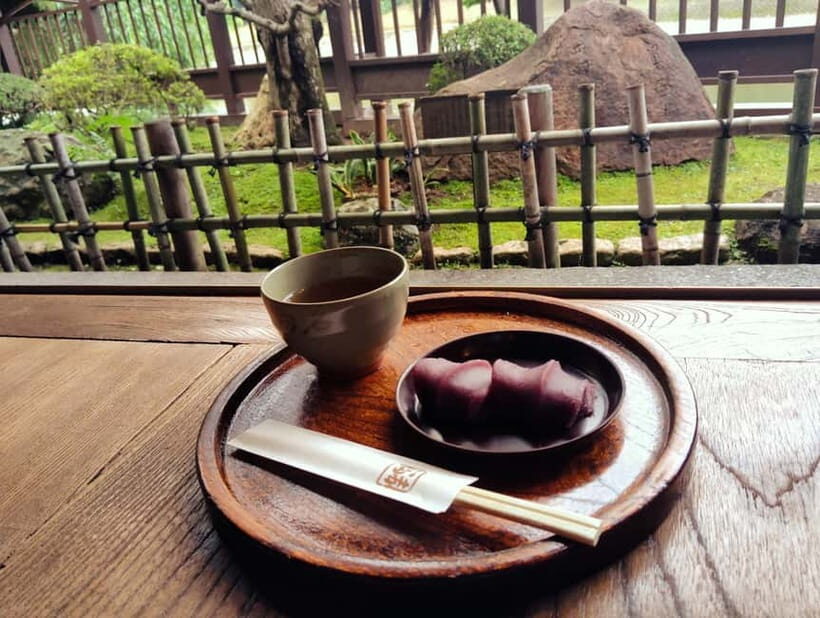
- Akafuku mochi: smooth and sweet, a classic Ise stop
- Ise uiro: fragrant and soft, often described as fragrant and gently sweet
- Miso-glazed dango: a savory-sweet contrast that works well after walking
Even if you don’t go hard on shopping, this part of the tour helps you remember the day as more than a series of shrine gates. You get a normal human payoff right after ritual space, which is exactly how a pilgrimage day often feels.
One note for your expectations: the tour emphasizes respectful viewing rather than chasing every most-restricted area. That can actually be a plus. You spend time learning and experiencing instead of spending energy on places you can’t really access anyway. The final stroll still lands you in the right mood and location for souvenirs and small bites.
Price and value: what $123 buys you here
At $123 per person, this isn’t the cheapest way to see Ise. But you’re not paying just for entry into sacred grounds. You’re paying for:
- an English-speaking local guide who explains rituals, symbolism, and shrine logic
- a structured route across Outer and Inner Shrines
- time allocated for both learning and walking
- a town finish where you can actually use your new understanding (and eat)
In my view, the biggest value is the guide. In the reviews tied to this experience, guides including Henry and Mr. Kurata are praised for going beyond facts—Henry is highlighted for making architecture and history feel meaningful, and Mr. Kurata is noted for preparing a schedule and teaching how to experience the shrines respectfully.
If you’re comfortable reading on your own and you already know Shinto basics, you might feel you could piece it together. But if you don’t, a guide is the difference between seeing a famous religious site and understanding why it’s famous.
Who this private English tour suits best
This tour is a great fit if you:
- want a calm, respectful visit to Ise Jingu without guessing what matters most
- like architecture and symbolism, not just landmarks
- prefer English guidance to translate rituals and shrine meanings into something you can actually use
- enjoy ending the day with a stroll and food rather than rushing back immediately
It may be less ideal if you:
- want a fully independent itinerary with zero guidance
- get impatient with walking through sacred spaces and historic streets
- are trying to maximize the number of locations regardless of meaning
The private group format helps here. Even without a stated group size, private tours tend to feel more flexible for questions and pace, especially in a place where etiquette is part of the experience.
Practical tips so the day feels smooth
Bring comfortable shoes. The tour includes walking through sacred sites and historic streets, and your legs will notice. You’ll also want a camera, since the transitions—cryptomeria shade, the Uji Bridge moment, and the town alleys—are exactly what you’ll want to remember.
Dress for the weather. The tour runs for several hours, and you’ll be outdoors for much of it. If it’s warm or humid, lightweight layers help. If it’s cool, a light warm layer makes the forest time more comfortable.
Also, use your guide’s explanations during the moment you’re standing there. I like tours best when I can ask one good question at the right stop, then see the answer reflected immediately in the space.
Should you book this Ise Gekū and Naikū guided tour?
You should book if you want Ise Jingu to feel like a real experience, not a checklist. This tour’s strength is the combination: Outer and Inner Shrines plus an explanation of the rituals and the renewal tradition, then a final walk where you can enjoy the town and the foods that match the day’s tone.
If you’re comfortable with independent exploration and already know what shikinen sengū and tokowaka mean to shrine life, you might not need a guide. But if you want the peace of a structured route and the clarity of an English-speaking local guide, this is the kind of tour that makes Ise click—then sends you into Oharaimachi with a better sense of what you just experienced.
FAQ
FAQ
How long is the Ise guided Gekū and Naikū tour?
The duration is listed as 210 minutes to 6 hours.
Is this tour in English?
Yes, the live tour guide is listed as English.
Is it a private group tour?
Yes, it is listed as a private group.
What does the tour include?
It includes a guided tour of Ise Jingu’s Outer and Inner Shrines, a visit to Oharaimachi, and an expert local guide.
Where does the tour finish?
The finish point is listed as おかげ横丁 (Okage Yokocho).
Is there an option for train tickets from Nagoya?
There is an optional upgrade for reserved-seat limited express train tickets from Nagoya to Ise.
What should I bring?
You should bring comfortable shoes and a camera, and wear weather-appropriate clothing.
Where do I meet the guide?
The meeting point may vary depending on the option booked. The listed starting locations are ナナちゃん人形 and 伊勢市駅観光案内所.