REVIEW · CHIBA
Japanese Cooking Class and Cultural Experience Around Tokyo
Book on Viator →Operated by Home-style Authentic basic Japanese Cooking Class & Experience of Japanese culture · Bookable on Viator
You get Japan hands-on, not just sightseeing. This class is built around home-style cooking and a second act of sake tasting (or a non-alcohol option), so your evening in Chiba turns into a real skill you can use later. I especially like learning how Japanese basics like dashi come together, and I like the way the host keeps the vibe friendly and fun. One thing to consider: the exact menu choices depend on group timing, so you may not always get your first pick.
Over about 3 hours, you’ll cook for roughly 2.5 hours, then spend about 30 minutes on sake/tea/calligraphy. It’s a tight schedule that feels efficient, and it also means you’ll eat the food you made without waiting around.
The only potential snag is decision-making up front. When there are multiple groups in the same session, your menu choice (A, B, C, or D) can be limited, so read the options when you book and plan for flexibility.
In This Review
- Key points to know before you go
- Chiba Station meetup: where your class starts
- Cooking 3–4 Japanese home dishes (plus the dashi base)
- How the timing usually feels
- What you learn about ingredients you can actually use later
- Dishes, teamwork, and a kitchen rhythm you’ll notice fast
- Sake tasting: the classic finish, served locally
- No alcohol? Japanese tea tasting or calligraphy instead
- Price and value: is $100.11 really fair?
- How to prep so the experience goes smoothly
- Who should book this class in the Tokyo area?
- Should you book this Tokyo-area Japanese cooking class?
- FAQ
- What happens in the 3-hour class?
- Do I choose the menu before I arrive?
- Is sake included?
- What if I have food allergies?
- Where do we meet?
- Is pickup available?
- Can I cancel for free?
Key points to know before you go
- Small group size (max 8) keeps it interactive, not lecture-style
- You make dashi and learn how Japanese ingredients fit into home cooking
- Sake tasting is part of the plan for a local flavor twist
- No-alcohol options include Japanese tea tasting or calligraphy with special tools
- Choose menus A–D carefully since group overlap can affect which one you get
- Pickup and mobile ticket help if you’re staying around the Tokyo area
Chiba Station meetup: where your class starts
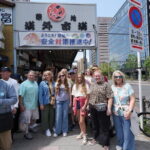
This experience meets at Chiba Station (Shinchiba area). The address listed is Chiba, Chuo Ward, Shinchiba, 1-chōme 1. It’s a sensible starting point because you can reach it by public transportation without complicated transfers.
If you want to reduce commuting stress, pickup is offered. That’s a big deal in practice, because you’ll already be in cooking mode. You won’t have to rush through train connections while thinking about ingredient smells, timing, and where to stand.
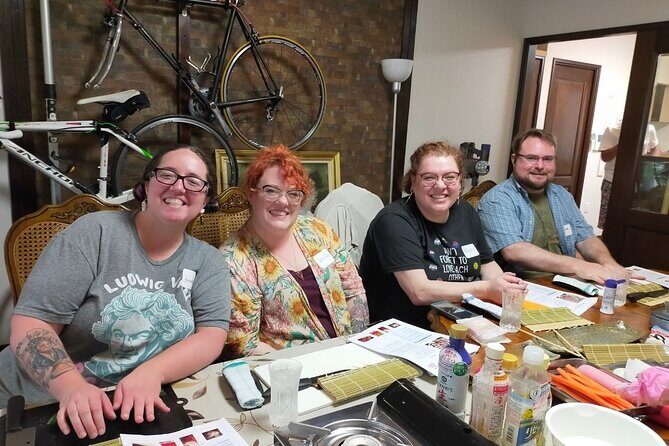
Also note the group size: up to 8 travelers. That matters because cooking classes can get loud and cramped when they run large. Here, you’re more likely to get hands-on help when you need it, especially during the parts that depend on technique (like stock and seasoning).
You can also read our reviews of more tours and experiences in Chiba.
Cooking 3–4 Japanese home dishes (plus the dashi base)
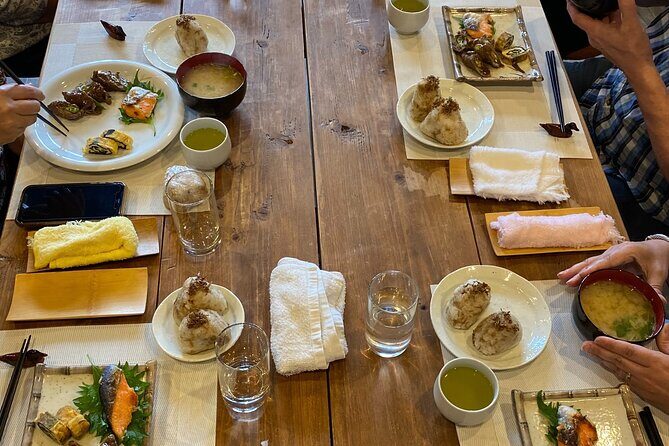
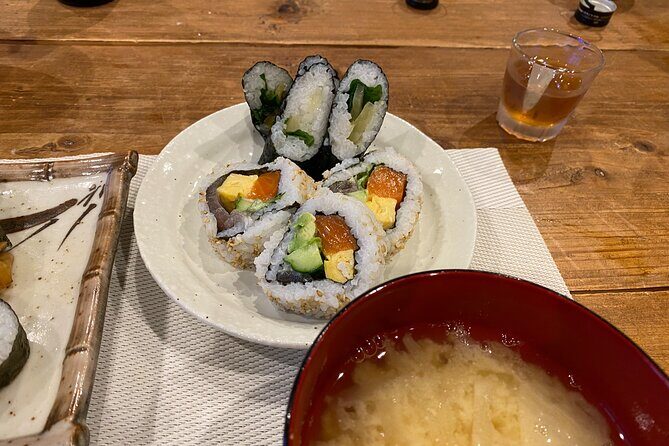
The core of the class is cooking 3–4 Japanese home-style dishes. This is not “watch and hope.” You learn by doing—prepping, cooking, and putting together the flavors that make Japanese food feel balanced and simple.
The featured skill is dashi, Japanese soup stock. Even if you’ve had miso soup before, dashi is its own foundation. Making it gives you a clearer sense of why Japanese dishes taste layered but not heavy. You also learn about Japanese ingredients and how they behave in cooking, which helps once you’re back home recreating meals from memory.
Menus are labeled A, B, C, or D, and the host prepares ingredients in advance. That’s practical: it cuts down on shopping time and keeps the class running smoothly. It also means the lesson stays focused on technique, not logistics.
One more important detail: when the group is smaller—if you or your group is the only one attending that day—you may be able to choose your favorite menu. If other groups join the same class, your menu selection may not be available. So if menu choice is a big deal for you, plan to book with enough flexibility in your calendar and be ready to roll with what’s assigned.
How the timing usually feels
The class runs about 3 hours total. You’ll spend about 2.5 hours cooking, then 0.5 hour on the follow-up activity (sake tasting, tea tasting, or calligraphy). That means you should come hungry, but also ready to focus—this is a full working session, not a casual stroll with cooking sprinkled in.
What you learn about ingredients you can actually use later
I like that this class is positioned as basic but authentic home-style Japanese cuisine. That phrase matters because “authentic” can sometimes mean overly fancy versions that are hard to copy. Here, you’re learning the building blocks people use in everyday Japanese cooking.
You’ll get direction on Japanese ingredients—what they are, when to use them, and how they change a dish. Even if you don’t memorize every detail, you’ll leave with a better sense of how Japanese flavors stack: stock depth, seasoning balance, and how ingredients complement rather than compete.
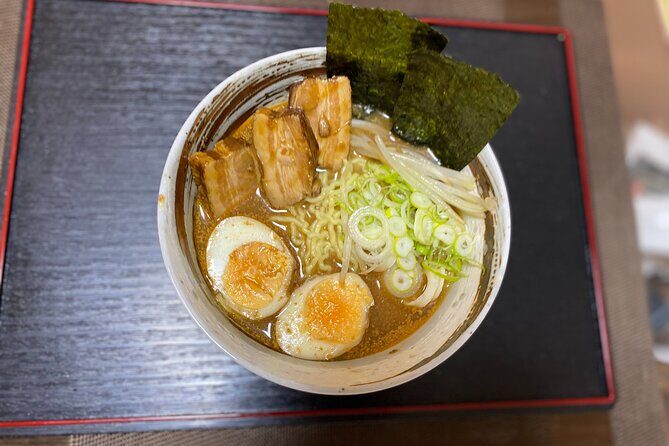
Dashi is a great example. When you understand the stock, you understand a lot of the country’s cooking language. Suddenly, things you thought were separate (soups, simmered dishes, broths that show up under noodles) start to feel connected.
And because you’re cooking together, you see the small cause-and-effect moments: what happens if you rush seasoning, what happens if you don’t balance heat, and how the texture changes as you cook. Those are the moments that make this feel useful long after the class ends.
Dishes, teamwork, and a kitchen rhythm you’ll notice fast
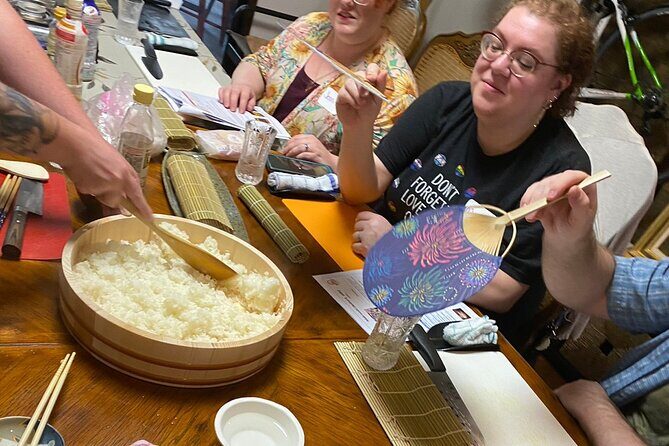
This type of class is at its best when you embrace the rhythm. You’ll take part in the cooking process rather than just following directions. That sounds obvious, but it changes the whole experience: you’ll be busy, you’ll be curious, and you’ll feel proud when you taste what you made.
With a max of 8 participants, it’s easier for the host to guide you one-on-one when needed. In a larger group, someone can get stuck waiting. Here, you can keep momentum, which helps with the most important part: tasting at the end won’t feel like an afterthought.
Also, you get that cultural payoff without turning it into a museum stop. You’re learning by doing something Japanese households actually do: cook at home, build flavor from basics, and share the table.
Sake tasting: the classic finish, served locally
After the dishes, the program shifts into sake tasting. The class includes a short tasting window of about 0.5 hour, and it’s described as very unique and rare high quality sake distilled locally in Japan.
If you like alcohol and want to understand it in a cultural context, this is one of the more interesting ways to do it in the Tokyo area. You’re not just drinking; you’re getting a guided taste connected to the food you cooked. Food and sake pairing isn’t spelled out in detail here, but the format makes sense: stock-based dishes and savory flavors are a natural match for many sake styles.
If you don’t drink or aren’t an adult, you’re not stuck. The experience explicitly offers alternatives, and the host will switch the activity to match your choice—so you’re still fully included.
No alcohol? Japanese tea tasting or calligraphy instead
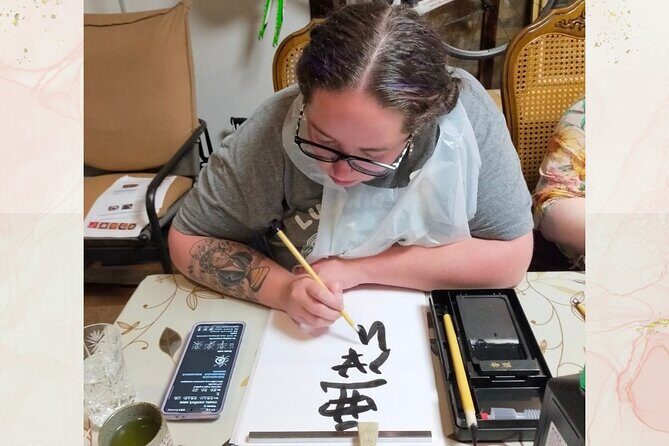
This is where the class gets pleasantly flexible. You can choose a non-alcohol option: Japanese tea tasting or a calligraphy experience.
Tea tasting is described as covering more than just green tea. That’s useful because many people assume Japanese tea equals one style. Here, the framing is broader, so you can taste different kinds and learn there’s more variety than the name on a menu.
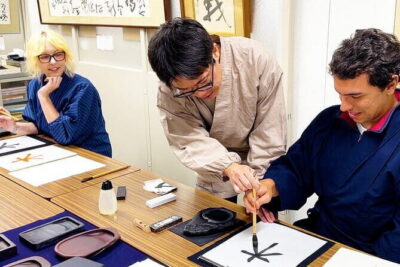
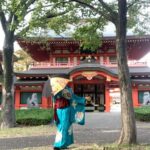
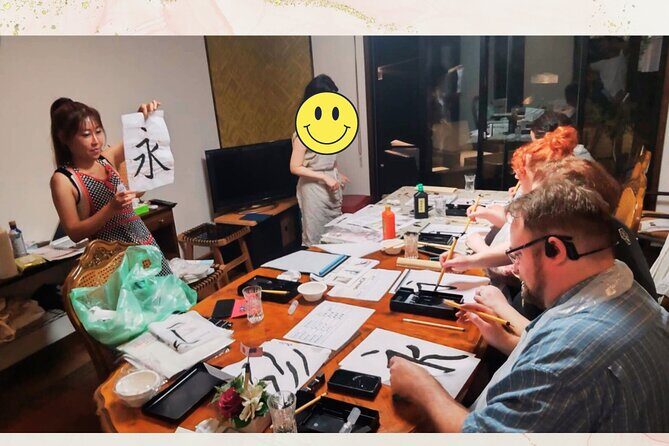
If you choose calligraphy, you use special brushes and ink. You can write your name or kanji, which is exactly the kind of activity that feels personal fast. And one of the best extra moments—added in the class experience—is that you can decorate your own fan after learning calligraphy basics.
That fan detail is a nice bonus because it gives you something tangible to take home that’s tied to what you actually did in the session, not just a generic souvenir.
Price and value: is $100.11 really fair?
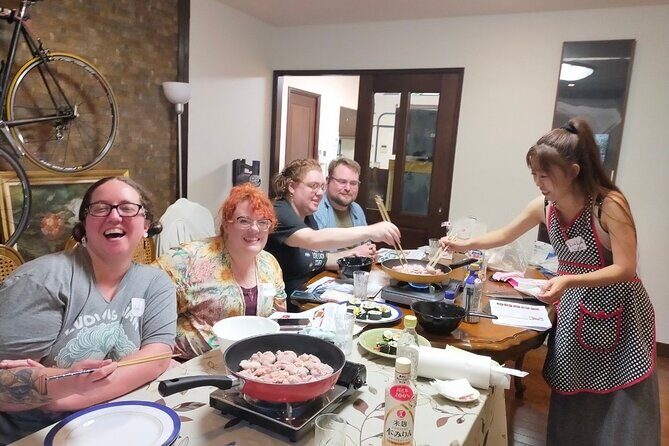
At $100.11 per person for about 3 hours, the price isn’t cheap-cheap, but it’s also not just “pay to stand near a chef.” You’re getting:
- Ingredient-prep support before class (the host prepares what’s needed)
- Instruction for cooking 3–4 dishes
- A guided follow-up activity (sake tasting or tea/calligraphy)
- A small-group limit (max 8), which boosts the chance you get real help
- Extras like pickup offered, group discounts, and a mobile ticket
When I judge value for a cooking class, I look for two things: hands-on time and total experience length. You get both here. You spend most of the time cooking, and the cultural add-on finishes the story. In other words, you’re paying for a complete evening format, not a quick demo.
If alcohol matters to you, sake tasting is included in the standard flow. If alcohol doesn’t matter, you still get an included alternative, so you’re not paying the same money and feeling like you opted out of the fun.
How to prep so the experience goes smoothly
You’ll have an easier time if you handle a few details before you arrive.
First, pick your follow-up activity when you book: sake tasting, tea tasting, or calligraphy. If you’re choosing calligraphy, think about whether you’d prefer to write your name or try a kanji character. Having a plan reduces stress when you’re handed the brush and ink.
Second, if you have food allergies, tell the host in advance. The class states you can discuss menus based on allergies, which is exactly what you want in a cooking setting.
Third, keep menu choice in mind. You’ll choose A, B, C, or D from the options shown at booking. But remember: if more than one group attends the same class session, your preferred menu might not be available. If you’re traveling with friends and menu matters, coordinate your choices early.
Finally, show up on time. With a cooking schedule measured in hours and half-hours, arriving late can throw off your rhythm and your participation.
Who should book this class in the Tokyo area?
Book it if you want a practical cultural experience that mixes cooking with something uniquely Japanese. This works especially well for:
- Food lovers who like learning techniques, not just tasting
- People who want to understand dashi and Japanese ingredients in a real way
- Travelers who enjoy hands-on activities and want a small-group setting
- Anyone interested in sake tasting, or anyone who wants a non-alcohol alternative like tea or calligraphy
Consider skipping it if you want a sit-and-watch experience, because this is built for participation. Also, if you’re extremely picky about the menu you must cook, plan around the A–D menu rule and the fact that group overlap can limit selection.
Should you book this Tokyo-area Japanese cooking class?
If you want a memorable Japan moment that goes beyond photos, I’d book it. The combination of dashi-focused cooking, home-style dishes, and a built-in cultural finale (sake, tea, or calligraphy with a fan) makes it feel like a full experience rather than a short snack activity.
The best part is that you leave with something real: skills from cooking basics and an option for a personal take-home item through calligraphy. The only reason to hesitate is if your schedule is rigid and you’re counting on a specific menu choice. If that’s you, choose your date carefully and be ready to stay flexible.
FAQ
What happens in the 3-hour class?
You cook 3-4 Japanese home-style dishes for about 2.5 hours. After that, you spend about 0.5 hour on sake tasting, or you can switch to Japanese tea tasting or calligraphy.
Do I choose the menu before I arrive?
Yes. When you book, you choose cooking menu A, B, C, or D. The class notes that menu choice may depend on whether another group attends the same session.
Is sake included?
Sake tasting is included as part of the standard flow after the cooking. If you are not a fan of alcohol or not an adult, you can change the activity to tea tasting or calligraphy.
What if I have food allergies?
Let the provider know in advance. The class says you can discuss menus based on your allergies.
Where do we meet?
The meeting point is Chiba Station in Chuo Ward, Shinchiba (Chiba, Japan).
Is pickup available?
Pickup is offered, and you’ll have a mobile ticket for the experience.
Can I cancel for free?
Yes. The experience offers free cancellation with a full refund if you cancel at least 24 hours before the start time.