REVIEW · KARUIZAWA
Japanese Noodle Making Class
Book on Viator →Operated by SOBA LABO~Japanese noodle making class~ · Bookable on Viator
Soba dough is tougher than it looks. This Karuizawa class at Shinshu Soba Restaurant Yamahei turns you into a hands-on maker for about two hours, guided from dough prep to the first bite of your own noodles. What I love most is the chance to work with real soba technique—kneading, stretching, and cutting—instead of just watching.
Another thing I genuinely like: Nagano soba is built into the lesson. You’ll learn why this region grows soba well, and you even get to grind walnut toppings for the local walnut soba style right there.
One possible consideration: at $91.21 per person, this is a food-focused activity—fun and skill-based, but not a full-day sightseeing experience.
In This Review
- Key highlights to look forward to
- Why Nagano soba tastes like it has a backstory
- The full class flow: what happens during those two hours
- Step 1: Get kitted out (samue and maekake)
- Step 2: Soba flour prep using traditional milling
- Step 3: Kneading, stretching, and cutting
- Step 4: Walnut prep in a small mortar
- Step 5: Cooking and immediate serving
- What you eat: tempura plus walnut soba soup (the payoff)
- Tempura on the side
- Walnut soba soup: the Karuizawa specialty
- The best part is the moment you realize you can do it
- Price and value: is $91.21 fair for two hours?
- Where to go and how to fit it into your day
- Who should book this (and who might prefer something else)
- Should you book this Japanese noodle making class?
- FAQ
- Where is the soba noodle making class located?
- How long does the experience last?
- What’s included in the meal?
- Will I make the soba noodles myself?
- Are instructions available in English?
- Do I get any souvenirs or included clothing?
- Can I cancel for a full refund?
Key highlights to look forward to
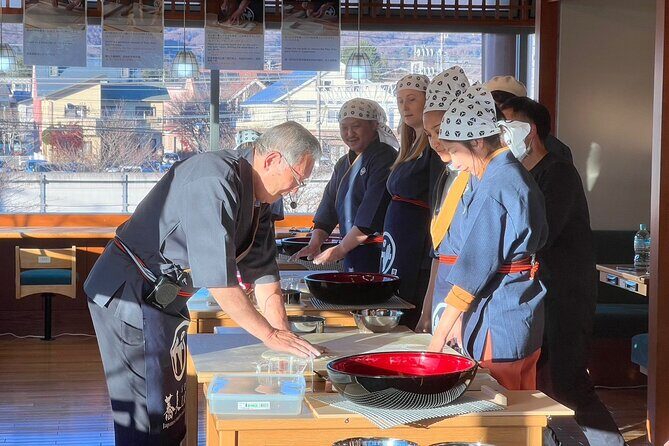
- Hands-on soba making: knead, stretch, and cut noodle dough with an instructor watching your form
- Nagano soba detail: you peel off the soba husk and grind the flour with a millstone and water mill
- Walnut soba fun: you can grind walnuts and add them to your soba soup in a small mortar
- Brunch-style meal included: tempura plus walnut soba soup served on the spot
- Traditional outfit + tool rental: you’ll be kitted out in samue and maekake, plus receive a tenugui gift
- Small-class feel (up to 32 people): enough structure that you’re not lost in a giant crowd
Why Nagano soba tastes like it has a backstory
If your Japan trip list includes food, don’t stop at tasting. This is one of those experiences where you learn why something tastes the way it does.
Soba from Nagano Prefecture has a reputation for a reason: it’s a mountainous place with lots of cold, slope-friendly growing conditions. The course leans into that identity. Instead of treating soba as a generic noodle dish, you’re guided through traditional steps that connect the ingredient to the finished bowl.
And then there’s Karuizawa’s signature twist: walnut soba. In plain terms, you get a local-style bowl where ground walnuts become part of the soup experience. It’s not just a topping. It changes the whole vibe—nutty, earthy, and very much a Nagano/Karuizawa thing rather than something you’d see everywhere.
You can also read our reviews of more tours and experiences in Karuizawa.

The full class flow: what happens during those two hours
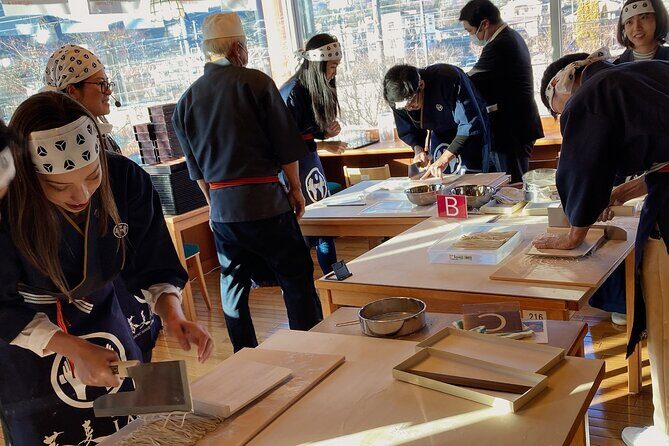
The session is about 2 hours, and it moves in a way that feels designed for learning, not just feeding people. You start at Shinshu Soba Restaurant Yamahei, which is a short walk from Karuizawa Shinkansen Station and set inside the Karuizawa Prince Outlets area (so you’re close to transit and easy to slot into your day).
Step 1: Get kitted out (samue and maekake)
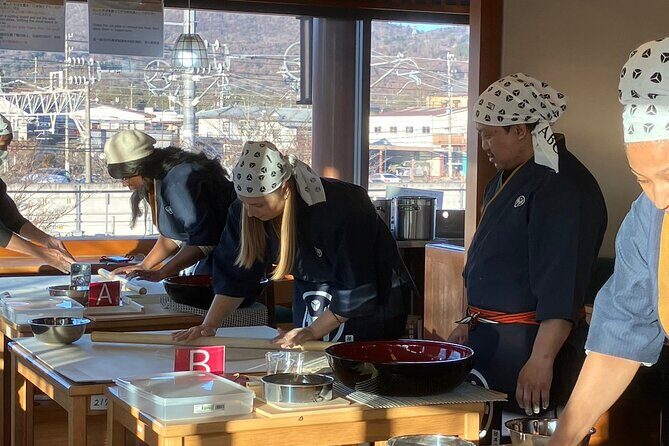
Before any flour flies, you’re provided with traditional work clothing: samue (traditional work clothes) and maekake (apron). It’s practical—mess control and comfort—but it also makes the whole thing feel official. When you look the part, you pay attention more.
Tool rental is included too, so you’re not worrying about what you need to bring. You can show up and focus on the technique.
Step 2: Soba flour prep using traditional milling
One of the most interesting parts is that the class doesn’t treat soba flour as a given. You peel off the soba husk yourself and then grind the flour using a millstone and water mill.
That step matters. Soba has a character that comes from how it’s handled. Even if you don’t nerd out on food chemistry (I don’t force it, either), you can feel the difference between flour that’s processed with care and something that’s treated like a commodity.
Step 3: Kneading, stretching, and cutting
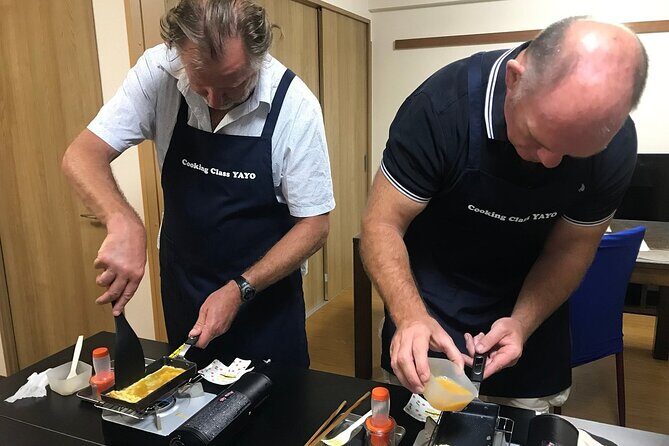
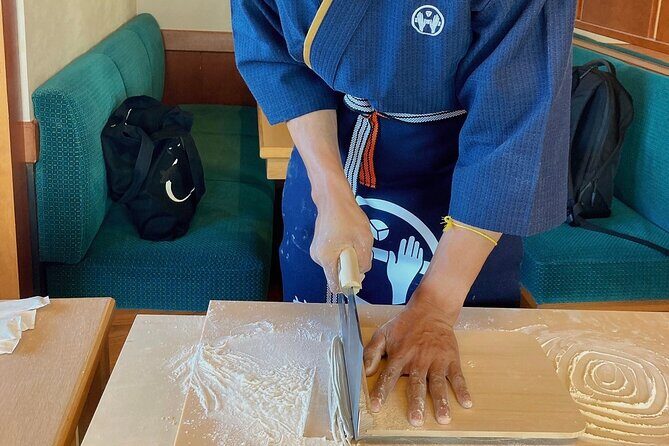
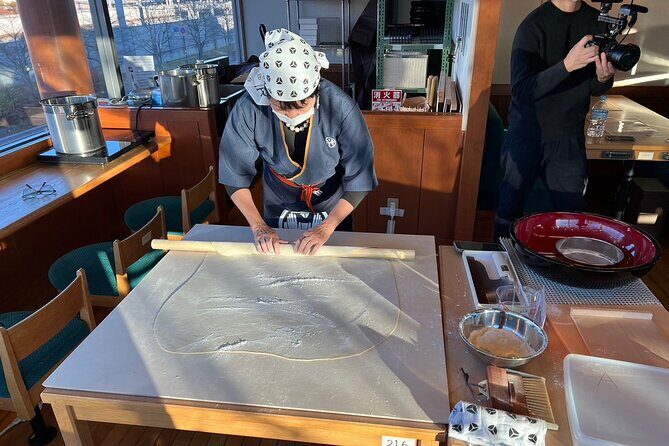
Now you get to the core skill: kneading, stretching, and cutting soba noodles. This is the “hands-on” section you came for, and the timing is tight enough that you stay focused.
From the setup, you can expect the instructor to guide you on how the dough should feel and how to handle the cutting. In a class like this, small adjustments make a big difference—thickness, consistency, and how confidently you stretch. The goal isn’t perfection on the first attempt. It’s understanding the motion and getting the noodles into a form that cooks well.
Step 4: Walnut prep in a small mortar
Walnut soba is part of what makes this class special in Karuizawa. You can add walnuts to the experience by grinding them yourself and mixing them into your bowl setup in a small mortar.
That’s a rare detail for a noodle class. Most food experiences stop at the main dish. Here, the regional specialty gets active participation.
Step 5: Cooking and immediate serving
After you’ve made your noodles, the finished noodles are served right there at the restaurant. You’ll also get tempura and your walnut soba soup on the spot.
So yes, it’s a brunch-style meal, not a take-home bag of noodles. You get the payoff quickly, which is exactly how you want it—especially on a trip day when you don’t want dinner logistics.
What you eat: tempura plus walnut soba soup (the payoff)
The included meal is a big part of the value. You’re not paying just to learn technique and leave hungry.
Tempura on the side
Tempura is included with the soba. It’s a nice pairing: crispy and light against the more rustic soba texture. Also, tempura gives you an immediate comfort-food anchor while you’re still learning the noodle process.
Walnut soba soup: the Karuizawa specialty
The walnut soba comes in as the star. The soup is built around ground walnuts, and you can participate by grinding your own walnuts before adding them.
This is one of those dishes that becomes more enjoyable once you’ve taken part in a component of it. You’re not just eating a regional item. You’re tasting the walnut step you helped create.
The best part is the moment you realize you can do it
Food classes can be either too hands-on (and chaotic) or too instructional (and you feel like you’re watching). This one feels balanced.
The teaching method is built around active doing. You knead, stretch, cut, and prep components. The instructor support—available in English and Japanese—helps you avoid the classic problem where your only instruction is a string of gestures and hopeful nods.
Also, the location helps. Being in a restaurant setting means you’re not wandering between vendors or complicated stations. It’s concentrated. You spend your time learning and then eating what you made.
Price and value: is $91.21 fair for two hours?
At $91.21 per person, the cost is not “cheap-eats” territory. But it’s also not just a ticket to a cooking show.
Here’s why the price can make sense if you care about technique and local food:
- You get tool rental plus traditional clothing (samue and maekake), so you’re not paying extra for supplies
- You learn from scratch: flour prep, noodle making motions, and walnut soba involvement
- The meal is included: your noodles, tempura, and walnut soba soup
- The class is structured with an instructor and capped at a maximum of 32 travelers, which usually means you’ll actually get attention when you need it
My practical advice: if you’re the type who buys cooking utensils and then never uses them, skip this. If you like mastering a skill for real—even a short one—this is the kind of class that makes your trip memories feel functional, not just visual.
Where to go and how to fit it into your day
The meeting point is at 1178-161 Karuizawa, Kitasaku District, Nagano 389-0102, Japan, at Shinshu Soba Restaurant Yamahei in Karuizawa Prince Outlets.
You also get a big logistical advantage: it’s near public transportation, and it’s described as about a 5-minute walk from Karuizawa Shinkansen Station. If you’re planning your day around the train schedule, this makes it easier to avoid stress.
Bring a normal travel attitude. This is a food class, so you’ll be working with dough and flour. The included clothing helps, but you should still expect to be a little messy by the end—part of the point.
One more practical note: this experience uses a mobile ticket, so make sure you can access it on your phone before you arrive.
Who should book this (and who might prefer something else)
This is a great fit if you:
- want a hands-on food experience rather than a tasting-only meal
- like local specialties, especially Nagano’s soba identity and Karuizawa’s walnut soba
- appreciate instruction in both English and Japanese, so you’re not guessing what to do
- enjoy workshops where you do the work and then eat the result soon after
It might be less ideal if you:
- want a long day tour with lots of sightseeing stops
- expect an all-inclusive drinks experience (alcoholic beverages are not included)
If you’re traveling with kids, this can work well. There are soba-making accommodations like costumes and pedestals intended for elementary school students, so children can participate in a kid-friendly way.
Should you book this Japanese noodle making class?
Yes, if you want a food experience that’s genuinely active and tied to a specific regional story. The combination of traditional flour prep, guided noodle making, and eating your own soba with tempura and walnut soba soup gives you a satisfying loop: learn, do, and taste.
Book it if you’ll enjoy getting a little hands-on and you like the idea of bringing home more than photos—more like a skill and a clearer understanding of what makes Nagano soba special.
Skip it only if you’re shopping for a casual, sit-and-watch activity, or if the price feels too close to a full meal and more than you want to spend for a two-hour workshop.
FAQ
Where is the soba noodle making class located?
It takes place at Shinshu Soba Restaurant Yamahei in Karuizawa, within the Karuizawa Prince Outlets area. The provided meeting point address is 1178-161 Karuizawa, Kitasaku District, Nagano 389-0102, Japan, and it’s about a 5-minute walk from Karuizawa Shinkansen Station.
How long does the experience last?
The duration is approximately 2 hours.
What’s included in the meal?
You’ll get brunch-style food that includes soba noodles you make yourself, tempura, and walnut soba soup.
Will I make the soba noodles myself?
Yes. An experienced instructor guides you through kneading, stretching, and cutting the soba noodles, and the finished noodles are served at the restaurant.
Are instructions available in English?
Yes. The class includes instructions in English and Japanese.
Do I get any souvenirs or included clothing?
Yes. You receive a tenugui as a gift, and you get rental of soba noodle making tools plus traditional work clothing (samue) and an apron (maekake).
Can I cancel for a full refund?
Yes, free cancellation is allowed. You can cancel up to 24 hours in advance for a full refund. If you cancel less than 24 hours before the start time, the amount paid is not refunded.