REVIEW · SHIRAHAMA
Osaka: Wakayama Cat Train, Seafood market, Hot Springs Tour
Book on GetYourGuide →Operated by TAIHOU CO,LTD · Bookable on GetYourGuide
A cat story and the sea—what a combo. This Wakayama day trip strings together three of my favorite Japan moods: Stationmaster Tama at Kishi Station and a proper live tuna cutting show at ToreTore Market. The itinerary moves at a friendly pace, and your guide, Tiger, tends to keep things clear and on track.
The one thing to weigh is time. The cat-themed train ride is fun but brief (about 15 minutes), and the tuna show can be canceled when weather or other factors get in the way.
In This Review
- Key things to know before you go
- From Osaka’s Namba area to Wakayama: the bus part you’ll actually like
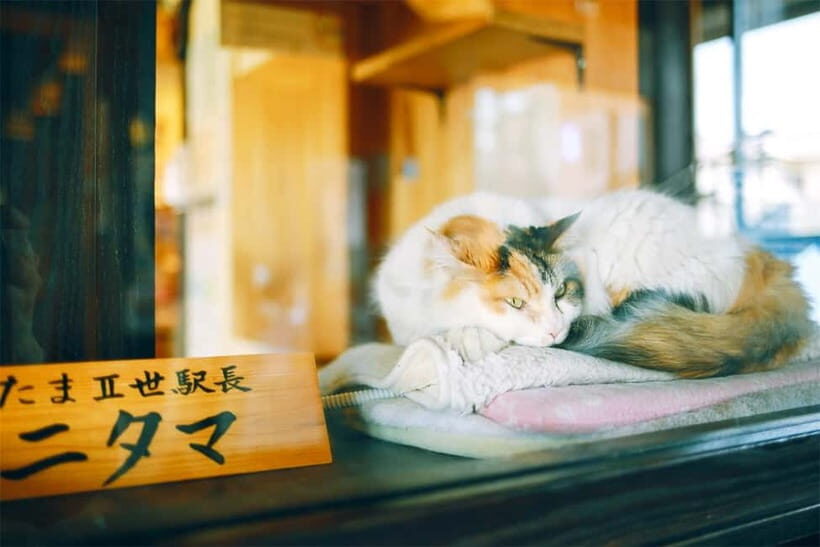
- Kishi Station and Stationmaster Tama: the small story with big heart
- The cat train ride: cute, quick, and schedule-dependent
- ToreTore Market in Shirahama: tuna cutting, shopping, and food timing
- Lunch on your own: build a seafood plan without stressing
- Shirahama’s ToreTore Onsen: soak in 1,350 years of springwater
- Senjojiki rock plateau: the ocean view that rewards the stop
- Sandanbeki caves and the 36-meter elevator ride
- The itinerary rhythm: how 10 hours feels in real life
- Price and value: why $83 can make sense (and when it won’t)
- Who should book this Wakayama cat-and-coast day trip?
- Should you book this Osaka to Wakayama tour?
- FAQ
- Where is the meeting point?
- What time does the tour start?
- How long is the tour?
- What is included in the price?
- Is lunch included?
- Is the hot spring entry included?
- Will I see a tuna cutting show?
- How long is the cat-themed train ride?
- Are tattoos allowed in the hot springs?
- Is the tour wheelchair accessible?
Key things to know before you go
- Stationmaster Tama legend at Kishi Station: a cat story that actually put a rural station back on the map
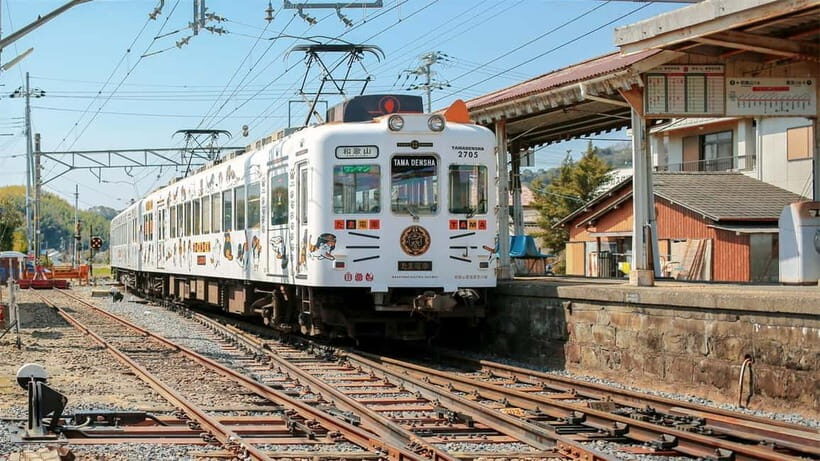
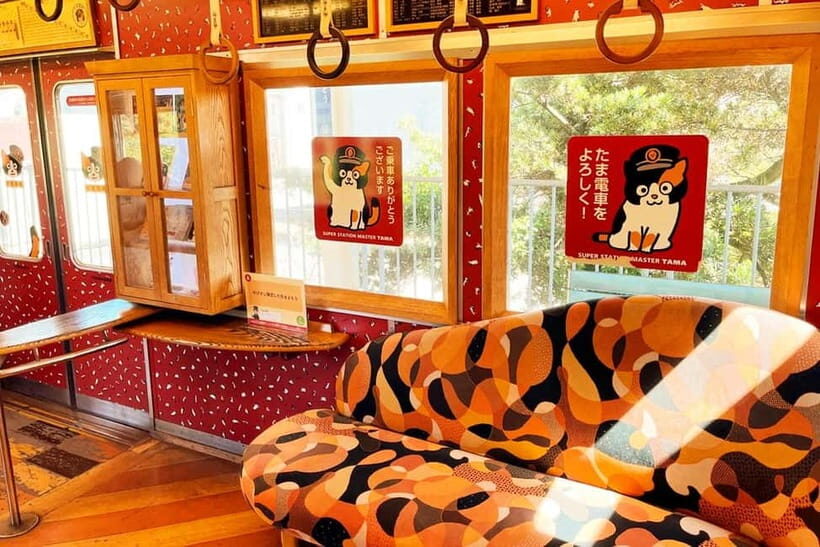
- Cat-themed train options: Tama Train, Strawberry Train, Toy Train (which one you get depends on the day)
- Toretore Market tuna cutting show: live, fast, and scheduled 2–3 times daily, with random timing
- Shirahama hot springs: ToreTore Onsen with salt-stone bedrock and sodium bicarbonate spring water
- Ocean cliffs and pirate caves: Senjojiki views plus Sandanbeki caves reached by a 36-meter elevator
From Osaka’s Namba area to Wakayama: the bus part you’ll actually like
You start at Nipponbashi Station, Exit 2 (near Namba/Shinsaibashi), meeting at 8:30am. From there, you’re on an air-conditioned coach with a professional driver. The ride to Wakayama takes roughly 1.5 hours, and you return after a full day out on the coast.
Why I like this setup: it’s built for comfort. You don’t have to coordinate transit across three different regions. You just show up, keep your daypack light, and let the guide handle the sequence of stops.
If you’re the type who hates “rush tourism,” you’ll appreciate that the day is organized around time blocks: bus, Kishi Station, market, then Shirahama’s onsen and coastal views, before heading back to Osaka around 6:40pm (arrival time depends on traffic).
You can also read our reviews of more tours and experiences in Shirahama.
Kishi Station and Stationmaster Tama: the small story with big heart
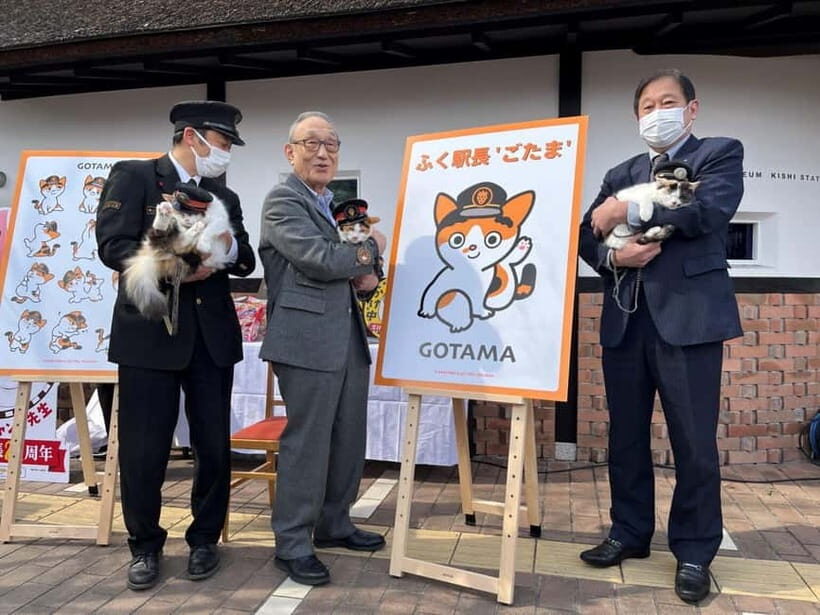
Kishi Station is the kind of place that looks like it was made for photos, but the real draw is the legend. The station is shaped like a cat’s face, and it became famous through Stationmaster Tama, a calico cat who helped revive local spirits and visitors. Not long before the station was at risk, Tama effectively became the daily “staff” that greeted passengers and helped boost the local economy through attention and charm.
You also learn about her successor, Nitama (Second Tama), continuing the station’s routine of healing smiles and soft purrs. That matters because this isn’t just a theme decoration. It’s a living local narrative tied to how the area sees itself.
After you arrive, you’ll also get time to enjoy the cat atmosphere beyond the platforms—think cat-themed café area (Tama Shop), collectible cat stamps, and cat-focused souvenirs. It’s a rare moment in Japan where the storytelling is the main attraction, not a bonus.
Practical tip: wear shoes you can walk in. You’ll be moving between station spaces and shop areas, plus there’s usually a bit of crowd flow when buses arrive.
The cat train ride: cute, quick, and schedule-dependent
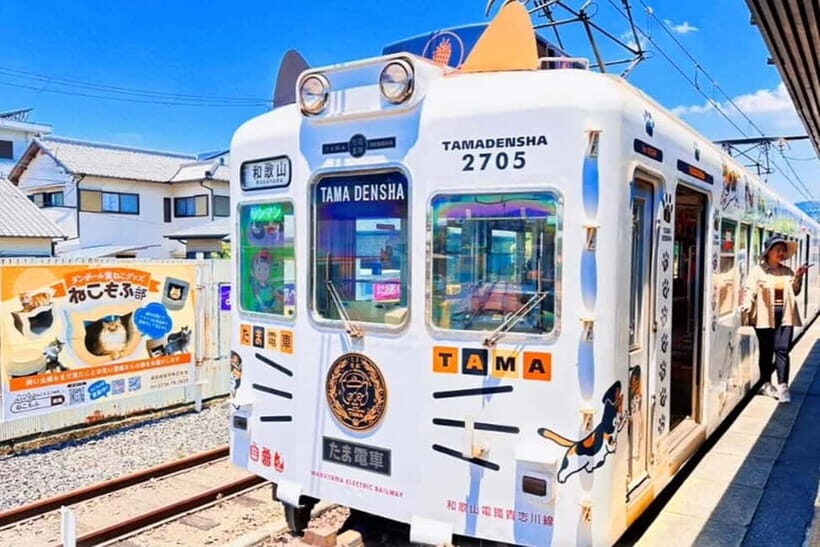
Then comes the whimsical part: boarding a cat-themed train for a short hop through the area. The ride is described as “panoramic” with an experience time around 15 minutes (the exact train depends on what’s operating that day).
You might ride one of these designs:
- Tama Train
- Strawberry Train
- Toy Train
Here’s how I’d frame it: treat this as a bonus moment of play, not the centerpiece of your day. The cat train is adorable, and yes, you’ll get the photo moment and the atmosphere. But if you’re hoping for a long train ride like a full regional excursion, this won’t be that. It’s a quick, themed taste.
Also, the specific train design can change daily. If you’re a serious cat-train collector, you might feel a little disappointment. For everyone else, it’s a fun, light interlude between countryside station legend and the seafood spectacle.
ToreTore Market in Shirahama: tuna cutting, shopping, and food timing
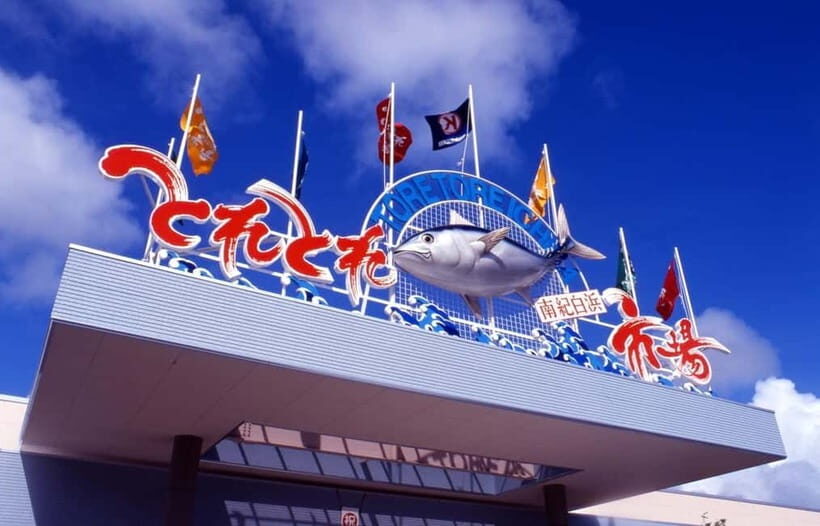
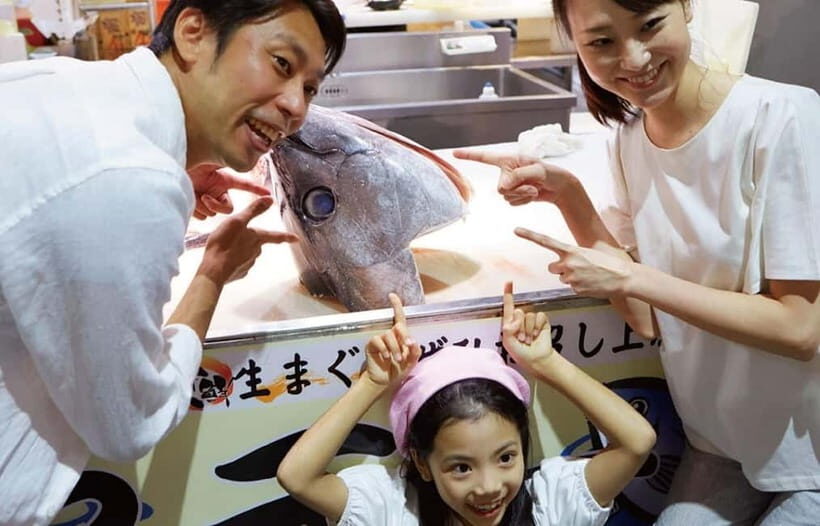
ToreTore Ichiba is where the day turns edible. It’s one of the biggest seafood markets in western Japan, and it’s active multiple times daily as fresh catches arrive (the exact schedule varies, described as 2–3 times daily).
You’ll get:
- a photo stop
- a visit
- and a guided tour for about 2 hours
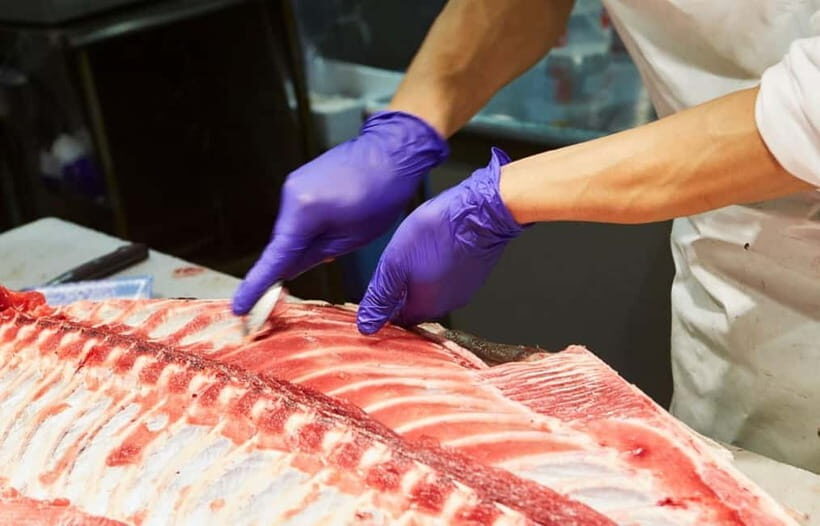
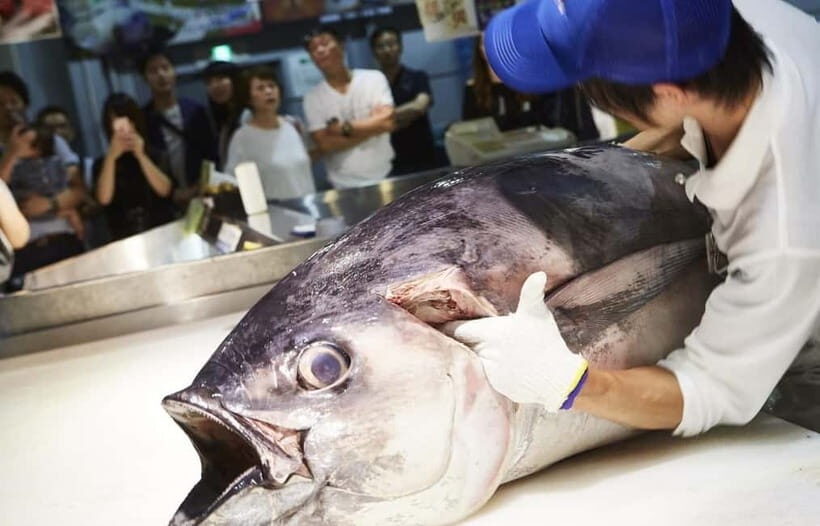
The highlight is the live tuna cutting show. It’s narrated and built around tuna anatomy and precision cutting—fast hands, clear explanations, and a lot of “how do they do that so cleanly?” energy. Just know timing is part of the deal: the cutting show happens 2–3 times per day, and the cutting time is random, so you’re not guaranteed to see it at a specific clock moment.
Important reality check: the show may be canceled due to weather or unforeseen circumstances. If seeing the tuna cutting show is your number one reason for booking, you’ll still enjoy the market even if it’s canceled—but I’d go in ready for the possibility.
Lunch on your own: build a seafood plan without stressing
Lunch is not included, and you’ll have free time afterward (lunch at your own expense). That’s actually a good model here because seafood menus are personal: some people want a tuna sashimi bowl, others want grilled cuts, octopus rice, or something a little sweeter.
The souvenir zone is also part of your market time. If you like bringing home seasonings or seafood gift items, you’ll find plenty to choose from.
One more useful angle from the market experience: you may find options to buy seafood and have it cooked at BBQ-style setups (some areas within the market offer cooking tables). That can be a fun way to turn your browsing into a meal—if it’s running on your day.
Practical packing note: bring cash, and have your camera ready. You’ll be tempted to buy small items on the spot.
Shirahama’s ToreTore Onsen: soak in 1,350 years of springwater
After the market, you head toward Shirahama. The hot spring stop is listed as Toretore Onsen (optional experience)—so you can decide based on your energy level and the day’s schedule.
This onsen is described as having over 1,350 years of history. It’s also noted as one of Japan’s oldest and most famous resorts, with references in ancient texts and historical visits by emperors.
What makes it practical for your body: the onsen includes the springwater features you’re paying for. You’ll hear about:
- Japan’s first salt-stone bedrock bath
- sodium bicarbonate spring water, often described as skin-friendly
If you’re thinking about comfort after a day of walking and coastal steps, this is a smart reset moment.
Tattoo note: entry may be restricted if you have tattoos. If this applies to you, it’s worth confirming in advance.
Senjojiki rock plateau: the ocean view that rewards the stop
From Shirahama, you stand above the Pacific at Senjojiki, with about 30 minutes for photos and sightseeing. Senjojiki is known for layered rock slabs and an expansive look out toward the sea.
Here’s the best way to time your mindset: don’t assume you’ll get the “perfect sunset.” But if your timing lines up, it’s the kind of view where you can feel the day slow down—the horizon meeting the sky, and the wind doing the rest.
You’ll want to keep it simple:
- Get your shots early.
- Then walk a little, find a spot where you can see the layers of rock and open water.
- Don’t over-plan; the ocean changes everything.
Sandanbeki caves and the 36-meter elevator ride
Next up is Sandanbeki Cave, also around 30 minutes for photo stops and sightseeing. This is the “below the surface” contrast to the cliff viewpoints.
You’ll take an elevator about 36 meters down to reach sea-level caves. These caves are described as having ties to Heian-era pirates, and there are exhibits recreating parts of that era’s storytelling. Natural erosion has shaped the rock formations, so even without the pirate theme, the cave geometry is the draw.
Is it worth the time? For most people, yes—because it’s a different sensory experience. One stop is open wind and bright cliffs. The next is cooler air and rock textures close enough to notice.
Admission to Sandanbeki cave is listed as optional, so check what’s included in your exact package details. Either way, you’ll be in the right area to decide on the spot.
The itinerary rhythm: how 10 hours feels in real life
This whole experience is described as 10 hours, including transport and sightseeing blocks. In practice, you’re looking at:
- a morning bus ride to Wakayama
- Kishi Station and cat-themed exploration
- a market window with a guided component and lunch time you control
- an optional onsen soak
- ocean cliffs and caves
- then the ride back to Osaka
What makes it work is the pacing variety. You’re not doing six “stand and stare” photo stops in a row. You get a guided station story, a guided market with a live performance element, then you shift to soaking and coastal viewpoints. It’s built for different kinds of traveler energy.
One potential drawback you should plan around: if weekends or peak seasons add traffic, the guide may adjust the order of attractions or change durations. That’s normal for day trips, and it’s part of how you stay on schedule.
Price and value: why $83 can make sense (and when it won’t)
At $83 per person for a 10-hour day trip with round-trip transportation, a multilingual guide, and included entrances/transport pieces, you’re paying for three things:
1) the driver + coach (you’re not stitching transit yourself),
2) guided storytelling where details actually matter (Tama legend, market context),
3) the themed train ride connection to Kishi Station.
If you like the combo—cat station story + seafood market + hot springs + coastal views—this is good value. You’d spend time and effort getting all these pieces separately, and you’d likely lose the convenience of being guided through timing, queues, and where to stand to see things.
When it might not be the best fit:
- If you came only for the cat train, remember it’s short.
- If you’re laser-focused on seeing the tuna cutting show at a specific time, remember it can be canceled.
- If you expect a full guided walking tour of every market corner, you’ll get guidance, but there’s also room to browse and choose lunch.
Who should book this Wakayama cat-and-coast day trip?
This tour fits best if you want variety in one day without DIY stress. It’s a strong choice for:
- families and couples who like a mix of cute + scenic + food
- seafood fans who want the drama of a live tuna cutting show
- people who also enjoy traditional sightseeing like hot springs and historic coastal areas
- anyone who likes clear organization from a guide like Tiger, who keeps visitors updated and helps with the flow
The tour is not suitable for wheelchair users, so if mobility is a concern, you’ll need a different format.
Should you book this Osaka to Wakayama tour?
I think you should book it if you want a single day that hits four satisfying beats: a cat legend, a short cat train moment, a hands-on seafood market experience with live cutting, and a coastal finale with Senjojiki and Sandanbeki plus an optional soak.
Hold off or consider other options if your priorities are extremely narrow (like only long cat-rail time) or you’re traveling when weather could easily disrupt the tuna cutting show. Even then, you’ll still be in a seafood market and on a beautiful stretch of coastline—but the live show is the variable.
If you like your Japan days organized, story-rich, and practical, this one is a solid match.
FAQ
Where is the meeting point?
You meet at Nipponbashi Station Exit 2 in the Namba/Shinsaibashi area, at 1-chōme-3-6 Nipponbashi, Chuo Ward, Osaka (542-0073).
What time does the tour start?
The pickup time is 8:30am.
How long is the tour?
The experience duration is about 10 hours.
What is included in the price?
Included items are the cat-themed train ride, round-trip transportation by air-conditioned bus, multilingual tour guide, and costs like expressway tolls, vehicle fuel, parking, and a professional driver.
Is lunch included?
No. Lunch is not included, and you’ll have free time to buy lunch on your own.
Is the hot spring entry included?
The onsen is optional, so hot spring entry is not included.
Will I see a tuna cutting show?
There is a live tuna cutting show, described as happening 2–3 times per day with random cutting time. It may be canceled due to weather or unforeseen circumstances.
How long is the cat-themed train ride?
The train experience time is around 15 minutes.
Are tattoos allowed in the hot springs?
Entry to the hot springs may be restricted if you have tattoos.
Is the tour wheelchair accessible?
No. It is not suitable for wheelchair users.