REVIEW · GIFU
Private Afternoon Cycling Tour in Hida-Furukawa
Book on Viator →Operated by SATOYAMA EXPERIENCE · Bookable on Viator
Rice fields and bike bells are the soundtrack. This afternoon cycling tour in Hida-Furukawa pairs an easy 22 km ride with real local stops, guided history, and Satoyama countryside views most people never see.
I really like the small group size (up to 8), because it keeps the ride personal and lets your guide answer questions without rushing you. I also like how the tour ties scenery to everyday life, from farm landscapes and home-style architecture to a market stop and local canal stories shared along the way.
One thing to plan around: food and drinks aren’t included, and the bikes don’t have a basket. Bring a small pack (and plan for water) so you’re not trying to carry everything awkwardly mid-ride.
In This Review
- Key highlights in plain terms
- Private cycling in Hida-Furukawa: what you’re really signing up for
- The 2:00 pm start and how the ride flows along the 22 km route
- Old-town streets to Satoyama farms: what you’ll notice from the saddle
- The farmers market stop and why it’s more than a quick photo break
- Canal stories, shrines, and the local details you remember later
- Family-friendly cycling: pace, safety gear, and real confidence boosts
- Bikes, what’s included, and the one thing you must bring yourself
- Guides make the difference: Ayato, Hisa, Nanami, and others
- Price and value: how $214.48 adds up for a 3.5-hour guided ride
- Weather and timing: what happens if the afternoon turns gray
- Should you book the Hida-Furukawa private cycling tour?
- FAQ
- How long is the afternoon cycling tour?
- What time does the tour start?
- Where is the meeting point?
- How far do you cycle during the tour?
- How big is the group, and is it private?
- What are the minimum age and height requirements?
- What’s included in the price?
- What is not included?
- What if it rains?
- Cancellation: can you get a full refund?
Key highlights in plain terms
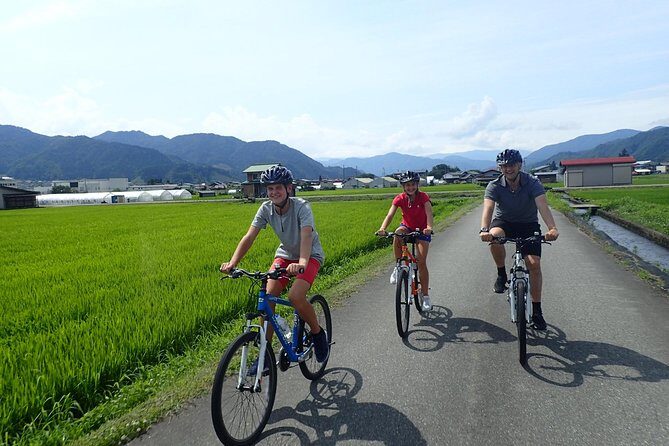
- Max 8 people, private feel: You get space to ask questions and stop for photos without a crowd crush.
- 22 km, relaxed pace: You’re cycling long enough to feel like an outing, but not in race mode.
- Market and daily-life moments: You’ll see local vegetables and the rhythms of countryside life.
- Guide-led culture stops: Expect stories about local features like canals (including why koi fish are there) and traditional areas.
- Snacks included, meals not: You’ll get some fuel, but you should still plan your own lunch or extra drinks before/after.
- Guides adapt to the group: Several guides are known for adjusting route and pacing for comfort and confidence.
Private cycling in Hida-Furukawa: what you’re really signing up for
This is an afternoon ride designed for people who want more than postcard scenery. You’re in the Gifu countryside, with Hida-Furukawa’s old-town feel at the start and Satoyama farmland coming into view as you pedal outward. The route is about 3 hours 30 minutes total, and it’s built around a relaxed pace with frequent chances to take in the surroundings.
The big value here is that you’re not just moving from point A to point B. Your guide is there to make the landscape make sense—how people live nearby, what parts of the area mean, and why certain places look the way they do. Guides across different tours (you may meet people named Ayato, Hisa, Nanami, Kazuki, Marino, Roy, and Kakuki) are repeatedly praised for being warm, helpful, and quick to match the group’s energy level.
You should also know this is “private” in the sense that it’s only your group—not mixed with random strangers. Still, the operator keeps it capped at up to 8 people, which is a sweet spot for interaction.
You can also read our reviews of more tours and experiences in Gifu.
The 2:00 pm start and how the ride flows along the 22 km route
The tour meets at the Furukawa office area in Hida-Furukawa and starts at 2:00 pm. You’ll return back to the same meeting point at the end, so you don’t have to think about logistics like drop-offs or transfers.
The ride itself is about 22 km, and the phrasing used for the tour experience is “gradual.” That matters because it usually means you get a mix: a first stretch that helps you settle in, then longer countryside segments where you can actually enjoy the view. You’ll cycle through an old town area, then out toward a farming village and the broader Satoyama surroundings.
In practice, what you’ll feel is the rhythm of a countryside loop:
- Start with streets that feel more built-up and historical.
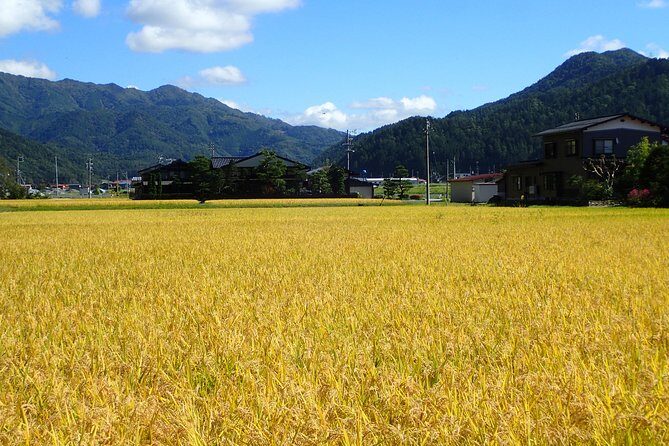
- Shift into open farmland and rice-field views.
- Hit small local stops (like a market) where you slow down for real-world details.
- Finish back into town with an easy, unhurried glide rather than a sprint to the finish line.
One more timing note: this is afternoon. In spring and early summer, it often means softer light for photos than mid-day, but also cooler conditions than evening. Bring that into your planning for water and comfort.
Old-town streets to Satoyama farms: what you’ll notice from the saddle
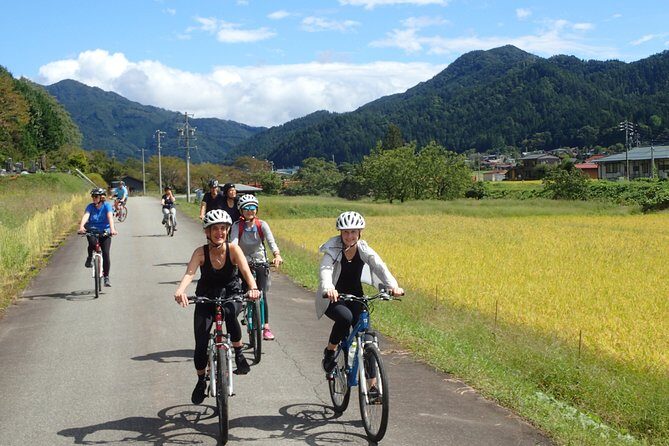
The route is designed to show you the countryside in layers. Early on, you’re in the historic town feel—older streets and the kind of built environment that makes rural Japan more tangible. As you keep cycling, the countryside opens up: rice fields, mountains in the distance, and that patchwork farming look that locals grow up with.
A key detail: this tour is not only about “pretty views.” It’s about the way daily life is laid out. You may pass areas with farmland edges lined by local vegetables, and you’ll likely see huge traditional folk houses scattered through the area. Those houses aren’t just scenery; they help you understand how communities were built around agriculture and seasonal work.
You’ll also get the sense that Satoyama isn’t wilderness. It’s managed countryside—fields, canals, and villages that show how people interact with the land year after year. That’s why the pace is described as relaxed: you want time to look, not just pedal past.
And yes, rice fields are a highlight, but you’ll probably remember the small “in-between” moments more: the canal-side details, the quiet farm paths, and the way your guide turns a simple stretch of road into a story about how the area works.
The farmers market stop and why it’s more than a quick photo break
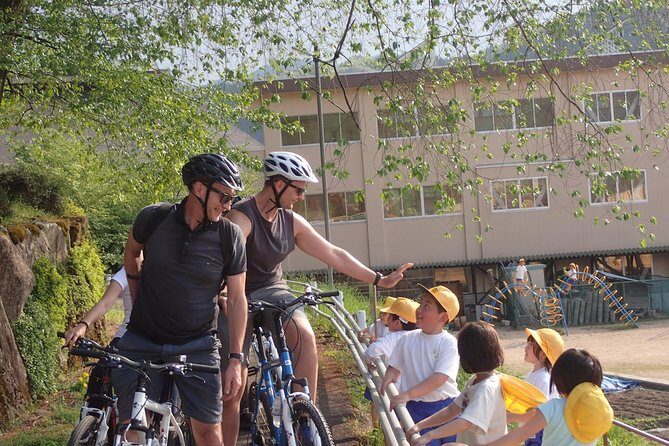
One of the most consistently praised parts of this tour is the stop connected to local food. You’ll see a market area where local vegetables line up, and it’s treated like a learning moment, not a tourist pit stop.
Why this matters: countryside markets are where you can spot what’s actually being grown and eaten locally. Even if you don’t buy much, it’s a direct window into daily life. For many people, this is the part that turns a cycling tour into a cultural one.
Guides also tend to make it practical. In the feedback you’ll see mentions of guidance about local wildlife and advice that makes the area feel less abstract. If you’re the type who likes to ask, bring questions. A market stop is a natural place to learn how locals think about seasons, produce, and routines.
Canal stories, shrines, and the local details you remember later
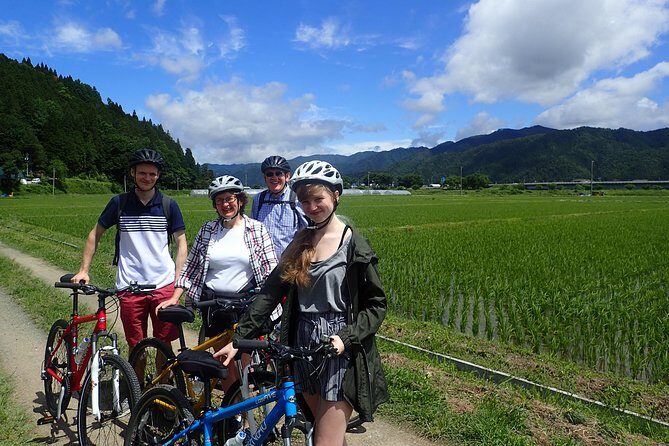
The tour isn’t strictly “ride and see.” It’s ride and understand. One standout example you may hear about during your stop-and-go pacing is a story related to koi fish in the canals—why they’re there and what it connects to in local life.
You may also pass and/or stop near shrines and other small religious-cultural touchpoints that are woven into everyday spaces. These aren’t staged set pieces. They’re part of the area’s rhythm, which is why a guided ride can change your perspective from sightseeing to noticing.
Here’s what to expect in terms of how you’ll experience these details:
- You pause, listen, and then you ride again.
- Your guide gives a reason for what you’re seeing.
- You get a few seconds to look on your own afterward, so it lands in your memory instead of becoming a lecture.
This is the kind of storytelling that works best at a slow biking pace, because you’re not fighting traffic or a tight schedule. You’re moving, but you’re still in “observe mode.”
Family-friendly cycling: pace, safety gear, and real confidence boosts
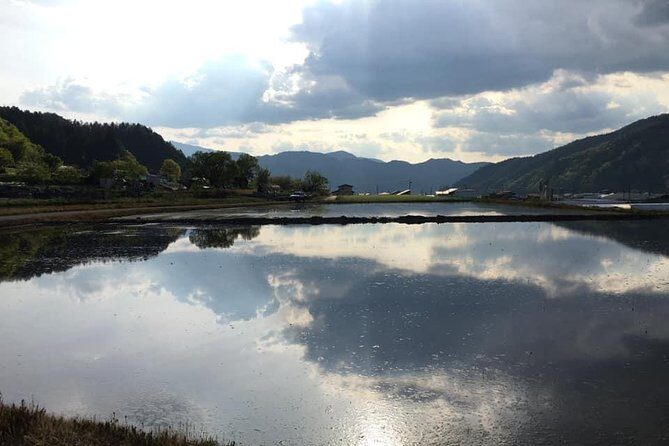
The tour includes a helmet and is geared toward riders who want an enjoyable countryside outing, not a technical cycling challenge. Feedback includes a first-time cyclist who hadn’t ridden in over 20 years, and guides who supported confidence and safety. That’s a big deal because it tells you the route and guidance aren’t only built for experienced riders.
If you’re wondering about the effort level, the general vibe from the experience is that it’s easy. That doesn’t mean you won’t feel like you biked—22 km is still meaningful—but it’s described as a relaxed ride where your guide helps you match the group’s ability.
Age minimum matters too:
- Minimum age is 6 years
- Minimum height is 125 cm (about 4.1 ft)
So yes, it can suit families, including kids around that height, but it also depends on the kid’s comfort riding a bike for the time.
If you’re traveling with mixed comfort levels, you’ll probably like that the guides are known for adjusting to the group—whether that’s slowing down, modifying how the route feels, or simply giving extra reassurance.
Bikes, what’s included, and the one thing you must bring yourself
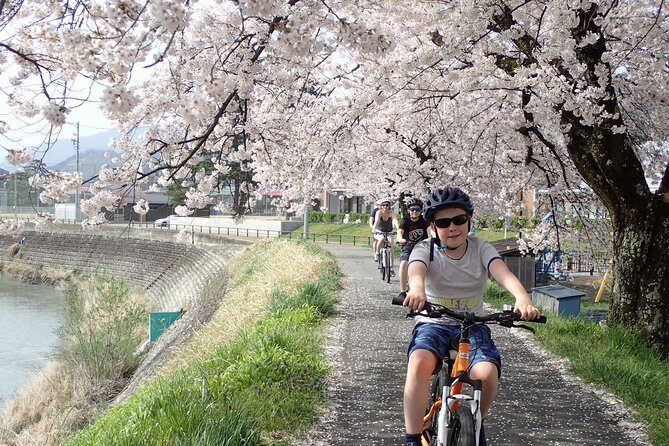
Included in your tour:
- Local guide
- Bicycle use
- Helmet
- Insurance
- Local taxes
- Snacks
Not included:
- Food and drinks
- No bike basket
That last part changes what you should pack. Since the bike doesn’t have a basket attached, plan to carry your essentials: water bottle, a light layer, and anything you need if you get snack-hungry early. If you’re the type who likes a small bag for phone/cash, bring a compact one.
You might also encounter moments like a tea-and-biscuit style pause—some guides are noted for welcome snack stops—but don’t count on a full drink refill being part of the plan. With food and drinks not included, you’ll want to start the ride properly fueled.
For comfort, bring:
- Water
- Sunscreen/hat if the afternoon is bright
- A thin jacket for temperature swings
- Your own cash or card for any optional purchases at stops
Guides make the difference: Ayato, Hisa, Nanami, and others
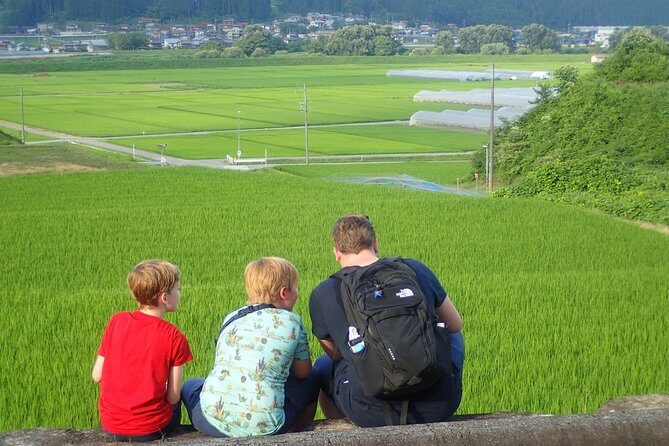
This is the part I’d actually optimize for when choosing your tour. The mechanics are solid (bikes, helmets, a route), but the experience lives or dies with the guide’s ability to connect you to the area.
From the names that come up again and again—Ayato, Hisa, Nanami, Kazuki, Marino, Roy, and Kakuki—you see a consistent pattern:
- Guides are described as warm and supportive.
- They share history and culture in a way that feels conversational.
- They adjust the tour to the group’s cycling level and children’s ages.
- They make time for questions and photos.
Even in a situation where rain shortened the cycling for at least one group, the guide didn’t just stop caring. The plan shifted to showing town spots and museums, which is a helpful sign that the operator thinks about the whole outing, not just the biking portion.
If you’re nervous about cycling or you want more than surface explanations, that guide flexibility is what makes the tour feel worth it.
Price and value: how $214.48 adds up for a 3.5-hour guided ride
At $214.48 per person, this isn’t a budget activity. But it also isn’t just a bike rental. You’re paying for:
- A local guide for about 3.5 hours
- Bike + helmet provided
- Insurance included
- Local taxes included
- Snacks included
- A small-group cap of 8 people
Private touring usually means you avoid the stress of managing a big crowd while trying to ask questions or stop for photos. Also, countryside cycling guides often spend extra time on safety checks and pacing, which is part of why the ride feels relaxed instead of chaotic.
If you’re traveling as a family or a small group who wants a guided, low-stress countryside day, the price can start to make sense fast. The value improves when you consider that you’re not just getting exercise—you’re getting context, cultural stories, and practical stops like a market.
If you’re a solo rider who already knows the area well and just wants a bike for a quick spin, you might find cheaper options elsewhere. But if you want the local layer, this is the kind of setup that pays for itself.
Weather and timing: what happens if the afternoon turns gray
This tour runs in the afternoon, so you’ll feel weather more than you would on a quick morning dash. In at least one recent experience, rain caused the cycling portion to stop early. In that case, the guide shifted the time to the town and museums, which gave the day a different shape without leaving the group stranded.
What you should do: check the weather the morning of your tour, pack a light layer, and be mentally ready for the plan to adjust. When guides are experienced, rain doesn’t have to mean disappointment—it can mean a pivot.
Should you book the Hida-Furukawa private cycling tour?
Book it if you want a countryside day that feels real, not just scenic. This tour fits best if you like:
- Easy cycling with guidance and safety support
- Cultural stories tied to what you’re actually seeing
- Small-group touring (up to 8) with time to ask questions
- Market and daily-life stops, not only viewpoints
Skip it (or at least rethink) if you’re the kind of rider who needs everything covered for food and drinks, since snacks are included but meals and drinks are not. Also note there’s no bike basket, so pack smart.
My final take: if you’re visiting Hida-Furukawa and you want to spend a calm afternoon getting around on two wheels—past old town lanes and out into Satoyama—this is a very strong choice.
FAQ
How long is the afternoon cycling tour?
It runs for approximately 3 hours 30 minutes.
What time does the tour start?
The start time is 2:00 pm.
Where is the meeting point?
The meeting point is at 11-32 Furukawachō Ninomachi, Hida, Gifu 509-4235, Japan.
How far do you cycle during the tour?
The route is about 22 km long.
How big is the group, and is it private?
The tour is private for your group, and it is capped at a maximum of 8 people per booking.
What are the minimum age and height requirements?
Minimum age is 6 years, and the minimum height is about 125 cm (4.1 ft).
What’s included in the price?
Included are the local guide, bicycle use, helmet use, insurance, local taxes, and snacks.
What is not included?
Food and drinks are not included, and there is no basket attached to the bike.
What if it rains?
In at least one instance, rain caused the cycling to stop early and the guide adjusted to show the town and museums instead.
Cancellation: can you get a full refund?
Yes. You can cancel for a full refund up to 24 hours before the experience’s start time.