REVIEW · ONNA
Tea Ceremony experience with simple kimono in Okinawa
Book on GetYourGuide →Operated by SASAGIRIAN OKINAWA · Bookable on GetYourGuide
A tea room is a different world, even in Okinawa. This experience pairs kimono dressing with a guided tea flow that teaches etiquette, tool care, and how the ceremony’s steps fit together. I like that it’s not just watching, it’s doing, from the first hand cleanse to your final bowl of matcha.
What I especially like is the professional, detailed instruction delivered in English (with Japanese support) and the calm, well-paced atmosphere. You’ll also get to taste both Okinawan and Japanese sweets, then make and drink the bitter tea you prepared yourself. One thing to consider: you’ll sit for parts of the ceremony, and it isn’t suitable for wheelchair users.
In This Review
- Key things you’ll notice
- Tea ceremony in Okinawa: calm ritual with local flavor
- Getting into your simple kimono and learning the flow
- Inside the tea room: scroll, flowers, and utensils you must respect
- Ryu-Rei-style seating: sweets first, then the bitter tea
- Tool care lessons: silk cloth handling and tea utensil cleansing
- Make your own matcha: hot water, green tea powder, your own bowl
- Photos at the gold folding screen and the origami crane souvenir
- Price and value: what your $83 includes in Okinawa
- Who should book this tea ceremony, and who should skip it
- Should you book this Okinawa tea ceremony experience?
- FAQ
- How long is the tea ceremony experience?
- Is a kimono included?
- What language support is available?
- Is it a small group?
- Will I make and drink my own matcha?
- What’s included besides tea?
- Is it accessible for wheelchair users, and is it suitable for young children?
- Should I book?
Key things you’ll notice
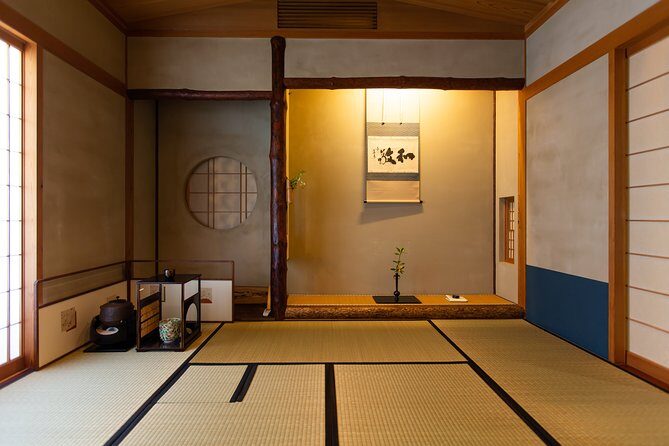
- A tiny entrance and proper entry manners in the traditional tea room
- Ryu-Rei-style seating with a gentler tea-room setup using tables and chairs
- Okinawan + Japanese sweets before tasting the bitter tea
- Hands-on matcha prep using hot water and green tea powder in your own bowl
- Photos at a gold folding screen plus a small origami crane souvenir
- Small group, up to 6 with English/Japanese instruction and careful tool guidance
Tea ceremony in Okinawa: calm ritual with local flavor
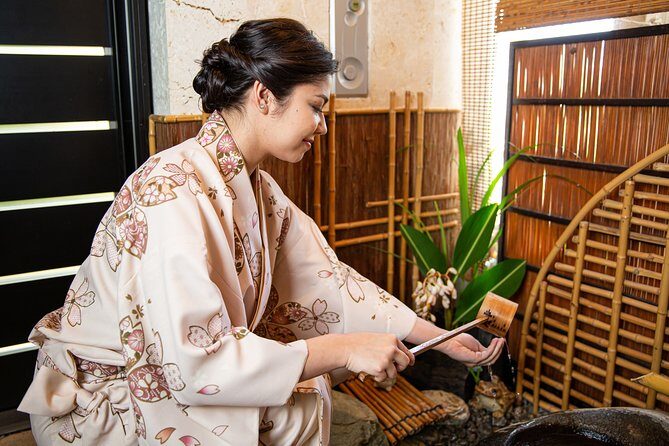
Okinawa is famous for beaches and big energy. This experience slows everything down on purpose. You’ll step into a traditional tea setting where even small actions matter, like how you enter the tea room and how you handle the utensils.
What makes it feel especially worthwhile here is the mix of Japanese ceremony structure with Okinawan sweets alongside Japanese sweets. That pairing helps you connect the ceremony to Okinawan taste without turning it into a watered-down performance. You get the rhythm of tea culture and the local food angle at the same time.
You can also read our reviews of more tours and experiences in Onna.
Getting into your simple kimono and learning the flow
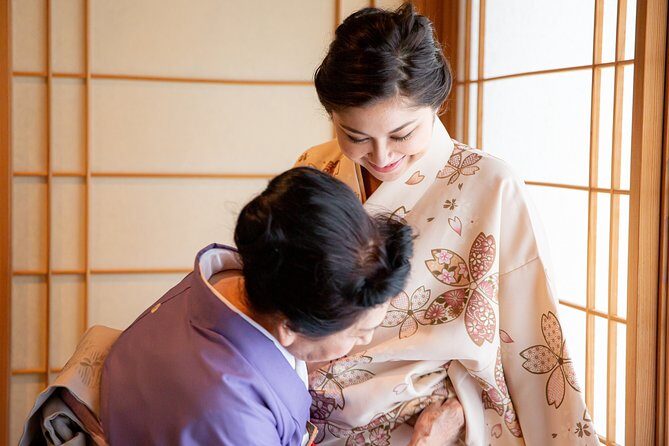
Before tea even starts, you’ll change into a simple kimono. That moment is more than a costume. It physically cues you to slow down and pay attention, because the ceremony actions assume you’re dressed in a certain way.
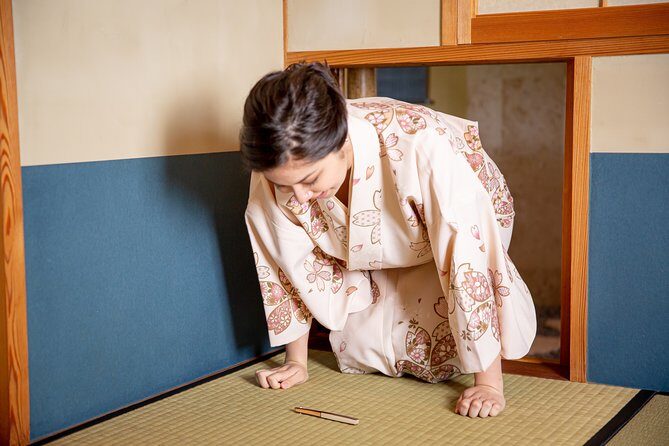
The routine then moves into cleansing your hands. It sounds basic, but it’s an important bridge between outside life and tea-room etiquette. You’ll also learn what to do as you enter—specifically, how to approach the small entrance of the tea room.
A practical tip: go in comfortable and ready for instructions. When the pace is guided and you follow the instructor’s cues, everything feels smooth—even the first-time parts.
Inside the tea room: scroll, flowers, and utensils you must respect
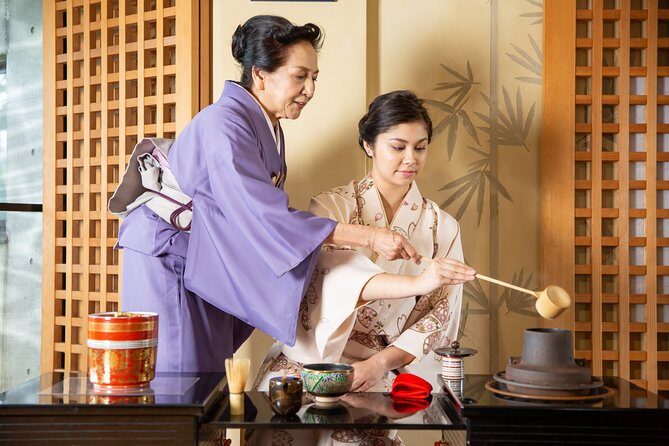
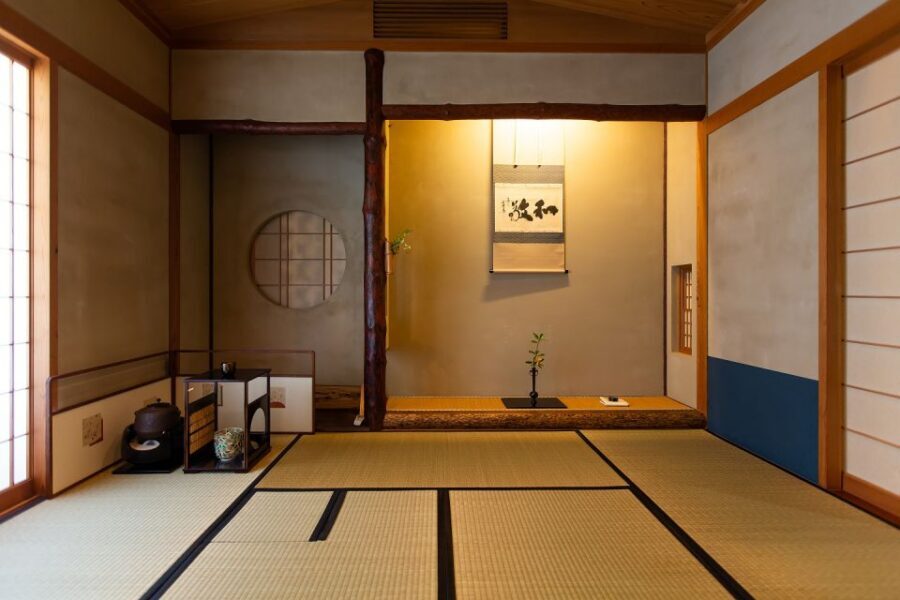
Once you’re in, you’ll get a structured introduction to the tea space. You’ll learn the manners for entering the tea room and what to appreciate, including the hanging scroll, flowers, and tea tools. This is where the ceremony starts teaching you how to look, not just what to do.
Then comes a big theme of tea culture: respect for tools. You won’t treat utensils like props. The instructor will show you how to view and handle each item properly, and you’ll practice those habits as the ceremony progresses.
The tea room approach is also part of why this feels rare. A traditional tea-room flow isn’t something you stumble across casually in Okinawa. If you want an experience that feels specific to Japanese tea culture instead of a generic “cultural activity,” this is built around that.
Ryu-Rei-style seating: sweets first, then the bitter tea
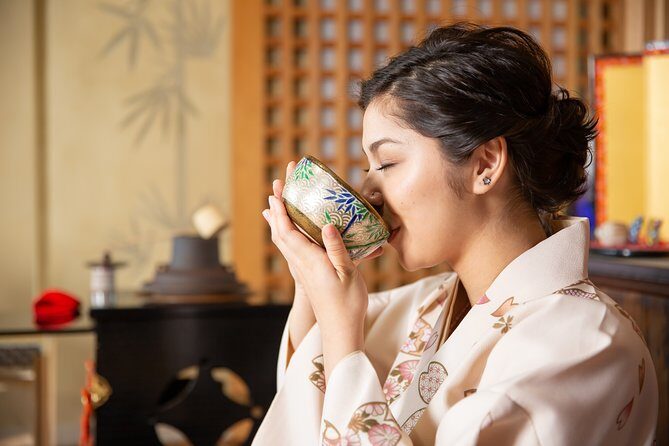
After the tea-room introduction, you move to the seating area set up for the ceremony: Ryu-Rei-style tables and chairs. This matters if you’re worried about being uncomfortable. Instead of making you “figure it out” with unfamiliar seating, the ceremony uses a setup meant for the experience.
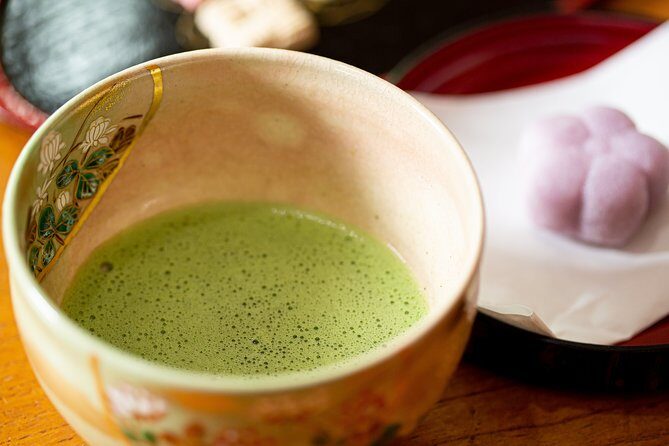
At the tables, you’ll start with tasting Okinawan and Japanese sweets. This is not an afterthought. Sweet first changes your palate and mood. It also gives you a social rhythm: you eat, you settle in, then you transition to the tea.
Then the ceremony shifts to the real signature: the bitter tea. You’ll taste the tea after the sweets, which helps you understand why tea culture often pairs flavors and transitions instead of treating everything like separate snacks.
If you’re curious about “what’s the point of bitter?” this sequence gives you an easy answer. You feel the contrast clearly because you taste it in order.
Tool care lessons: silk cloth handling and tea utensil cleansing
One of the most “you’ll remember it later” parts is the focus on how to treat the tools. You’ll learn how to handle the silk cloth and how to cleanse the tea tools as part of proper preparation.
This section is valuable because it explains that ceremony isn’t just about taste. It’s about hygiene, attention, and precision. You’ll feel the difference between casual drinking and the intentional process behind tea.
A small consideration: if you rush or skip steps, the experience won’t feel right. The ceremony is designed so that each tool action has meaning. Plan to slow down and follow the instructor’s hand movements.
Make your own matcha: hot water, green tea powder, your own bowl
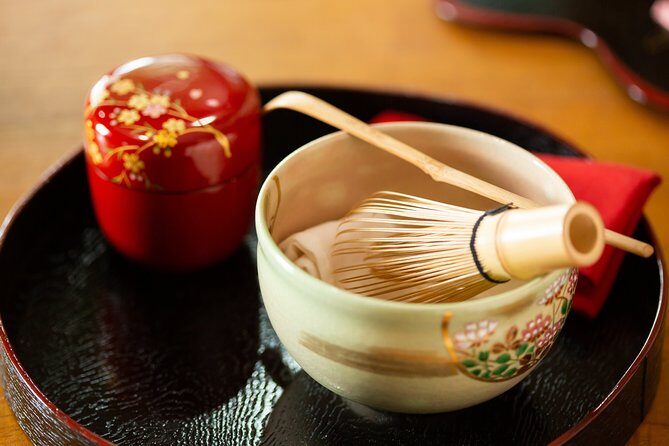
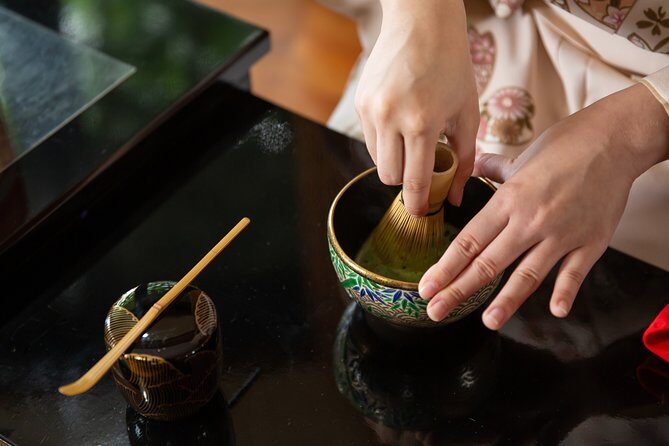
Now you get to the hands-on highlight: making your own green tea, including matcha. You’ll add matcha green tea and hot water into the tea bowl and learn the method for preparing it.
This is the part that turns the experience from “education” into something more personal. The tea isn’t just served to you. It’s made by you, with guidance so you’re not guessing.
Then you taste what you made. That first sip is where the training pays off. You’ll have context for why the process matters and why the tea’s taste shows up the way it does.
I like that you’re not left alone with a set of utensils and a vague instruction. The instructor stays close enough that you can correct small movements and understand the logic behind the steps.
Photos at the gold folding screen and the origami crane souvenir
The experience includes photography, including a photo spot in front of a gold folding screen. It’s a fun moment because it looks very “traditional” in a way that matches what you just did in the tea room. You’re not taking random travel photos; you’re photographing a ritual setting.
You’ll also receive an origami crane souvenir. It’s small, but it makes the experience feel complete. A souvenir like this works best when it connects to the atmosphere you experienced, not just when it’s easy to hand out.
If you care about keeping memories, this is one of the better inclusions. The gold-screen photo makes it feel intentional rather than a quick snapshot at the end.
Price and value: what your $83 includes in Okinawa
At $83 per person for about 90 minutes (the flow is listed around 75 minutes), this sits in the “experience” category rather than the “cheap activity” bucket. But the value is strong because the price bundles the things that often cost extra elsewhere.
Here’s what’s included:
- Simple kimono rental
- Tools use fees and instruction fee
- Okinawan and Japanese sweets
- Matcha green tea
- Photography
- Origami crane souvenir
When you price those items separately, the ceremony still has a practical advantage. You’re paying for more than tea. You’re paying for structured etiquette teaching, careful tool guidance, and a guided experience that culminates in your own matcha.
This is also a small group format (up to 6), which usually means more attention per person. In a tea ceremony, that matters. The instructor needs to correct small habits, and you benefit from being in a group where that can happen.
Who should book this tea ceremony, and who should skip it
This works best for:
- People who like structured cultural activities with clear steps
- Anyone who wants Japanese tea culture with Okinawan touches (especially the sweets)
- Couples, solo travelers, or small groups who appreciate hands-on learning
- Visitors who want English instruction support
A couple of practical notes:
- It isn’t suitable for wheelchair users.
- It’s not suitable for children under 3.
If you’re someone who gets impatient with slower traditions, this can still be a good fit because the activity is guided and timed. You’ll always know what comes next—kimono, manners, sweets, tool care, then your matcha.
Should you book this Okinawa tea ceremony experience?
If you want a calm, authentic way to understand Japanese tea culture in Okinawa, I think this is an easy yes. The big reasons are the included kimono, the careful etiquette teaching, and the hands-on matcha prep that ends with you tasting what you made. Add in the gold folding screen photo moment and the mix of Okinawan and Japanese sweets, and it feels like more than a one-time show.
You might think twice only if your mobility needs are a factor (wheelchair access isn’t available) or if very small children are coming with you. Otherwise, for a memorable cultural half-day highlight, this is the kind of experience you can look back on and explain clearly.
FAQ
How long is the tea ceremony experience?
The experience is listed as 90 minutes, with the ceremony flow noted as about 75 minutes. Check available starting times when you book.
Is a kimono included?
Yes. The simple kimono rental fee is included.
What language support is available?
Instruction is available in English and Japanese.
Is it a small group?
Yes. It’s limited to a small group of up to 6 participants, with a minimum of 2 people.
Will I make and drink my own matcha?
Yes. You’ll learn how to add matcha green tea and hot water to prepare your own tea and then taste it.
What’s included besides tea?
You’ll also have Okinawan and Japanese sweets, photography, and an origami crane souvenir. Tool use and instruction fees are included too.
Is it accessible for wheelchair users, and is it suitable for young children?
It is not suitable for wheelchair users. It’s also not suitable for children under 3 years old.
Should I book?
Book if you want hands-on matcha, guided etiquette, and a true traditional tea-room experience in Okinawa, with kimono and a small-group pace. If mobility access is a concern or young kids are traveling, you may want to choose a different activity.