REVIEW · OSAKA
Nara Early Morning Tour (Osaka Departure Option)
Book on Viator →Operated by GuideMe Japan · Bookable on Viator
A morning tour can change the whole feel of Nara. This one is built for early starts, so you can see the big-name temples and shrines before the day crowds roll in. You also get a clear finish time, since the tour wraps before noon at Kintetsu Nara Station.
What I liked most is the small group size (up to 8) and the guide attention you get while walking. I also like that the tour hits four major stops—Kofuku-ji, Kasuga Grand Shrine, Nara Park, and Todaiji—without wasting time. You’ll cover a lot, and the pacing stays friendly.
One thing to consider: this is a walking tour using public transportation, and it totals about 10,000 steps. If you’re not comfortable walking for hours, you may want to plan a slower day elsewhere.
In This Review
- Key points at a glance
- Why Nara feels calmer before noon
- Osaka-to-Nara logistics: small group, public transit, no private vehicle
- Stop 1: Kofuku-ji Temple and Japan’s dramatic pagoda
- Kasuga Grand Shrine lanterns: the walk that feels special
- Nara Park deer: sacred folklore plus real-life cuteness
- Todaiji Temple and the Great Buddha: the big finale
- Price and value: what $87.96 buys you (and what it doesn’t)
- What the guides are like, and why it matters on a walking day
- After the tour: using your pre-noon finish at Kintetsu Nara Station
- Should you book this Nara Early Morning Tour?
- FAQ
- How long is the Nara Early Morning Tour from Osaka?
- Where does the tour start in Osaka?
- Where does the tour end in Nara?
- What places does the tour visit?
- How many steps will I walk?
- How big is the group?
- Is Todaiji Temple admission included?
- Is the return transportation fee included?
- What’s the cancellation window?
Key points at a glance
- Early timing beats afternoon crowds, so photos and quiet moments are easier to get
- Up to 8 people means less shuffle and more personal guidance
- Four heavy hitters in one loop: Kofuku-ji, Kasuga Grand Shrine, Nara Park, Todaiji
- About 10,000 steps plus temple/stair time, so wear solid shoes
- Todaiji costs extra (800 yen), but other admissions are handled or free
- Finish before noon at Kintetsu Nara Station, giving you time to keep exploring
Why Nara feels calmer before noon
Nara gets busy, fast—especially around the park and the biggest temple areas. This tour is timed to help you experience the places people actually came for, while the streets are still manageable. That means you spend more of your attention on what you’re seeing, not on dodging slow crowds for the perfect angle.
The morning also helps with the deer and photo vibe at Nara Park. You’ll still see plenty of deer, but you’re less likely to be stuck behind tour groups when you want a clean shot or a moment of quiet.
Finally, the schedule is practical: it runs about 4 hours 30 minutes and ends before noon. So you can do a second activity the same day, whether that’s more Nara exploring or a quick Osaka/Kyoto sidetrip.
A few more Osaka tours and experiences worth a look



Osaka-to-Nara logistics: small group, public transit, no private vehicle
This is a walking tour that uses public transportation and no private vehicle. Translation: you’re moving like an independent traveler, just guided and organized. That can actually be a plus if you like learning how to get around instead of being chauffeured.
Your start point is very specific: Osaka Tourist Information Center inside the JR Osaka Station central concourse (Umeda area). You’ll want to arrive early so you’re not rushing when the tour is ready to go. The tour also notes that late arrivals may not receive a refund, so treat the meeting time as real.
The group stays small—maximum 8 people—which matters on a walking itinerary. It reduces the “line up and wait” feeling that can happen on larger tours, especially when you’re stopping at temple gates and walking through park paths.
And yes, you should plan on about 10,000 steps total. This isn’t just strolling from one viewpoint to another. Expect walking plus temple grounds, some stairs, and time on your feet at each major stop.
Stop 1: Kofuku-ji Temple and Japan’s dramatic pagoda
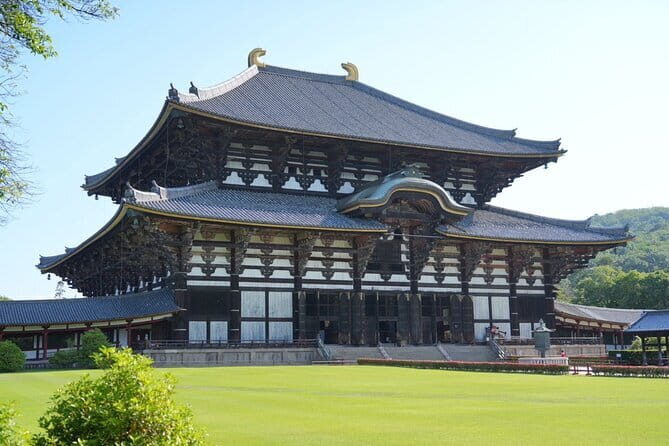
Kofuku-ji is a strong opener because it sets the tone: old, monumental, and easy to appreciate even if you know only a little Japanese history. The temple dates back to the time when Nara became Japan’s capital in 710.
The headline attraction here is the five-storied pagoda. It’s described as the second tallest wooden pagoda in Japan, only seven meters shorter than the tallest one. Even without going deep on architecture, you can understand why people stop and stare. The scale is hard to ignore, and it’s the kind of structure that makes you look up even when you think you’ve already done the postcard photos.
Admission is listed as free for this stop, which helps your budget early on. You’ll also get about one hour here, enough time to slow down, walk the grounds, and take pictures without feeling like you’re racing a clock.
Potential drawback: if you’re sensitive to height-focused scenery (lots of looking upward and walking around viewing points), you might find your neck gets a workout. I know that sounds funny, but it’s true with pagodas.
Kasuga Grand Shrine lanterns: the walk that feels special
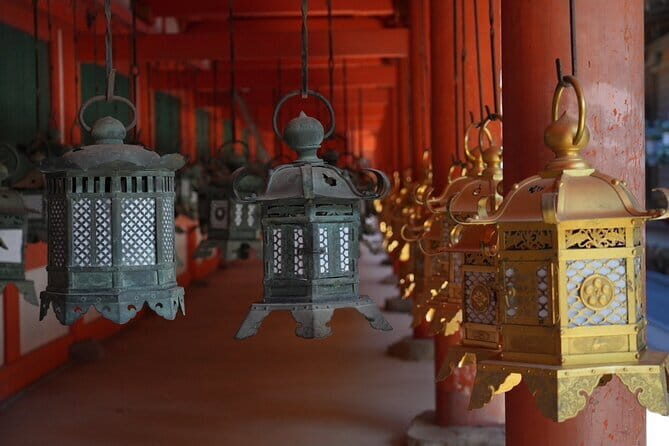
Kasuga Grand Shrine is famous for its lanterns—roughly 3,000 stone and bronze lanterns. The tour’s description also highlights that these lanterns are donated by worshippers, which gives the place more meaning than just “pretty lights.”
This is one of those locations where the value isn’t only in the main structures. It’s in the feel of the path and the gradual reveal of lantern-lined areas. Even if you’re focused on photos, you’ll often need a few stops to figure out where the light and angles work best.
Admission is listed as included, so you don’t have an extra line-item cost to worry about here. You’ll have about one hour at the shrine, which is a realistic amount of time to enjoy it without rushing.
A small practical note: lanterns are visually dense. If you try to “shoot everything” at once, you’ll miss the overall atmosphere. I recommend choosing a couple of strong frames and then letting your eyes adjust for the rest.
Nara Park deer: sacred folklore plus real-life cuteness

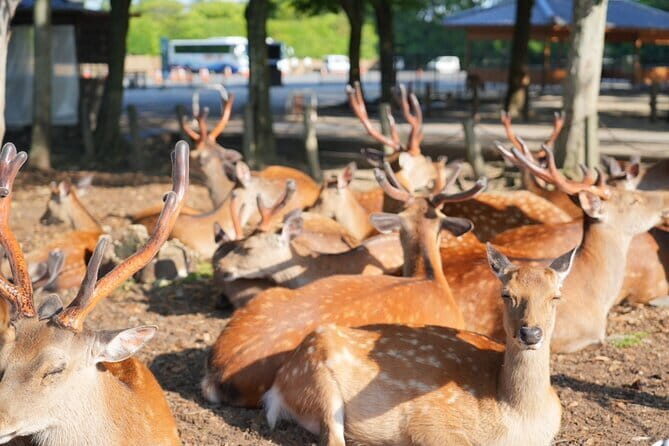
Nara Park is the part most people picture when they think of Nara. The tour notes that the deer are considered sacred, tied to a story involving one of the four gods in Kasuga Shrine riding a deer to Nara.
What makes this stop fun is that it’s not just temples and monuments. It’s an outdoor scene where you can slow down and watch deer wander through the park paths. And yes, they’re adorable.
The tour gives you about one hour here, and that pacing is helpful. You can do a quick loop for the main deer areas, then spend longer if you spot interesting moments or good photo angles. Early timing helps, too, because the park can get crowded later in the day.
Etiquette matters, even if no one scolds you. Treat deer like wildlife, not pets you can chase or crowd. If a deer approaches, stay still and let it decide. You’ll get better photos that way anyway.
Potential drawback: if you dislike animals in public spaces, this stop may not be your favorite. The good news is you’re not stuck for hours; you get a defined one-hour window before moving on.





Todaiji Temple and the Great Buddha: the big finale

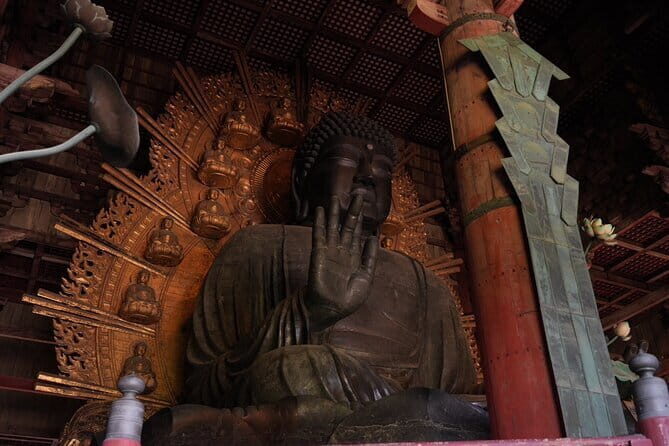
Todaiji Temple is the reason many people travel to Nara in the first place. The tour highlights its Great Buddha Statue, described as the biggest Buddha statue in Japan. It also mentions that the main hall was, until recently, the world’s largest wooden building.
This is one of those places where the scale does the explaining. You don’t need long speeches to understand what makes it impressive. You walk in, you look around, and the building itself tells you you’re in the heavyweight category of religious architecture.
Here’s the money part: the tour says Todaiji Temple admission is not included and lists it as 800 yen. Budget that ahead of time so you don’t have a surprise payment right at the last major stop.
You’ll have about one hour here. That’s often enough for the main hall and the key sights without feeling like you’re on a sprint. Also, because you’re finishing the temples before the city gets too packed, the vibe stays more comfortable while you’re inside.
Price and value: what $87.96 buys you (and what it doesn’t)

The tour price is $87.96 per person, and the value comes from a few practical items working together.
First, you’re paying for an English-speaking guide who organizes the route and keeps your stops efficient. With four major sites in one morning, that coordination saves time compared to doing everything solo while also trying to manage logistics.
Second, the tour includes the transportation fee from Osaka to Nara. That’s part of your cost that many do-it-yourself plans forget to account for until later.
Third, the admissions aren’t all extra. Kofuku-ji is free, and Kasuga Grand Shrine’s admission is included. Nara Park is a free public space. Only Todaiji has the extra 800 yen listed.
So what’s not included? Food and drinks are personal expenses, and Todaiji’s admission is the extra you should plan for.
In plain terms: if you want a guided hit-list morning that covers the main Nara icons with less hassle, this price starts to make sense.
What the guides are like, and why it matters on a walking day
One reason this tour stands out is the guide quality. Reviews specifically call out guides by name—Koh, Lin, and Soichiro—as being helpful and well-informed. The common theme is that they add context so the sites feel more connected instead of random stops.
Koh is also noted for practical help with what to do afterward. The important takeaway for you: the tour ends at Kintetsu Nara Station, and you’re expected to return on your own. On a packed day, that kind of guidance is useful.
Also, with a maximum group size of 8, the guide has less to juggle. You’re more likely to get clearer directions and get your questions answered while you’re already on the move.
After the tour: using your pre-noon finish at Kintetsu Nara Station
The tour concludes at Kintetsu Nara Station. Since it ends before noon, you get a genuine head start on the rest of the day. That’s great if you want to keep sightseeing in Nara, or if you’d rather switch gears and do Osaka/Kyoto next.
The tour also specifies one important transport detail: the fee from Osaka to Nara is included, but the fee on the way back is not included. So have a plan for your return fare and don’t assume it’s covered.
Practical suggestion: before you start, decide what your “Plan B” is if the deer or temple stops run a little longer than expected. You’ll finish early enough to adjust, but still plan to use the morning efficiently.
Should you book this Nara Early Morning Tour?
Book it if you want the classic Nara hits—Kofuku-ji, Kasuga Grand Shrine, Nara Park, and Todaiji—with less crowd stress and better photo timing. You’ll also like it if you value a guide who can explain what you’re seeing and help you stay on track during a walk-heavy morning.
Skip it if you want a totally relaxed day with lots of sitting breaks. This tour is about movement and seeing the big sites in a tight window, and it totals around 10,000 steps.
One more honest check: you’re responsible for getting back after it ends at Kintetsu Nara Station, and the way-back transport cost isn’t included. If that kind of logistics makes you nervous, go in with a simple return plan.
If you like efficient sightseeing done well, this is a strong way to experience Nara at its best—before the afternoon crowds arrive.
FAQ
How long is the Nara Early Morning Tour from Osaka?
The tour lasts about 4 hours 30 minutes.
Where does the tour start in Osaka?
It starts at the Osaka Tourist Information Center at JR Osaka Station, Umeda (JR大阪駅中央コンコース).
Where does the tour end in Nara?
It concludes at Kintetsu Nara Station.
What places does the tour visit?
You visit Kofuku-ji Temple, Kasuga Grand Shrine, Nara Park, and Todaiji Temple.
How many steps will I walk?
The tour includes walking about 10,000 steps.
How big is the group?
The tour has a maximum of 8 travelers.
Is Todaiji Temple admission included?
No. Todaiji Temple admission is not included and is listed as 800 yen.
Is the return transportation fee included?
The tour includes the fee from Osaka to Nara Station, but the fee on the way back is not included.
What’s the cancellation window?
You can cancel for a full refund up to 24 hours before the experience’s start time.