REVIEW · OSAKA
Osaka: Japan’s Oldest Temple & Bone Buddha Walking Tour
Book on GetYourGuide →Operated by DeepExperience, Inc. · Bookable on GetYourGuide
Bone buddhas turn grief into sacred art. This Osaka walk is a focused mix of early Buddhist architecture and a strangely human tradition: you start at Shitennoji and end at Isshinji, where cremated remains become Kotsubotoke. I especially love how the guide makes Shitennoji feel readable, from the temple’s Four Heavenly Kings theme to the logic behind its symmetrical layout.
The other big reason I like this tour is the contrast at Isshinji: you’ll stand before the striking modern main gate, then learn how Bone Buddhas are made from ashes of more than two million ancestors. One possible drawback: because it’s a tight 2-hour, guided walking format with set time at each stop, you won’t get long stretches of totally free wandering for photos or quiet pacing.
In This Review
- Key Points You’ll Actually Care About
- Start Where the Walking Begins: Shitennoji Stone Torii
- Shitennoji Temple: Prince Shotoku, Symmetry, and the Four Heavenly Kings
- Pure Land Garden: Western Paradise and the Sunset Connection
- What to Watch For (So This Doesn’t Feel Like a Lecture)
- Isshinji Temple: A Modern Gate with a Nearly 900-Year Memory
- The Bone Buddha (Kotsubotoke) Tradition: Cremated Ashes as Remembrance
- How the Two Temples Tell One Osaka Story
- The Guide Experience: Why This Tour Feels Human
- Pacing and Practical Comfort for a 2-Hour Walk
- Price and Value: Is $65 Worth It?
- Should You Book This Osaka Old Temple & Bone Buddha Tour?
- FAQ
- FAQ
- Where is the meeting point for the tour?
- How long does the Osaka Bone Buddha walking tour take?
- What temples will I visit?
- What is included in the price?
- What languages are available for the guide?
- Is free cancellation offered?
Key Points You’ll Actually Care About
- Shitennoji’s origins (founded 593): you’ll connect Prince Shotoku’s role to how Buddhism took root in Japan.
- Four Heavenly Kings explained: the temple’s symbolism isn’t just decor; it’s the story framework.
- Pure Land Garden + Amida’s promise: you’ll learn why the setting sun matters in Pure Land thinking.
- Isshinji’s modern main gate: tradition and design today sit side by side.
- Bone Buddha tradition (Kotsubotoke): cremation becomes remembrance, not just closure.
- A guide who ties religion to everyday Osaka: the best part is how the meaning lands in real life.
Start Where the Walking Begins: Shitennoji Stone Torii
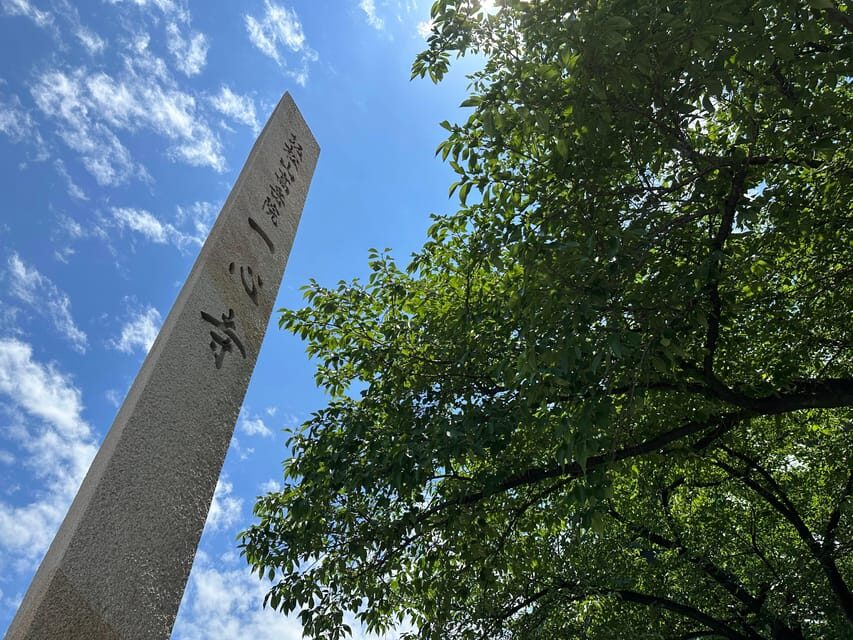
Your tour starts at the stone torii gate (Ishidori) at the main entrance of Shitennoji Temple, marked by a guide holding a sign with your name. The meeting point is a short walk from Shitennoji-mae Yuhigaoka Station, so once you arrive, you’re not fighting Osaka’s station maze for long.
Timing matters here. The whole experience runs about 2 hours, with the bulk of the time spent at Shitennoji first. That’s smart. You get context for what Buddhism was trying to do in early Japan before you hit Isshinji’s more emotionally direct, urban form of faith.
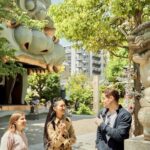
The tour is a private group, led by a professional guide in English (and Japanese as well). That matters for value, because temple tours can turn into a silent highlight reel. Here, you should expect the guide to explain what you’re looking at, not just recite facts.
You can also read our reviews of more walking tours in Osaka



Shitennoji Temple: Prince Shotoku, Symmetry, and the Four Heavenly Kings
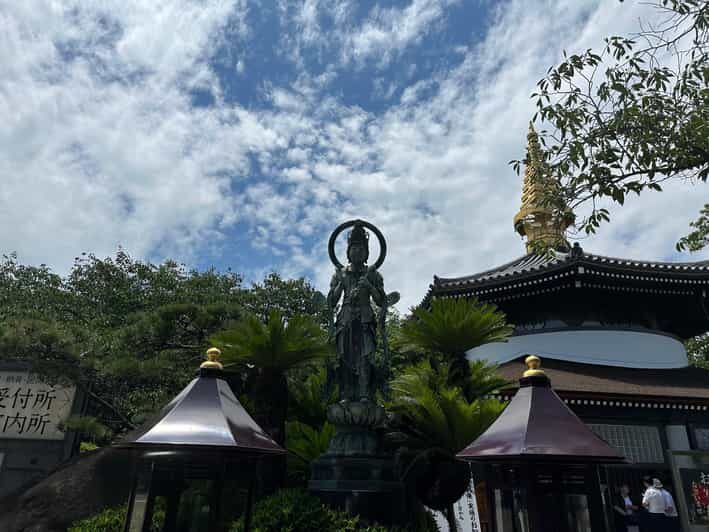
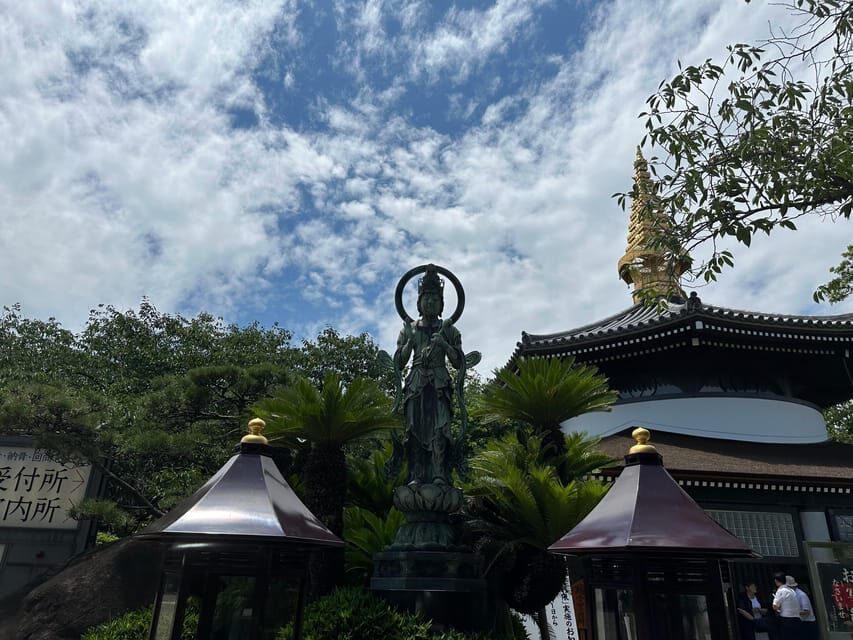
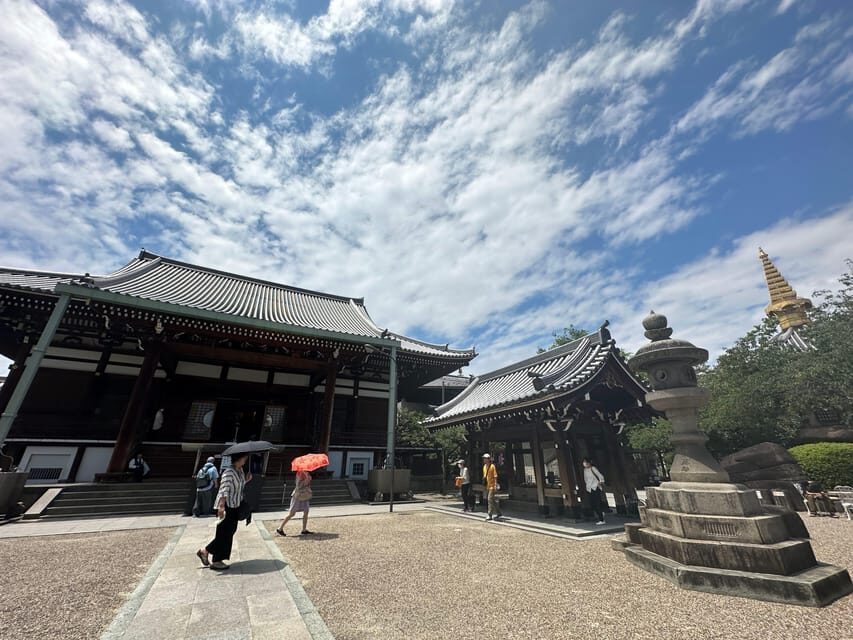
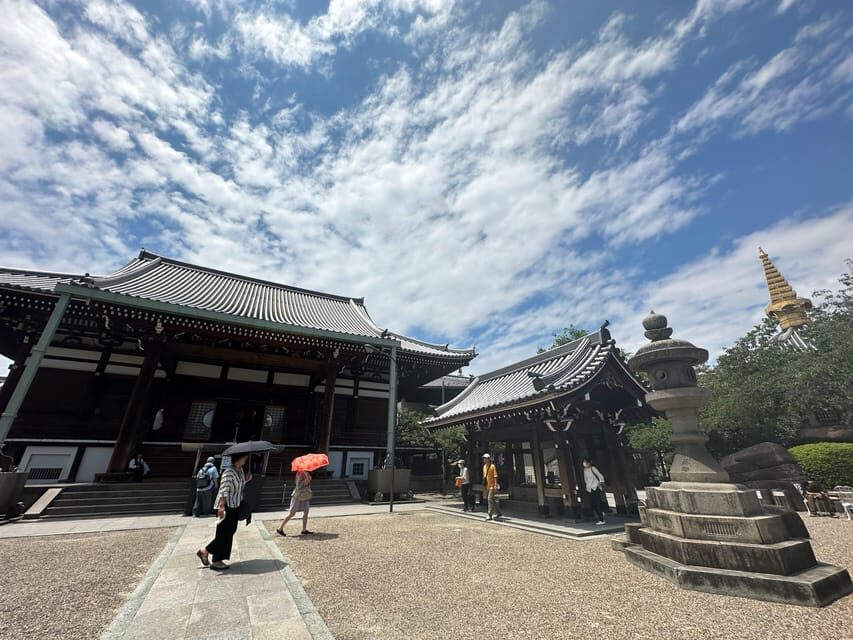
Shitennoji Temple is one of Japan’s oldest officially established Buddhist temples, founded in 593 by Prince Shotoku. When you hear that number, it’s easy to think, so what. The guide’s job is to make it practical: you’ll see how the place reflects an early moment when Buddhist ideas were being integrated into society, not kept on the sidelines.
One thing I really like about Shitennoji is that it’s designed to be understood. The central precinct is laid out symmetrically, and your guide will explain why. Early Buddhist design in Japan didn’t just care about being beautiful. It also cared about order—how a visitor should move, where attention should land, and what the space is trying to teach you without words.
You’ll also learn about the Four Heavenly Kings (Shitenno), the guardian deities believed to protect the nation. This theme isn’t some obscure footnote. It’s part of the emotional job of the temple. It tells you that early Buddhism in Japan was tied to protection and stability, not only personal spirituality.
Another meaningful detail you’ll hear is that the temple has endured fires, wars, and repeated reconstruction. Places like this aren’t static museum pieces. They’ve been rebuilt by real communities dealing with real setbacks. When your guide ties that history to what still feels continuous today, you start to see why temples keep their spiritual identity even after physical change.
Pure Land Garden: Western Paradise and the Sunset Connection
After the main precinct, the tour includes the Pure Land Garden. This is where you’ll shift from national protection to personal hope, because Pure Land Buddhism focuses on rebirth and salvation.
The garden is inspired by visions of the Western Paradise, and you’ll learn about Pure Land thought and Amida’s paradise. The guide will also connect something very visual—the setting sun—with the promise of rebirth. In other words, it’s not only a philosophy. It’s a practice of attention. You’re being taught how to read time and light as part of the religious message.
The area around Shitennoji is associated with sunset views, and the guide will help you understand why that connection matters. Even if you don’t hang around after the tour for more sightseeing, the idea will stick: religious meaning can be built into ordinary daily rhythms like evening.
What to Watch For (So This Doesn’t Feel Like a Lecture)
At Shitennoji, I’d focus on three things as you walk:
- Look at the layout and ask yourself where you’re being guided to stand.
- Notice how symbols connect to protection themes like the Four Heavenly Kings.
- Let the Pure Land Garden shift your mindset from society to salvation.
If you’re someone who usually rushes through temples, this part will slow you down in a good way.
Isshinji Temple: A Modern Gate with a Nearly 900-Year Memory
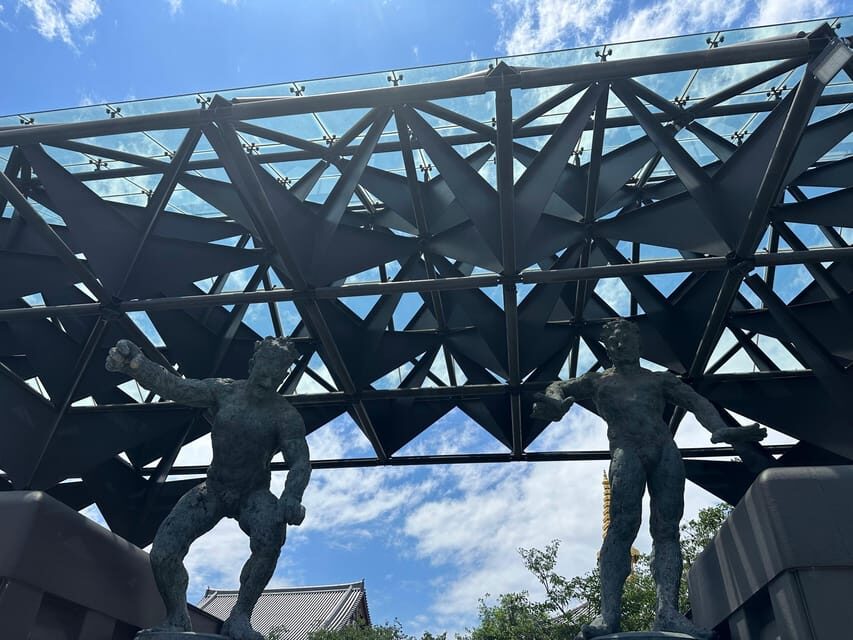
After Shitennoji’s older, more formal feeling, the tour moves to Isshinji Temple. This is where the tour’s contrast does its best work.
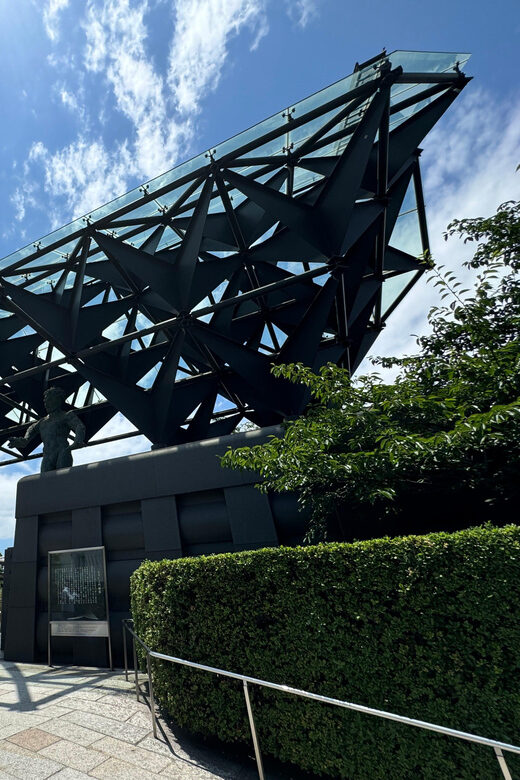
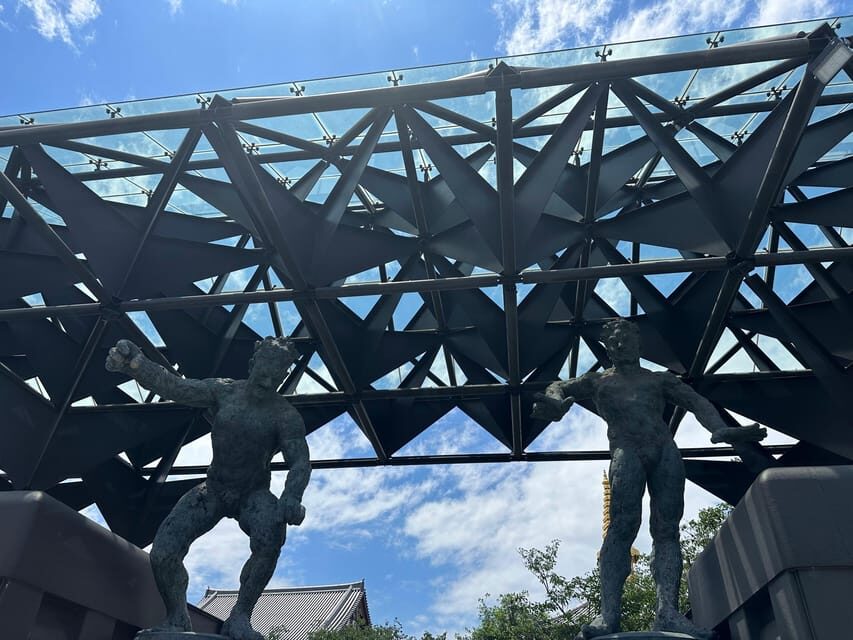
Approaching Isshinji, you’ll notice the striking modern main gate. It was designed by the current head priest, and you’ll feel the tension right away: innovation and reverence at the same time. Then you learn the gate isn’t replacing tradition. It’s framing it.
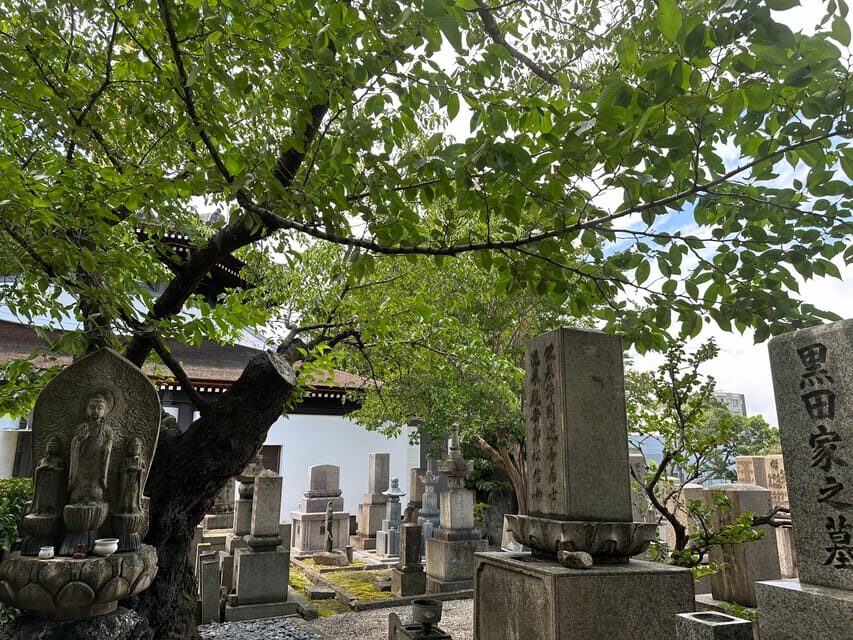
Isshinji has nearly 900 years of history, and the guided visit makes that age feel less abstract. Instead of treating the temple like a single artifact from long ago, you’re being shown an ongoing practice—families returning, remembering, and keeping the same spiritual needs alive through the centuries.


The Bone Buddha (Kotsubotoke) Tradition: Cremated Ashes as Remembrance
The emotional center of the tour is Isshinji’s Bone Buddha made from cremated ashes. You’ll learn that the temple honors the ashes of more than two million ancestors of Osaka residents, and those remains are respectfully combined to create statues known as Bone Buddhas, or Kotsubotoke.
That sounds heavy at first. The guide helps you understand the logic: this is communal remembrance with a physical form. It’s not only private grief. It’s also a city’s shared way of keeping family ties close and visible.
And because these are statues made from ashes, you’ll get a powerful lesson about what religion can do in urban life. It can handle scale. It can turn many individual lives into something that visitors and descendants can recognize and reflect on. Your guide will explain how the practice began and how it continues to serve families across generations.
This is the part of the tour that most often becomes the memory you carry home. Not because it’s shocking, but because it gives you a direct window into how faith and community support each other when people are gone.
How the Two Temples Tell One Osaka Story
What I appreciate is that this tour doesn’t just hop between landmarks. It builds a line you can follow.
Start with Shitennoji: early Buddhist ideas spread and then get integrated into society. You see that through Prince Shotoku’s founding moment, the Four Heavenly Kings guardian theme, and the orderly symmetry of the precinct. The temple teaches a worldview where Buddhism contributes to national protection and social stability.
Then Isshinji reframes faith as something personal and communal at the same time. The Bone Buddha tradition is urban Buddhism in action—devotion tied to remembrance and family history, expressed through a carefully managed, respectful practice.
By the time you’re finishing at 一心寺 (Isshinji), you should feel like you just got a mini-course on how Buddhism adapted to Japan’s city life. It’s not just a story of temples. It’s a story of people using religion to structure meaning across time.
The Guide Experience: Why This Tour Feels Human
Temple tours can be hit or miss. You either get a calendar of dates, or you get meaning. This tour is designed for meaning.
You’re led by a professional English-speaking guide, and the format is built around explanation at each stop: why the layout is symmetrical at Shitennoji, what the Pure Land Garden symbolizes, and what Bone Buddhas represent at Isshinji. The guide also gives cultural context for how Buddhism shaped early and urban Japan, so you don’t leave knowing just what something is called—you know why it exists.
One detail I value: the tour works like a conversation, even though it’s structured. You’ll likely get chances to ask what you’re seeing. A good guide makes complicated ideas feel normal. That’s especially important with religion, because it’s easy to treat temples like tourist sets. Here, the goal is understanding.
Pacing and Practical Comfort for a 2-Hour Walk
The total duration is 2 hours, and the time split is meaningful: about 1.5 hours at Shitennoji, then around 1 hour as you transition to Isshinji and cover the key sights there.
So yes, it’s efficient. But it’s also realistic. Temples are never a one-photo-and-done thing if someone is explaining. The pacing keeps the tour from dragging while still giving you enough time to process what you’re learning.
I’d still come prepared for walking. Even if the distance between stops isn’t described in exact meters, you’re doing a guided walk between temple areas and moving through precinct spaces. Comfortable shoes matter more than you’d think until you’re standing in quiet places longer than you planned.
Also, plan your photos with intention. If you treat this like a quick sightseeing sprint, you’ll miss the meaning. If you treat it like a guided read of the city’s faith, you’ll get more out of the same 2 hours.
Price and Value: Is $65 Worth It?
At $65 per person for a 2-hour private-group guided tour, the value depends on what you want from the experience.
If you’re the type who enjoys temples but hates reading on your phone, the guide support is the whole point. You’re getting:
- a guided visit through two major Osaka temples
- admission to Shitennoji’s main temple complex and the Pure Land Garden
- an explanation of symbolism, doctrine ideas like Pure Land and Amida, and the Bone Buddha tradition at Isshinji
If you tried to do this on your own, you could probably visit both temples. But you’d lose the connective tissue: Prince Shotoku’s role tied to the founding moment, the meaning behind the symmetrical layout, the sunset-Pure Land connection, and the reason cremated remains become Kotsubotoke.
To me, $65 feels fair when you factor in the guide doing the translation work between what you see and what it means. If you’re mainly there for selfies and don’t care about interpretation, you might feel it’s pricier than expected. If you do care, it’s money spent to save your time and make the temples click.
Should You Book This Osaka Old Temple & Bone Buddha Tour?
Book it if you want a guided route that explains both early Japanese Buddhism and the way faith lives in an urban city like Osaka. This tour is especially good for first-timers who feel overwhelmed by temple complexity. You’ll get Shitennoji’s foundational story, then you’ll get Isshinji’s emotional and distinctive Bone Buddha tradition without needing to piece everything together yourself.
Skip it (or consider extending your day) if you prefer lots of free time inside temples, or if you’d rather handle religious sites entirely on your own pace. The tour is efficient by design, so it’s not built for slow wandering.
FAQ
FAQ
Where is the meeting point for the tour?
Meet your guide in front of the stone torii gate (Ishidori) at the main entrance of Shitennoji Temple. The guide will be holding a sign with your name, and the meeting point is a short walk from Shitennoji-mae Yuhigaoka Station.
How long does the Osaka Bone Buddha walking tour take?
The tour lasts about 2 hours.
What temples will I visit?
You’ll visit Shitennoji Temple and Isshinji Temple (ending at 一心寺).
What is included in the price?
The tour includes a professional English-speaking guide, guided tours of Shitennoji and Isshinji, admission to Shitennoji’s main temple complex, and admission to the Pure Land Garden.
What languages are available for the guide?
The guide is available in English and Japanese.
Is free cancellation offered?
Yes. You can cancel up to 24 hours in advance for a full refund.