REVIEW · KYOTO
Half Day Kyoto Sagano Bamboo Grove & Arashiyama Walking Tour
Book on Viator →Operated by JTB Global Marketing & Travel Inc. · Bookable on Viator
Sagano has a way of slowing me down. This half-day Kyoto tour strings together bamboo calm with three major sights—Tenryu-ji, Jojakko-ji, and Togetsukyo Bridge—so you see more than a standard self-guided stroll. I especially like the guide-led flow, because you’re not just walking from photo spot to photo spot. One thing to keep in mind: you’ll still be on public transport and walking in a small group, so at peak times it can feel busy fast.
Two parts I really like are Tenryu-ji’s garden time and that river-and-bridge finale at Togetsukyo. Tenryu-ji is widely treated as one of Kyoto’s best Zen stops, and the way the tour gives you time there (not just a quick look) makes a difference. Also, the quiet hillside feel at Jojakko-ji is the kind of contrast that makes the day feel worth it.
The only drawback is practical: the itinerary includes some stairs and viewpoints, and you’ll want solid walking shoes. If you get caught in rain or heavy seasonal crowds, you may end up waiting longer between segments than you hoped.
In This Review
- Key highlights that make this tour work
- Sagano Bamboo Grove: the calm start that sets the tone
- Tenryu-ji Temple: the Zen garden stop you’ll remember
- Jojakko-ji: hillside quiet, Heike-era stories, and maple views
- Togetsukyo Bridge: photo-perfect views, then the river from yakatabune
- Walking distance, stairs, and the public-transport reality
- Value check: $79.26 buys you time, guidance, and included entry
- Guide quality: why people keep praising the human touch
- Who should book this tour (and who should skip it)
- Should you book this Half Day Kyoto Sagano Bamboo Grove & Arashiyama Walking Tour?
- FAQ
- How long is the tour?
- What’s the walking distance?
- Are entrance fees included?
- Does the itinerary change in July and September?
- How do we travel to Arashiyama?
- Where does the tour start and end?
- Is this tour free for young children?
Key highlights that make this tour work
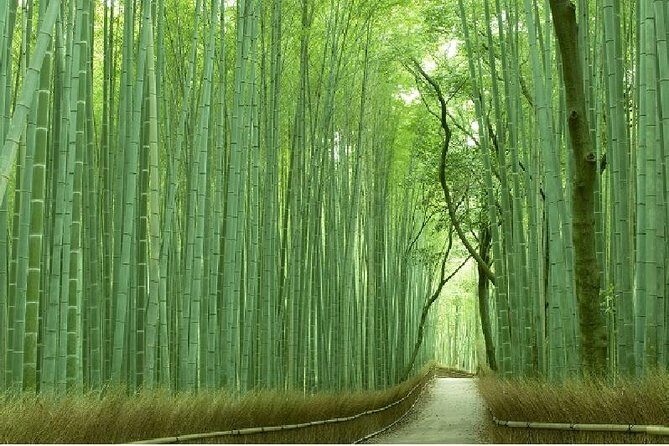
- Sagano bamboo grove, about a 3 km day of walking total: enough time to enjoy it without feeling like you’re rushing.
- Tenryu-ji Temple with real garden time: built for Zen attention, and it’s easy to miss details if you go solo.
- Jojakko-ji’s forested hillside setting: a quieter, scenic stop with Jizo and a tucked-away pagoda view.
- Togetsukyo Bridge plus yakatabune viewing: you get the river view from both the bridge and the water.
- English guides and small-group energy (max 25): good pacing, plus options to move on at the end in many cases.
Sagano Bamboo Grove: the calm start that sets the tone
The day kicks off with Sagano before you even get to the big temple names. Right away, you’re walking through the famous bamboo grove vibe: tall stalks, soft shadows, and that “why is it suddenly quiet?” feeling. Even if you’ve seen bamboo pictures before, it plays differently in person because you’re moving through it, not just looking at it.
The tour’s pacing matters here. You get a proper stroll—enough time to stop, look up, and let your eyes adjust to the light—rather than sprinting along the main corridor. You’ll also be in good shape if you treat this like walking time rather than sightseeing marathons.
Practical tip: dress for the weather. The grove and the walking between stops can leave you exposed, and the day is short enough that bad conditions can really change your mood. Bring a light rain layer if your forecast looks questionable.
You can also read our reviews of more walking tours in Kyoto


Tenryu-ji Temple: the Zen garden stop you’ll remember
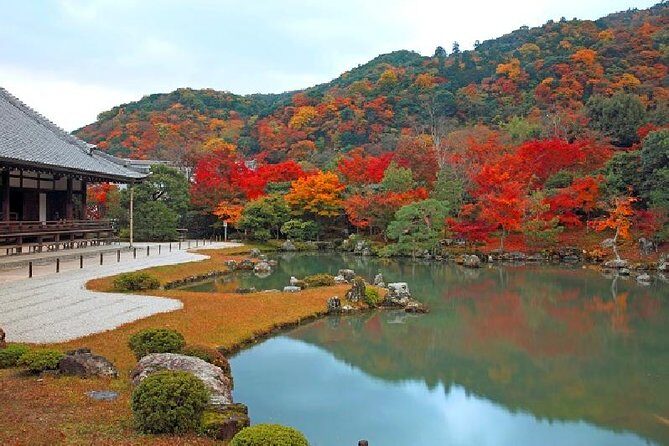
Next comes Tenryu-ji, a World Heritage Zen temple that’s a major deal in Arashiyama. It traces back to 1339, linked to Takauji of the Ashikaga Shogunate, and it’s associated with the Rinzai Zen School. What I like most is that the tour doesn’t treat it like a checkbox.
You’re guided through the setting, and then you get time to sit with what makes Tenryu-ji special: the landscaped garden, arranged to work with how you view it. The tour specifically calls out that the garden survives in its original design, which is exactly the kind of detail you appreciate once you’re standing there. The surrounding Arashiyama scenery also connects to the garden experience, so your eyes keep finding new angles while you’re there.
If you care about seasonal scenery, this is also a smart choice. Tenryu-ji’s garden is one of those places where the same path can feel different in autumn versus spring.
One caution: during peak seasons, Arashiyama can get crowded, and Tenryu-ji is a magnet. The guide helps you keep moving without losing the context, but you’ll still want patience.
Jojakko-ji: hillside quiet, Heike-era stories, and maple views
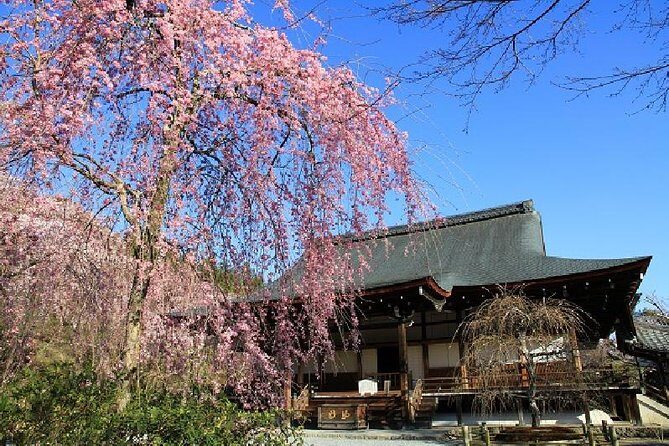
After Tenryu-ji, you head to Jojakko-ji, a smaller, more secluded-feeling temple tucked up in the wooded hills. This is the kind of stop that makes the itinerary feel balanced: bamboo and big names up front, then something calmer and more hidden.
Jojakko-ji is famous for its connection to the Tale of the Heike, tied to Empress Dowager Kenrei-mon-in, and the site’s story goes back to the 6th century. The tour also highlights that it was originally constructed as a nunnery, which adds a different layer to what you’re seeing. This is one of those moments where a guide can turn a quiet temple into a story you can actually carry around with you.
In terms of what to look for, keep an eye out for the Jizo statue and a hidden pagoda you can find among the maple trees. In autumn, the hillside can turn into a show, with color spreading across Mt. Ogura for wide-range seasonal views.
Important seasonal note: the tour data says that during July and September, Jojakko-ji isn’t included. In that window, the itinerary changes and Okochi Sanso Villa Garden replaces the visit. If you’re traveling specifically for Jojakko-ji, check your dates carefully.
Togetsukyo Bridge: photo-perfect views, then the river from yakatabune
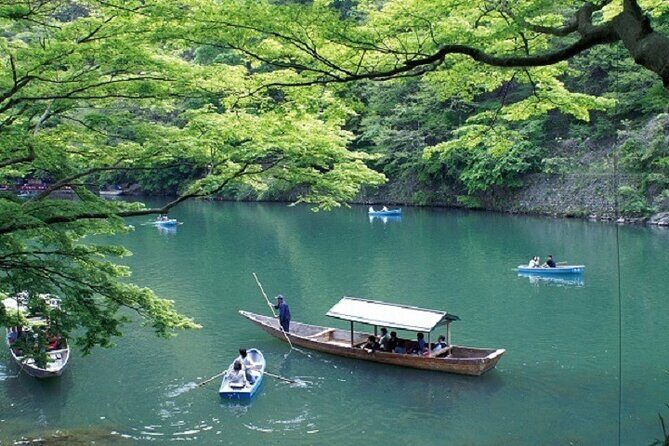
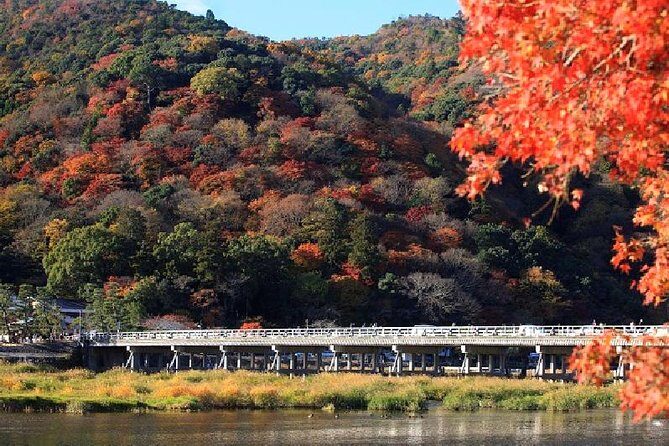
The finale is Togetsukyo Bridge, also called Crossing Moon Bridge. This 250-meter-long bridge is a classic Kyoto framing device: cherry blossoms or fall color above, and the Hozu River far below. The tour also notes that the current bridge is a reproduction of the original, reconstructed in 1934, so you’re standing in a modern version of a long-used viewpoint.
What makes this stop more than just a quick photo is that the tour includes a yakatabune moment. Instead of only viewing from above, you get to admire the scenery of Arashiyama from aboard the boat. That brief shift—from walking and stairs to sitting and looking—can feel like a reset for your legs.
The guide also helps you know what to look for while you’re on the water, which matters because otherwise it’s easy to just snap pictures and miss the flow of the scenery. Even if you’re not a “boat person,” this is a good use of time because the day stays short.
If your goal is maximum wow, this is the right ending. If your goal is “pure peace,” you’ll want to time your gaze well, since bridge areas can get busy during popular seasons.
Walking distance, stairs, and the public-transport reality
This is a half-day tour, but it’s still a real walking experience. The tour data puts total walking at about 3 km, with a moderate fitness level requirement. You should wear shoes made for uneven sidewalks and temple approaches. One review note specifically called out lots of stairs, so plan for that even if your legs usually handle Kyoto just fine.
Logistics are also part of the experience. The tour includes travel from Kyoto Station to Saga-Arashiyama Station using public transport with non-reserved seats. That means seating isn’t guaranteed and you might stand during busy hours. The good news: the route is straightforward, and the tour handles the group flow so you don’t have to troubleshoot trains while trying to see temples.
Group size is capped at 25. Still, Arashiyama is a high-demand zone, and peak periods can make any small-group tour feel crowded at transitions. If you’re traveling during cherry blossom week or peak autumn color, build in patience. You’ll still get the sights, but the pace may slow down at the busiest moments.
Finally, this tour ends back at Kyoto Station. The data says you return and then continue independently.

Value check: $79.26 buys you time, guidance, and included entry
At $79.26 per person for about four hours, what you’re really paying for is not just entry tickets—it’s the friction removal. The tour includes national government licensed English guide interpretation, plus other admission fees and transportation costs.
That matters in Kyoto. Entrance fees add up, and Arashiyama isn’t always painless to navigate when you’re juggling crowds, train platforms, and a short schedule. Here, the structure is doing the heavy lifting.
The best value part is Tenryu-ji and Jojakko-ji timing. You’re not just looking at temple exteriors; you get guided context and time inside the key areas, which is where a guide helps most.
If you’re trying to optimize your day—especially if you only have a morning—this price starts to make sense. You’re buying an organized tour footprint that still leaves you free to enjoy each place rather than rushing.
One practical caution for anyone using a JR Pass: the tour uses trains between Kyoto and Arashiyama, and one participant reported being asked to use a JR Pass without a rebate. If you’re counting on a specific reimbursement, confirm details with the operator before you go.
Guide quality: why people keep praising the human touch
One reason this tour scores well is the guide factor. Some departures have featured guides like Sachiko and Donna, and at least one review mentions Michiharu. The consistent theme is clear explanations plus a mix of cultural stories and practical help.
What I’d watch for on a good tour guide is simple: do they point you to what matters, and do they help you not get lost when the group slows down? The tour experience is designed for that. You’ll get commentary through the headsets and guidance between the major stops, and you often end up with clearer mental images of what you’re seeing.
A small bonus: in some cases, guides give directions for nearby add-on ideas, like lunch options, or where to go after the tour ends. If you want to turn your half-day into a full Arashiyama chunk, that kind of help is gold.
Who should book this tour (and who should skip it)
This is a great fit if you:
- Want bamboo + two temples + Togetsukyo in one short morning window.
- Prefer guided time in gardens and temple settings rather than solo guesswork.
- Like a plan, but still want time to look and take photos without feeling chased.
It may be less ideal if you:
- Want a fully unstructured, slow day with zero crowd friction.
- Struggle with stairs and viewpoint walking.
- Travel during the busiest seasonal weeks and dislike any waiting or compressing of time between stops.
If you’re the kind of traveler who likes to wander streets for hours, you might find this tour a bit “planned.” But if you’re time-limited, it’s a strong way to cover the core Arashiyama/Sagano experience efficiently.
Should you book this Half Day Kyoto Sagano Bamboo Grove & Arashiyama Walking Tour?
I think this is worth booking for most first-timers—or for anyone who wants a smart morning off their Kyoto checklist. The combination is the key: bamboo to Zen gardens to a tucked-away hillside temple to a bridge-and-river finish. Add in the fact that entrance fees and interpretation are handled, and you get a lower-stress way to see a lot.
Book it if you want structure, a guide to explain what you’re looking at, and a short day that still feels meaningful. Skip or go in with eyes open if you’re very sensitive to crowds, rain, or stairs.
If you do book, do two things: wear good shoes and check whether your travel dates fall in July or September, since Jojakko-ji is replaced during that period. Then show up ready to walk, look up at the bamboo, and let Tenryu-ji’s garden do its quiet work on you.
FAQ
How long is the tour?
It’s about 4 hours long.
What’s the walking distance?
The tour includes approximately 3 km of walking.
Are entrance fees included?
Yes. The tour includes entrance fees for the stops listed in the itinerary.
Does the itinerary change in July and September?
Yes. During July and September, Jojakko-ji Temple is not included, and Okochi Sanso Villa Garden replaces that visit. The schedule also starts earlier to avoid peak heat.
How do we travel to Arashiyama?
You travel from Kyoto Station to Saga-Arashiyama Station by public transport with non-reserved seats. Seating is not guaranteed, and you may need to stand on busy trains.
Where does the tour start and end?
The meeting point is the JTB Sunrise Tours Desk Kyoto (Avanti B1F). The tour ends back at Kyoto Station.
Is this tour free for young children?
Children aged 0–5 are free as long as they do not occupy separate seats.