REVIEW · TOKYO
Tokyo: Open Top Panoramic Sightseeing Bus with Audio Guide
Book on GetYourGuide →Operated by VIP Japan Tour · Bookable on GetYourGuide
Tokyo looks different when the city is around you, not behind glass. This is a 70-minute open-top panoramic bus ride with a GPS-enabled audio guide that points out what you’re seeing as you pass it. I like that it’s designed for fast orientation on your first day, and I also like that you get route options so you can focus on either the bay side or the city skyline. One thing to watch: the open-top experience can change in bad weather, and some people also found the audio presentation a bit noisy if you’re trying to hear every detail.
If you want a low-effort way to rack up big-photo landmarks—Tokyo Station area, Tokyo Tower, and Ginza included—this fits well. You’ll spend most of your time riding and looking, with the audio doing the heavy lifting, and you can treat it like a moving sightseeing “index” for the rest of your trip.
In This Review
- Key Things I’d Look For Before You Ride
- Why an Open-Top Bus Is a Smart Way to Start Tokyo
- Price and Value: What $11 Buys You in Real Sightseeing Time
- Getting On: Where You Start Near Tokyo Station
- GPS Audio Guide: How to Hear It Clearly (and When to Bring Headphones)
- Bay Course Route (70 Minutes): Tokyo Bay to Odaiba With Rainbow Bridge Views
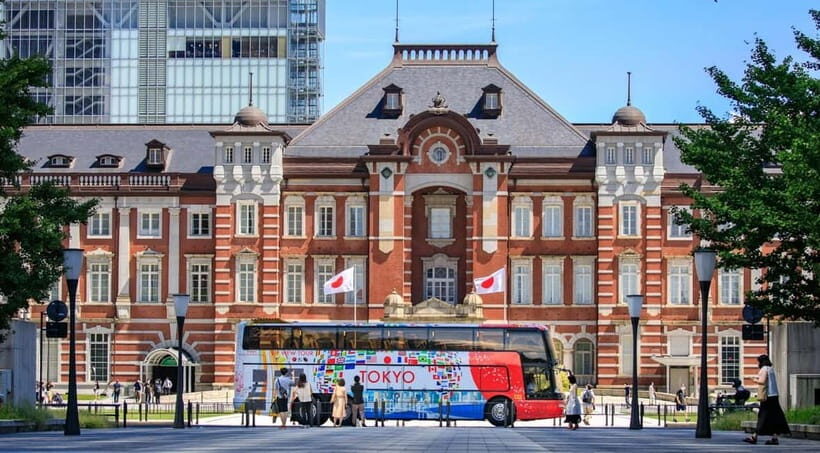
- Tokyo Station Red Brick Station Building → Marunouchi
- Zojoji Temple → Tokyo Tower
- Shibaura Rainbow Bridge (1st Level) → Fuji TV Building
- Statue of Liberty → Odaiba Seaside Park
- Rainbow Bridge (2nd Level) → Shiodome → Ginza
- City Course Route (70 Minutes): Imperial-Area to Roppongi Skyline and Ginza
- Tokyo Station Red Brick Station Building → Marunouchi
- Chidorigafuchi → Akasaka State Guest House
- Meiji Jingu Gaien → Tokyo Midtown
- Roppongi → Tokyo Tower → Hibiya
- Ginza Finish
- Comfort Check: Weather, Seating, and Rules You’ll Actually Notice
- What You’ll Actually Learn From the Audio (Beyond Just Names)
- Should You Book This Tokyo Open-Top Bus Tour?
- FAQ
- How long is the Tokyo open-top bus tour?
- What routes are available?
- Do I get a live guide?
- What languages are available on the audio guide?
- Are headphones included?
- Where do I meet the bus?
- What time should I arrive for check-in?
- Does the tour run in rain?
- What items are not allowed on the bus?
Key Things I’d Look For Before You Ride
- GPS audio guide tied to location so the commentary matches where the bus is going, even with traffic
- Two 70-minute routes: Bay Course (Tokyo Bay, Rainbow Bridge, Odaiba) or City Course (Imperial-area, Roppongi, Ginza)
- Open-top panoramic views of Tokyo Tower and the skyline, especially from the Rainbow Bridge stretches
- Optional wired headphones (100 yen) with a 3.5mm mini plug, since headphones aren’t included
- Clear on-board rules (no food, no umbrellas, no selfie sticks), which keeps the ride easier for everyone
Why an Open-Top Bus Is a Smart Way to Start Tokyo
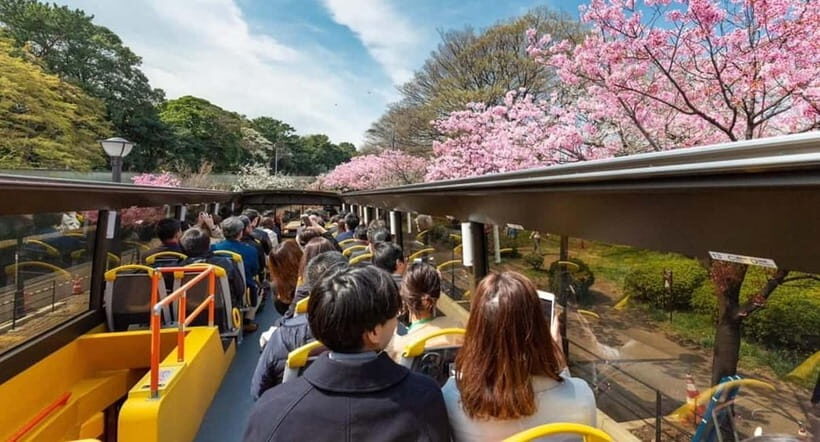
Tokyo is huge, and your first day can feel like a test of stamina. An open-top bus turns that problem into a solution: you get wide-angle views while staying seated, which means you don’t burn energy translating signage, figuring transfers, or constantly checking directions.
What I like about this style of tour is that it’s built for “see it now, decide later.” You’re not committing to hours of museum time or a strict walking route. Instead, you pass through major districts and landmarks—then you can decide where you want to spend real time afterward.
For this particular tour, the audio guide also matters. It’s not just generic facts. The system uses GPS tracking and is designed to deliver the right information as the bus reaches each area. That makes it easier to follow along, even if traffic slows things down.
You can also read our reviews of more guided tours in Tokyo

Price and Value: What $11 Buys You in Real Sightseeing Time
At around $11 per person for 70 minutes, the value is the mix: transportation + an open-top viewing format + multi-language GPS audio.
You’re not paying for a full live guiding experience here. There’s audio guidance and Japanese-speaking staff for assistance, but the tour is not marketed as a live narration service. If you want someone to answer your personal questions or tailor the stops to your interests, this may feel too automated.
Still, for many first-timers, the math works. Seventy minutes is long enough to see a lot of Tokyo’s recognizable landmarks from multiple directions, and short enough that the tour doesn’t steal half your day. If you’re using your time wisely—like taking the bus route that matches what you want most (Bay views vs. city skyline)—the cost-to-sight ratio can feel very reasonable.
Getting On: Where You Start Near Tokyo Station
The meeting point is Tokyo VIP Lounge on the 2nd and 3rd floors of the building, with a FamilyMart on the ground floor. It’s about a 5-minute walk from Tokyo Station’s Yaesu North Exit, and the coordinates you can save are 35.681763, 139.7713517.
The key practical tip: check in 20–40 minutes early. This isn’t about being early for fun. It’s about smoothing boarding and getting seated before departure, since the tour departs promptly.
Also note that the meeting area is described as a shared facility with other general users. If you’re expecting a private, lounge-like wait, you might be surprised by how “shared” it feels. One traveler described the space as basic, and that the greeting area didn’t match the VIP wording in their expectations—so show up ready to check in quickly rather than expecting a full service waiting room.
GPS Audio Guide: How to Hear It Clearly (and When to Bring Headphones)
The tour uses a GPS-enabled audio system with language support including Japanese, English, Chinese, French, Korean, Vietnamese, and Thai. The system is also designed to deliver sightseeing information in relation to where the bus is at the moment, and it’s meant to stay accurate even when road conditions change.
Headphones are optional. They cost 100 yen and only work with a 3.5mm mini plug (so if you show up with wireless-only earbuds, you’ll want a wired option or a compatible adapter you already know works). Your tour info also suggests a headphone jack is the standard setup, and since headphones aren’t included, you should plan for that if you’re picky about audio clarity.
A real-world consideration from rider feedback: some people felt the background music between segments was too loud compared with the voice. If you’re sensitive to that kind of audio mixing, headphones can help you focus on the narration. But if you’re hoping for total silence, the format may not be ideal.
Bay Course Route (70 Minutes): Tokyo Bay to Odaiba With Rainbow Bridge Views
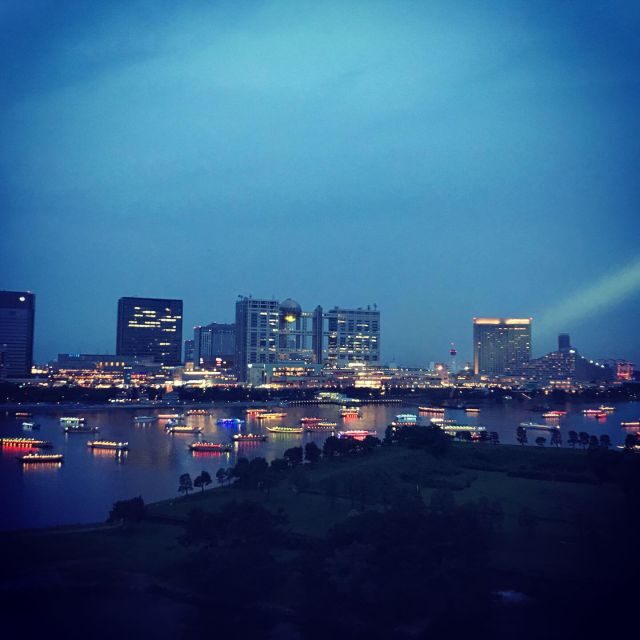
If you want water, bridges, and that classic Tokyo “modern waterfront” feel, choose the Bay Course. The route is paced for scenery, mixing city landmarks with major bay highlights.
Here’s the flow, stop by stop, and why each part is worth your attention:
A few more Tokyo tours and experiences worth a look

Tokyo Station Red Brick Station Building → Marunouchi
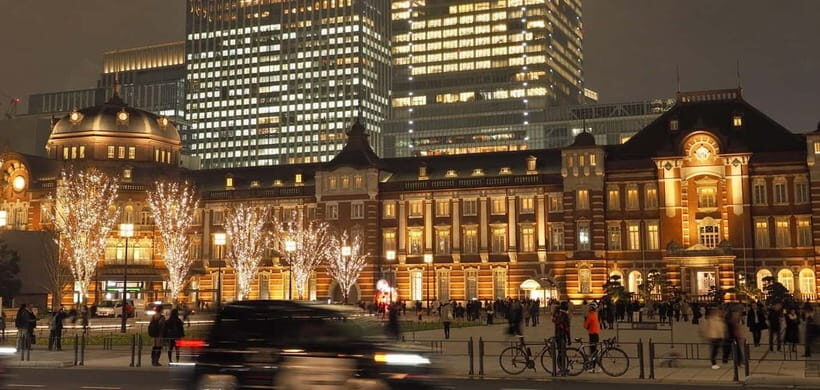
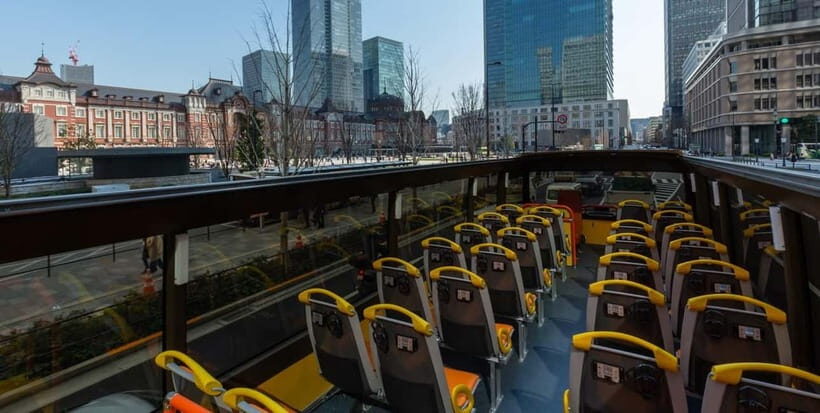
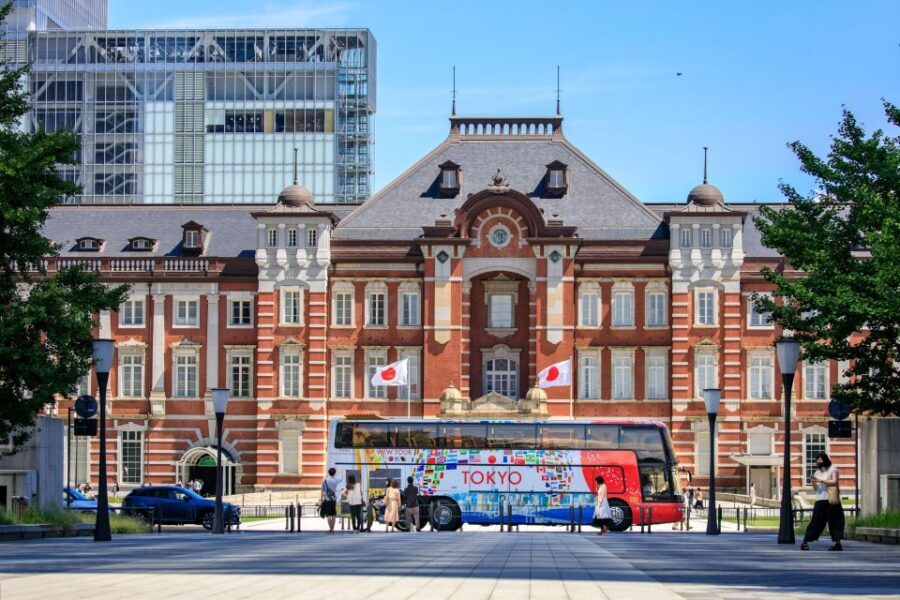
You start near one of Tokyo’s best-known architectural hits: the Red Brick Station Building. It’s a great primer for Tokyo, because it signals the city’s older, grander side right away. From there, you slide into Marunouchi, the business spine where the streets feel designed for big views.
Zojoji Temple → Tokyo Tower
You then pass Zojoji Temple, one of the more recognizable temple names in central Tokyo. Even if you don’t step off, it’s a neat contrast: traditional religious grounds alongside modern Tokyo infrastructure.
Then comes Tokyo Tower. From a bus, this is one of the landmarks you’ll probably want to photograph early, because angles will change as the vehicle moves. It’s also a useful orientation point—Tokyo Tower is often the “north star” for understanding how neighborhoods connect.
Shibaura Rainbow Bridge (1st Level) → Fuji TV Building
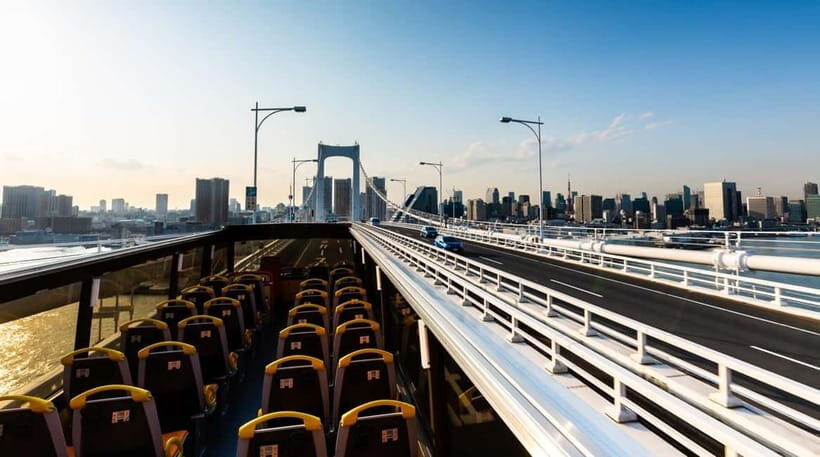
Now you move into the money shot: Rainbow Bridge. The “1st Level” portion is where you get that bridge-and-water context that makes Tokyo feel unusually cinematic. After that, you pass the Fuji TV building, another piece of the city’s modern identity.
Statue of Liberty → Odaiba Seaside Park
The route continues through Odaiba, starting with the Statue of Liberty replica and then heading toward Odaiba Seaside Park. This is where you get the broadest sense of Tokyo Bay’s waterfront layout.
If your trip includes photos of skyline reflections or you simply like waterfront cityscapes, this section is usually the payoff stretch.
Rainbow Bridge (2nd Level) → Shiodome → Ginza
You cross Rainbow Bridge (2nd Level) again from a different perspective, which is a nice bonus because it gives you multiple looks at the same structure. After that, you pass through Shiodome, a modern district, and finish with Ginza, Tokyo’s famous upscale shopping and dining zone.
Even if you’re not shopping, Ginza is valuable for a final reset. It’s easy to keep exploring from there by metro or walking around nearby streets.
City Course Route (70 Minutes): Imperial-Area to Roppongi Skyline and Ginza
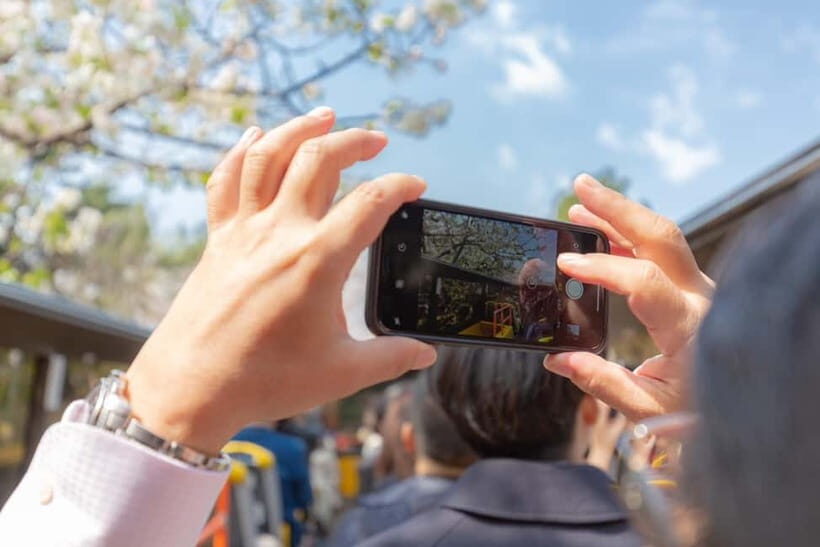
If you prefer streets, government-era landmarks, and a skyline-heavy route, the City Course is the one. It focuses more on central Tokyo districts and big-name city panoramas.
Tokyo Station Red Brick Station Building → Marunouchi
Same opening as the Bay Course: start near the Red Brick Station and head through Marunouchi, giving you a classic Tokyo introduction.
Chidorigafuchi → Akasaka State Guest House
The bus passes Chidorigafuchi, known for its moats and scenic setting. Even if you don’t go for a walk, it helps you connect the geography of the Imperial-area surrounding neighborhoods.
Next is Akasaka State Guest House. You’re mainly seeing the exterior context, but it adds another layer of Tokyo’s official, formal side.
Meiji Jingu Gaien → Tokyo Midtown
Then you move toward Meiji Jingu Gaien, which gives the route a calmer, park-like edge depending on the viewing angle from the road.
After that, it heads to Tokyo Midtown, a major modern complex area. This is where the skyline emphasis ramps up.
Roppongi → Tokyo Tower → Hibiya
The bus passes Roppongi, then loops back near Tokyo Tower again. The repeat is useful: you get a second chance to see the tower from a different road approach and likely different framing.
Next is Hibiya, an area that often feels like a bridge between offices and entertainment zones, depending on time of day.
Ginza Finish
And you end at Ginza again. That consistency is helpful. No matter which route you choose, Ginza gives you an easy place to continue your day—dining, shopping, or just wandering illuminated streets.
Comfort Check: Weather, Seating, and Rules You’ll Actually Notice
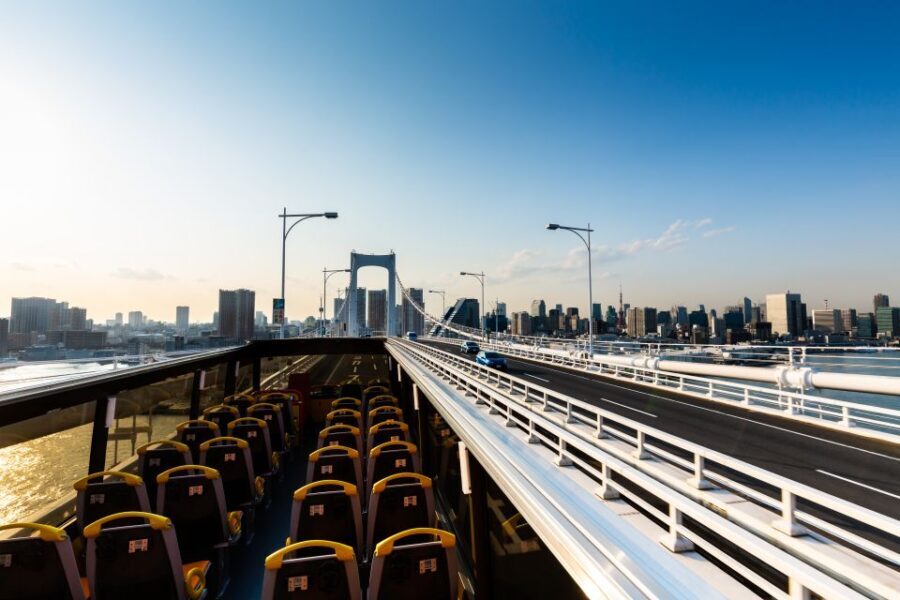
Open-top bus tours sound effortless, until weather hits. This tour is described as operating rain or shine, with cancellations only in extreme weather like typhoons. The important practical detail: if it rains, the open top may be closed. That can reduce the “open sky” feeling and change your photo angles.
Also, you’ll want to plan for temperature. One traveler specifically noted that knee space was limited and that you may feel too cold or too hot depending on conditions. So if you’re tall or easily uncomfortable in tight seating, this is a real consideration.
Rules on board are straightforward and mostly aimed at safety and comfort:
- no smoking
- no selfie sticks
- no food in the vehicle
- no umbrellas
Umbrellas matter because if it’s wet, you’ll need a rain plan that doesn’t involve using them while seated. If you rely on umbrellas daily, consider bringing a rain jacket instead.
Finally, even though the format is audio-based, one traveler reported that a loud Japanese live announcement was sometimes heard over the audio guide, making it harder to catch the narration. That’s not guaranteed, but it’s worth keeping in mind if you’re very detail-focused about what the audio says word-for-word.
What You’ll Actually Learn From the Audio (Beyond Just Names)
The audio guide is doing more than listing landmarks. It’s tied to GPS positioning and is meant to explain the significance behind what you see. That matters, because Tokyo has a lot of similar-looking streets and districts. Without context, you might memorize the skyline but forget what it means.
This tour’s structure—audio + major landmarks + two different routes—helps you build a basic mental map quickly:
- where Tokyo Tower sits relative to major districts
- how Ginza fits into the central grid
- how the bay area stretches out toward Odaiba and Rainbow Bridge
- how older Tokyo landmarks sit next to modern corporate zones
If you’re the type who likes knowing why a place matters while you’re looking at it, the GPS-driven narration will likely feel worth it.
Should You Book This Tokyo Open-Top Bus Tour?
I’d book this if:
- You’re in Tokyo for a short time and want maximum landmark coverage in minimal effort
- You want open-air views and easy photography angles where available
- You’d rather follow GPS audio than listen to a live guide you can’t hear
- You want an organized way to choose what to explore next day, using Ginza and Tokyo Tower as anchors
I’d think twice if:
- You’re extremely sensitive to audio mixing (background music vs voice) and want perfect clarity every minute
- You hate tight seating or long sitting periods
- You’re traveling during likely rain and you want the open-top experience to stay open the whole time
- You specifically need a live guide for questions and customization (this is not set up as that kind of tour)
If your goal is simple: get your bearings fast and collect the iconic Tokyo shots without spending hours planning routes—this bus tour makes a strong case. Choose Bay Course for Rainbow Bridge and Odaiba, choose City Course for Imperial-area context and skyline energy, then use Ginza to keep the day moving.
FAQ
How long is the Tokyo open-top bus tour?
The tour runs for 70 minutes with the audio guide.
What routes are available?
You can choose between Bay Course and City Course, each listed as a 70-minute route with audio guidance.
Do I get a live guide?
No. A live guide is not included. Japanese-speaking staff are available for assistance.
What languages are available on the audio guide?
The GPS audio system is described as supporting Japanese, English, Chinese, French, Korean, Vietnamese, and Thai.
Are headphones included?
No. Headphones are optional and cost 100 yen. The jack supports 3.5mm mini plugs.
Where do I meet the bus?
Meet at Tokyo VIP Lounge, located on the 2nd and 3rd floors of the building with a FamilyMart on the ground floor, about a 5-minute walk from Tokyo Station’s Yaesu North Exit.
What time should I arrive for check-in?
Check in 20–40 minutes before the scheduled departure time.
Does the tour run in rain?
It operates rain or shine, with cancellations only in extreme weather such as typhoons. If it rains, the open top may be closed.
What items are not allowed on the bus?
You can’t bring smoking, selfie sticks, food in the vehicle, or umbrellas.