REVIEW · OSAKA
Retro Osaka Street Food Tour: Shinsekai
Book on Viator →Operated by Arigato Japan KK · Bookable on Viator
Street food in Shinsekai feels like a time machine. This 3-hour Osaka tour trades the usual rush for a guided crawl through the retro lanes around Tsutenkaku and Kuromon, with menu help, history context, and plenty of photo moments.
I really like two things about this setup: you get an English-speaking local guide who helps with language barriers while you snack, and the pace is built around seeing how locals spend their evenings, not just ticking boxes. The small group size (max 10) also matters because it keeps the tasting flow friendly.
One watch-out: it’s not recommended for vegans or gluten-free diners, so if your needs are strict, you’ll want to double-check fit before booking.
In This Review
- Key points to know before you go
- Retro Osaka Street Food in Shinsekai: Where the Night Looks Old-School
- Price and Value: What $217 Buys Besides Food
- Timing and Meet Point: Starting at Tsutenkaku at 5:00 pm
- What You Really Get From an English-Speaking Local Guide
- Stop-by-Stop: Shinsekai Landmarks That Frame the Food
- Tsutenkaku: The Classic Starting Shot
- Shinsekai: The Street-Food Crawl Part
- Billiken shrine: A Quick Cultural Pause That Helps Photos
- Ja Jan Yokocho: Where the Alley Vibe Does the Work
- Isshin-ji: A Landmark Check-In for Context
- Tower Knife Osaka: A Retro Photo Moment
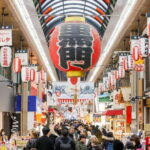
- Kuromon Ichiba Market: Finish the Tasting Energy at a Food Hub
- Sennariya Coffee: A Softer Landing Back Near the Start
- What to Expect to Eat and Drink (Without the Guesswork)
- Group Size and Pacing: Why Max 10 Travelers Helps
- Who This Tour Fits Best (and Who Might Want Another Option)
- Should You Book This Retro Osaka Street Food Tour?
- FAQ
- What is the duration of the Retro Osaka Street Food Tour: Shinsekai?
- How much does the tour cost?
- Where does the tour start and end?
- What’s included in the price?
- Is the tour suitable for vegetarians or people with dietary restrictions?
- Can children join?
- What happens with cancellation or bad weather?
Key points to know before you go
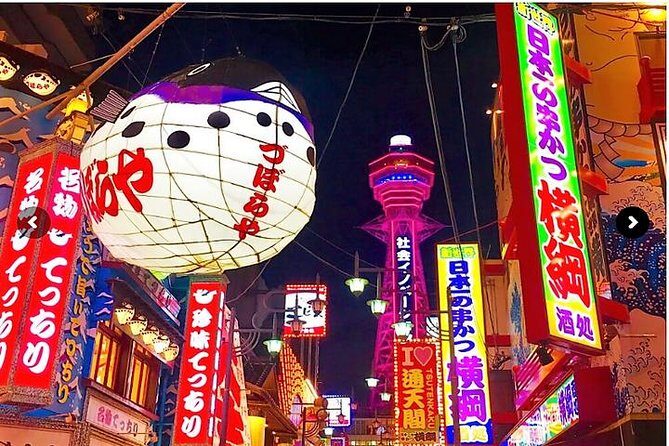
- Tsutenkaku starts the night in a classic Shinsekai setting with an easy meet point.
- Hands-on takoyaki-making plus Osaka food traditions like mixed juice.
- Small group, max 10 travelers, which helps with pacing and questions.
- 4 included food stops (with additional tasting stops built into the route).
- Retro landmarks on the walk like Billiken shrine, Ja Jan Yokocho, and Tower Knife Osaka.
- Ends back near the start area at Sennariya Coffee, so you’re not stranded.
Retro Osaka Street Food in Shinsekai: Where the Night Looks Old-School
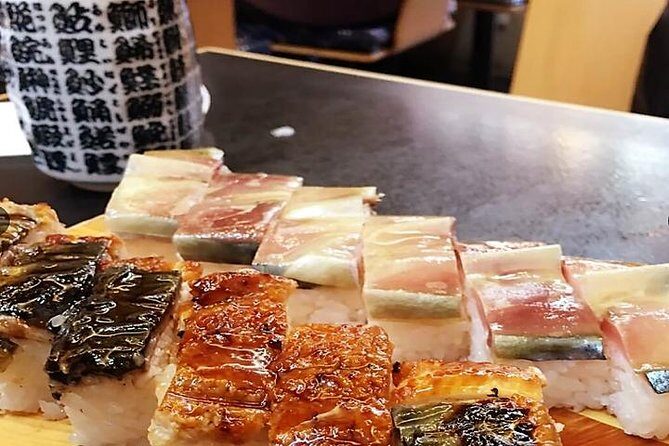
If you’re the type of traveler who likes your food tours to feel like you’re walking through a movie set, Shinsekai is a strong match. The whole point here is to experience Osaka the way people around you do it—by drifting from spot to spot, ordering what looks good, and talking with a guide who can translate both menus and context.
I also like how the tour frames the area: it’s not sold as a generic tasting list. You’re learning why these spots matter, including how traditional foods trace back to the early 1900s. Even if you don’t care about dates, that story does one useful thing: it helps you pay attention while you’re eating. Suddenly you’re not just consuming street snacks; you’re noticing why each bite fits the neighborhood.
The tour is also built for visuals. You’ll be moving through several recognizable Shinsekai landmarks, which makes it easier to grab photos without stopping every five minutes. And because the guide is with you throughout, you’re less likely to wander into the wrong side street while you’re trying to line up your shot.
You can also read our reviews of more food & drink experiences in Osaka
Price and Value: What $217 Buys Besides Food
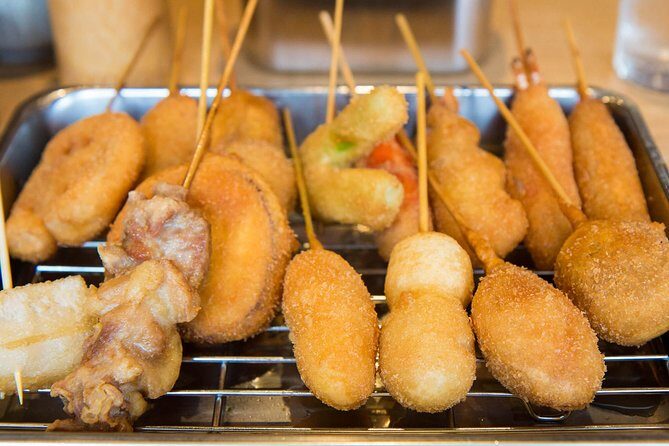
At $217 per person for about 3 hours, this isn’t the cheapest way to eat in Osaka—but it also isn’t just “walk around and buy stuff.” Your money buys three things that add up fast in Japan:
First, you’re paying for a local guide who handles the menu barrier. That sounds small until you’re staring at Japanese text with no time to decode it. Here, the guide helps you order and understand what you’re getting, so your meal doesn’t turn into a stressful guessing game.
Second, the tour includes actual food value: 4 food stops are included, plus 1 beverage and a dinner in a restaurant. It’s not only snacks. That matters because street-food-heavy evenings can leave you hungry if the route is light or the tastings are tiny. This one is set up to keep the calories and satisfaction level moving.
Third, you’re getting a hands-on activity: making takoyaki. Even if you’ve eaten takoyaki before, participating in the process changes the whole experience. You’re paying attention to texture, timing, and the little steps that create that classic outside-crisp, inside-hot bite.
Timing and Meet Point: Starting at Tsutenkaku at 5:00 pm
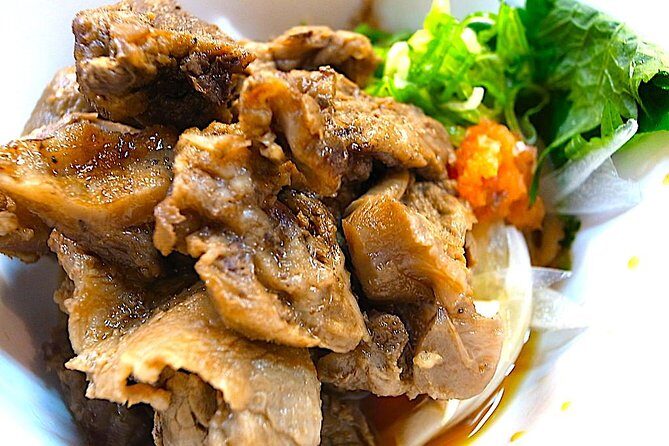
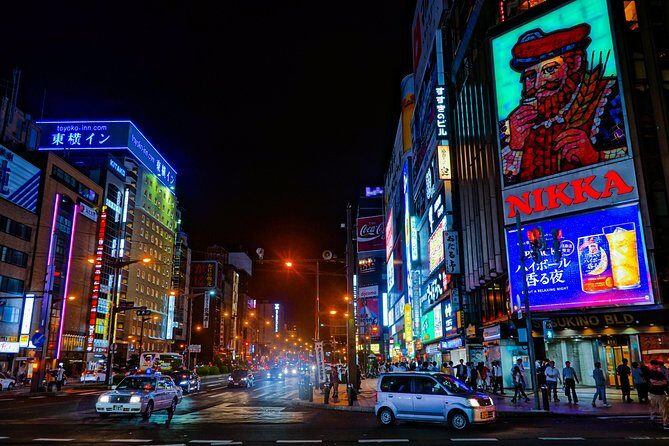
This tour starts at 5:00 pm and runs about 3 hours. That timing is ideal for Shinsekai. You catch the shift from late-day movement into evening energy, when street signs start glowing and people are out and about. If you arrive early, I’d use that time to simply orient yourself around Tsutenkaku and get your bearings so you’re not rushing for the meet-up.
The meet point is right at Tsutenkaku:
1-chōme-18-6 Ebisuhigashi, Naniwa Ward, Osaka, 556-0002, Japan
The activity ends back at the meeting point area, so you’re not dealing with a “meet here, vanish there” situation. You can plan dinner or a quick coffee stop after without needing extra logistics.
You’ll also use a mobile ticket, which is handy if you’re bouncing between transit lines that day. Keep your phone battery charged if you’re doing other Osaka plans before 5:00.
What You Really Get From an English-Speaking Local Guide
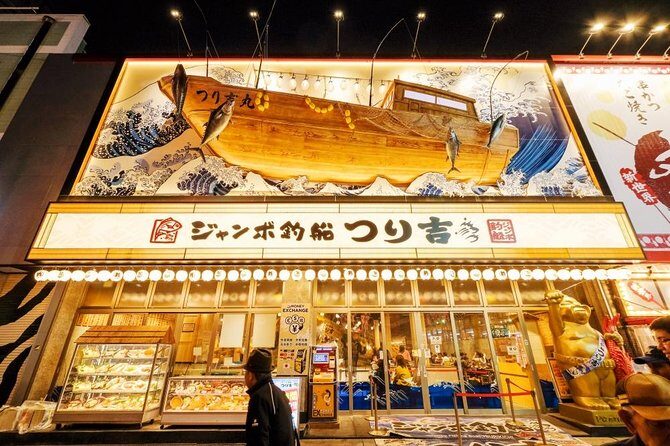
The guide isn’t just there to keep the group together. The tour is explicitly set up to make it easier to navigate food ordering and neighborhood history.
Here’s what I’d pay attention to: the guide helps you understand what you’re eating and why it fits this place. The tour includes explanations of Osakan food traditions like mixed juice, and it also connects dishes to the Shinsekai area’s story. That’s how you get more than “I tried this.” You start thinking, Oh, this makes sense here.
The guide names that show up in this tour’s reputation—Ike, plus Eki and Hiro—are associated with relaxed, old-school explanations. The big practical takeaway: you should expect the guide to keep things comfortable while still sharing details that make Shinsekai feel real, not staged.
Stop-by-Stop: Shinsekai Landmarks That Frame the Food
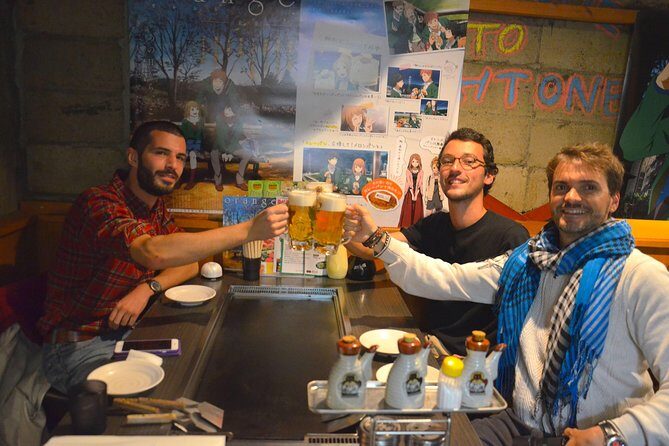
This tour is designed as a walk with set stops, rather than a bus ride with a quick snack at each place. You’ll visit several landmarks while also sampling food and drinks at multiple shops.
Here’s how the route feels in sequence, and what each stop is likely doing for you.
A few more Osaka tours and experiences worth a look
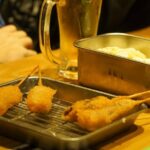
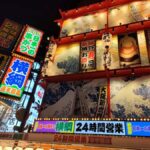

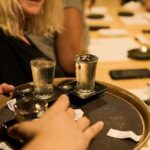
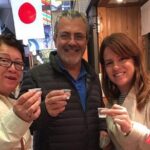
Tsutenkaku: The Classic Starting Shot
You meet at Tsutenkaku, and it works as a smart orientation point. The tour begins right where the district’s retro energy is easiest to spot, so your first minutes feel like you’re already in the atmosphere.
Practical value: when a tour starts with a big recognizable landmark, you spend less time hunting. You also get a natural photo anchor early, which makes it easier to document the night.
Shinsekai: The Street-Food Crawl Part
Once you move through Shinsekai, you’ll be tasting Osakan food traditions. The core experiences called out for this tour include an Osaka-style breakfast, mixed juice, and the hands-on takoyaki-making.
What you’ll probably notice is that the guide is doing double duty: steering you toward places where the food is worth ordering, and explaining what matters about each stop. That’s the difference between wandering on your own and doing a guided crawl where every bite has a reason.
This section is also where the tour leans into how locals spend time—shopping, entertainment, and hanging around the neighborhood. You’re not just passing through; you’re learning how to read the scene.
Billiken shrine: A Quick Cultural Pause That Helps Photos
Next you’ll visit the Billiken shrine. Even if you’re not a big shrine person, this kind of stop is valuable on a food tour because it breaks up the constant eating and keeps your brain engaged.
It also gives you a built-in moment for photos without interrupting the flow. Food tours sometimes feel like one long line of taste-test snacks. Adding a cultural waypoint can make the whole experience feel more structured.
Ja Jan Yokocho: Where the Alley Vibe Does the Work
You’ll also stop at Ja Jan Yokocho. Alleys like this are where Osaka’s street-life energy becomes obvious. On a guided tour, you’re more likely to notice the details—signs, crowd patterns, and the way people move between shops—because the guide can point out what matters instead of leaving you to guess.
The upside here is practical: you learn where to stand, what to look for, and how to order without feeling awkward. If you’ve ever felt lost trying to read a menu in a tiny alley restaurant, this part is designed to prevent that.
Isshin-ji: A Landmark Check-In for Context
The tour includes Isshin-ji on the route. It’s another reminder that Shinsekai isn’t only about food. The neighborhood has layers, and stopping at a temple site helps you understand the area as more than a nightlife zone.
I like these pauses because they slow you down just enough to keep you from eating yourself into boredom. You also get more storytelling time, which makes the food taste better afterward because you know what you’re eating and why.
Tower Knife Osaka: A Retro Photo Moment
Next is Tower Knife Osaka. This one sounds like it’s there for atmosphere and photos, and that’s a fair role on a street-food tour. It gives you something memorable to look back at later, and it keeps the walk from turning into “just another shopping street.”
If you’re photographing, this stop is one of those points where you can stop and shoot without feeling like you’re holding up the group. The tour route is built to include these anchor landmarks.
Kuromon Ichiba Market: Finish the Tasting Energy at a Food Hub
Finally, you’ll visit Kuromon Ichiba Market. The tour uses it as one of the key feeding points in the evening, and it fits with the theme: food culture is central here.
Even without knowing exactly what you’ll find inside, the value of this stop on a guided tour is that you’re not arriving cold. You’ve already learned what to look for, how to ask questions, and how to move with the group. That means your orders feel more confident.
Sennariya Coffee: A Softer Landing Back Near the Start
The tour ends at Sennariya Coffee. Finishing with coffee makes sense after a food-heavy night because it gives you a more relaxed wrap-up and a place to cool down.
Also, since the activity ends back near the start point, you’re not stuck figuring out transportation while your stomach is full and your feet are tired. You can choose what you feel like next—another snack, a short walk, or calling it a night.
What to Expect to Eat and Drink (Without the Guesswork)
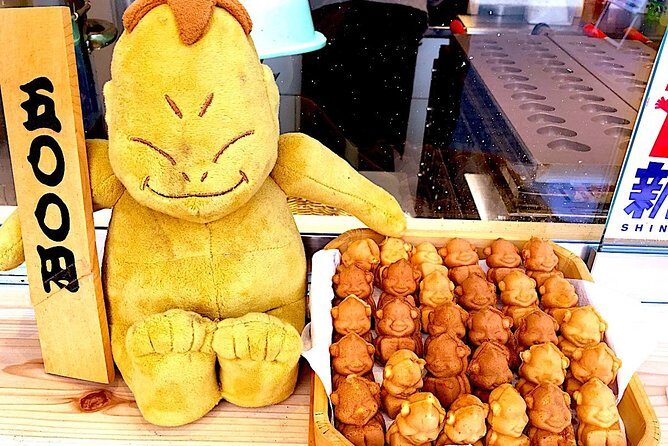
The tour is built around a few standout food moments:
- Mixed juice: called out as an Osaka food tradition, and included in the tasting plan.
- Make your own takoyaki: not just watching someone else do it. You’ll be involved in the process.
- Osaka-style breakfast: included as part of the tasting.
- A restaurant dinner: not only street snacks.
- 1 beverage included: plus you can expect additional purchases may be needed depending on what you want.
There’s also a clear shopping/entertainment vibe in Shinsekai, so the food isn’t only about what’s in your hand. It’s about how the neighborhood feels while you’re eating.
Diet note: the tour says vegetarian and pescetarian friendly. It’s not recommended for vegans and not recommended for gluten-free, which matters a lot if your diet is restricted for health reasons. If you fall into those categories, I’d treat this as a “probably not” unless your options are flexible.
Group Size and Pacing: Why Max 10 Travelers Helps
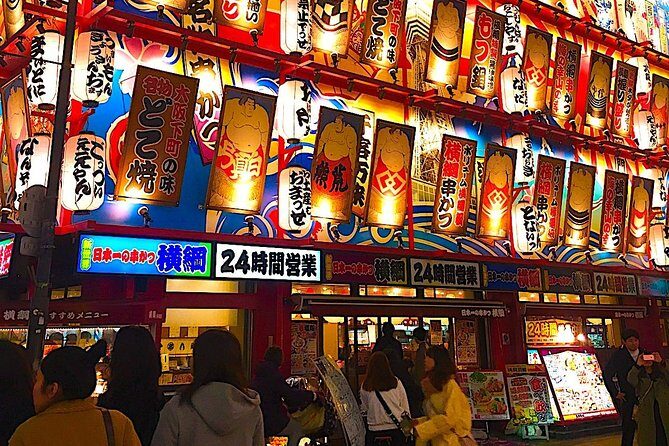
With a maximum of 10 travelers, this feels more like a guided evening with a group of friends than a huge tour herd. Small group size changes the experience in small ways that add up:
You’ll get more time to ask questions about what you’re eating. You’re also less likely to feel rushed between shops. And on a walk with multiple landmarks, smaller groups help everyone keep up without the stop-and-go chaos of larger tours.
If you like structure but don’t want to feel tightly scheduled, this is a strong sweet spot.
Who This Tour Fits Best (and Who Might Want Another Option)
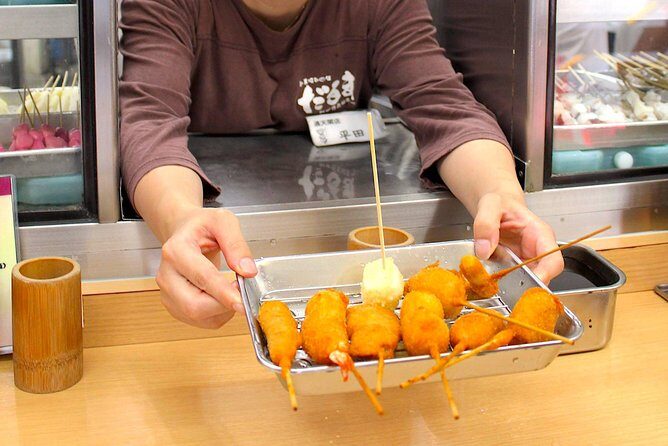
This is a great pick if you want:
- a guided street-food evening that includes more than just snacks
- help with menus via an English-speaking local guide
- hands-on fun like takoyaki-making
- a Shinsekai walk focused on retro atmosphere and practical photo stops
It’s also family-friendly, which makes it useful if your group includes kids. The tour info notes children must be accompanied by an adult.
It may be a weaker fit if:
- you’re vegan or you need a gluten-free plan (explicitly not recommended)
- you’re expecting a pure alcohol-focused night (there’s a minimum drinking age of 21, and the included beverage doesn’t mean you need to drink)
Should You Book This Retro Osaka Street Food Tour?
I’d book this if you want a guided night that combines food, context, and recognizable Shinsekai landmarks without turning your evening into a stressful map chase. The value feels solid because you’re not paying only for walking—you’re paying for a guide, included tastings, 1 beverage, and dinner, plus the hands-on takyoyaki experience.
I’d skip or rethink if your diet is vegan or gluten-free, since the tour is explicitly not recommended for those needs. Also, if you hate walking, this is still a street tour by design, so plan for the shoes-and-steps reality.
If you like food tours that teach you how to order and how to read a neighborhood at night, this one has the right ingredients.
FAQ
What is the duration of the Retro Osaka Street Food Tour: Shinsekai?
It runs for about 3 hours.
How much does the tour cost?
The price is $217.00 per person.
Where does the tour start and end?
You start at Tsutenkaku (1-chōme-18-6 Ebisuhigashi, Naniwa Ward, Osaka, 556-0002, Japan). The tour ends back at the meeting point.
What’s included in the price?
Included are 1 beverage, dinner in a restaurant, a local guide, and 4 food stops.
Is the tour suitable for vegetarians or people with dietary restrictions?
The tour is vegetarian and pescetarian friendly. It is not recommended for vegans and it is not recommended for gluten-free.
Can children join?
Yes, it’s family-friendly. Children must be accompanied by an adult. A passport information copy is required for kids 10 and above.
What happens with cancellation or bad weather?
You can cancel for a full refund up to 24 hours before the experience starts. The tour requires good weather; if it’s canceled due to poor weather, you’ll be offered a different date or a full refund.