REVIEW · FUJI
Winter Special: Clear View Mt. Fuji E-Bike Tour
Book on Viator →Operated by Ninomaru Village · Bookable on Viator
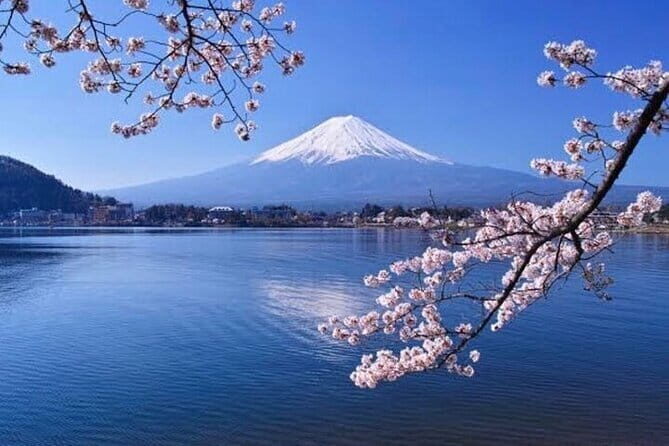
Mount Fuji looks different when you ride toward it. In winter, this small-group e-bike tour from Shin-Fuji Station gives you a calmer path to the mountain, plus sea views and local everyday spots with guide Yasu from NINOMARU Village.
Two things I really like here are the electric-assisted bike (so you can enjoy the scenery without grinding uphill) and the chance to slow down for photo stops and quiet places you’d likely miss on your own. One consideration: the ride depends on weather—if visibility is poor, you may not get that crisp, clear Mt. Fuji moment you came for.
In This Review
- Quick highlights you’ll care about
- Winter Fuji views: why this ride is timed for clear air
- The Miyata Ridge Runner: the e-bike that makes the route feel easy
- Small-group pacing across 2 hours 30 minutes
- Shin-Fuji Station start: the key to skipping the usual scramble
- Bishamonten Myoho-ji Temple: a short cultural stop before the coast
- Suruga Bay cycling: where Mt. Fuji hits from sea-level angles
- Yusui Park: spring water that’s tied directly to the mountain
- Hounji fountain: a drink break with a calmer rhythm
- Fujisan Yume No Ōhashi Bridge: the viewpoint, plus the 50-step choice
- What’s included, plus what you should bring for winter comfort
- Your guide matters: why Yasu’s style fits this kind of tour
- Value check: is $105.42 a good deal for a winter Mt. Fuji ride?
- Who should book this tour, and who might pass
- Should you book the Clear View Mt. Fuji E-Bike Tour?
- FAQ
- How long is the Winter Special Clear View Mt. Fuji E-Bike Tour?
- What is the meeting point?
- How many people are in the group?
- What e-bike is included?
- What does the tour price include?
- Is bottled water provided?
- Is it a mobile ticket experience?
- What if the weather is poor?
Quick highlights you’ll care about
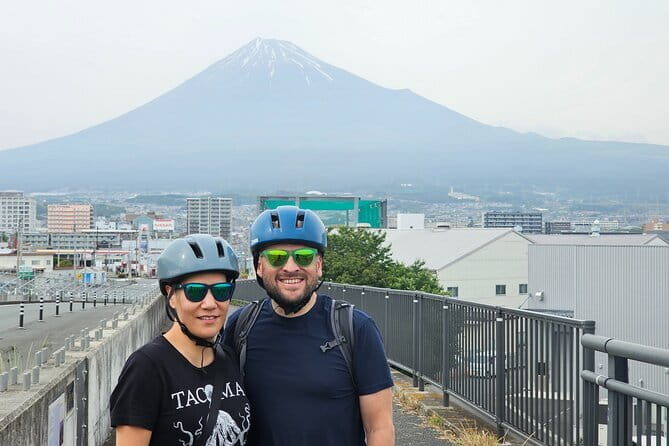
- Small group of 5 max keeps the pace relaxed and the guide within reach
- Miyata Ridge Runner e-bikes let you pedal comfortably on rural roads and coast routes
- Winter-only kairo heat packs help take the edge off cold rides
- Suruga Bay coastline views bring Mt. Fuji into the scene from a different angle
- Spring water stops at Yusui Park and Hounji turn the tour into more than just scenery
- Fujisan Yume No Ōhashi Bridge offers a major viewpoint, with an optional 50-step stair on the south side
Winter Fuji views: why this ride is timed for clear air
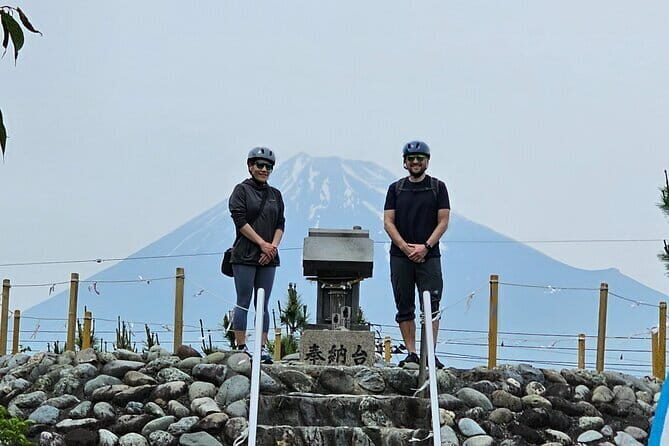
If you’ve ever watched Mt. Fuji hide behind clouds on a bright-looking day, you’ll understand why winter matters. This tour is built as a winter special, and the pitch is simple: crisp air can improve visibility, and the lower crowds around popular bases can make the whole experience feel less rushed.
The other key point is that you’re not just doing a single lookout. You move through Fuji City on a gentle route—temple, sea-adjacent cycling, and then spring-water sites—so even if Fuji peeks in and out, the tour still gives you plenty to enjoy.
You can also read our reviews of more tours and experiences in Fuji.
The Miyata Ridge Runner: the e-bike that makes the route feel easy
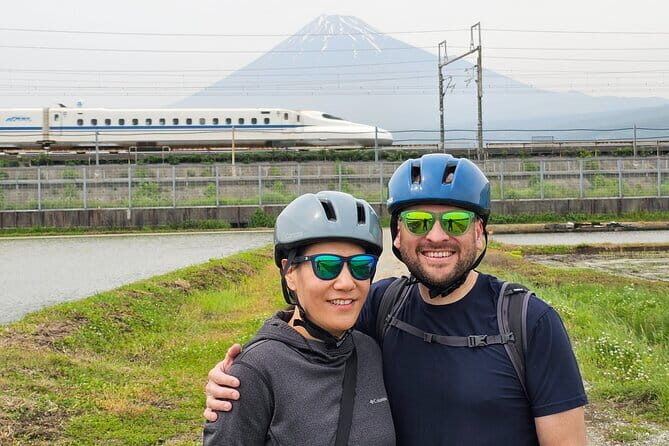
You’re riding an electric-assisted bike (Miyata Ridge Runner), which changes the whole math of biking in Japan’s hilly areas. Instead of worrying about stamina, you can keep a steady cadence and stay present for the views and photo stops.
Plus, you’re not doing this as a solo planning exercise. A guide is with you for the route pacing and timing, and you get a rental helmet and insurance covered by the operator. In winter, that extra layer of support matters because cold hands and slippery ground can make any activity feel harder than it should.
Small-group pacing across 2 hours 30 minutes
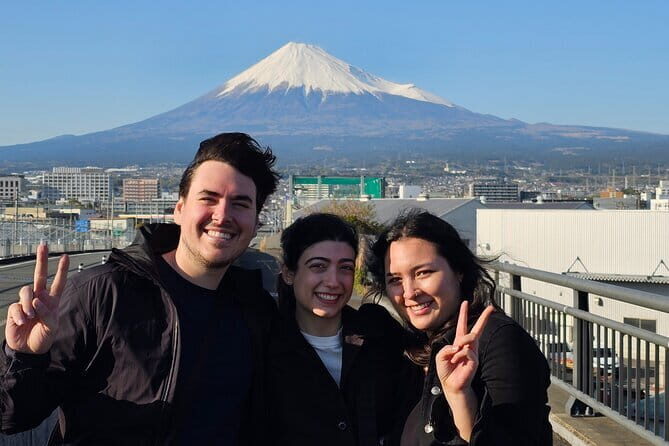
The tour runs about 2 hours 30 minutes total, including time for start, each stop, and returning. With a maximum of 5 travelers, the experience is designed to feel unhurried. That’s not just comfort—it helps you actually enjoy the stops instead of sprinting between them.
You’ll have multiple short segments—think quick look-and-photo moments rather than long tourist van hangs—so you get a variety of settings in one outing. It also means the guide can respond if someone needs an extra minute to warm up or capture the shot.
Shin-Fuji Station start: the key to skipping the usual scramble
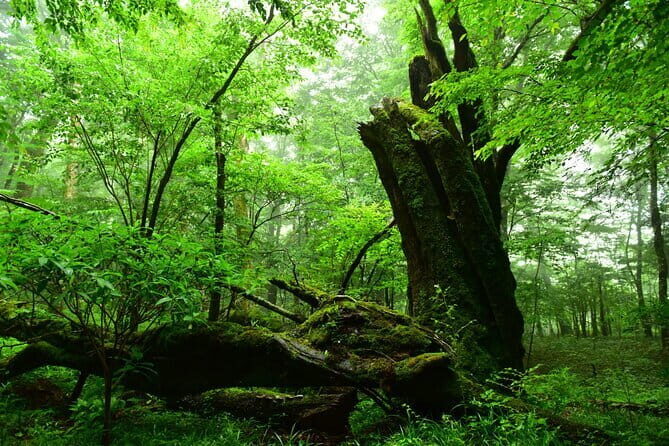
You meet at the south exit of Shin-Fuji Station. This matters because Shin-Fuji is a practical jumping-off point: it’s easier to organize around than far-flung bases where lines and transfers can stack up.
From there, the tour heads into Fuji City’s quieter areas. The overall vibe is: less of the classic Mt. Fuji day-trip crowd, more of the real local rhythm near the mountain. That shift alone is a big part of the value, especially if you’re already doing Hakone or Kawaguchiko and want a different side of the region.
Bishamonten Myoho-ji Temple: a short cultural stop before the coast
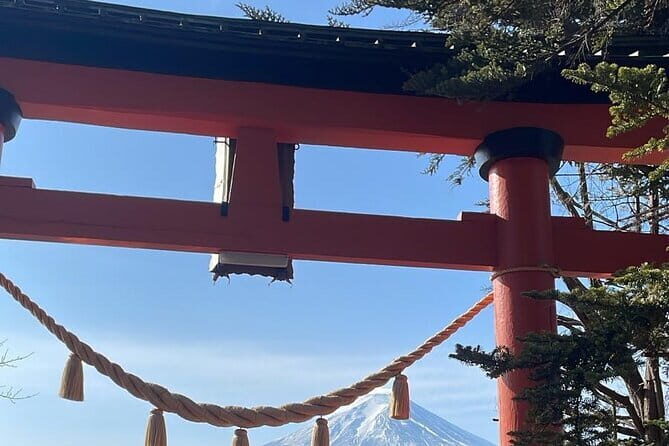
Your first sightseeing stop is Bishamonten Myoho-ji Temple. It’s scheduled for about 10 minutes, and admission is free. This is a “see it, reset, and go” kind of stop—enough time to orient yourself, notice details, and keep moving without burning half your trip.
After the temple, you head toward the sea and cycle along a route with views of Suruga Bay—described as Japan’s deepest bay—along with Mt. Fuji. That combination is the tour’s early payoff: you’re not only looking at the mountain, you’re watching how it appears from different terrain.
Possible drawback: with a stop this short, if you’re the type who wants to soak up temple architecture for a long time, you may feel you’re moving quickly. The tradeoff is that you still get several other meaningful stops later.
Suruga Bay cycling: where Mt. Fuji hits from sea-level angles
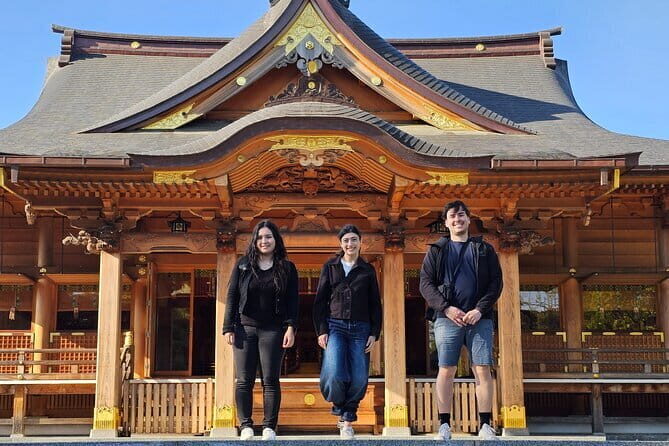
This is the part you’ll likely remember most: cycling with Mt. Fuji in the frame while Suruga Bay stretches out around you. Seeing Fuji from a more coastal perspective gives you a different sense of place than the classic frontal look from the busiest viewpoints.
Also, riding while the guide handles pacing helps you spend your attention on the outside world. You’ll be in motion, but not in a “race bike” way. The electric assist keeps it comfortable enough to keep noticing details—shoreline views, rural road sections, and the way communities sit at the foot of the mountain.
Yusui Park: spring water that’s tied directly to the mountain
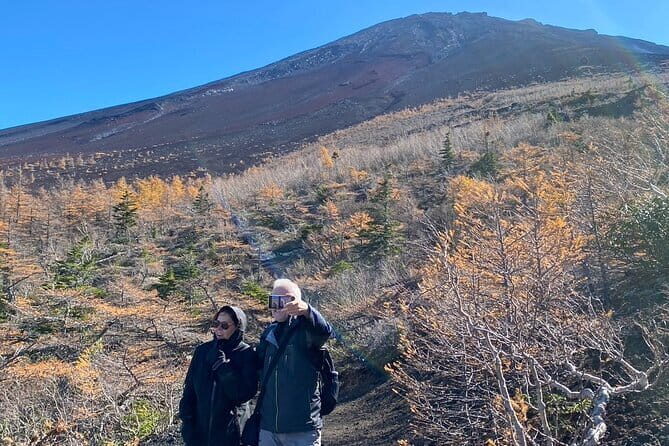
Next comes Yusui Park, with about 10 minutes on site. The tour focuses on various spring water sites in the city, specifically spring water drawn from Mount Fuji. This is a very Fuji City-style stop: practical, local, and not dependent on having a postcard-perfect mountain photo.
What makes it more than just a quick break is the theme. You’re not only riding through scenery—you’re stopping where locals connect daily life to the mountain. In winter, these water stops also feel extra “real,” because you can see how people use and value resources beyond tourism.
Possible consideration: the stop is brief. If you want to linger with a longer explanation or take extra time reading signage, you may have to do that on your own after the tour.
Hounji fountain: a drink break with a calmer rhythm
At Hounji, you’ll spend about 5 minutes at a fountain where you can drink spring water from Mount Fuji. It’s quick, but it’s a nice tonal shift: after biking and wide views, you get a grounded, sensory moment.
Even if you’re not a big “tourist taste” person, this is the kind of stop that helps you slow down. You notice temperature, smell, and the simple act of refilling at a source connected to the mountain.
Fujisan Yume No Ōhashi Bridge: the viewpoint, plus the 50-step choice
The final major photo moment is Fujisan Yume No Ōhashi Bridge, with about 10 minutes at the bridge. The south side includes a staircase with 50 steps, which gives you a choice: you can stay at the bridge level, or go up to gain a different vantage.
This is where winter can really pay off. If the sky cooperates, the bridge viewpoint is built for catching Mt. Fuji clearly. If Mt. Fuji is partially obscured, the bridge still provides a strong “Fuji in context” experience because you’re positioned above and around open space.
Possible drawback: those steps are something to think about in winter. Wear grippy shoes and move steadily. Cold weather can make surfaces slick, so treat the stair option as optional, not mandatory.
What’s included, plus what you should bring for winter comfort
The price includes an electric-assisted bike (Miyata Ridge Runner), a rental helmet, the guide, and insurance covered by the operator. In winter season only, you also get kairo heat packs. That’s a smart inclusion because warmth isn’t just comfort—it can affect how safely you ride.
Bottled water is not included, so you’ll want to bring your own drinks. The tour is short enough that you can manage with a light drink supply, but cold weather also makes you underestimate hydration needs.
Practical gear tips for winter:
- Dress in layers you can adjust while riding.
- Bring gloves you can still grip with.
- Use warm socks and shoes with good traction for possible stairs and cool ground.
- If you get cold easily, plan to use the kairo packs early, not at the end.
Your guide matters: why Yasu’s style fits this kind of tour
A standout in the experience is the guide, Yasu Hasegawa of NINOMARU Guided Tour. The tone of his guidance comes through repeatedly: he shares information that makes the stops feel connected, and he’s attentive about the group’s pace.
There’s also a practical photography angle. Even when the day isn’t ideal, the guide helps you capture the moment with the time you have at viewpoints. And on hot days in other seasons, the operator has lent cooling gear, which hints at a broader approach: the tour outfitters are paying attention to what weather does to riders.
Value check: is $105.42 a good deal for a winter Mt. Fuji ride?
At $105.42 per person, you’re paying for a guided route plus the bike itself and winter gear. That’s important because doing this kind of ride independently can turn into hidden costs: figuring out the route, arranging an e-bike, managing parking, and timing stops so you don’t waste your limited viewing windows.
Here, the value is in the structure. You get:
- a pre-set route that’s aimed at quieter Fuji City areas,
- multiple stops with free admission,
- an e-bike you can ride comfortably with minimal effort,
- and winter heat support (kairo).
The stops are short, but that’s part of what makes the price feel reasonable for a 2.5-hour outing. You’re not paying for a half-day bus excursion; you’re paying for an efficient, local route that’s hard to replicate on the fly.
Who should book this tour, and who might pass
You’ll likely love this if you want:
- Mt. Fuji views without the chaos of the most crowded bases,
- a light, comfortable ride thanks to electric assist,
- small-group pacing with time for photos,
- and local details like spring water sites that connect to daily life.
This isn’t the best fit if you want a long, slow, deep cultural day with extended time at each site. The format is designed for motion and a handful of focused stops, not extended museum-style wandering.
Also, because the tour requires good weather for the clear-view promise, it’s best if your schedule can handle a possible change of plans.
Should you book the Clear View Mt. Fuji E-Bike Tour?
I’d book it if you’re traveling in winter and want a practical, low-stress way to see Mt. Fuji from fresh angles—temple to sea to spring water to a bridge viewpoint—while staying away from the busiest crowds. The small-group cap and the winter heat packs make it feel thoughtfully designed.
Skip it only if you prefer to control every minute yourself, or if you’re on a tight schedule with no flexibility when weather affects visibility.
If you want a satisfying Mt. Fuji outing that mixes views with everyday local stops, this is a strong choice.
FAQ
How long is the Winter Special Clear View Mt. Fuji E-Bike Tour?
The tour is about 2 hours 30 minutes total, including time from the start through each segment and back to the meeting point.
What is the meeting point?
You meet at the south exit of Shin-Fuji Station in Fuji, Shizuoka, Japan.
How many people are in the group?
The tour has a maximum of 5 travelers.
What e-bike is included?
You’ll ride an electric-assisted bike, the Miyata Ridge Runner.
What does the tour price include?
It includes the electric-assisted bike, a rental helmet, a guide, insurance coverage by the operator, and winter-only heat packs (kairo).
Is bottled water provided?
No. Bottled water is not included, so you should prepare your own drinks.
Is it a mobile ticket experience?
Yes, the tour uses a mobile ticket.
What if the weather is poor?
This experience requires good weather. If it’s canceled due to poor weather, you’ll be offered a different date or a full refund.