REVIEW · FUJI
Shizuoka: Advanced Canyoning Activity near Mt. Fuji
Book on Viator →Operated by Fujiyama Canyoning Japan · Bookable on Viator
A lava canyon beside Mt. Fuji feels unreal. In Shizuoka, you’ll swap city time for real canyoning—lava gorge walking, water-chute slides, rope rappels, and jumps—guided by Yuki and Misa from Fujiyama Canyoning Japan. It’s built for a small group (max 6) and runs about 3 hours, with the best season typically from summer into early fall.
What I like most is how practical it feels: you get the full canyon kit (wetsuit, helmet, harness, and shoes), then you’re coached through the movement step by step. Yuki’s calm, experienced guide style and Misa’s friendly energy make the day feel organized, not chaotic, even when you’re doing something new.
My other favorite part is the setting. This is a Fuji area canyon, so you’re getting that fresh-nature change of pace while you’re scrambling, sliding, and cooling off in wetsuit-and-helmet mode. One drawback: this is not a good fit if you have bad joints or back issues, or any serious health limitations, and there can be moments that feel a little scary if it’s your first time.
In This Review
- Key highlights to know before you go
- Mt. Fuji’s canyon side: why this feels different
- Meet your guides: Yuki and Misa’s team vibe
- What’s included: gear that actually lets you move
- Your canyon day: lava gorge walking, slides, rope work, and swimming
- 1) Start-up and safety coaching
- 2) Lava gorge walking and moving through rough terrain
- 3) Water-chute slides
- 4) Jumping (about 1m to 9m)
- 5) Rappelling with a rope
- 6) Swimming in a pool (with wetsuits)
- Jump and rappel confidence: how to get through the scary moments
- Value and price: is $180.64 worth it?
- When to book: summer-to-September is the sweet spot
- Getting there from Fujioka: simple start, simple finish
- Who this canyoning trip suits best
- Should you book Fujiyama Canyoning Japan?
- FAQ
- Where is the meeting point for the canyoning activity?
- How long is the experience?
- How much does it cost?
- What’s the group size?
- What gear is included?
- What canyon activities are included?
- What should I bring since some items aren’t included?
- When is the best time of year to go?
- What if the weather is bad?
- Can I cancel for a refund?
Key highlights to know before you go
- Small-group cap of 6 keeps the coaching personal and the pacing sane
- Jumping (about 1m to 9m) plus rappelling gives you variety beyond basic sightseeing
- All major gear is included: wetsuit, socks, helmet, harness, and canyon shoes
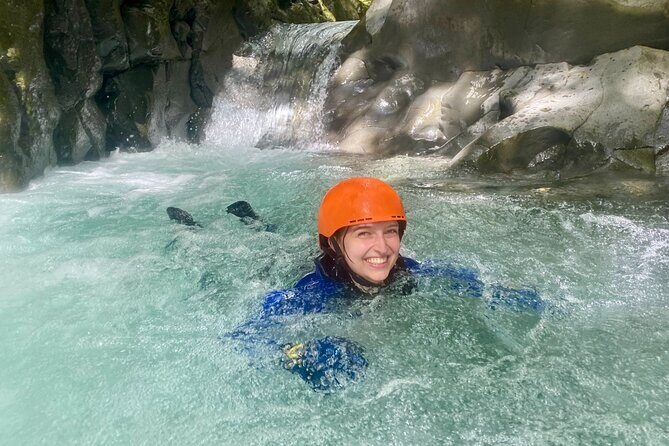
- Lava gorge activity style means slides, walking over rough terrain, and swimming in a pool
- Best season is summer to September; winter months are closed
Mt. Fuji’s canyon side: why this feels different
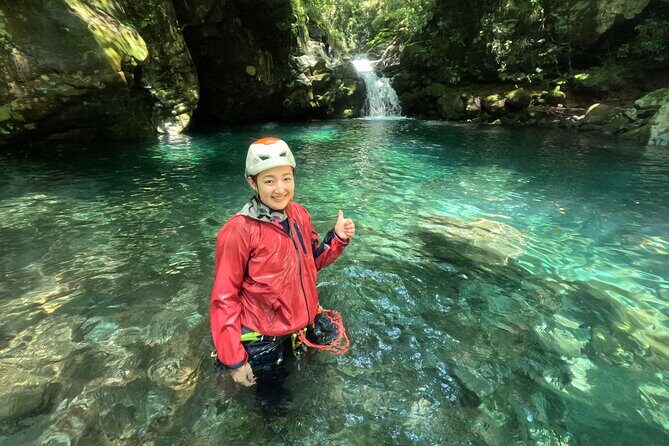
Most people think of Mt. Fuji as views from a train window or a crowded viewpoint. This experience flips the script. You’re still in the Fuji area, but instead of looking at nature from a distance, you’re in it—moving through a lava gorge and working your way from one obstacle to the next.
The canyoning format also makes the day feel complete. In a few hours, you’ll do multiple skills: you’ll walk uneven ground, slide down water chutes, and get on rope-assisted moves. Then there’s the swim portion—still active, but less about climbing and more about staying loose and comfortable in the water.
Another value point: the tour is designed to fit people who want adventure without turning the day into an all-day hike. At about 3 hours, it’s long enough to feel like an experience, but short enough that you’re not wrecked for the rest of your trip.
You can also read our reviews of more tours and experiences in Fuji.
Meet your guides: Yuki and Misa’s team vibe
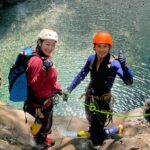
The guides matter more than people expect in activities like this. Here, you’re led by an experienced duo with very different strengths that work together.
Yuki (born in Kochi Prefecture) has experience in canyoning, rock climbing, skiing, and even competitive swimming. That background shows in how an activity like this gets managed: you need confidence and calm when you’re handling rope work, and you need comfort with moving in and around water. Even the little “how to breathe / how to move” coaching matters when you’re learning something physical and unfamiliar.
Misa (born in Kanagawa) brings warmth and friendly energy. In practice, that means you’ll feel comfortable asking questions and you’re not stuck guessing what to do at each step. The goal here is safe, enjoyable canyoning—not just pushing you through obstacles.
This is also a small operation built specifically for canyoning near Mt. Fuji, founded in 2024 at the foot of the mountain. That focus tends to translate into smoother logistics on the ground: less improvising, clearer instructions, and a stronger sense of what the canyon day should look like.
What’s included: gear that actually lets you move
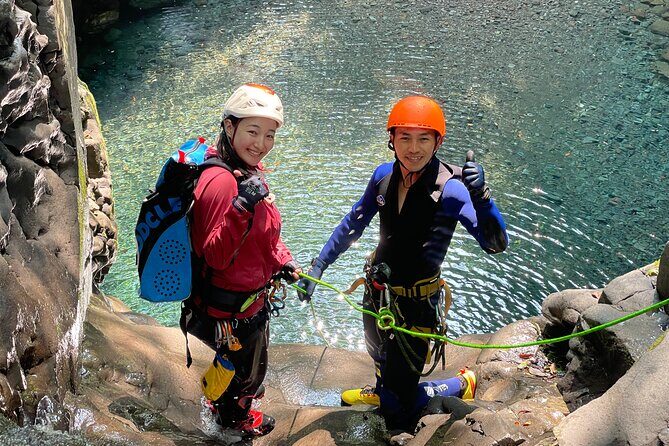
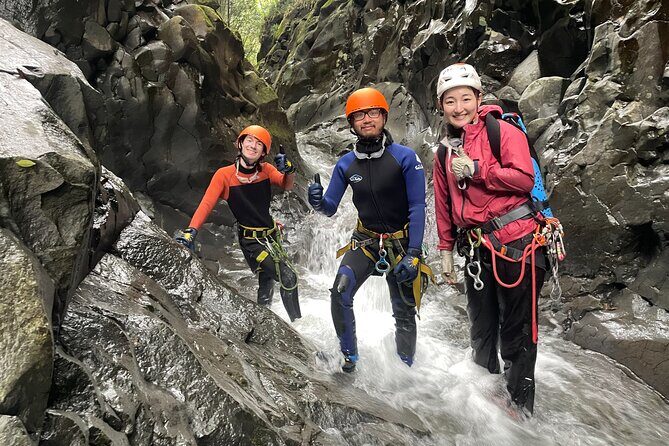
This tour includes the core canyoning equipment: wetsuits, socks, helmet, harness, and canyon shoes. You’re not expected to show up dressed like you’re going hiking. You’ll suit up for getting wet and for contact with rock and water during slides, jumps, and rope work.
A wetsuit is more than “winter-style warmth.” It helps with comfort and safety during the swim and when you’re dropping into water after jumps. Helmet and harness gear are what let the team run rope-assisted parts confidently. And canyon shoes are a big deal: you’ll be stepping on slick, uneven surfaces where normal footwear can feel sketchy.
What’s not included is simple but important. You should plan on bringing:
- A towel (not provided)
- Your own swimwear approach: swimsuits are not included, and you may want to bring something you can spare underwear for afterward
If you’re packing for Japan generally, this is a day where you’ll want to travel light on water-ready clothes, since most of the “hard gear” is handled for you.
Your canyon day: lava gorge walking, slides, rope work, and swimming
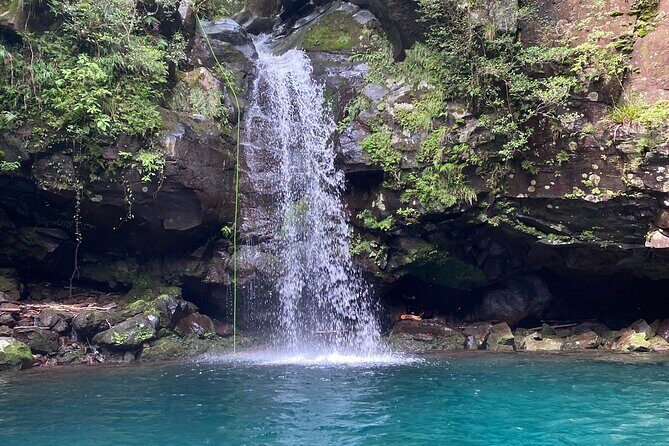
The exact route can vary with conditions, but the day is built around a classic canyoning flow: you start with coaching, then you move through a sequence of obstacles in the lava gorge environment near Mt. Fuji.
Here’s what you can expect in a practical, no-nonsense way:
1) Start-up and safety coaching
Before the fun parts, you’ll be briefed on how to use the harness and what to do during rope work and water entries. This is where you should ask anything you’re unsure about—foot placement, how to handle the rope, and what body position feels stable on a slide or during a jump.
If you’re new, treat this time as your “confidence builder.” You’ll get the best experience when you’re not guessing.
2) Lava gorge walking and moving through rough terrain
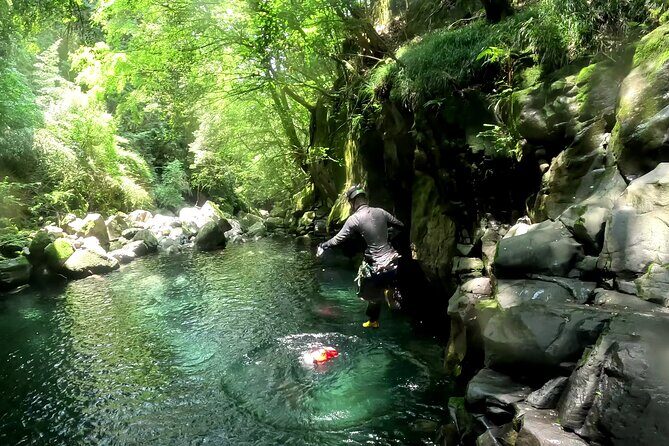
Canyoning isn’t just about jumping. A big chunk is walking through the gorge—moving over uneven lava-rock terrain while staying aware of footing and water flow. This part sets the stage: you learn how to move without panicking when the ground is slick or irregular.
If you’re someone who gets tense on uneven surfaces, tell the guides early. They can help you pick a pace that keeps you focused.
3) Water-chute slides
Sliding down water chutes sounds simple until you’re doing it with a harness and a helmet. The key isn’t speed—it’s control. You’ll want to keep your body compact, follow instructions about where to look, and be ready for how water feels against your legs and hips.
Slides are one of the best “first-time friendly” parts because they let you experience the water movement without needing to be strong in climbing.
4) Jumping (about 1m to 9m)
Jumping is the headline skill, and it’s included—some jumps from roughly 1 meter up to 9 meters. That range matters. The activity can feel very different depending on which jump height you choose.
If you’re comfortable, you’ll likely enjoy the bigger drops. If you’re cautious, you can still have a great day on the lower end—especially if you’re new. The big thing is listening carefully to how the entry should be handled so you hit the water smoothly.
5) Rappelling with a rope
Rappelling adds a different kind of challenge: you’re moving down by controlling your descent and staying calm while suspended. That’s where a guide with real canyoning experience (hello Yuki) is worth its weight in gold.
This part is often the moment people realize canyoning is about technique, not bravado. If you take your time and follow instructions, it turns from scary to doable.
6) Swimming in a pool (with wetsuits)
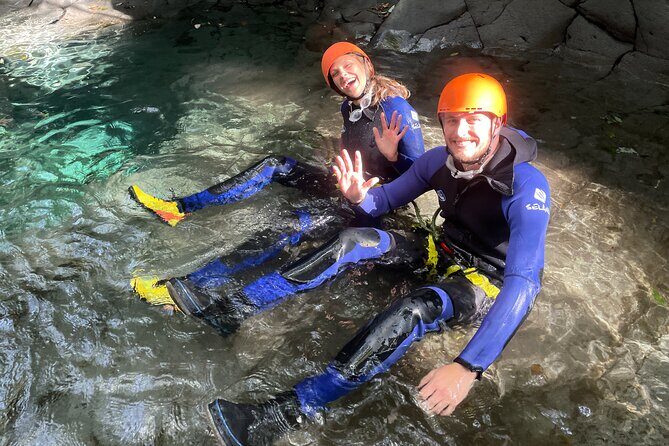
There’s also a swim portion in a pool setting while you’re wearing wetsuits. Swimming here is less about speed and more about staying relaxed and present in the water. You’ll get a break from the constant jumping and moving, which helps the day feel varied rather than nonstop adrenaline.
Jump and rappel confidence: how to get through the scary moments
Let’s be honest: a canyon day can be intimidating. The good news is that the experience includes a structured approach with trained guides, and it’s especially suitable for second timers, where you already know the basic rhythm.
If this is your first time, I’d recommend this mindset:
- Decide in advance what you’re comfortable with. You don’t need to match someone else’s bravery.
- Focus on the next instruction, not the whole event. Rope work and slides feel easier when you’re thinking one step at a time.
- Let your body follow the gear. The helmet and harness aren’t there for show. They help you stay stable and protected.
Also, be careful with expectations around health. This activity is physical and involves jumping, sliding, and rope movement. If you have a back issue, sensitive knees, or any mobility limitation, don’t force it. The day can be a lot, even if you’re healthy.
Value and price: is $180.64 worth it?
At $180.64 per person for about 3 hours, you’re paying for more than a tour guide holding a clipboard. You’re paying for:
- Licensed guided canyoning coaching (especially for rope work)
- The full set of rental gear: wetsuit, helmet, harness, shoes
- A structured program built around multiple canyon skills, not just one photo stop
This is also a small-group experience with a maximum of 6 travelers, which usually means less waiting around and more direct time with the guides. And there are group discounts, so if you’re traveling with friends (or can coordinate), the value can improve.
One more practical note: it’s typically booked about 28 days in advance on average, so if you’re traveling in peak summer weeks, plan ahead to get your preferred slot.
When to book: summer-to-September is the sweet spot
If you want the best conditions, this trip strongly points you toward warm weather. The tour notes that the best season is summer to September, and you should expect winter closure from December to March.
That seasonal rhythm makes sense in Japan. Canyoning relies on safe water and weather conditions. Even if you’re in a wetsuit, the environment still has to cooperate.
Plan around the weather reality too. The experience requires good weather, and if it’s canceled due to poor weather, you’ll be offered a different date or a full refund. Translation: you’re not gambling your trip with no safety net.
Getting there from Fujioka: simple start, simple finish
Your meeting point is Gakunan Fujioka Station, located in Fujioka, Fuji, Shizuoka 417-0841. The good part is that the activity ends back at the same meeting point, so you don’t need to figure out a complicated one-way return after you’re wet and tired.
It’s also described as being near public transportation, which matters in Japan where train connections often save your day.
If you’re planning your full day, I’d treat it like an adventure block: get there rested, eat something earlier (not a huge meal right before), then let the guides handle the rest.
Who this canyoning trip suits best
This isn’t a “sit and watch” excursion. It’s for people who want active time, enjoy water and movement, and are okay with rock, rope, and the occasional moment of nerves.
It’s a solid match if you:
- Want a nature break from cities and want to be physically involved
- Like hands-on learning, not just guided storytelling
- Are comfortable following safety instructions and trying new skills
- Have some adventure experience already (and this can be great for second timers)
I’d skip it, or at least talk carefully with the operator first, if you:
- Have bad joints or back problems
- Have any serious health limitations
- Know you can’t handle jumping or rope-controlled descent
Most travelers can participate, but “can” isn’t the same as “should.” Your body is the key safety tool.
Should you book Fujiyama Canyoning Japan?
Based on what you’re getting, I think booking is an easy yes if you want real adventure near Mt. Fuji and you don’t mind getting wet. The small-group format, the included gear, and the skill variety (walking, slides, jumps, rappelling, swimming) make this feel like value, not just a paid activity.
I’d book with extra confidence if you like structure: you’ll be guided by Yuki and Misa, and they clearly run this as a focused canyoning program rather than a casual add-on. And with a strong 4.9 average rating and 100% recommendation in the info provided, it’s a good sign that people generally leave happy.
Hold off if you have mobility or health concerns, or if the idea of jumps and rope work makes you uneasy in a way you can’t manage. In that case, you’ll likely spend the day wishing you were somewhere else.
FAQ
Where is the meeting point for the canyoning activity?
The tour meets at Gakunan Fujioka Station in Fujioka, Fuji, Shizuoka 417-0841, Japan, and it ends back at the same meeting point.
How long is the experience?
The activity lasts about 3 hours.
How much does it cost?
The price is $180.64 per person.
What’s the group size?
The maximum group size is 6 travelers.
What gear is included?
Included gear covers rental items like wetsuits, socks, a helmet, a harness, and canyoning shoes.
What canyon activities are included?
The experience includes some jumping (about 1m to 9m), rappelling with a rope, sliding, and swimming with a licensed guide.
What should I bring since some items aren’t included?
Bring a towel, and plan for swimsuits (you may also want spare underwear). Passion for the activity is also listed as something you bring yourself.
When is the best time of year to go?
The best season is summer to September.
What if the weather is bad?
The experience requires good weather. If it’s canceled due to poor weather, you’ll be offered a different date or a full refund.
Can I cancel for a refund?
Yes. Cancellation is free up to 24 hours before the experience start time for a full refund. If you cancel less than 24 hours before, the amount paid is not refunded.