REVIEW · NARA PREFECTURE
Make Your Own Soy Sauce in Japan’s Old Capital Asuka Nara
Book on Viator →Operated by Discover Asuka’s Wonders · Bookable on Viator
Soy sauce gets personal in Asuka. You’ll visit Tokusei Soy Sauce, press your own soy sauce from moromi with a traditional wooden press, and finish by putting your name on a custom bottle. What I like most is the hands-on pressing and the fact that you taste the freshly pressed sauce right there, with local tofu.
One thing to consider: you’re meeting in Asuka Village near Okadera Temple, and the experience doesn’t include private transportation. If you’re coming from Nara, plan for a public-transit route and a little walking.
In This Review
- Key Highlights You’ll Care About
- Where Asuka Turns Soy Sauce Into a Hands-On Craft
- Tokusei Soy Sauce: A 105-Year Factory Stop (That Still Feels Personal)
- Pressing Moromi With a Wooden Press: The Part You’ll Remember
- Your Soy Sauce Tastes Like Fresh Work, Not Shelf Stock
- The Bottle Label Moment: Why the Souvenir Feels Real
- Price and Timing: A 1:00 pm Plan That Fits Real Travel Days
- Who Should Book This Soy Sauce Pressing Experience
- Should You Book It? My Practical Take
- FAQ
- How long is the soy sauce pressing experience?
- Where do I meet for the tour?
- What time does the tour start?
- Is this tour private?
- What’s included in the price?
- Do I make and take home soy sauce?
- Is transportation included?
- Is the soy sauce you taste heated?
- What’s the cancellation policy?
Key Highlights You’ll Care About
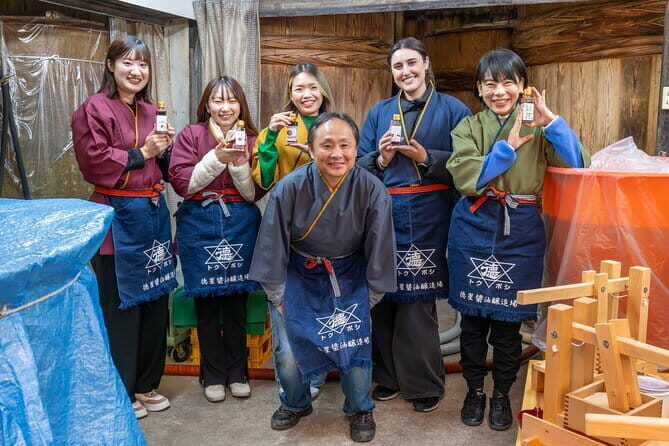
- Press moromi with a traditional wooden press using an original squeezer tool
- Taste freshly pressed soy sauce (not heated) with tofu from Shimode Tofu
- Make it souvenir-level by attaching your own label to the bottle
- See a long-running shop in action with continuous operation for three generations since 1918
- Eat mitarashi dumplings with an original Tokusei shoyu-based sauce
- Small-group feel with your own private group for this activity
Where Asuka Turns Soy Sauce Into a Hands-On Craft
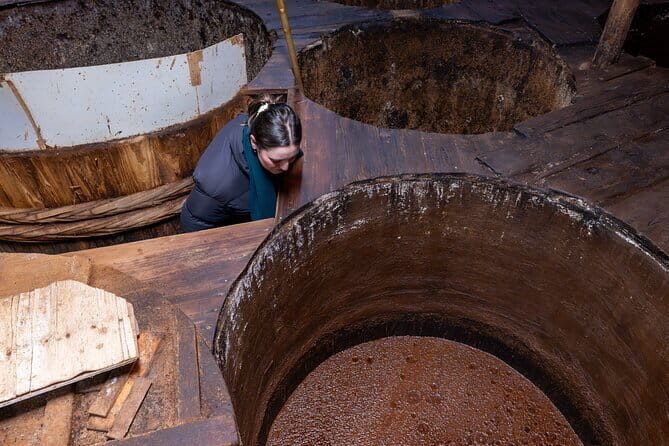
Asuka isn’t just another stop on the Nara circuit. It’s one of those places where food traditions stay tied to real geography—here, on the approach to Okadera Temple in Asuka Village. The experience starts at 明日香スタンド7 Oka, Asuka, Takaichi District, Nara, so you’re not wandering around vague industrial zones. You’re close to something local and specific, and that helps the whole lesson feel grounded.
Tokusei Soy Sauce is the center of gravity. This is a shop founded 105 years ago, and it’s been in continuous operation for three generations since 1918. That kind of continuity matters when you’re learning a process that depends on fermentation, texture, and patience. You’re not just watching a production demo—you’re participating in a step that turns raw mash into something kitchen-ready.
The tone of the experience is also practical. You’ll have a tour of the brewery, then you’ll do the work: squeezing the mash and packaging the result. By the end, you’re not leaving with a generic souvenir. You’ve made a bottle that carries your label and your choices, which is rare for food experiences at this price point.
You can also read our reviews of more tours and experiences in Nara Prefecture.
Tokusei Soy Sauce: A 105-Year Factory Stop (That Still Feels Personal)
Soy sauce can sound like a commodity, like it only exists on restaurant tables. At Tokusei Soy Sauce, it becomes a real craft. Your visit includes a tour of the brewery, with a focus on how soy sauce starts and how it’s pressed from the base mash (moromi). You’re learning inside a place that has kept operating long enough to have passed skills from one generation to the next.
The tour is positioned around the idea that soy sauce isn’t a single moment—it’s the outcome of fermentation followed by careful separation. When you’re standing there, you can connect the dots between the chemistry you might’ve heard about in textbooks and the physical steps you’re about to repeat. Even if you’re not a food scientist, you’ll understand the logic quickly: fermentation builds flavor, and pressing concentrates it into the bottle.
Why this matters for you: you’ll taste the result on-site, and you’ll do it while the whole process is still fresh in your mind. That’s when soy sauce stops being background flavor and becomes a distinct product you can recognize.
Pressing Moromi With a Wooden Press: The Part You’ll Remember
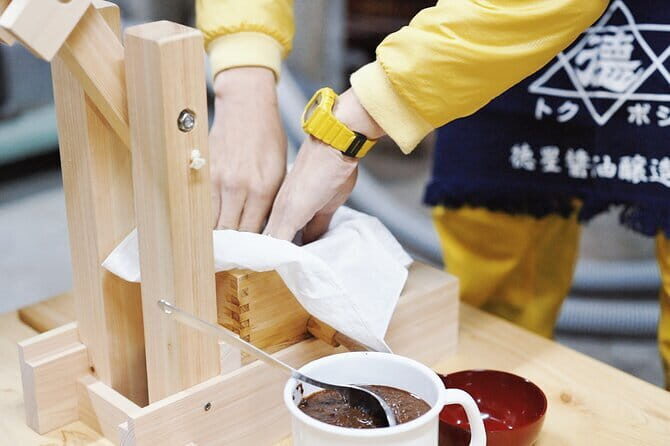
After the brewery tour, the experience shifts into your hands. You’ll use an original press to squeeze your own soy sauce from the mash. Then you’ll finish the workflow with packaging in bottles and decoration.
Here’s what you can expect, step by step:
First, you’ll learn how moromi becomes soy sauce through pressing. This is the core action: applying pressure to separate liquid soy sauce from the solids. The tools matter. You’re using a traditional wooden press setup, not a modern machine that makes the work feel automatic. That difference changes how you experience the process. You’ll pay attention to force, texture, and timing.
Next, you’ll get a chance to squeeze by hand using the tour’s original squeezer. That makes this more than a passive activity. You’ll feel the rhythm and resistance yourself, and you’ll likely notice how the work changes as the mash yields.
Then comes the “make it yours” stage. The squeezed soy sauce is packaged into bottles, and you attach your own label. That small step is bigger than it sounds. It turns a tasting experience into a take-home product with a story you can explain at dinner later.
A quick consideration: this is a foodcraft activity, not a fast-moving show. It’s about doing things carefully. If you like hands-on tasks and don’t mind slowing down for quality, you’ll enjoy it. If you only want quick photos and no participation, you may find the pace slower than expected.
Your Soy Sauce Tastes Like Fresh Work, Not Shelf Stock

One of the best parts is that you taste what you just pressed. The experience includes tasting freshly pressed soy sauce that has not been heated. That single detail changes the flavor perception. Heating can shift aromas and mellow certain notes, while unheated soy sauce tends to taste more like the immediate result of pressing—briny, rich, and bright in a way that feels closer to the source.
You’ll taste it on the spot with tofu from Shimode Tofu in the village. Tofu is an ideal pairing for this kind of taste test because it’s neutral enough to let the soy sauce flavor do the talking. You can get a clear sense of saltiness, depth, and the way the sauce clings to food.
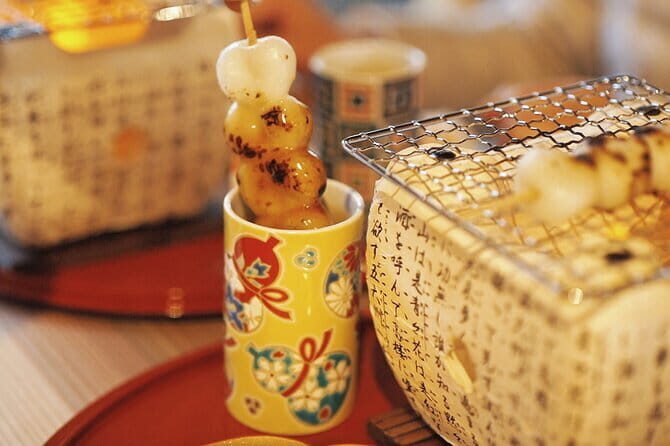
After that, you’ll move into dessert-and-snack territory with mitarashi dumplings. You’ll be served excellent dumplings with an original sauce made from Tokusei soy sauce in collaboration with a local long-standing shop. Mitarashi sauce is usually sweet-salty and glossy. Here, you get a direct line from your soy sauce to a classic Japanese treat. It’s the kind of contrast that makes the learning stick.
This tasting sequence is also smart for your memory. You start with the sauce alone on tofu, then you shift to an actual dish where soy sauce becomes part of a balanced flavor profile. By the time you leave, you’re not just thinking about fermentation—you’re remembering how it tasted in two different contexts.
The Bottle Label Moment: Why the Souvenir Feels Real
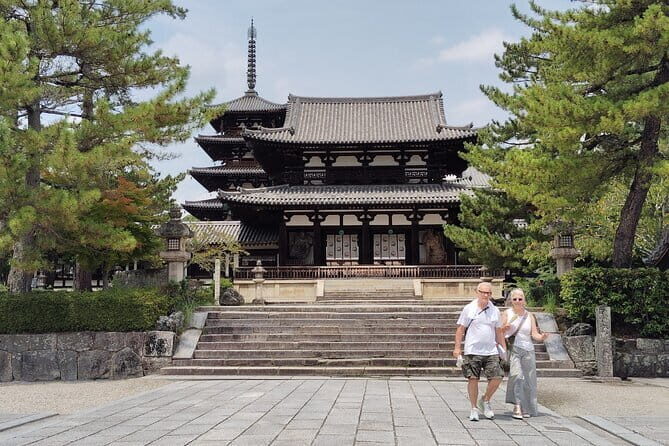
Plenty of cooking classes hand you a finished product. Fewer let you make something that feels like a personalized artifact. Here, the tour ends with you attaching your own label to the bottle.
That’s why this experience punches above its weight as a value play. At $78.83 per person for about 2 hours 30 minutes, you’re paying for time, staff guidance, the use of tools, food pairings, and a take-home product you helped create. The tasting with tofu and the snacks (included) also help justify the cost because you’re not just buying an activity; you’re getting a mini food program.
In practical terms, the bottle label turns your soy sauce into something you’ll actually use. You can bring it home and compare it to what you usually buy. Even if you end up using it mostly for special cooking, it will feel different because you know how it was pressed and packaged.
If you’re worried about carrying glass, plan ahead with a small bag or wrap. The tour includes bottling and decoration, so treat it like a fragile food souvenir on the way back to your lodging.
Price and Timing: A 1:00 pm Plan That Fits Real Travel Days
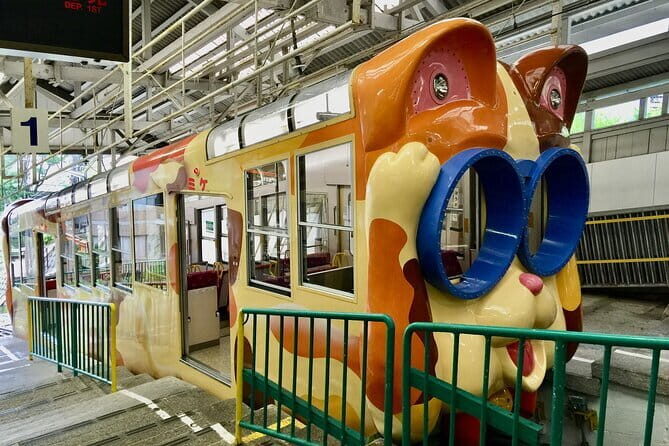
This experience starts at 1:00 pm and runs around 2 hours 30 minutes, ending back at the meeting point. You can fit it nicely between other Asuka visits, especially if you’re already in the area. Late mornings can be a mess with crowds in popular sites, so a mid-afternoon start can feel calmer.
The tour uses a mobile ticket, and it’s a private activity for your group only. That matters for comfort and focus, since you’re doing hands-on pressing and tasting rather than walking past stations on a crowded schedule. Also, it has a minimum number of travelers, so it can be canceled if the group requirement isn’t met—then you’ll be offered a different date or a full refund.
About getting there: the meeting point is near public transportation, but the tour does not include private transportation. So you’ll need to do the usual Japan planning—figure out the train/bus route into Nara’s Asuka area and allow time for the final connection to 明日香スタンド7. One review noted that reaching the location from Nara was easier than expected. My advice: still build in a bit of buffer. When you’re aiming to arrive on time for a hands-on start, being early beats being fast.
Who Should Book This Soy Sauce Pressing Experience
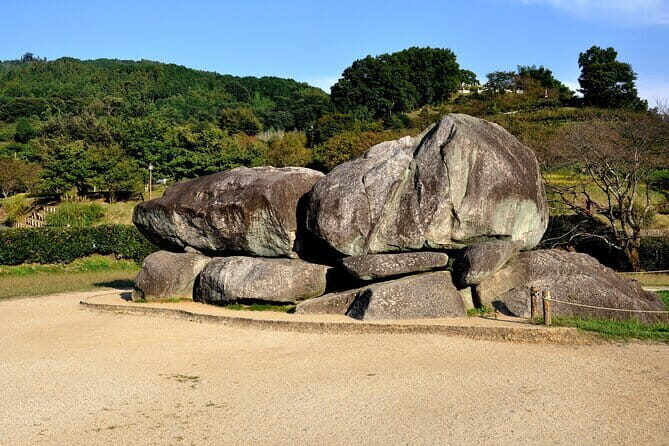
You’ll probably love this if you like food as a craft, not just as a flavor. This is a good pick for:
- Food lovers who enjoy learning processes, not just tasting
- Travelers who like small, specific experiences tied to a place (Asuka has that feel)
- Anyone interested in Japanese staples beyond restaurants and convenience stores
You might skip it if:
- You dislike hands-on activities (the pressing and squeezing are the heart of it)
- You’re mainly there for a sightseeing checklist and want minimal participation
- You prefer shopping over making something from scratch
If you’re traveling with a group, the private format can feel like a sweet spot—you get attention without the full-on crowd. If you’re solo, it can still be worth it because the action is structured: tour, press, label, taste, eat.
Should You Book It? My Practical Take
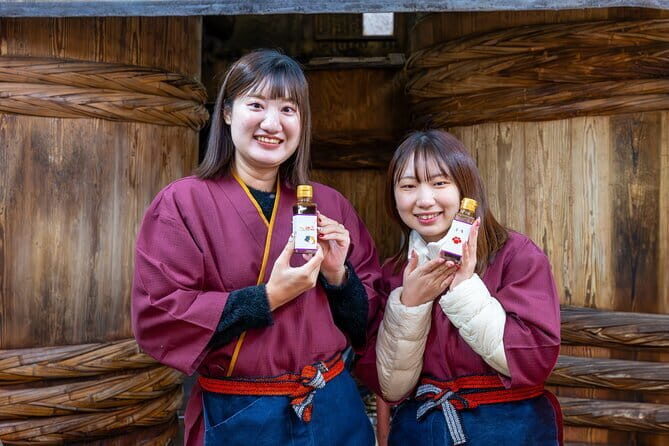
If your travel style includes hands-on food experiences, this is an easy yes. The value isn’t just in the finished bottle—it’s in the sequence: tour a long-running brewery, press the sauce yourself, taste the unheated result with tofu, then end with mitarashi dumplings. That combination makes the lesson feel complete.
The only reason I’d hesitate is if your schedule is tight or you don’t want to manage public transit to Asuka. Since private transportation isn’t included, the main challenge is logistics, not the experience itself. If you can get there in time, you’ll leave with something you made and something you tasted—plus a story you can explain without needing a translation.
FAQ
How long is the soy sauce pressing experience?
The experience lasts about 2 hours 30 minutes.
Where do I meet for the tour?
You meet at 明日香スタンド7 Oka, Asuka, Takaichi District, Nara 634-0111, Japan.
What time does the tour start?
The start time is 1:00 pm.
Is this tour private?
Yes. It’s a private tour/activity, so only your group participates.
What’s included in the price?
Snacks are included, and the experience includes tasting soy sauce with tofu and eating mitarashi dumplings as part of the event.
Do I make and take home soy sauce?
Yes. You press soy sauce from the mash, package it in bottles, and attach your own label.
Is transportation included?
No. Private transportation is not included.
Is the soy sauce you taste heated?
No. You’ll taste freshly pressed soy sauce that has not been heated.
What’s the cancellation policy?
You can cancel for a full refund up to 24 hours before the experience’s start time. If you cancel less than 24 hours before, the amount paid won’t be refunded.