REVIEW · NARA PREFECTURE
Private Guided Half-Day Walking Tour in Yoshinoyama
Book on Viator →Operated by Yoshino Visitors Bureau · Bookable on Viator
Yoshinoyama turns a simple walk into a story you can feel. I like how this tour mixes UNESCO temple sites with the mountain district’s seasonal “layer zones,” and I really enjoy the private guide flexibility that lets you hike the whole way or swap in bus/ropeway for easier pacing. My one caution: spring can be painfully crowded, and the uphill sections may not feel good if your legs are tired.
You get a 4-hour plan with clear stops and timing, but it’s still yours to shape. You’ll visit the Mt. Yoshino area, pass the Kane no Torii Gate, go inside Kinpusen-ji Temple’s Zao-do Hall, and walk in the kami-senbon sakura tree grove—then you’re free to keep exploring on your own or move on while you still have time.
In This Review
- Key things to notice before you go
- Where Yoshinoyama’s Shugendo route starts to make sense
- The walking plan: Mt. Yoshino, village streets, and the seasonal “tier zones”
- Kane no Torii Gate: why a 10-minute stop feels important
- Inside Kinpusen-ji: Zao-do Hall and the Shugendo story
- Kami-senbon sakura grove: when the trail is the main event
- Making the tour match your energy level (walk, bus, or ropeway)
- Time, crowds, and the smart spring strategy
- Price and value: what $99.76 per person buys you
- Practicalities that help you enjoy the day
- What the best moments feel like on this tour
- Should you book Private Guided Half-Day Walking Tour in Yoshinoyama?
- FAQ
- What time does the tour start, and where do I meet?
- How long is the private guided walking tour?
- What are the main guided stops on the route?
- Is the Zao-do Hall entrance fee included?
- Is lunch included in the tour price?
- If I want help avoiding uphill walking, can I use transportation?
- How much does ropeway transport cost if I choose it?
- What happens if the experience can’t run due to weather?
Key things to notice before you go
- Private, not crowded: only your group joins, so your guide can adjust the pace and route.
- Seasonal focus: sakura in spring, fall colors in colder months, with the same sites showing different moods.
- Two ways to enjoy the hike: walk from Yoshino Station, or use bus/ropeway when the climb is too much.
- Shugendo at eye level: you’re not just looking at temples—you’re learning how the route connects to mountain ascetic practice.
- Zao-do Hall is the big interior stop: admission is included, and you’ll spend real time there.
Where Yoshinoyama’s Shugendo route starts to make sense
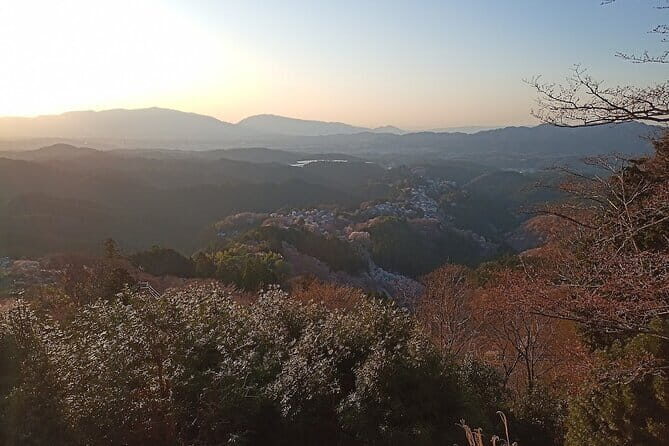
Yoshinoyama isn’t a single monument. It’s a temple district built around an older way of thinking—Shugendo, the tradition of mountain ascetic training. The whole area feels like a pilgrimage route, with gates, halls, and trails that guide you step-by-step from everyday life toward a sacred mountain world.
What makes this half-day tour so practical is that it doesn’t force one exact hiking fantasy. The itinerary is built around the “great hits,” but your guide can reshape the route. If you want the full walking experience from Yoshino Station, you can do it. If you’d rather avoid steep climbs (or just want to conserve energy), you can choose a bus or ropeway option instead, and your guide can also arrange an alternative to the uphill section in the kami-senbon sakura grove.
Even better: after the guided portion, you don’t feel rushed into leaving immediately. You get time to wander the streets and shops on your own, grab a snack, or simply pause and watch the season change across the hillside.
You can also read our reviews of more tours and experiences in Nara Prefecture.

The walking plan: Mt. Yoshino, village streets, and the seasonal “tier zones”
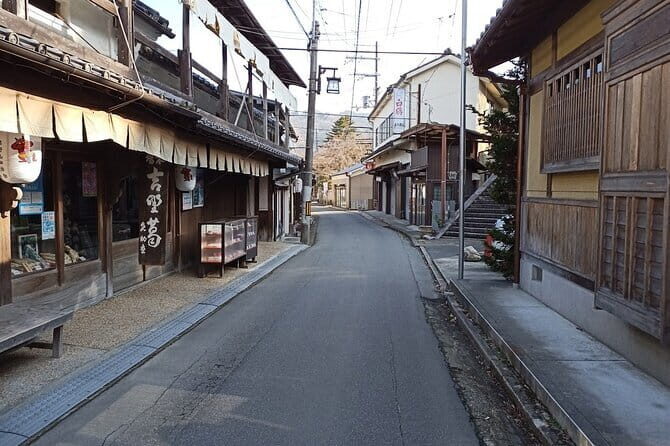
The first stop is Mt. Yoshino, the heart of the UNESCO district centered on Kinpusen-ji. This is where the tour becomes more than sightseeing. You’ll walk through the mountain temple town—streets, trails, and viewpoints—while your guide points out what to notice so your brain starts connecting the dots.
You get about 2 hours 45 minutes here, and admission isn’t required for this portion. That matters because it gives you freedom to spend time on the parts that catch your attention—especially if you’re there in a peak season when everything looks beautiful and you want to move slower.
In spring, the big draw is sakura. The area is known for thousands of sacred cherry blossoms, but the effect isn’t only about a single cherry-lined path. Yoshinoyama is organized into different tiers and zones, so you can get that gradual sense of the mountain being layered with blossoms. In fall, the same walking rhythm delivers strong color and a different kind of atmosphere.
One small detail that makes a big difference: your guide is there to help you read the terrain. The tour is described as manageable for moderate fitness, but there’s a warning built in—roughly 400 meters of elevation gain in the uphill parts. If you hit that and think your pace is breaking down, you still have the option to adjust rather than forcing it all the way.
Kane no Torii Gate: why a 10-minute stop feels important
Next comes Kane no Torii (Kane no Torii Gate), a bronze torii gate linked to Shugendo practice. You’ll spend about 10 minutes here, and there’s no admission fee.
On paper, it’s quick. In real life, a gate like this changes your mindset. The tour explains that passing through the gate represents a shift—from the world of the profane into the sacred mountain realm. If you’ve ever visited temples where you only notice the architecture, this kind of context makes you notice something else: movement and meaning.
Also, it’s a nice “breather stop” between longer walking segments. You can look around, take photos, and then get back on the path with a clearer understanding of why the route matters.
Inside Kinpusen-ji: Zao-do Hall and the Shugendo story
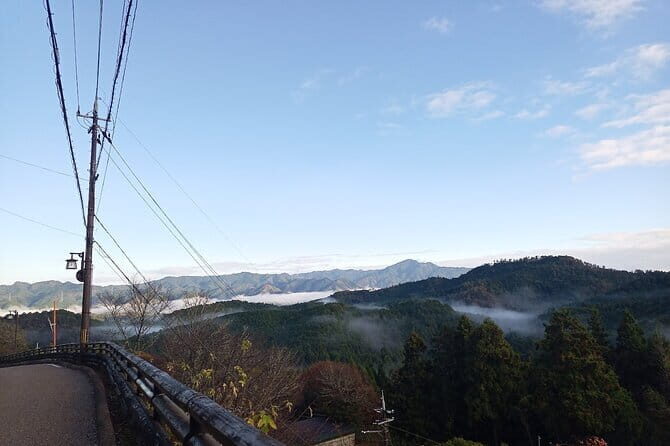
The centerpiece for learning and awe is Kinpusen-ji Temple, specifically the Zao-do Hall. This is where you’ll see the architecture tied to the long Shugendo tradition. The stop lasts about 30 minutes, and admission is included.
The guide’s focus here is practical and cultural at the same time:
- Kinpusen-ji is believed to have been founded around 1,300 years ago.
- The tradition connects to the mountain ascetic En no Gyoja.
- The hall you visit (Zao-do Hall) dates to 1592 and is built atop the mountain ridgeline, using giant trees from the surrounding forest for pillars.
- The site venerates Zao-gongen, with a sacred symbol tied to cherry blossoms.
So what do you get, beyond a pretty building? You get a sense of how religion, geography, and ritual travel work together. The hall isn’t just a photo stop. It’s a place to understand what the Shugendo route was trying to do to people: train the mind through the mountain experience.
If you’re visiting during cherry blossom season, it’s worth knowing that the Zao-do Hall entrance fee increases then. Since your tour includes the entrance fee, your included cost stays useful, but it does explain why peak season can feel pricier overall.
Kami-senbon sakura grove: when the trail is the main event
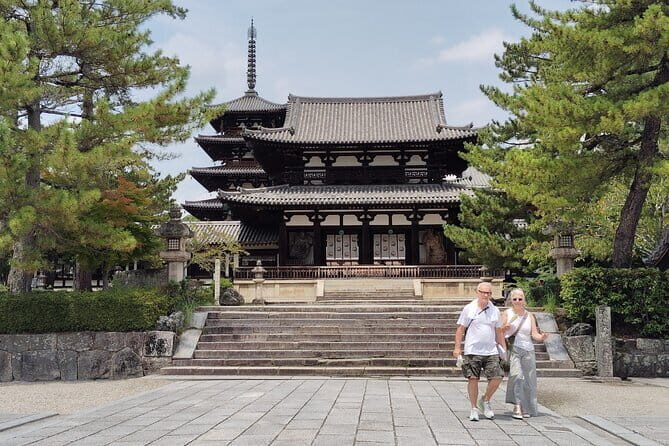
The last guided highlight is the kami-senbon sakura tree grove. This is the part that delivers the real “mountain cherry blossoms” experience, walking along a higher trail with views over the surrounding area.
The description makes it clear why this grove is special: it’s the third highest sacred sakura tree grove, and it changes with the season. In spring, blossoms can fall like snow. In colder months, you’ll see fiery autumn colors instead of petals.
Here’s the practical consideration: this part is uphill and can be strenuous for some people. The tour notes that if you’re not okay with walking uphill (again, roughly 400 meters of elevation gain), you should choose a bus or ropeway option. It also says an alternative to hiking through the kami-senbon area can be arranged on request.
That flexibility is the best part for me. You’re not locked into a workout. You can still get the core Yoshinoyama feel, but on terms your body can handle.
Making the tour match your energy level (walk, bus, or ropeway)
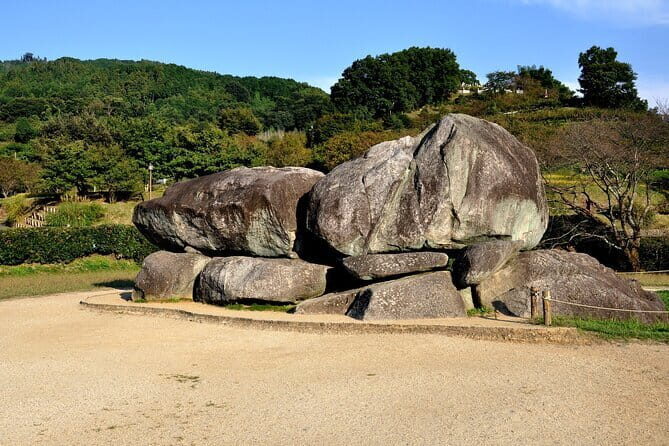
One reason this tour is popular is that it treats access as part of the experience, not an afterthought. Your guide can set the course so you can do everything on foot from Yoshino Station, or take transport to reduce the climb.
If you do add ropeway transportation, budget 450 yen one way. The guide will help you decide what makes sense based on your preferences and the day’s conditions.
This is where I think the private format really pays off. In a group tour, you often feel pushed toward the same pace. Here, your guide can adjust so you don’t end up spending the day fighting the clock or forcing yourself uphill when you’d rather enjoy the views and the details.
And yes, it also means your questions matter. If you care more about history, say so. If you care more about seasonal scenery and photo angles, say that too. The itinerary is described as suggestions that can be changed to meet your needs, which is exactly what you want in a place where the same trail can feel totally different across seasons.
Time, crowds, and the smart spring strategy
Timing is everything in Yoshinoyama. The tour is four hours long, starting at 10:30 am. That schedule is a good chunk of the day without swallowing your whole morning, and it gives you room after the tour to explore further.
But spring changes everything. The tour info explains that cherry blossom season—usually from late March through mid-April—can be very crowded. It also states that guiding fees increase slightly during that time, and Zao-do Hall’s entrance fee rises as well.
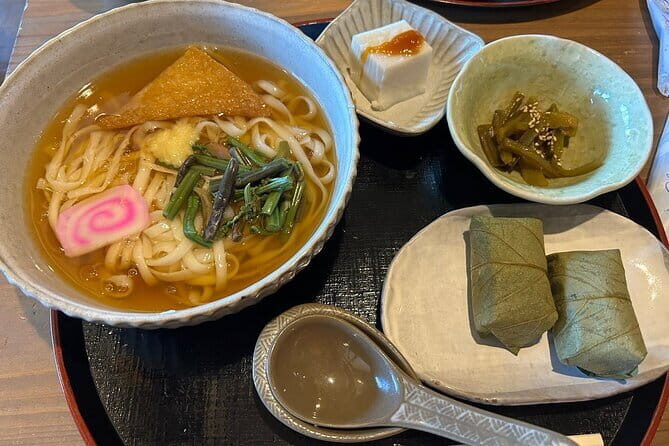
Here’s the real-life implication: it can be very difficult to find seats at restaurants in Yoshinoyama during peak bloom. So the smartest move is simple—bring your own lunch if you’re visiting in that window. The guide can also find a suitable lunch location, but you shouldn’t rely on easy seating.
Food pricing is also noted: lunch at restaurants averages about 1,000 to 2,000 yen, so planning ahead keeps costs under control.
If you hate crowds, the tour doesn’t hide the truth: Yoshinoyama can become extremely crowded in peak season, and that will affect the experience. If your dates are flexible, consider coming outside the busiest weeks.
Price and value: what $99.76 per person buys you
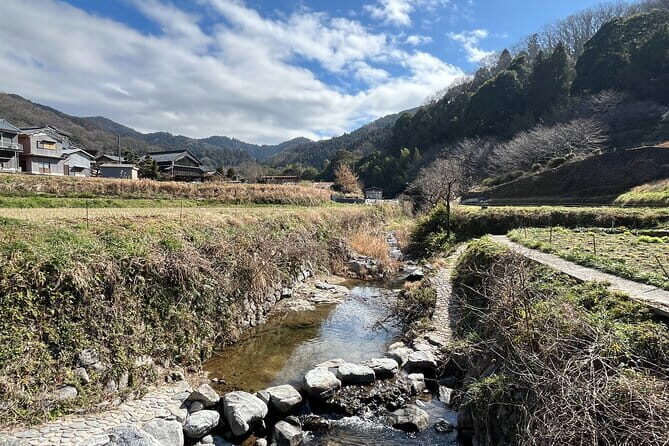
At $99.76 per person for a private guided half-day, you’re paying for three things: local expertise, flexibility, and smooth execution in a place that can be hard to navigate during busy seasons.
Is it cheap? No. But it can be good value if you care about getting the story right and walking with purpose. The tour includes the Zao-do Hall entrance fee, which helps offset part of the cost. It’s also mobile-ticket ready, which cuts down on friction.
The other value lever is format. This is a private tour/activity, so only your group participates. That matters because the guide can pace for you and adjust transport decisions around your comfort level. In Yoshinoyama, where elevation and crowds can turn a pleasant walk into a slog, that flexibility is more than a nice-to-have.
Finally, there are hints that this tour has built-in group discounts, which can make the per-person cost feel more reasonable when you travel with friends or family.
Practicalities that help you enjoy the day

A few small logistics decisions can make your day smoother:
- Start point: meet at Yoshino Station (Yoshinoyama, Yoshino District, Nara). The start is 10:30 am.
- End point: finish at Koyama Shrine (2054 Yoshinoyama…). From there, walking back to Yoshino Station takes about 40 minutes.
- Moderate fitness: uphill sections are part of the deal, and the tour suggests choosing bus/ropeway if you’re not comfortable with the climb.
- Lunch: not included. Plan for restaurant prices around 1,000–2,000 yen, or bring your own, especially in cherry blossom season.
If your goal is to keep moving to your next stop, finishing near town bus access can be a plus. If your goal is more wandering, you still have time to do it after the guide portion ends.
What the best moments feel like on this tour
From the single detailed review provided, the strongest praise centers on two things: the guide’s information and the experience of walking different Yoshinoyama zones.
A guide named Nathan is mentioned as being very informative. The review also highlights how the walking covered the village, the sakura tier zones, and the upper areas of Yoshinoyama. Even though the timing was slightly early for full sakura bloom, the experience was still described as lovely.
That combination matters. It suggests this tour works even when you don’t hit perfect bloom timing. The guide’s job is partly to help you see what’s there now, not just what you hoped would be in peak color.
If you want photos, you’ll also appreciate that the route isn’t only one long straight path. It’s a series of stops and views, including the gate and the temple hall interior, then the higher grove trail.
Should you book Private Guided Half-Day Walking Tour in Yoshinoyama?
Book it if you want:
- A private guide who can explain Shugendo and point out what to notice.
- A half-day plan that hits the key Yoshinoyama sights without turning into a full-day endurance event.
- Options to match your comfort level—walk the whole route or use bus/ropeway.
Skip or rethink it if:
- You’re traveling during peak cherry blossom season and you hate crowd effects. Even with a flexible guide, the area can get packed.
- You can’t handle uphill at all. The tour says alternatives can be arranged, but you should plan around that from the start rather than hoping the route will magically flatten itself.
If you do book, I’d focus on one strategy: in spring, plan for lunch scarcity and expect the day to be popular. Then let the guide help you slow down at the right moments—gate, hall, and the grove trail—so you actually enjoy Yoshinoyama instead of just passing through it.
FAQ
What time does the tour start, and where do I meet?
The tour starts at 10:30 am. You meet at Yoshino Station (Yoshinoyama, Yoshino, Yoshino District, Nara 639-3115, Japan).
How long is the private guided walking tour?
The tour runs about 4 hours.
What are the main guided stops on the route?
You’ll cover Mt. Yoshino, the Kane no Torii Gate, Kinpusen-ji Temple (Zao-do Hall), and the kami-senbon sakura tree grove.
Is the Zao-do Hall entrance fee included?
Yes. Admission to Zao-do Hall at Kinpusen-ji Temple is included.
Is lunch included in the tour price?
No. Lunch is not included. Restaurant meals average about 1,000 to 2,000 yen, and you can also bring your own lunch.
If I want help avoiding uphill walking, can I use transportation?
Yes. If you’re not comfortable with walking uphill, you should choose the bus or ropeway option instead. An alternative route to the kami-senbon uphill section can also be arranged upon request.
How much does ropeway transport cost if I choose it?
Ropeway transportation is optional and costs 450 yen one way.
What happens if the experience can’t run due to weather?
The tour requires good weather. If it’s canceled due to poor weather, you’ll be offered a different date or a full refund.