REVIEW · KYOTO
Calligraphy Experience in Kyoto Townhouse
Book on Viator →Operated by Ami Kyoto · Bookable on Viator
Silence, ink, and a real Kyoto townhouse. This calligraphy workshop turns a famous Japanese art form into a calm, step-by-step session inside a traditional wooden home you normally would not access.
You get the history and Zen roots up front, then you actually put brush to paper and finish with a keepsake you made yourself.
What I like most is how the lesson balances meaning with technique. You learn why kanji feels less scary when you treat it like drawing from the start, and you also leave with a take-home kanji work that feels personal, not like a souvenir stamp.
A second big win: the class size stays small, with feedback that helps you correct your strokes before they harden into bad habits.
One consideration: this is a focused 1 hour 30 minutes experience, so if you want lots of extra practice time, you may feel slightly rushed. Also, there is no hotel pickup, so plan on reaching the meeting point on your own using public transport.
In This Review
- Key things to know before you go
- A 1.5-hour kanji workshop inside a traditional townhouse
- Before you write: the lesson’s Zen-rooted history (and why it helps)
- Watching the demonstration: tools, technique, and getting your bearings fast
- Your turn with the brush: feedback, meditative focus, and a real souvenir
- Why this Kyoto townhouse setting feels different
- Price and value: what $58.64 buys you in real learning time
- Who should book Ami Kyoto calligraphy
- If you want to get the most out of the class
- Should you book Ami Kyoto calligraphy?
- FAQ
- How long is the Kyoto calligraphy workshop?
- What is included in the price?
- Where do I meet for the experience?
- Is hotel pickup or drop-off included?
- How big is the group?
- What is the cancellation policy?
Key things to know before you go
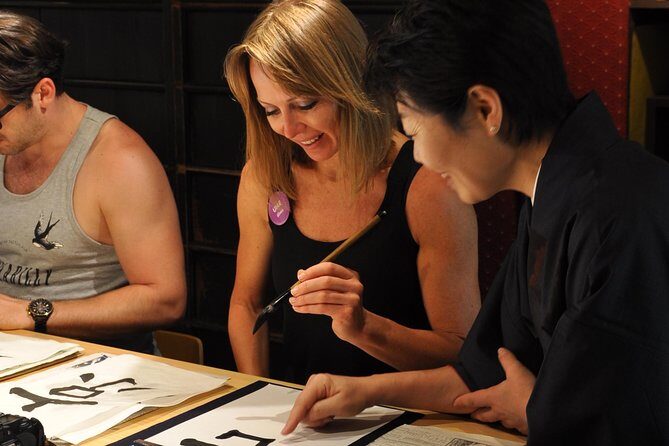
- Small group, max 5 people: you should get more attention than in a big classroom setting.
- An old Kyoto townhouse setting: lessons happen in a traditional wooden home, including a classic old-Kyoto feel.
- Start with the story: you learn background and context before you write.
- Demonstration first, then you try: the class is built around clear stages, not guesswork.
- Take home your finished kanji: supplies are included, and your result becomes your souvenir.
- Materials handled for you: ink, paper, and utensil rental are part of the experience.
A 1.5-hour kanji workshop inside a traditional townhouse
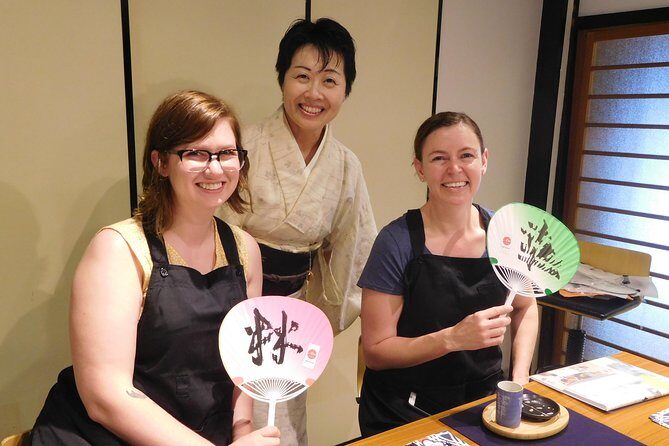
This workshop is designed for a quick reset. In about 90 minutes, you go from basics to a finished piece, without needing any prior art experience. The tone is meant to feel meditative, like Japanese calligraphy at its best: slow enough to focus, structured enough that you do not waste time staring at blank paper.
The setting matters, too. You meet at Ami Kyoto at 605 Nishidachō, Shimogyo Ward, Kyoto. The instruction takes place in a traditional wooden townhouse, described as being around 80 years old. That means you are not just sitting in a generic studio. You are inside a real Kyoto home atmosphere, which makes the act of learning feel more like stepping into the culture instead of buying a class ticket.
Because the group is limited to 5 travelers, it is easier to ask questions and get help while you work. And yes, being close to the instructor also means you will notice what makes a character look right when it is formed with intention, not just copied.
Practical tip: wear comfortable clothes and shoes suited for indoor seating. Since hotel pickup is not included, you should build a little buffer time to get there calmly using public transportation.
You can also read our reviews of more tours and experiences in Kyoto.



Before you write: the lesson’s Zen-rooted history (and why it helps)
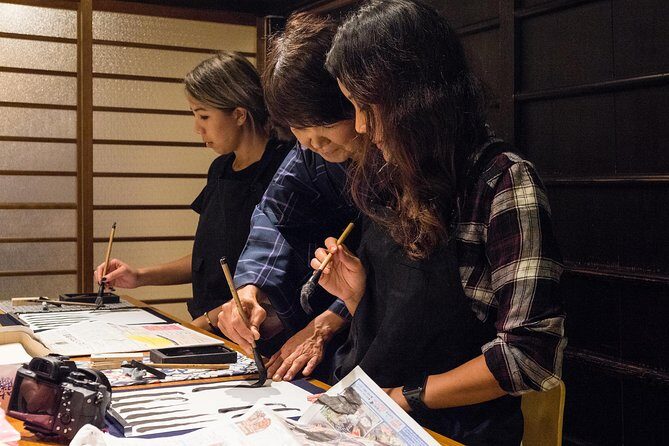
The class starts with essential knowledge: where Japanese calligraphy comes from and how it connects to Zen practice. You are not just learning shapes. You are learning why the brush matters in the first place.
This is also where the workshop makes beginners comfortable. Calligraphy looks intimidating from the outside because each character has its own personality. But the approach here treats writing kanji as something more like drawing than painting. The idea is that kanji originally comes from pictograph-like roots, so your job is to construct a character rather than “create art from scratch.”
That shift is useful in real life. When you tell yourself I am drawing, not performing, your shoulders drop and your eyes slow down. You stop worrying about being an artist and start focusing on the strokes you can actually control: the direction, the flow, and the order of marks.
Watching the demonstration: tools, technique, and getting your bearings fast
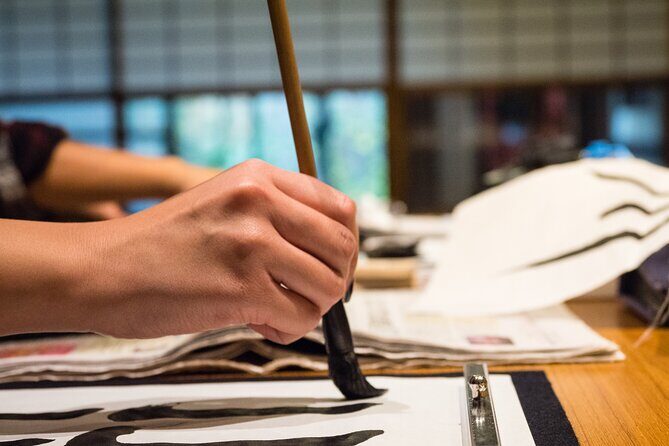
After the background comes a demonstration. This is one of the best ways to learn calligraphy quickly because the brush does not lie. You can read instructions all day, but watching how the ink moves and how the stroke begins and ends gives you a model you can copy.
In this workshop, supplies are part of the deal. You get ink and paper, plus the rental fee for calligraphy utensils. That matters for value, because the lesson is not turning into a shopping trip. You also do not have to puzzle over what you need to buy to participate. If you have never handled a brush before, this saves you from the usual beginner trap: spending more time sourcing tools than learning.
During the demonstration, pay attention to the small moments:
- how the character is started
- where the stroke seems to “aim” even when it curves
- how the marks relate to each other in the overall balance of the character
You can treat the demonstration like a short practice run for your hands. Even if you do not nail it the first time, you will know what the instructor considers correct.
Your turn with the brush: feedback, meditative focus, and a real souvenir
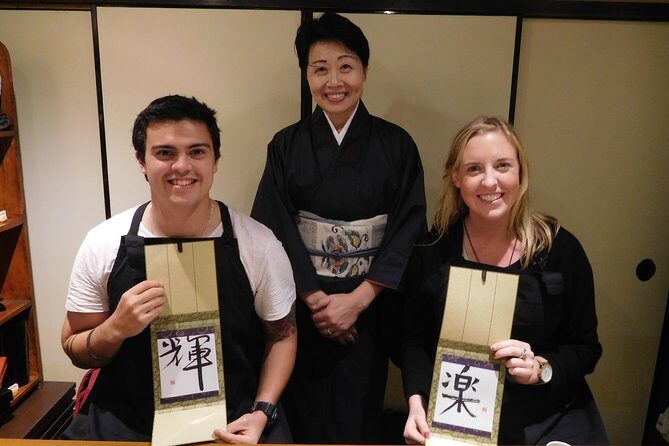
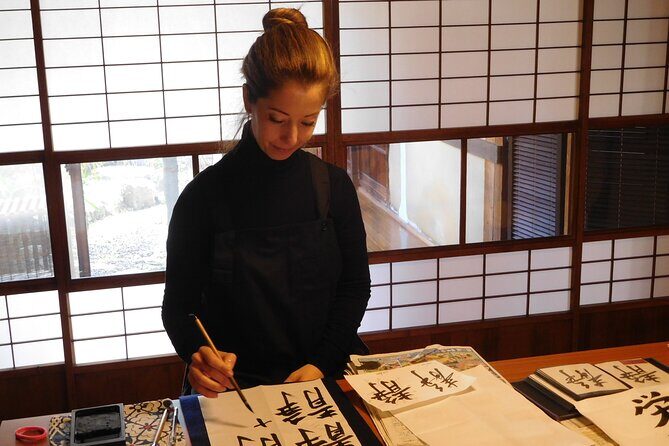
Then comes the hands-on phase, the part you will remember. You create your own Japanese kanji calligraphy artwork, guided step-by-step. The lesson includes instructive feedback, which is crucial if you want your piece to look intentional instead of accidental.
Because this is a small group (up to 5 travelers), you are not stuck waiting your turn. If you start drifting into a sloppy stroke, the instructor can help you adjust while the session is still moving. That is how you get results in only 90 minutes.
Here is the meditative angle in practical terms. Calligraphy demands attention, but it also gives you a task that is repeatable. You are not trying to improvise; you are following a form, then refining it. That is what makes it relaxing. Your brain focuses on one thing: the line.
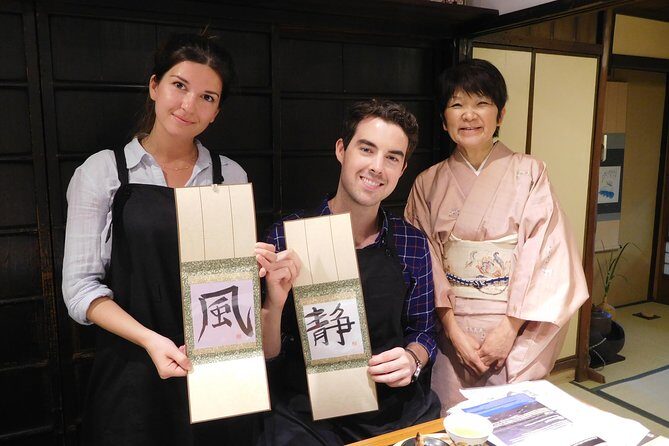
And at the end, you take the artwork home. That is not just a nice perk. It changes your mindset during the workshop. You work with more care because you know the piece will sit on your wall later, proof that you learned something real.
Tip: when you start writing, slow down on the first character or first few strokes. It feels like you are being cautious, but it is actually how you avoid correcting later. Calligraphy is forgiving in some ways, but it is not forgiving if you sprint through the basics.
Why this Kyoto townhouse setting feels different
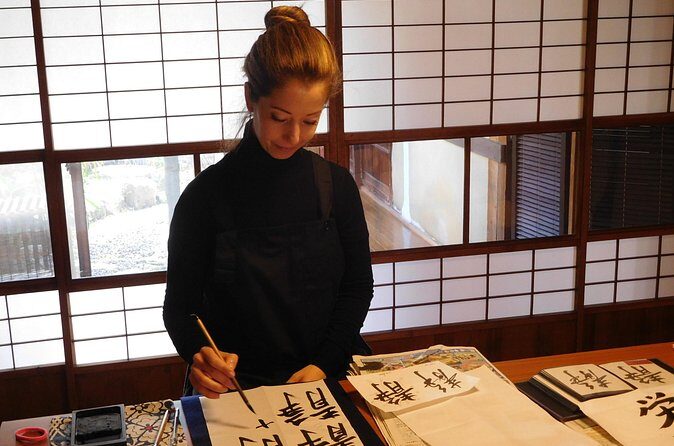
Kyoto has studios for many arts, but this experience is built around access to a traditional townhouse setting. The workshop highlights an older wooden home, described as about 80 years old, giving you a glimpse of old Kyoto that you cannot get just by wandering.
Why it matters: atmosphere changes how you learn. When you sit in a space that feels lived-in and traditional, the whole activity feels more respectful. You are not treating calligraphy like a party craft. You are treating it like a practice.
Also, the townhouse setting tends to make the class feel cozier and quieter. In at least some sessions, the experience is described as a small, cozy class with very few people—sometimes it is just you plus the instructor. That kind of low noise level helps you get into the right headspace quickly.
One more point: this is a “watch, then try” format. That keeps the workshop from turning into a long lecture or a rushed activity. You get a sequence that feels natural, even if you are a first-timer.






Price and value: what $58.64 buys you in real learning time
At $58.64 per person, this is not the cheapest activity in Kyoto. But it is also not trying to compete with entry-level souvenir workshops. For the price, you get a structured 90-minute lesson, plus all materials: ink, paper, and utensil rental.
The value is in the combination:
- Time: 1.5 hours is long enough to learn basics and complete something you can take home.
- Guidance: instructor feedback matters, especially when strokes are new to you.
- Included supplies: you avoid extra costs and avoid the frustration of missing something.
- Small group size: max 5 travelers helps attention stay focused.
If you compare it to paying for a DIY calligraphy kit plus a random “how-to” video, the difference is guidance. Learning the feel of writing kanji takes more than watching. This workshop gives you a human reset when something looks off.
There are also group discounts, and the mobile ticket format can make the process smoother if you are already organizing multiple Kyoto stops.
Who should book Ami Kyoto calligraphy
This workshop fits best if you want something calmer and more hands-on than the usual sightseeing grind.
You will likely enjoy it if:
- you are a complete beginner and want a clear pathway
- you like the idea of learning the history and Zen roots before you try
- you want a Kyoto memory you can physically bring home
- you enjoy small-group classes more than big group activities
It also makes sense for a family outing with teens, since the experience states that most travelers can participate. If someone under 18 is joining, an adult must accompany them. One catch noted in the rules: if the adult does not participate, a viewing fee of 3,500 yen per person applies. So if you are bringing family, double-check who plans to write.
If you want to get the most out of the class
A calligraphy workshop rewards preparation, even when the class supplies everything. Here is what helps you land a better result without overthinking it:
- Arrive a bit early: no hotel pickup means you want time to find the meeting point without stress.
- Go in with one goal: finish a piece you are proud to take home. That goal keeps you focused.
- Expect to learn by correction: the strokes improve when you accept feedback quickly.
- Keep your pace steady: the class is short, so slow down at the start and you will save time later.
And if you are the type who worries you will be bad at art, good. That anxiety is normal. This workshop is built to show you how to approach kanji like a drawing, which is exactly what you need when you are nervous.
Should you book Ami Kyoto calligraphy?
I think you should book this workshop if you want a small, guided introduction to kanji calligraphy in a setting that feels genuinely Kyoto. For the money, it is strong value because you get guided feedback, included supplies, and a real take-home artwork—all in 90 minutes.
Skip it if you are only looking for a quick photo stop or you want a long session with lots of extra practice time. Also, if you hate figuring out meeting points without pickup, this may feel like extra work since hotel pickup and drop-off are not included.
If you can handle those two trade-offs, this is the kind of experience that gives you more than a memory. It gives you a piece of Japanese calligraphy you can live with.
FAQ
How long is the Kyoto calligraphy workshop?
The workshop runs for about 1 hour 30 minutes.
What is included in the price?
You get the materials such as ink and paper, plus the calligraphy utensils rental fee.
Where do I meet for the experience?
You meet at 605 Nishidachō, Shimogyo Ward, Kyoto, 600-8397, Japan. The activity ends back at the same meeting point.
Is hotel pickup or drop-off included?
No, hotel pickup and drop-off are not included.
How big is the group?
The experience has a maximum size of 5 travelers.
What is the cancellation policy?
There is free cancellation. You can cancel up to 24 hours in advance for a full refund.