REVIEW · TOKYO
Sumi-e Ink Painting Suiboku-Ga Workshop in a Japanese Teahouse
Book on Viator →Operated by Beauty of Japan · Bookable on Viator
Ink and tea in a quiet Tokyo teahouse is a treat. This sumi-e workshop focuses on suiboku-ga, a style where control of water and ink creates the look, with a Zen feel and a surprisingly hands-on lesson from award-winning artist Rensui.
Two things I love about it are the small-group size (up to eight, so you’re not lost in the back) and the fact that you leave with an actual finished piece plus a packet of green tea. The main consideration: it’s an introductory class, so you’ll get techniques and guided help, but you shouldn’t expect a super long, detailed session—plan on about an hour.
In This Review
- Quick reasons this workshop gets top marks
- Where this happens: Tsukiji’s teahouse setting
- Your intro to suiboku-ga: why ink wash looks so different
- Meet the instructor: Rensui’s small-class teaching style
- Choosing what you paint: the subject list that makes it personal
- What happens during the hour: learn, paint, finish
- Tea included: more than a pause, it sets the tone
- Materials and what you take home
- Price and value: is $93.34 fair for an hour?
- Logistics that actually affect your day
- Who this workshop is best for
- A small caution: what to expect if you’re brand-new
- Should you book this sumi-e ink workshop in Tokyo?
- FAQ
- How long is the sumi-e ink painting workshop?
- What’s included in the price?
- Is the class large?
- Do I get to choose what I paint?
- Does the experience include tea?
- Where does the workshop start and end?
- How is the ticket delivered?
- What if plans change?
Quick reasons this workshop gets top marks
- Up to eight people means more time with the instructor and faster feedback
- Suiboku-ga basics teach you how water/ink flow does the work
- Pick your subject in advance (pine, bamboo, plum, orchid, chrysanthemum, or kanji) so it feels personal
- One teahouse experience with tea that’s included, not a separate add-on
- Take-home souvenir: your painting plus a green tea packet
Where this happens: Tsukiji’s teahouse setting
This workshop meets at Uogashi Meicha Chanomi Club, in the Tsukiji area of Chuo City (2-chōme-11-12 Tsukiji). It’s a practical neighborhood choice because it’s described as near public transportation, so you won’t feel tied to a taxi plan.
Once you’re there, the setting matters. A Japanese teahouse changes the pace: you sit comfortably, slow down, and focus on one task at a time. That matters for ink painting, because the results depend on what the ink does in the moment.
A few more Tokyo tours and experiences worth a look


Your intro to suiboku-ga: why ink wash looks so different
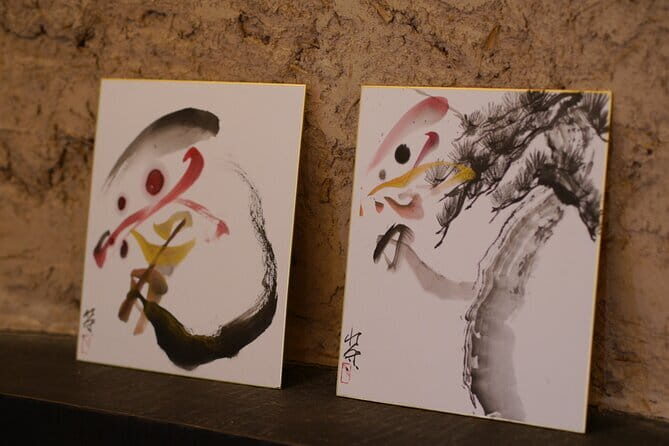
Sumi-e has a reputation for being “soft” and poetic, but this workshop explains why it works. You’re learning suiboku-ga, a form of sumi-e ink wash painting that uses washes of ink to build texture and contrast—without leaning on lots of layers of paint.
Here’s what that means for you as a beginner: your brushwork isn’t about covering a surface. It’s about controlling flow. When the ink spreads or thins, you see the result immediately. That’s both the challenge and the magic.
You’ll also hear the “from the heart” idea behind the style. The workshop frames suiboku-ga as a technique where simplicity lets your intention show through. Even if you’re not chasing spirituality, it helps you relax. Less “trying to be perfect,” more “letting the ink answer.”
Meet the instructor: Rensui’s small-class teaching style
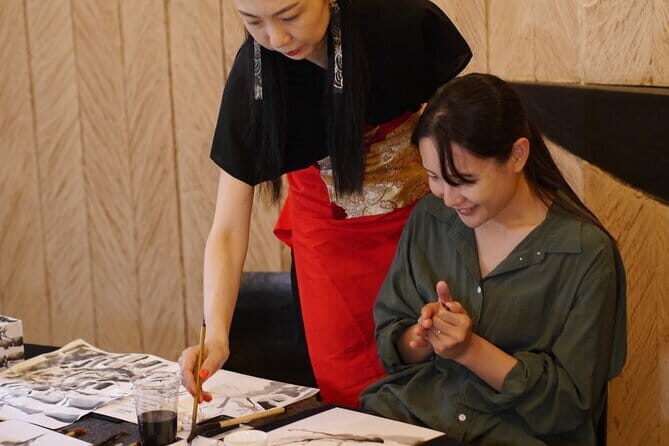
The class is led by award-winning artist Rensui, who also teaches as a calligrapher and ink artist. In a small group, that kind of teacher really counts, because they can correct your grip, brush angle, and timing while you’re actively painting.
One review focus stood out in the feedback: the instruction is paced so you can improve even when you think you’re not good at drawing. That fits suiboku-ga well, because technique (especially the water-to-ink relationship and a clean finish) matters more than “talent.”
The workshop’s approach also emphasizes finishing with a single brushstroke—that’s a great reminder that ink painting is often about choosing when to stop, not adding more.
Choosing what you paint: the subject list that makes it personal
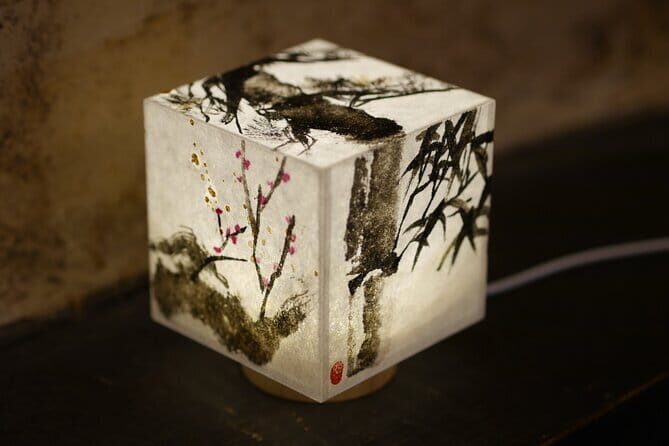
At booking, you choose which object you want to paint on, and the workshop uses a theme chosen from: pine, bamboo, plum, orchid, chrysanthemum, or kanji characters.
That’s a smart way to keep things manageable in a one-hour class. Pine and bamboo, for example, naturally suggest line work and contrast. Kanji characters, meanwhile, let you experiment with structure—like calligraphy, but in ink wash form.
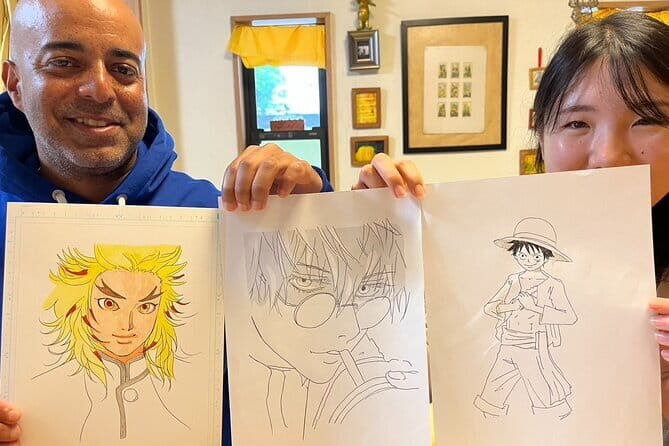
If you’re traveling with kids or you’re worried about being “creative enough,” this structure helps. One review mentioned a family where a younger child wanted to draw Snoopy even after being offered bamboo or pine. The takeaway for you: the instructor works with your ideas within the style, so you’re not stuck doing exactly what someone else chose.
What happens during the hour: learn, paint, finish
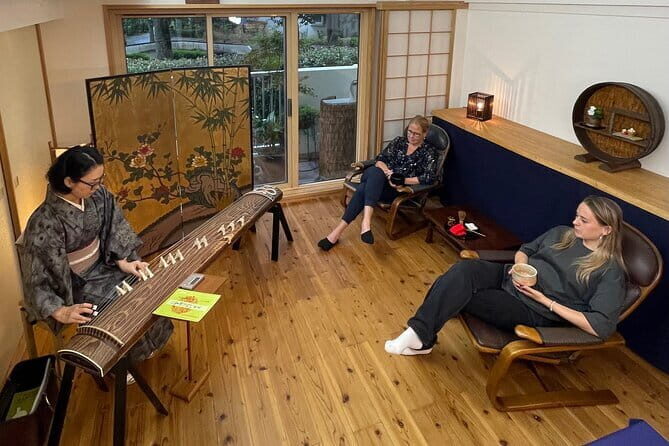
The workshop runs about 1 hour and includes instruction plus time to paint. You’ll be in a comfortable, relaxed environment and you’ll enjoy Japanese green tea during the session.
You can think of the flow like this:
- You get an intro to the basics of suiboku-ga (how ink and water behave)
- You practice the simple moves you’ll need for your chosen theme
- You complete a piece that functions as a real souvenir, not a demo copy
Because it’s an introductory course, the teaching sticks to fundamentals and easy-to-apply methods. The goal isn’t complexity—it’s leaving with something you can hold, show, and smile at. And for most people, that’s the best kind of souvenir: one that actually took effort.





Tea included: more than a pause, it sets the tone
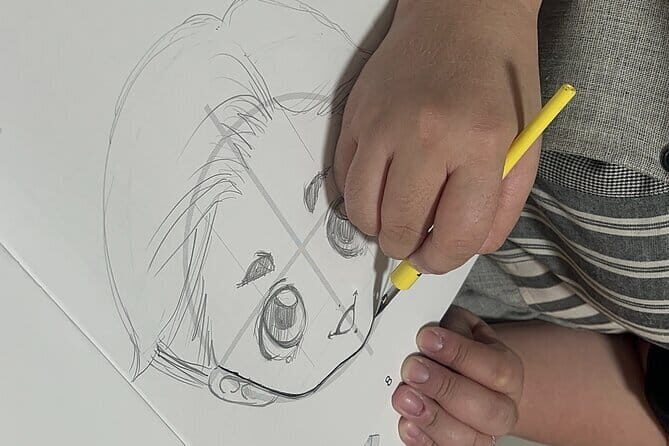
This workshop isn’t just “sit down and paint.” Green tea is part of the experience. You also get a light green tea refreshment, and you leave with a packet of green tea as a souvenir.
That packet matters more than you might think. It’s not just a random trinket; it lets you recreate the mood at home. Even if your painting doesn’t hang on a wall, that tea keeps the memory in your routine.
And for people who don’t drink a lot of tea on trips, this is an easy cultural taste that doesn’t require extra planning.
Materials and what you take home
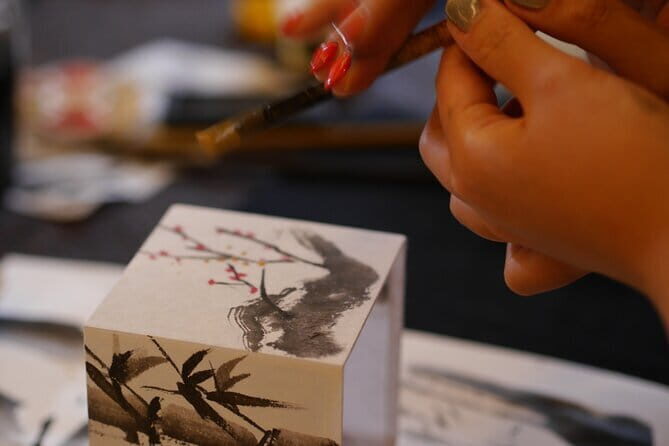
Materials are included in the workshop fee, so you don’t need to hunt down paper, ink, brushes, or anything like that. You’ll also take home:
- Your finished artwork
- A packet of green tea souvenir
So at $93.34, you’re paying for guided instruction, included supplies, and the end product. It’s not just paying to watch someone paint—it’s paying for the chance to make your own piece with coaching.
Price and value: is $93.34 fair for an hour?
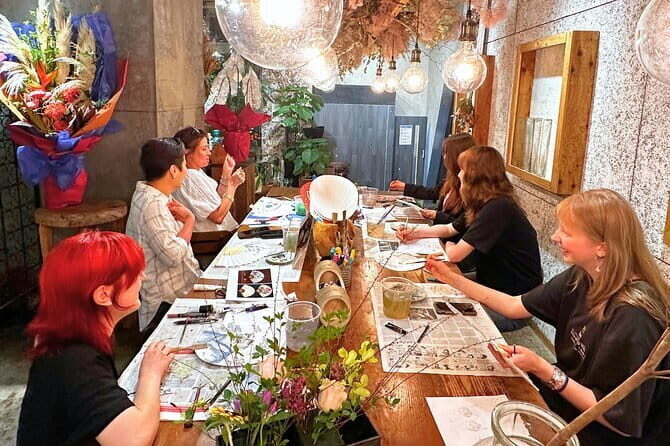
At $93.34 per person, this sits in the “worth it if you’ll actually use the result” category. For an hour, it’s not cheap, but it doesn’t feel overpriced because you get three concrete things built in:
- A guided class led by Rensui
- Materials included (so there’s no hidden cost creep)
- A take-home souvenir (your artwork plus green tea)
Also, the class is capped at eight travelers. That smaller group size is a real value lever in a hands-on activity. If you’ve ever done a craft class where you spend most of the time waiting, you’ll appreciate this one-hour structure and the tight group limit.
Logistics that actually affect your day
This is a mobile-ticket experience, and it ends back at the meeting point. That’s helpful: you can plan your day with less uncertainty and fewer moving parts.
The start location is in Tsukiji at Uogashi Meicha Chanomi Club, which is near public transit. If you’re building an itinerary around Tsukiji, it’s easy to pair with nearby sights and food stops afterward. If you’re not in the area yet, it’s still straightforward to reach by train compared with experiences that require remote travel.
One more practical note: because the class is about ink, plan to show up ready to focus. Wear something comfortable enough to sit and paint without stress.
Who this workshop is best for
This works especially well if:
- You love art and want a hands-on Tokyo experience that most visitors miss
- You want a small-group class rather than a big show-and-tell
- You’re traveling with family and want something creative for kids (one family highlighted this as a favorite activity for two sons, ages 7 and 9)
- You’d like a giftable souvenir that isn’t mass-produced
It can also be a good reset activity. If your Tokyo days have been nonstop walking and planning, the calm rhythm of tea and ink gives you a different kind of travel memory.
A small caution: what to expect if you’re brand-new
Ink painting can feel more difficult than it looks online. One review straight-up called out that they didn’t realize how difficult it would be, then loved it anyway once they understood what to do.
So go in with the right mindset. Your first attempt might be imperfect—and that’s normal here. The instruction is designed for beginners, but the medium itself is unforgiving in a good way: it shows you what happens when you change water, ink amount, and brush pressure.
Should you book this sumi-e ink workshop in Tokyo?
If you want one artistic activity that’s real, personal, and not just “something to tick off,” I think this is a strong choice. The combination of small-group instruction, guidance from Rensui, and a take-home artwork makes it feel like value rather than a simple demo.
Book it if you’re the type who enjoys learning a small technique and leaving with a tangible souvenir. Skip it only if you want a long, detailed class or you prefer instruction-heavy experiences with lots of extra practice time. With a one-hour format, you’ll get the basics and a finish—aiming for that is the point.
FAQ
How long is the sumi-e ink painting workshop?
The workshop lasts about 1 hour.
What’s included in the price?
The price includes the workshop fee, materials, Japanese green tea refreshment, and a packet of green tea to take home.
Is the class large?
No. The group size is capped at a maximum of eight travelers.
Do I get to choose what I paint?
At booking, you can choose which object you’d like to paint on, and the theme is selected from pine, bamboo, plum, orchid, chrysanthemum, or kanji characters.
Does the experience include tea?
Yes. You enjoy Japanese green tea during the workshop, and there’s also a light green tea refreshment.
Where does the workshop start and end?
It starts at Uogashi Meicha Chanomi Club in Tsukiji, and it ends back at the same meeting point.
How is the ticket delivered?
You receive a mobile ticket.
What if plans change?
Free cancellation is available up to 24 hours in advance for a full refund. Changes within 24 hours of the start time aren’t accepted.