REVIEW · TOKYO
Full Day Private Tokyo Tour for Wheelchair Users
Book on Viator →Operated by アウテック · Bookable on Viator
A wheelchair-friendly day in Tokyo without the train shuffle.
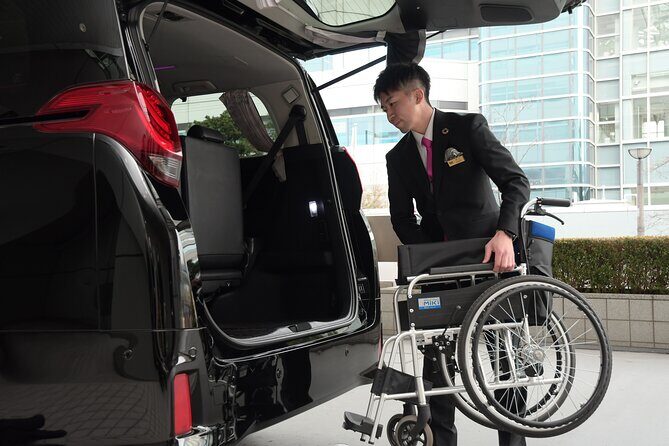
This private tour is built around accessibility, using a private vehicle and a guide who keeps the day moving. You also get little extras that make sightseeing feel easier, not harder, especially when you are managing mobility needs.
I especially like the flexibility. The route can shift to match what you want to see and how your day feels. I also like that the vehicle includes Wi‑Fi, plus snacks and bottled water. One possible drawback: several stops are mostly car-window sightseeing and some time blocks are short, so if you want lots of walking at every location, you may need to plan for that.
In This Review
- Key points before you go
- How this wheelchair-friendly Tokyo day stays simple
- Meeting at Tokyo Station and riding in comfort
- Tsukiji Outer Market: seafood atmosphere without the big-market chaos
- Hama Rikyu Gardens: feudal lord grounds and a calmer hour
- Ginza, the Imperial Palace area, and the National Diet: big icons, easier pacing
- Senso-ji Temple: Tokyo’s oldest temple moment in plain view
- Omotesando and Harajuku: fashion-forward Tokyo with less stress than you fear
- Meiji Jingu Shrine: a quiet reset from traffic noise
- Shibuya Crossing and Daikanyama: the famous stop, then a calmer finish
- Guides who adjust to you: Umi, Roberto, and Gen’s approach
- Price and value: what $731.60 per group really buys
- Who should book this private accessible Tokyo tour
- Should you book this private accessible Tokyo tour?
- FAQ
- Is the tour designed specifically for wheelchair users?
- How long is the private tour?
- What does the price include for $731.60 per group?
- Are pickup and drop-off included?
- Where do we meet for the tour?
- Is lunch or dinner included?
- Are tickets included for the stops?
- Does the tour use a mobile ticket?
- Is there Wi‑Fi during the ride?
- What if I need help with a mobility scooter?
Key points before you go
- Private door-to-sightseeing timing: You skip the train and bus puzzle with a dedicated vehicle.
- Route built around you: Your guide can tailor the day to your interests and schedule.
- On-the-go comfort extras: Air-conditioning, snacks, and bottled water help on hot days.
- Wi‑Fi in the vehicle: You can get online while you ride between sights.
- Icon lineup, measured pace: Big-name Tokyo stops, with a format that avoids long, stressful transfers.
- Guide support for mobility gear: In practice, guides have helped manage mobility scooters.
How this wheelchair-friendly Tokyo day stays simple
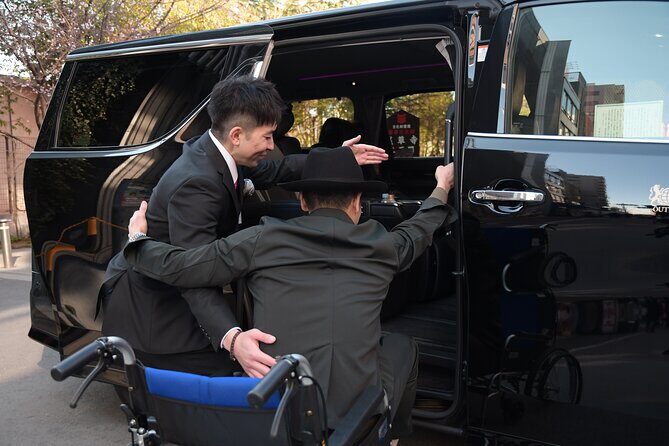
Tokyo is one of those places where the map looks easy, until you hit real life: stairs, crowded crossings, confusing platform routes. This tour is designed to cut that stress out early. Instead of building your day around public transit, you ride in an air-conditioned private vehicle and let your guide handle the flow.
The other big benefit is how the day is structured. You get a full itinerary with major stops, but it is not locked in as a rigid checklist. The guide can tailor the route to what you care about, so you are not stuck trying to force interest into a pre-set plan.
This tour is aimed at wheelchair users, but it is also a smart fit if you are traveling with mobility scooters, have limited stamina, or simply want a calmer day with fewer logistical headaches.
You can also read our reviews of more private tours in Tokyo



Meeting at Tokyo Station and riding in comfort
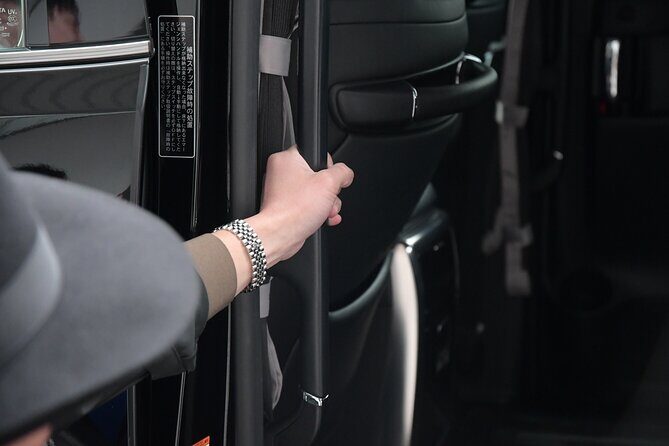
You meet at Tokyo Station (near Marunouchi, Chiyoda). It’s a central hub, and the tour info notes it is near public transportation, which can help if you need to coordinate independently before your pickup or meeting time.
From there, the experience is about comfort and predictability. The vehicle has Wi‑Fi on board, so you can check directions, messages, or just plan the next stop without hunting for a signal every time the traffic changes.
Small things matter on a full day like this. You have snacks and bottled water included. That sounds basic, but in Tokyo heat, little food-and-water breaks can prevent the day from sliding into cranky territory.
You also receive a mobile ticket, which is convenient when you are managing time and movement.
Tsukiji Outer Market: seafood atmosphere without the big-market chaos
Your first stop is the Tsukiji Jogai Market, the outer market area. Here is the key context: the main Tsukiji Market moved to Toyosu in 2018. The outer market at Tsukiji still has plenty of shops and restaurants, which means you can enjoy the classic “market energy” without needing to chase the relocated main facility.
Expect around one hour here. This is the kind of stop where you can browse at your own speed. Grab a snack if that works for you, look at food stalls and kitchen supplies, and take in the sensory overload that makes Tsukiji famous in the first place.
Accessibility note to keep in mind: markets often have tight aisles. Even with a smooth plan, the space can be denser than you expect, so it helps to use your guide’s judgment on where to go first and what to skip.
Hama Rikyu Gardens: feudal lord grounds and a calmer hour
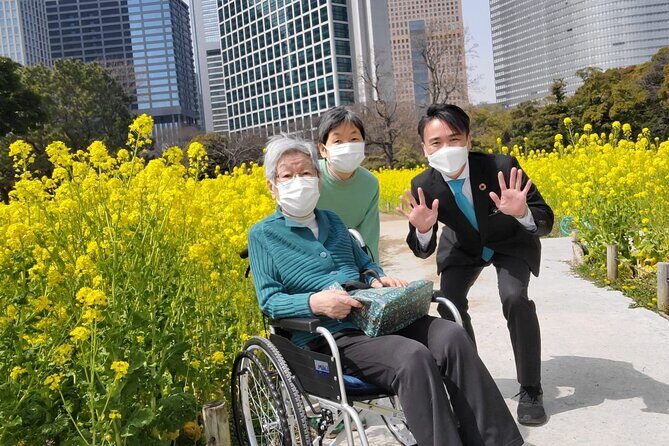
Next up is Hama Rikyu Gardens (about one hour). Admission is not included, so you’ll want to plan for an extra ticket cost. That said, the payoff is a genuine change of pace.
The garden has had multiple lives over the centuries. It was originally built as a feudal lord’s Tokyo residence and used as duck hunting grounds between the 17th and 19th centuries. Later, it became the garden you visit today. That mix of past purposes shows up in how the grounds feel: part formal, part atmospheric.
This is a strong break in the day, especially if the earlier market area is tiring for you. Gardens tend to be easier for photos and slower pacing than the shopping streets.
Ginza, the Imperial Palace area, and the National Diet: big icons, easier pacing
Ginza is next, and you’ll spend about one hour with sightseeing from the car window. Ginza is known for its eclectic mix: boutiques, galleries, craft shops, and modern architecture. The window format is not a dealbreaker here. It actually helps: you can absorb the neighborhood without getting stuck in the thick of crowds.
Then the day includes two major government and royal landmarks, both also primarily viewed from the car window:
- The Imperial Palace area (about 30 minutes)
- The National Diet Building (about 30 minutes)
These are short blocks. That can be a good thing if you want the highlights without tiring yourself out, but it can also feel quick if you expected longer on-foot time at each location. If your priority is photos and views from key angles, this timing works well. If your priority is getting close and walking around extensively, you may want to use the guide’s flexibility to adjust the pace.
A few more Tokyo tours and experiences worth a look


Senso-ji Temple: Tokyo’s oldest temple moment in plain view
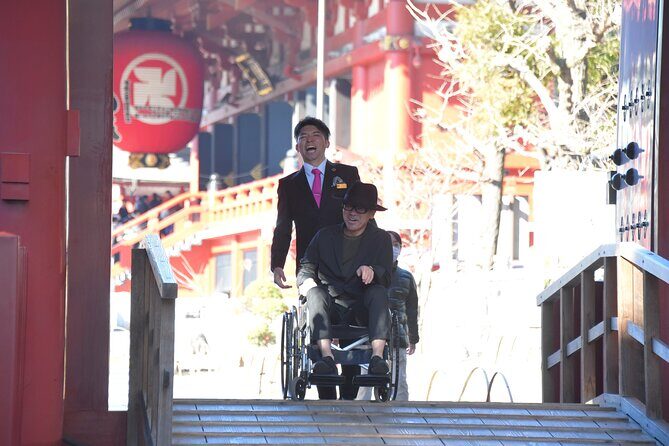
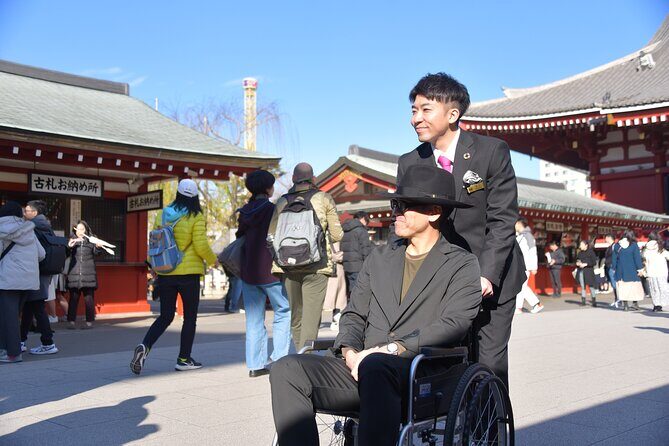
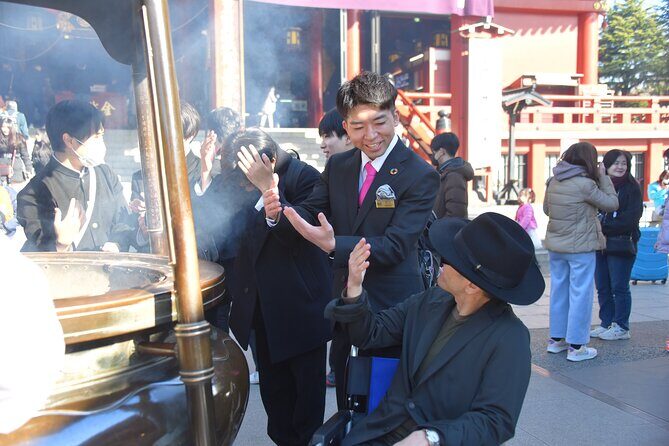
Senso-ji is one of the emotional anchor stops on the route, and it gets about one hour. Admission is free, so you can spend that time without worrying about ticket planning.
Senso-ji is described as Tokyo’s oldest temple. The name Asakusa appears in records going back to 628, tied to a story about a Kannon statue found by two fishermen. That legend gives the place extra weight when you see it in person: this is not just a photogenic stop, it is a temple that carries long continuity.
This is also a stop where you can slow down. Temples naturally invite standing and looking. If you can manage a short walk, you’ll get a more meaningful feel than a pure “pass-by” stop. If you need to stay mostly in one zone, you can still take in the atmosphere while the guide helps you position for the best views.
Omotesando and Harajuku: fashion-forward Tokyo with less stress than you fear
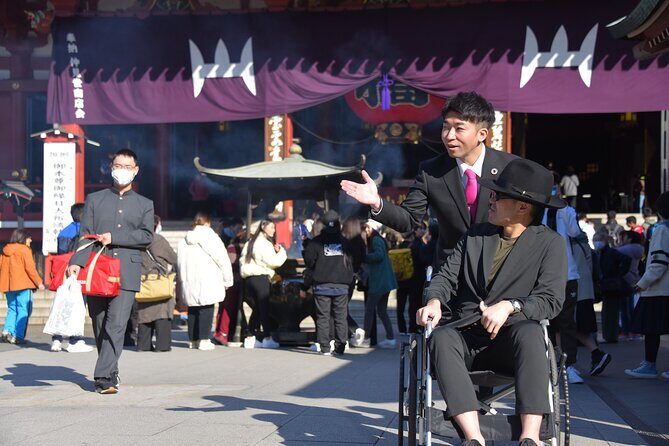
Omotesando and Harajuku keep the day in Tokyo’s youth and design lane, with short viewing windows:
- Omotesando (about 30 minutes, mostly car-window sightseeing)
- Harajuku (about 30 minutes, car-window sightseeing)
Omotesando is famous for architecture designed by leading architects. It’s also a place where you see major fashion brands. The point of this stop in a mobility-friendly tour format is not to force you to navigate every side street. It is to show you the look and feel of the area quickly, so you still get the cultural snapshot.
Harajuku adds a different flavor. It is known for youth culture, unique fashion trends, and sometimes very outrageous design choices in clothing and buildings. Again, the short window works well because it prevents you from turning your day into a long loop of stops where the crowd density might slow you down.
Meiji Jingu Shrine: a quiet reset from traffic noise
After the fashion energy, you get a nature-and-tradition breather: Meiji Jingu Shrine. This stop is about one hour and admission is free.
The shrine is known for a pleasant atmosphere and a chance to step away from busy streets. It is often the kind of place where you feel your head slow down. If you want one stop that doubles as a rest break, this is a strong candidate.
The tour notes you might be able to see a traditional Japanese wedding ceremony on Saturdays and Sundays. If your schedule happens to align, that could add a memorable bonus moment without needing extra planning.
Shibuya Crossing and Daikanyama: the famous stop, then a calmer finish
Shibuya Crossing is next, with about 30 minutes. You are looking at the busiest intersection in the world. The sheer scale makes places like Times Square feel smaller by comparison. The car-window format still lets you capture the idea: this is choreography at street level.
Then the tour moves to Daikanyama, also about 30 minutes. This area is described as filled with boutiques and cafes, with an atmosphere that feels less hectic than more famous nearby neighborhoods. The feel matters here. After Shibuya’s intensity, Daikanyama gives you room to breathe while still ending the day in a fashionable, photo-friendly part of town.
Guides who adjust to you: Umi, Roberto, and Gen’s approach
The tour’s accessibility is not just about vehicles. It is also about how your guide runs the day.
One guide, Umi, has been praised for keeping things comfortable on hot days. The key practical point: she asks what experiences you really want and works to keep you cool rather than rushing you through stops. Another guide, Roberto, was specifically mentioned for handling mobility support needs. That matters because getting around with a scooter or equipment can be stressful if nobody is thinking about it for you.
A third example: Gen guided a customizable itinerary and was described as kind. Customization is a real value here because Tokyo is big, and “everyone should see everything” is not realistic for a mobility-friendly day. A guide who adjusts the plan to your interests turns a standard sightseeing list into something personal.
In plain terms, you want a guide who treats mobility needs like part of the sightseeing plan, not an afterthought. These guides appear to do that.
Price and value: what $731.60 per group really buys
The price is $731.60 per group, with a group size up to 9, for about 8 hours. That number can look high if you think in terms of per-person rates. But with private tours, you are paying for time, transportation, and a guide built for your needs.
Here is the value logic I would use:
- You get private transportation for the whole day, which can be hard to replicate with taxis when your schedule needs smooth timing.
- You get included extras: snacks, bottled water, and Wi‑Fi on board. Those reduce the small costs and hassles that add up during a full-day plan.
- You get an itinerary that prioritizes major Tokyo sights without forcing you to navigate public transit between them.
If your group includes more than one person needing accessible support, the group-up-to-9 pricing can start to feel more reasonable. If you are only two people, it can still be worth it because the real cost-saving is the stress you avoid: fewer transfers, fewer navigation problems, and more control.
Who should book this private accessible Tokyo tour
This tour makes the most sense if you:
- Use a wheelchair or mobility scooter and want fewer transit hurdles
- Prefer a private setting over crowd-based navigation
- Want a full-day “greatest hits” approach, but without long, exhausting logistical work
- Value a guide who will adapt the plan and help with mobility gear
It may be less ideal if you love deep, slow exploration of a single neighborhood and want long on-foot time everywhere. Some stops here are intentionally short and include car-window viewing, which keeps the day efficient, but it is not built for spending hours in each location.
Should you book this private accessible Tokyo tour?
I think this is a strong choice when your top priority is a smooth, accessible Tokyo day that still hits iconic places. The combination of private transportation, included comfort items, and a guide who can handle mobility support is exactly the kind of trip planning that pays off when you want to enjoy Tokyo instead of wrestling with logistics.
Before you book, ask yourself one simple question: do you want a full-day overview with comfort and control, or do you want long, independent exploration at every stop? If you want the first one, this tour fits well. If you want the second, you might want to pair it with additional time plans outside the guided blocks.
FAQ
Is the tour designed specifically for wheelchair users?
Yes. The experience is designed with accessibility in mind and focuses on wheelchair-friendly sightseeing.
How long is the private tour?
The tour lasts about 8 hours.
What does the price include for $731.60 per group?
It includes air-conditioned private transportation, snacks, bottled water, and Wi‑Fi on board.
Are pickup and drop-off included?
Pickup is offered, and the tour starts at Tokyo Station. The activity ends back at the meeting point.
Where do we meet for the tour?
The meeting point is Tokyo Station, 1 Chome-9 Marunouchi, Chiyoda City, Tokyo 100-0005, Japan.
Is lunch or dinner included?
No. Lunch and dinner are not included.
Are tickets included for the stops?
Most stops are listed as free. Hama Rikyu Gardens has admission not included, so you should plan for that ticket.
Does the tour use a mobile ticket?
Yes, the tour includes a mobile ticket.
Is there Wi‑Fi during the ride?
Yes. Wi‑Fi is available on board the vehicle.
What if I need help with a mobility scooter?
The tour includes a private guide, and there is support in practice for handling mobility scooters, which helps reduce pressure during the day.