REVIEW · KYOTO
Kyoto Udon & Tempura Cooking Class with Professional Chefs
Book on GetYourGuide →Operated by MagicalTrip · Bookable on GetYourGuide
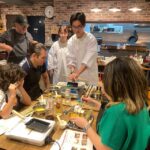
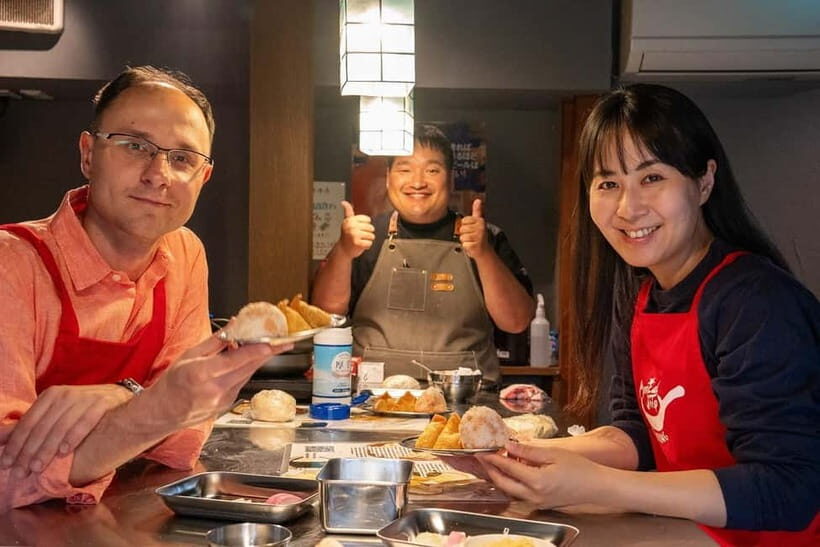
Udon dough is oddly relaxing. In this small-group Kyoto class, you go from flour and water to chewy noodles by hand, then turn out Inari sushi and crispy tempura with help from an English guide and an udon master. It’s a fun, practical way to learn techniques you can actually repeat later, not just watch from a distance.
I especially like how hands-on it is. Kneading, rolling, shaping, and frying keep your hands busy, and the payoff is real: you get to eat what you make right there, paired with a mini sake tasting. One thing to keep in mind is that the class can run a bit shorter than the listing suggests, and some steps may be simplified to fit the schedule.
In This Review
- Key Points at a Glance
- Getting There at 7-Eleven Kyoto Kawaramachi-Takoyakushi
- Flour and Water to Chewy Udon Noodles
- Inari Sushi: Seasoned Rice and Shaping Practice
- Tempura Frying: Getting That Crisp, Golden Result
- Eating Your Udon, Inari Sushi, and Tempura (Plus Sake)
- Price and Time: Is $83 Good Value in Kyoto?
- Who This Kyoto Cooking Class Fits Best
- What You’ll Take Home (Recipes and Photos)
- Should You Book This Kyoto Udon & Tempura Cooking Class?
Key Points at a Glance
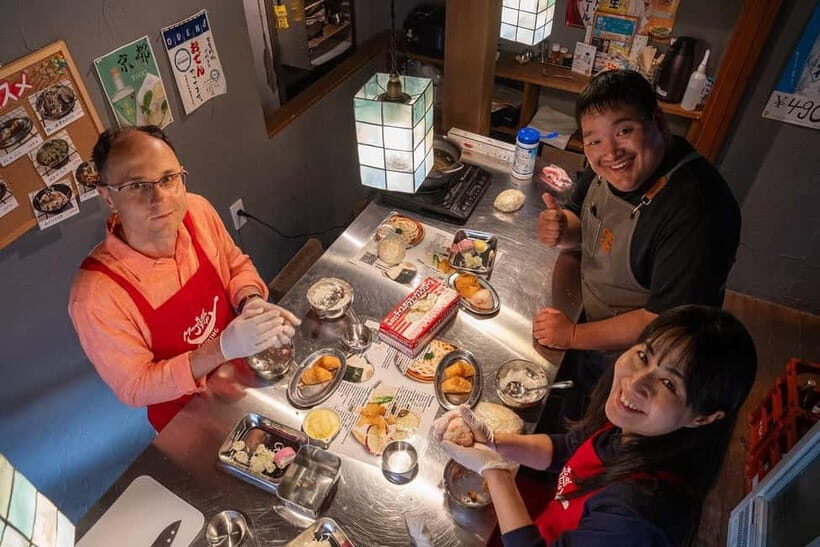
- From flour and water to homemade udon with guided kneading and rolling
- Inari sushi rice shaping using freshly steamed rice and taught seasoning
- Tempura frying practice aimed at getting golden, crisp results
- Mini sake tasting alongside the meal you cooked
- Small group of up to 8 for more attention and easier hands-on learning
- Take-home English recipe set designed to help you recreate the dishes
Getting There at 7-Eleven Kyoto Kawaramachi-Takoyakushi
You’ll meet at a 7-Eleven near Kyoto-Kawaramachi-Takoyakushi. It’s a very “easy to navigate” meeting spot, which matters when you’re arriving from different areas of Kyoto and want the start to feel calm, not frantic.
Here’s what helps: the meeting point is a short walk from Kyoto-Kawaramachi Station (Exit B3 on the Keihan Kyoto Line), and it’s also reachable from Gion-Shijo Station (Exit 3 on the Keihan Main Line). In practice, that means you can pick the station that’s easiest for your day plan without overthinking it.
If you’re the type who likes to arrive early, do it. A cooking class moves faster than a typical museum visit, and a few extra minutes at the start helps you get settled, apron-ready, and focused.
You can also read our reviews of more cooking classes in Kyoto
Flour and Water to Chewy Udon Noodles
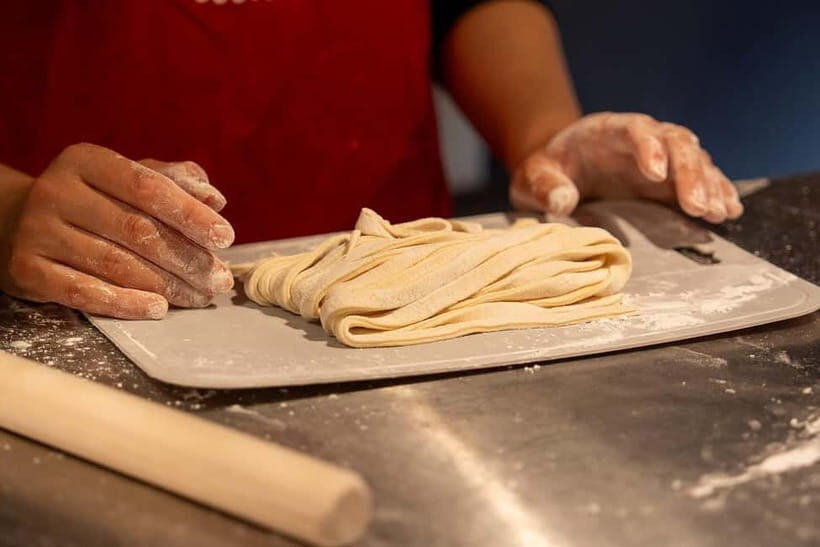
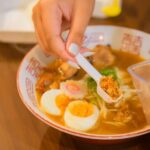
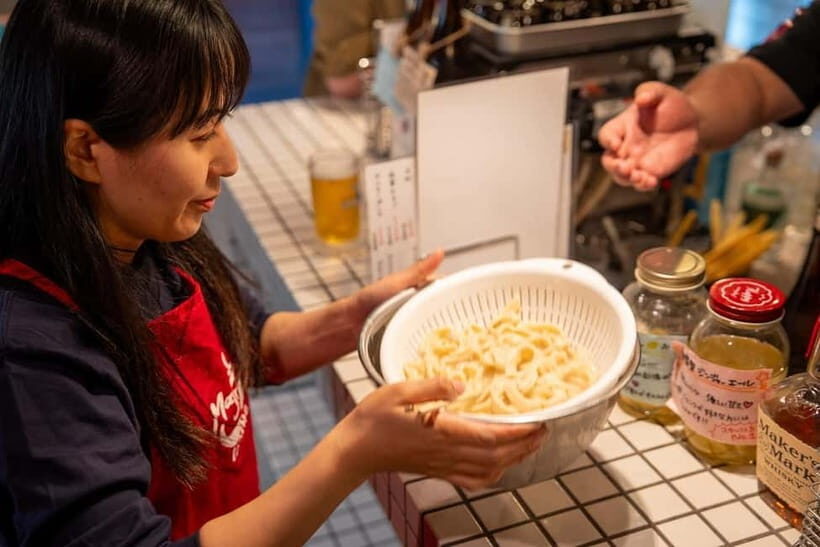
The star of the experience is homemade udon. You start with basic ingredients and learn how to mix, knead, and roll your dough by hand. Even if you’re new to cooking, the point isn’t fancy technique homework. It’s learning how the dough changes as you work it—what you feel matters.
This is also why I think udon classes are great value: udon is one of those foods that tastes “simple” once you know the fundamentals. When you make it yourself, you understand why homemade versions feel different—especially the chew and the texture.
Practical expectations:
- You’ll spend time on dough work, including kneading and rolling.
- Some sessions may focus more on dough preparation than on cooking every final step like broth-making.
- Your best takeaway will be the feel of the dough and the method for shaping noodles.
A quick caution for schedule-minded travelers: one participant described the experience as shorter than what’s advertised when the meal is included. So I’d plan your day assuming you might not get every possible “from-scratch” moment—though you’ll still learn the core udon process.
Inari Sushi: Seasoned Rice and Shaping Practice
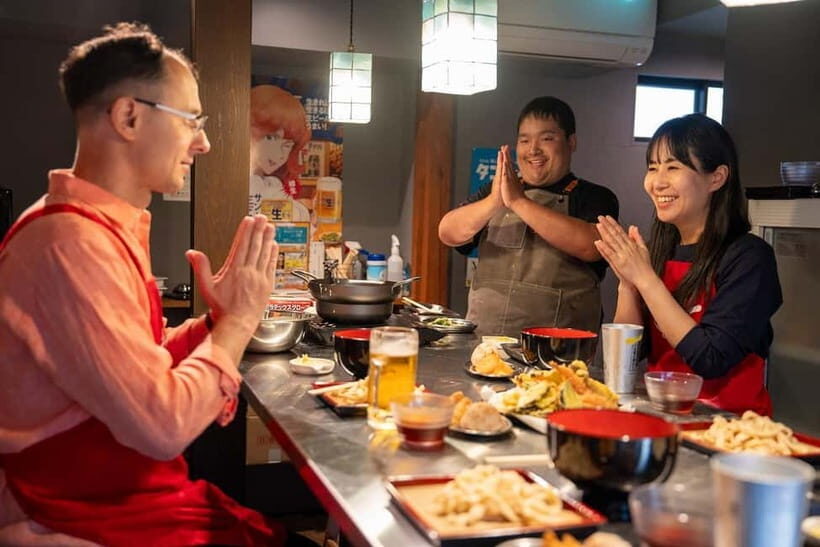
After udon dough, you shift gears to rice dishes. You’ll be taught how to season freshly steamed rice for Inari sushi and then shape it into tasty bites.
You’re not just learning a recipe. You’re learning how Japanese rice is treated when it’s meant for a specific purpose. Inari sushi needs rice that tastes right on its own and holds its shape with the right approach.
Expect a hands-on flow that includes:
- Seasoning the rice for Inari sushi
- Shaping rice into onigiri and Inari sushi-style portions
One note: the class description emphasizes making Inari sushi, but some sessions may have you doing more of the shaping and assembly than every single step from scratch. That doesn’t automatically make it less worthwhile—it can simply mean the instructors keep things moving so you can eat sooner.
If you like food that’s comforting and snackable, Inari sushi is a great skill. It’s also a dish where your home results can be very close to what you make in class because you’re taking home an English recipe set.
Tempura Frying: Getting That Crisp, Golden Result
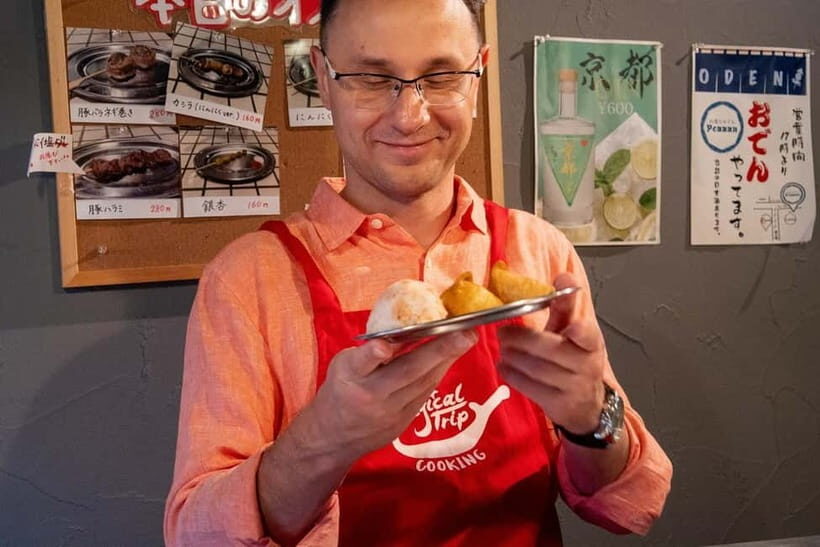
Next up is tempura—crunchy, golden, and honestly one of the most satisfying foods to make in a class setting. You’ll watch the master chef and guide demonstrate the steps, then you’ll fry your own tempura pieces.
What I like about this part is that tempura teaches you technique, not just ingredients. Frying is timing and temperature and how you handle batter. Even if some components like batter mixing are simplified to keep the process smooth, you can still learn the part that matters most: how the pieces behave in the fryer and how to aim for that crisp finish.
Based on real class experience, you might not always mix batter from zero during your session. Some people report that tempura batter preparation may be pre-handled, leaving you with the hands-on portion of dipping and frying.
So here’s my practical advice: go in expecting to practice frying and handling, and treat “from-scratch everything” as a best-case scenario rather than a guarantee. The goal should be mastering the technique you’ll use again at home.
Eating Your Udon, Inari Sushi, and Tempura (Plus Sake)
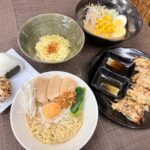
This is the moment where the class stops being work and starts being enjoyment. You’ll eat what you made: udon noodles, Inari sushi, and tempura.
That meal is more than a reward. It’s the real feedback loop. If the noodles were chewy enough, you’ll feel it immediately. If the rice seasoning hit the mark, you’ll taste it. If the tempura is crisp, you’ll notice how fast it changes as it cools.
You’ll also get two drinks, including a mini sake tasting experience. Even if you’re not a sake expert, mini tastings are a low-pressure way to learn what you personally like. It also pairs nicely with fried and savory foods, which helps the meal feel more complete rather than just “snack after cooking.”
Pro tip for your appetite planning: this is a lot of food in a two-hour experience. If you’ve been walking around Kyoto all morning, hydrate and go easy on heavy lunch right before class. You’ll want room for everything.
A few more Kyoto tours and experiences worth a look

Price and Time: Is $83 Good Value in Kyoto?
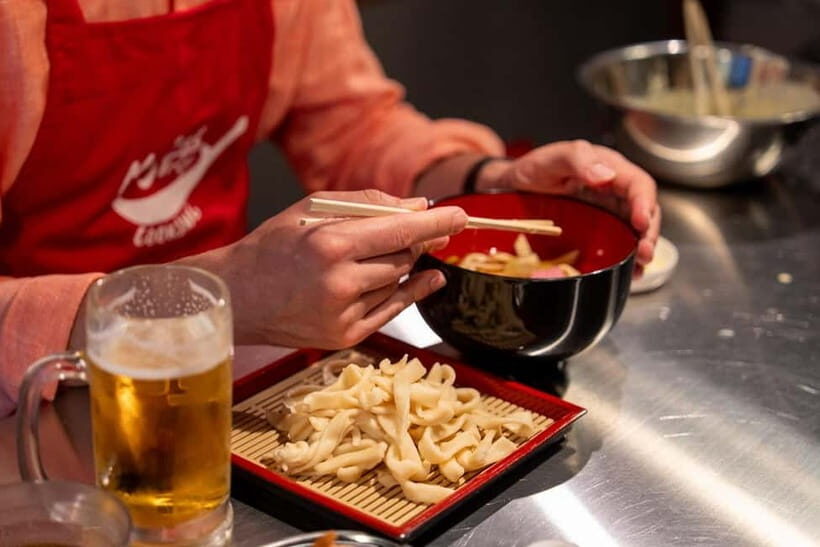
At $83 per person for about two hours (and possibly closer to around 1 hour 20 when the meal is included), you’re paying for more than ingredients. You’re paying for:
- A small group setup (up to 8)
- Instruction from an udon master and English guide
- Hands-on time across multiple dishes
- A meal made from your work
- An English recipe set you can use later
- Photos taken during the experience
When it’s good value, it’s because you leave with skills, not just snacks. Udon noodles and Inari sushi are hard to learn “correctly” from random online videos. This class gives you structured guidance plus the confidence that comes from eating your results.
When it’s less ideal is when you expect every component to be fully handmade from scratch in the time window. One real participant experience pointed out differences in timing and preparation methods, like focusing more on dough work than cooking broth, and tempura batter not being mixed from scratch.
So I’d frame it like this: pay for the experience of learning the core techniques and getting a guided meal. If you’re the type who needs zero compromises, choose your expectations carefully.
Who This Kyoto Cooking Class Fits Best
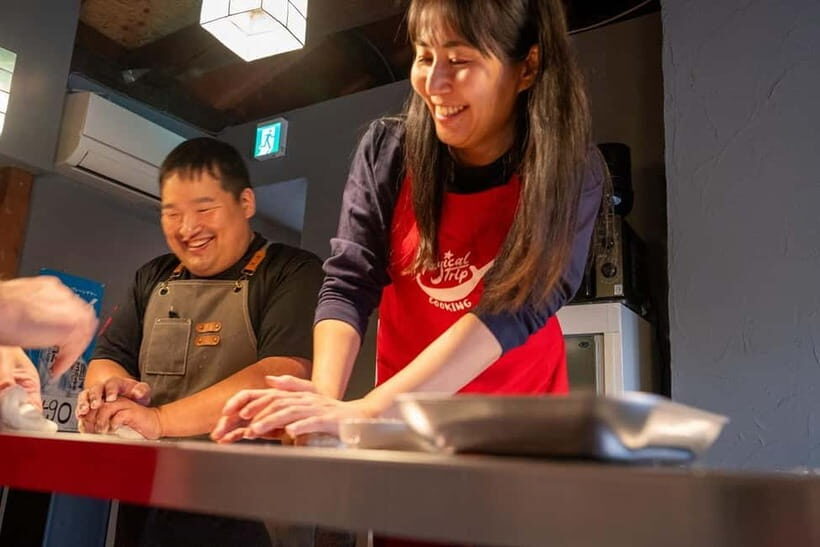
This class is a strong match if you:
- Want hands-on cooking with no prior experience required
- Enjoy Japanese comfort foods and want to understand what makes them work
- Prefer small group attention instead of a big, impersonal demo
- Want take-home recipes in English so you can recreate results later
It also works well for mixed groups and families. The format is described as suitable for all ages, and that usually means the pace and instruction are kept beginner-friendly.
Where it may not fit as well:
- If you’re tightly scheduled and two hours is the absolute ceiling
- If you’re expecting a strict, every-step-from-scratch workshop where nothing is simplified
What You’ll Take Home (Recipes and Photos)
One of my favorite practical touches is the English recipe set. It’s designed for ingredients you can find at home, which is where many cooking experiences fall apart. You don’t want a souvenir card full of vague instructions. You want something usable.
You’ll also get tour photos. Even if you don’t usually care about pictures, it’s a nice reminder of what you made, and it helps you compare your own next attempt at home.
Should You Book This Kyoto Udon & Tempura Cooking Class?
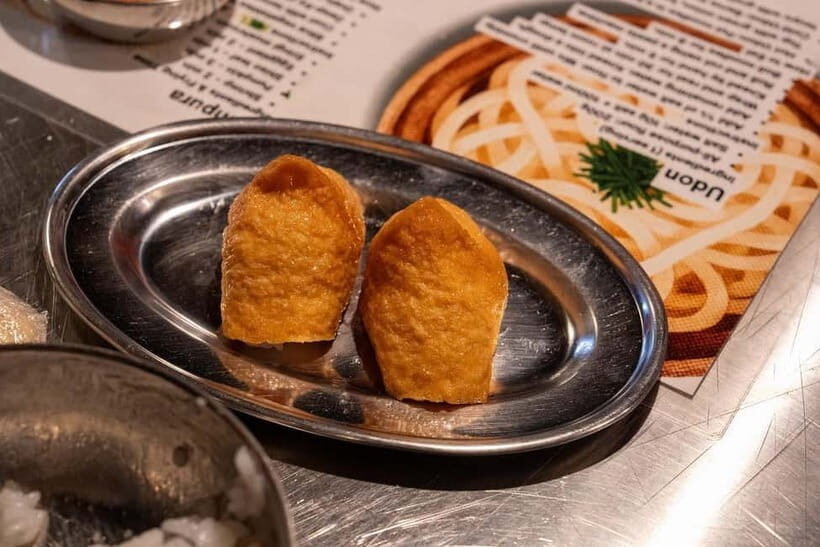
I’d book it if you want a short, friendly, skills-focused cooking experience in Kyoto—one where you can make udon, shape Inari sushi, and fry tempura, then eat it all while learning with real guidance.
Skip or adjust expectations if your top priority is a perfectly timed, fully from-scratch production where you do every single step (broth, batter, everything) within the class window. Some parts may be simplified to keep things flowing.
If that tradeoff sounds fine, this is a fun way to spend a couple hours in Kyoto that feels both authentic and useful.