REVIEW · TOKYO
Tokyo: Meet Locals & Travelers Gathering All-You-Can-Drink
Book on GetYourGuide →Operated by WelcomeTokyo · Bookable on GetYourGuide
Meeting new people in Tokyo can feel like a puzzle. This party uses wristbands, simple games, and an all-you-can-drink setup to make it easier to start conversations. I like that the format is built for connecting fast, not milling around with awkward small talk.
What I love most is the purpose-first vibe. Pick a wristband color (like Green for language friends) and you’ll naturally gravitate toward people who want the same kind of evening.
My one caution: it’s a standing-style event and there’s no food included. If you want a full meal experience, plan to eat before you go, and expect to be on your feet.
In This Review
- Key highlights worth planning around
- Tokyo social time starts at Shinjuku’s easy-to-find meetup
- How the all-you-can-drink system actually works (and what to expect)
- Wristbands turn a crowd into groups with similar goals
- The standing-style party format: freedom to mingle, less time to sit
- Games like Jenga and UNO help you talk without trying too hard
- Language practice you can actually use: English, Japanese, French, and more
- Travel and food tips without the lecture vibe
- Timing and pacing: make the first 30 minutes count
- Who this Tokyo party is best for
- Cost and value: is $48 worth your night?
- Quick booking thoughts: should you book this party?
- FAQ
- FAQ
- What is the duration of the Tokyo social party?
- Where do I meet for the party in Tokyo?
- What time does the all-you-can-drink run?
- Is food included?
- What languages are used during the event?
- Does the all-you-can-drink include craft beer?
- Are there rules about drink sharing?
- Do I need an ID?
- What’s included besides drinks?
Key highlights worth planning around
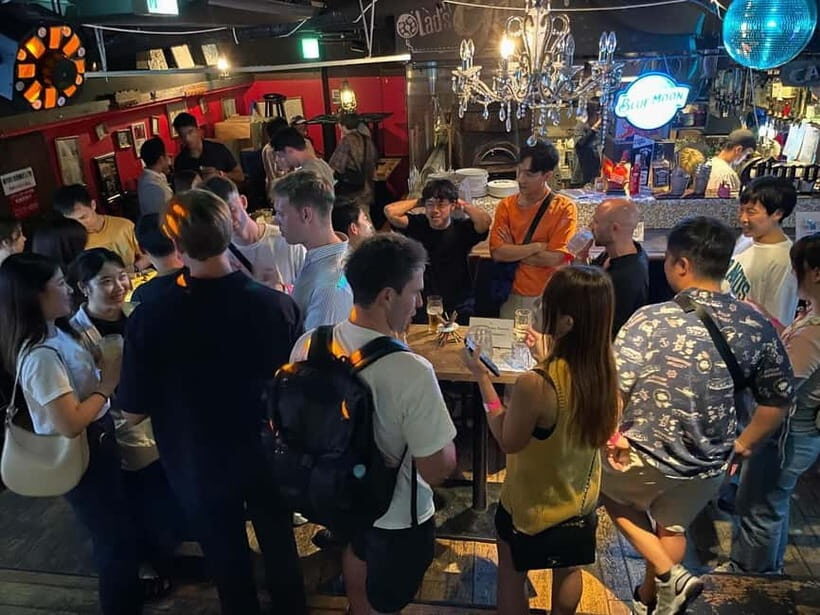
- Wristband color system that matches your goal for the night (fun, language, single, same-gender chat, or your own purpose)
- All-you-can-drink for 2.5 hours with clear rules, plus a note that craft beer isn’t included
- Games like Jenga, UNO, and Trump that keep conversations moving
- Language practice built into the night with English, Japanese, French, and more
- Travel tips without a lecture: food, places to visit, and Japan logistics
- Location in Shinjuku with an easy meeting point by JR Shinjuku Station South Exit
Tokyo social time starts at Shinjuku’s easy-to-find meetup
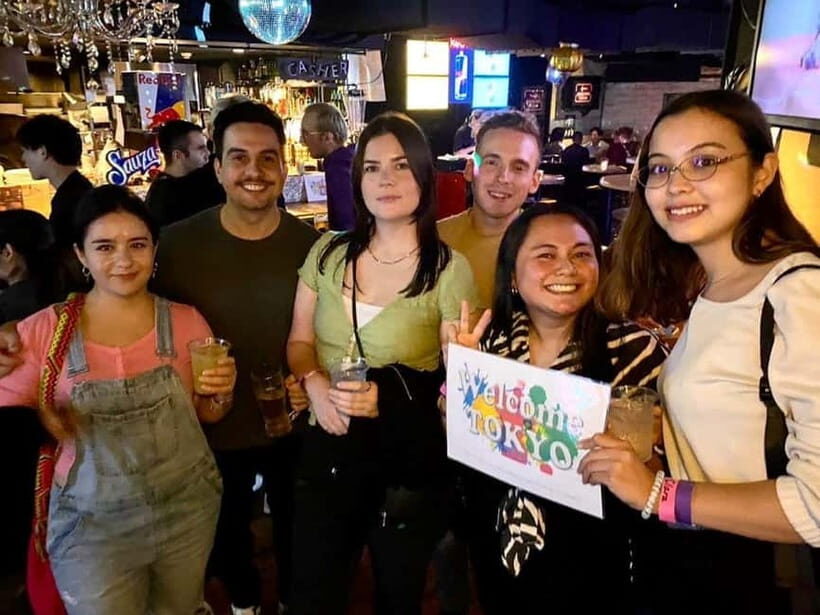
You’ll meet near JR Shinjuku Station, about 2 minutes from the South exit, outside a venue marked with a Welcome Tokyo sign. It’s one of those start points that helps you avoid the usual Tokyo trap: arriving already stressed and then trying to find the place while everyone else is mid-conversation.
Once you see the sign, you go in and check in. That’s it. No long walk, no complicated train puzzle, no mystery meeting spots. For a social event with a short time window, that matters.
The host or greeter is listed in English and Japanese, which is useful if you want to ask one quick question before the fun begins. Also, the event is designed for adults only, so you’ll need to bring your ID for age verification.
You can also read our reviews of more tours and experiences in Tokyo.



How the all-you-can-drink system actually works (and what to expect)
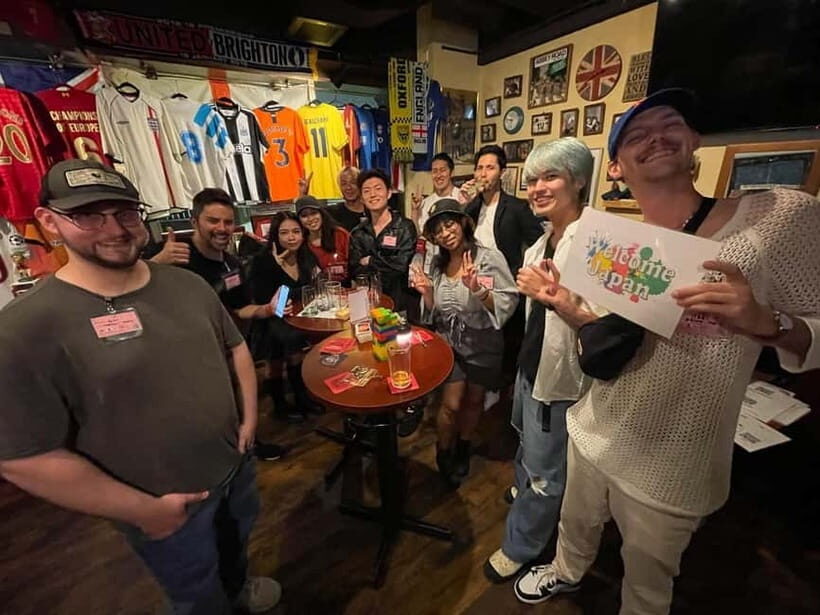
This is the big value lever. You get an all-you-can-drink option for 2.5 hours, with drink service running 19:00–23:00. The wording also includes a practical detail: there’s a last order 30 minutes before the event ends, so don’t plan to order right at the cutoff and hope for the best.
One rule you should know: you need to order another drink after finishing the current glass. That keeps things moving at the counter and prevents the line from turning into chaos, but it also means you’ll want to pace yourself. If you tend to sip slowly, just accept that you’ll still be returning to the bar repeatedly.
Two other clear boundaries:
- Craft beer is not included.
- Sharing drinks is prohibited under the all-you-can-drink option.
None of these are deal-breakers, but they help set expectations. If you’re specifically chasing craft beer, you’ll need to budget for that outside the included drinks.
Wristbands turn a crowd into groups with similar goals
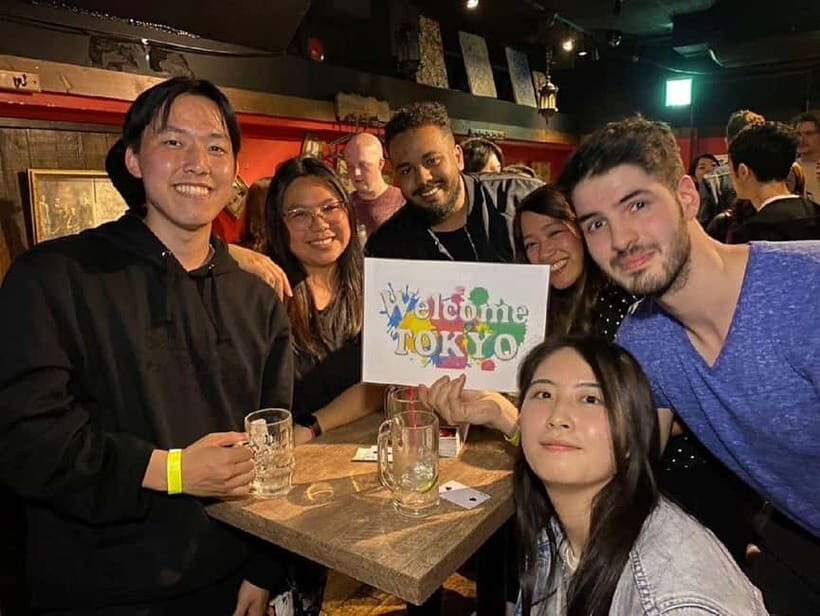
This party doesn’t treat conversation like luck. It uses a wristband color system to guide who you’ll end up meeting. You’ll also see wristbands and table signs so you can quickly identify people with the same intent for the evening.
Here’s the core idea: rather than forcing you to invent what to talk about, you signal your goal. Examples given include:
- Orange: fun time
- Green: language friends
- Pink: single
- Yellow: chat with same gender
- Blue: others, with your purpose written
That last detail is sneaky-useful. If you don’t fit one category neatly, you can still communicate what you’re after. It makes meeting people feel less like a random lottery and more like targeted mingling.
In practice, this format helps on two levels. First, it cuts the time between arrival and first meaningful chat. Second, it gives you permission to ask something specific right away, like exchanging travel ideas or practicing a language topic you actually care about.
The standing-style party format: freedom to mingle, less time to sit
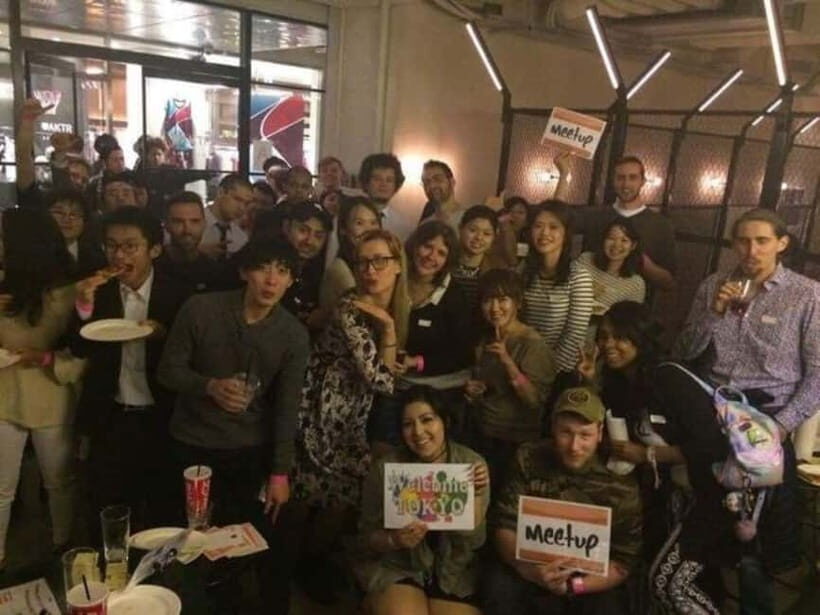
You should know the vibe: it’s a standing-style party in a relaxed social atmosphere. That means you can move around and mingle easily. It also means there’s less opportunity to “settle in” for long stretches.
If you enjoy active social nights—talking, walking up to new groups, switching conversations every so often—this works well. If you prefer structured seating or quiet corners, you may find it tiring after a while, especially since it lasts about 150 minutes.
That said, the whole point is mixing. Standing helps reduce barriers. You’re not stuck waiting for someone to turn toward you in a chair arrangement. You can simply step closer, introduce yourself, and move on if the conversation clicks or doesn’t click.
Games like Jenga and UNO help you talk without trying too hard
The schedule includes fun games such as Jenga, UNO, and Trump while you’re drinking. Games are doing heavy lifting here. They give you a shared activity so you’re not staring at each other wondering what to say next.
If you’re shy, games can be a relief because the conversation becomes part of the play. Even basic talk—what strategy someone’s using, where they’re visiting from, what they liked in Tokyo—comes naturally when you’re in the middle of a game.
If you’re outgoing, games offer instant momentum. You can meet multiple people without having to run the same introduction repeatedly. And because the atmosphere is meant for people with the same goals, the game table tends to attract the right sort of energy.
One practical tip: be ready to participate. If you hang back, you’ll miss the best chance to meet people who are motivated to talk while playing.





Language practice you can actually use: English, Japanese, French, and more
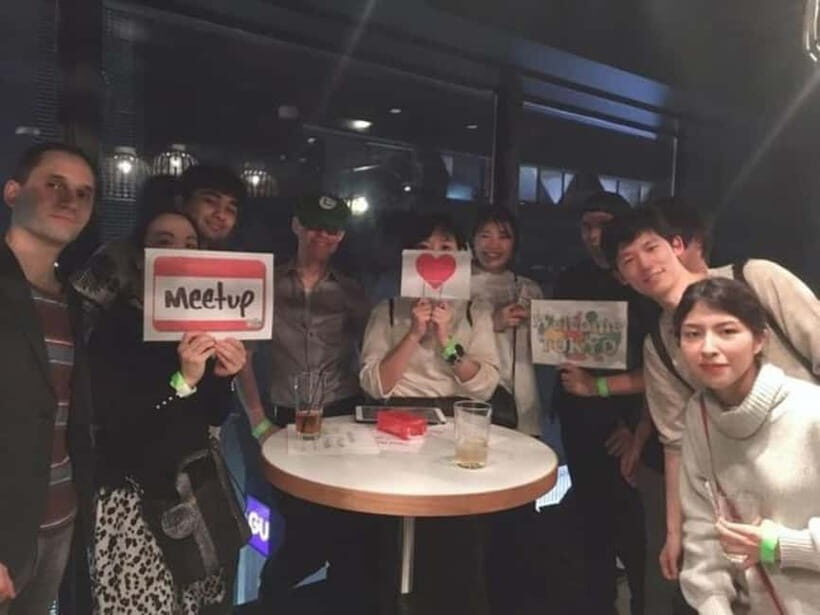
This event explicitly includes language practice. You can practice English and Japanese, and the description also mentions languages like French and more. The idea isn’t formal class time. It’s more like real conversation practice, using the night’s natural chatter.
The wristband system reinforces this. If you choose the Green wristband for language friends, you’ll likely find people who want to talk and trade phrases. You can use games and drink-time conversation to test vocabulary in context, not just memorize words on your phone.
You also get something many language meetups skip: pressure-free repetition. You hear the same kinds of phrases and requests repeatedly across different conversations. That builds confidence fast, especially in a city like Tokyo where you might otherwise speak less than you want.
If you’re the type who likes quick exchanges, this is ideal. If you need deep grammar explanations, this isn’t listed as a teaching session. Think practical chat and mutual practice.
Travel and food tips without the lecture vibe
A big part of the evening is informational, but it’s kept social. You’ll have chances to get tips about places to visit, food, and travel, plus general guidance about Japan.
What I like about this approach: you’re learning from people who are in your same situation. They’re also figuring things out in Tokyo right now—where to go, what to skip, and what’s easy to handle as a visitor. That makes tips more actionable than generic guidebook advice.
You can also use the evening to compare plans. For example, you might learn where others are going for a particular type of meal, or you might hear which neighborhoods feel easier for first-timers. Since it’s a mixed group of locals and international visitors, you’ll get a blend of insider perspective and practical arrival questions.
Just keep your questions simple and specific. Ask what people enjoyed, what surprised them, and what they’d do differently next time. Those questions tend to produce answers that are useful on your own itinerary.
Timing and pacing: make the first 30 minutes count
With a 150-minute duration, your window is short. The best strategy is to treat the opening portion as your setup phase and your later portion as your deep-chat phase.
In the beginning, focus on introductions tied to the wristbands. Grab a couple conversations where your goals match. Once you’ve found people you click with, you can go a little deeper: language practice gets better after the ice melts, and travel tips turn more useful once you understand someone’s plans.
Then, toward the end, keep an eye on the last order timing. Since last order is 30 minutes before the event ends, it’s worth ordering earlier rather than waiting for the final stretch. That way you avoid the awkward moment of realizing you missed the cutoff.
Who this Tokyo party is best for
This experience is best for adults who want a low-pressure social night with structure. It fits well if you:
- want to meet locals and international travelers without a networking vibe
- enjoy games as a shortcut to real conversation
- are interested in language exchange (English/Japanese and possibly others)
- like getting travel tips while you’re actually chatting, not reading
It may not be the right fit if you hate standing for long stretches or you’re expecting a sit-down dinner event. Also, the event has stated limits: it’s not suitable for children under 18 and people with a cold aren’t recommended.
One more reality check: food isn’t included, so plan to eat before or after. Drinks plus games can be fun, but hunger kills good conversations.
Cost and value: is $48 worth your night?
At $48 per person for about 2.5 hours of guided social time, the value depends on what you want from the experience.
If you’re paying mainly for drinks, the math can work in your favor because it’s all-you-can-drink for a set window. But it’s not unlimited craft beer, and you’ll still be following the glass-and-reorder rule. So think of it as a structured drinks package, not a craft-beer festival.
If you’re paying for social energy, the wristband matching system and the built-in games are the value engine. You’re not just buying access to a crowd; you’re buying help meeting the right kind of people faster. That can easily beat spending your evening awkwardly trying to start conversations on your own in Shinjuku.
Add in the practical language practice and travel-food tips, and the price feels more reasonable because it’s not only socializing—it’s also information and connection.
Bottom line: if you want a fun, guided social night in Tokyo and you’re okay with a standing format, this price can be a strong deal.
Quick booking thoughts: should you book this party?
I’d book this if you’re traveling solo or in a small group and you want to turn Tokyo from a sightseeing schedule into real human connections. The wristband goal system makes it unusually straightforward to find people with similar intentions, which is exactly what most travelers struggle with in big cities.
I’d skip it if you want a quiet, seated evening, or if you’re expecting food to be included. Also, avoid it if you’re not feeling well, since people with a cold aren’t considered suitable.
If you’re ready to be social for about 2.5 hours near Shinjuku, this is a solid, efficient way to meet people and pick up genuinely useful Japan ideas along the way.
FAQ
FAQ
What is the duration of the Tokyo social party?
The event lasts about 150 minutes.
Where do I meet for the party in Tokyo?
You meet near JR Shinjuku Station South exit. The venue is about 2 minutes away, and you’ll look for the Welcome Tokyo sign outside.
What time does the all-you-can-drink run?
The all-you-can-drink period is listed as 19:00–23:00.
Is food included?
No, food is not included.
What languages are used during the event?
The host or greeter is listed in English and Japanese, and the event also mentions practicing languages like English, Japanese, French, and more.
Does the all-you-can-drink include craft beer?
No. Craft beer is not included in the all-you-can-drink option.
Are there rules about drink sharing?
Yes. Sharing drinks is prohibited for the all-you-can-drink option.
Do I need an ID?
Yes. You should bring an ID for age verification.
What’s included besides drinks?
You get the chance to meet new people, play games like Jenga, UNO, and Trump, and practice languages and learn travel tips about Japan.