REVIEW · OSAKA
Tsumami Zaiku (Kanzashi) making Workshop in Abeno Osaka
Book on Viator →Operated by Moirai Arts · Bookable on Viator
A small craft class can feel like a secret door. This Tsumami Zaiku (kanzashi) workshop in Abeno Osaka lets you learn step-by-step and wear your handiwork later. I especially like the friendly instruction from Jun, Ami, and Misa-sensei, and the practical flow that includes a matcha-and-sweets break. The main thing to consider is the steep staircase at the 100-year-old house.
Inside, you’ll work in a traditional Japanese setting with a mixed eastern-style interior, in a group capped at 6. You’ll pick between two styles: an easier traditional kanzashi or a sakura cherry blossom version that takes a bit more time. You’ll leave with your finished piece boxed up, plus time to look at kanzashi made by the instructor that you can purchase.
If you want a hands-on Osaka experience that’s calm, guided, and not just watching, this is a great bet. Expect an hour and a half (approx.), a mobile ticket, and optional pickup. Also, the workshop requires good weather, so plan with a little flexibility.
In This Review
- Key highlights to look for
- Tsumami Zaiku in Abeno: what you’re really making
- Where the workshop happens: the 100-year-old house near Nishitanabe
- Picking Traditional vs Sakura kanzashi (and what difficulty feels like)
- The workshop flow: from patterned cloth choices to petal assembly
- The matcha-and-sweets break while the glue dries
- Taking your kanzashi home (and what the final wrapping means)
- Price and value in Osaka: what $35.83 buys you
- Who should book this workshop, and who should reconsider
- Booking tips: timing, weather, and how to prepare
- Should you book Tsumami Zaiku (Kanzashi) in Abeno Osaka?
- FAQ
- How long is the Tsumami Zaiku (Kanzashi) workshop in Abeno Osaka?
- What styles can I choose from during the workshop?
- Are the materials provided?
- Is there a break during the workshop?
- Can I take my handmade kanzashi home?
- Do you offer pickup?
- Is it suitable for children?
Key highlights to look for
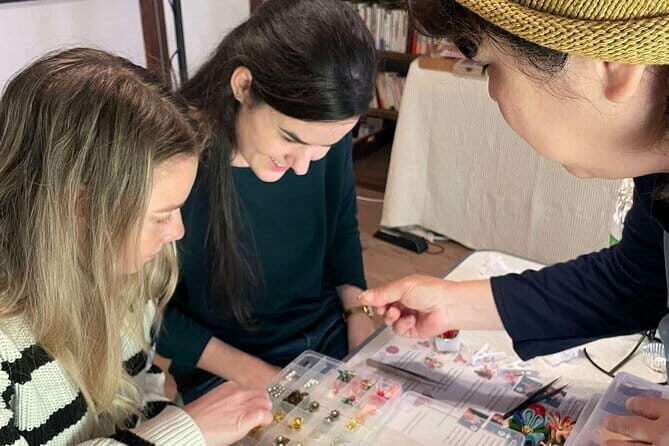
- Two difficulty tracks (Traditional vs Sakura): choose based on how much time you want to spend folding petals.
- All materials provided: cloth, pin sets, accessories, and a box—already organized for an easy start.
- Guided step-by-step building: you don’t need prior craft skills to avoid getting stuck.
- Matcha and Japanese sweets break: glue needs drying time, so you get a real pause instead of rushing.
- Small group setting: max 6 travelers, which keeps questions from feeling like a line.
- Take-home in a box: your finished kanzashi comes wrapped and ready to keep.
Tsumami Zaiku in Abeno: what you’re really making
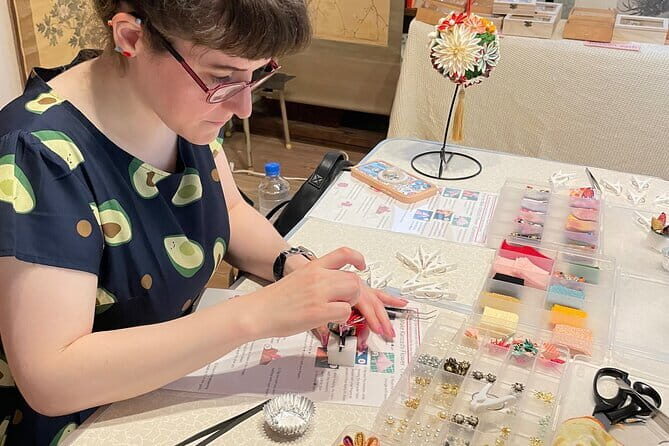
Tsumami-zaiku is the art of making decorative kanzashi hairpieces from fabric. The key idea is that you form small petal shapes by folding fabric, then assemble them into a clean, layered look. It’s one of those crafts where the final result feels fancy, but the process is very teachable once someone shows you the steps.
In this Abeno workshop, your finished piece is designed to look like you did it at a studio—because the instructor helps you get the structure right. What makes it satisfying is that you aren’t improvising from scratch. You’re choosing patterns and building from prepared components, then focusing on the parts that make it truly yours: the petals and the assembly choices you make during class.
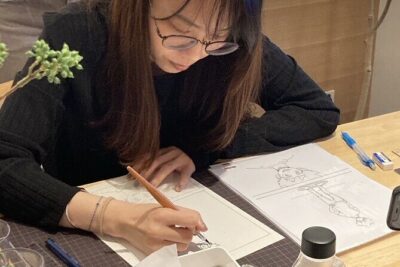
This isn’t a “watch and leave” activity. It’s the kind of class where you’ll feel your hands learning a rhythm. And if you worry about messing up, the format is reassuring: you’re guided throughout, and the materials are set up so you can relax and focus.
A few more Osaka tours and experiences worth a look

Where the workshop happens: the 100-year-old house near Nishitanabe

The class takes place in a 100-year-old traditional Japanese house with a mixed eastern-style interior. That matters more than it sounds. You’re not in a generic classroom; you’re in an older space that makes the craft feel grounded in real Japanese domestic design.
You’ll start at Nishitanabe Station (meeting point is listed at Nishitanabechō, Abeno Ward). The location is near public transportation, and there’s an option for pickup. You’ll also use a mobile ticket, which is convenient if you want everything on your phone.
One practical note: the house has a steep staircase. If you use mobility aids or you’re uncomfortable with stairs, take this seriously before you book. You’ll want to plan for that route at arrival time—there’s no “skip the stairs” detail in the info you’re given. Also, since the group is small, you won’t have a crowded workaround, so your comfort level matters.
Picking Traditional vs Sakura kanzashi (and what difficulty feels like)
You’ll begin with a short talk about the brief history of Tsumami-zaiku, then you choose between two options:
1) Traditional kanzashi
2) Sakura (Cherry blossom) kanzashi
The traditional version is described as easy. The sakura version is more difficult and may take more time. That means you’re not just picking a style—you’re picking the pace.
In real terms, the sakura option likely asks for more careful assembly (more petals or more layering work) and it can test your patience a little more while the glue sets. The good news is that you’re not left alone with it. The instructor guides you step-by-step, and there’s a scheduled break later anyway when the glue needs time to dry.
If you’re short on energy—after a long day of sightseeing—or if you just want a smooth win, choose traditional. If you like a challenge and you enjoy slow, precise craftwork, go sakura.
The workshop flow: from patterned cloth choices to petal assembly

After you choose your style, the workshop shifts into hands-on mode fast. Here’s what to expect from the process.
First, you’ll browse a variety of patterned cloths and accessories. This is the fun part where your brain goes from Osaka sightseeing mode to craft design mode. The workshop gives you a chance to think about color and texture before you start folding.
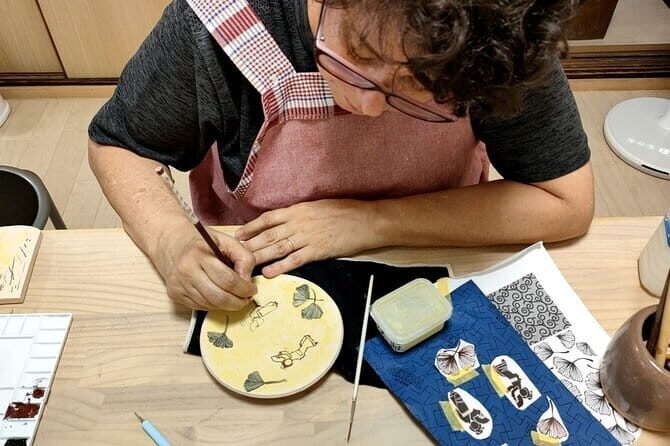
Then the instructor teaches the steps. All the materials are provided and are prepared in a way that makes the class easier: cloths, pin sets, and accessories for the kanzashi are ready. The one part that isn’t pre-made is the Kanzashi petals. That’s the core craft you’ll be doing.
So you’ll assemble your petals, follow the instructions, and build up the kanzashi piece. The teacher guides you through each stage, and you should feel free to ask questions. The info emphasizes that you don’t need to worry about making mistakes. That’s important because kanzashi work is small and fiddly. When someone can correct your technique early, you avoid the spiral of trying to fix it alone later.
Also, the group size is capped at 6, which keeps the instruction from turning into a one-way lecture. You can ask something and get an answer that applies to what you’re holding right now.
The matcha-and-sweets break while the glue dries
This is one of the smartest parts of the workshop design. The glue used to assemble the kanzashi takes time to dry. Instead of squeezing you into a long waiting period, they plan a break.
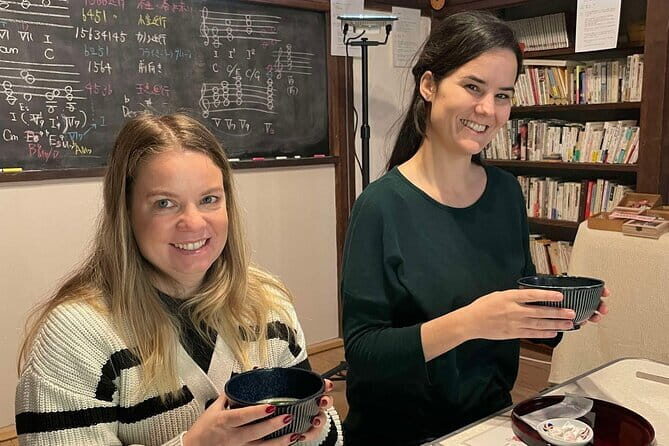
During that downtime, you can enjoy matcha and Japanese sweets. It’s a proper rest between the technical folding/assembly steps and the final finish. You’ll also have time to look around at handmade items available for purchase—so you can see how the instructor’s pieces look once fully finished.
I like this pacing because it keeps your mood steady. Craft classes can feel tense if you’re worried you’ll fall behind. Here, the class builds in a natural reset, and you get something enjoyable and local to go with it.






Taking your kanzashi home (and what the final wrapping means)
Once the glue has set and your piece is assembled, you’ll get a finished kanzashi wrapped up and ready to take home, in a box.
That box detail matters. A handmade hairpiece is fragile in transit. Packaging you can actually use makes the difference between a gift you’re proud of and a craft project that ends up tangled in your bag. The workshop clearly sets you up for a clean departure with your work protected.
They also allow time to purchase kanzashi made by the instructor. That’s a nice option if you want a second piece—maybe a different color or style than yours.
As for what you’ll do with it afterward, you’re basically bringing home a wearable craft. Even if you only wear it on special outings, it’s the kind of souvenir that isn’t just decorative. It has daily-life meaning, because it’s made to be used.
Price and value in Osaka: what $35.83 buys you
The price is $35.83 per person, and the workshop lasts about 1 hour 30 minutes. It’s booked on average about 50 days in advance, which usually signals steady demand for a small, hands-on class like this.
Here’s where the value comes from. You’re paying for more than a single activity moment. Your class includes:
- matcha and Japanese sweets
- cloths, pin sets, accessories, and a box
- step-by-step instruction
- help choosing between two styles
You’re also getting time to work in a real traditional setting, in a small group, which is hard to replicate at home. With a workshop like this, the craft materials and the organizer’s preparation do real work. The petals are the part you make, but everything around that is set up so you can focus on learning the technique rather than sourcing supplies.
Could you buy a kanzashi instead of making one? Sure. But the experience you get here is the skill and the satisfaction of completing something by your own hands, with guidance when you need it. For many people, that’s exactly what they want from Japan: not just objects, but competence and memory in one package.
Who should book this workshop, and who should reconsider
This workshop is a strong match if you:
- want a calm, creative break from big-city sightseeing
- enjoy crafts and precision work
- like guided experiences where you can ask questions
- want a take-home souvenir that’s actually useful
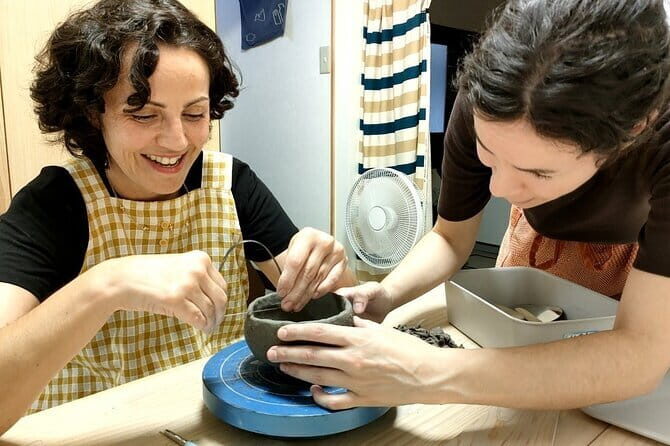
It’s also capped at 6 travelers, which keeps it from feeling like a factory tour. You’ll get more attention, and the instruction should feel personal.
It may be less ideal if you:
- need step-free access. The house has a steep staircase.
- are traveling with a child under 8 (only kids 8+ are allowed).
- are dealing with infectious illness. The activity isn’t recommended if you have flu, COVID, or similar symptoms.
- want an ultra-fast activity. It’s about 1.5 hours, and some of that time is purposeful (drying + break).
If you’re traveling with kids 8+, you can bring them, but you’ll be responsible for their care during the workshop. That’s a key reality check: the instructor is teaching the craft, not supervising children as a daycare.
Booking tips: timing, weather, and how to prepare
Good timing helps you enjoy the class instead of rushing it. The workshop requires good weather. If it’s canceled due to poor weather, you’ll be offered another date or a full refund. Because of that, I suggest you pick a day where you have flexibility.
You’ll receive confirmation at booking time, and you’ll use a mobile ticket at entry. If you have pickup, confirm that you’re matched with the right pickup option when you book.
For preparation, keep it simple:
- Wear something comfortable for sitting and working with small parts.
- Be ready for glue time (that scheduled break is part of the plan).
- If stairs are an issue, plan ahead for the 100-year-old house entrance.
Should you book Tsumami Zaiku (Kanzashi) in Abeno Osaka?
I think you should book this workshop if you want a genuinely hands-on Osaka experience with a guided craft you can take home. The combination of a traditional setting, a small group (max 6), and friendly instruction from Jun, Ami, and Misa-sensei makes it feel personal without being stressful. Add matcha and Japanese sweets during the glue-drying break, and it becomes a satisfying outing even if you’re not a big “craft person.”
You might skip it if stairs are a dealbreaker for you, or if you’re dealing with an illness that could make the environment unsafe. Also choose your style with honesty: traditional is the easier path, while sakura is more demanding and may take longer.
If you want a souvenir that isn’t just another photo, this is one of the best types of activities to fit into your Osaka plan. You’ll leave with something real, boxed up, and made with your own hands.
FAQ
How long is the Tsumami Zaiku (Kanzashi) workshop in Abeno Osaka?
It runs about 1 hour 30 minutes (approx.).
What styles can I choose from during the workshop?
You can choose between a Traditional kanzashi option and a Sakura (Cherry blossom) kanzashi option.
Are the materials provided?
Yes. The workshop provides the cloths, pin sets, accessories for the kanzashi, and a box. The petals (the Kanzashi petals) are the part you make during the class.
Is there a break during the workshop?
Yes. There is a break time when the glue is drying. During that break, you’ll enjoy matcha and Japanese sweets.
Can I take my handmade kanzashi home?
Yes. After the workshop, you’ll receive your finished kanzashi wrapped up and ready to take home in a box.
Do you offer pickup?
Pickup is offered.
Is it suitable for children?
Only children from ages 8 and above are allowed. Parents or guardians should take care of their children during the workshop.