REVIEW · TOKYO
3-Hour Manga Drawing Workshop in Tokyo
Book on GetYourGuide →Operated by マンレボ ManRevo · Bookable on GetYourGuide
Tokyo hands you a manga page in 3 hours. In Kichijoji, near the Ghibli Museum in Mitaka, you sit down with a professional manga artist and learn the practical steps behind a real manga page—sketch, dip pen, ink, black, effect lines, and screen tones.
I love that you start on A4 manga paper and build your page through clear technique stages, including dip-pen drawing and finishing details. I also like the small-group setup (up to 5 people), which makes it easier to get help when your lines don’t do what you want. One consideration: the workshop is conducted in Japanese, and although English support appears via slides, you’ll still be following a mostly Japanese class flow.
In This Review
- Key moments you should know before you go
- Kichijoji location: near the Ghibli Museum, easy to plan
- Price and what you’re really paying for ($129 for 3 hours)
- Small-group class in a real room: attention without the crowd
- What you’ll make: one A4 manga page you can take home
- Step-by-step breakdown: sketching to dip-pen control
- Inking, black painting, and effect lines: where your page starts reading
- Screen tones: finishing technique that turns line art into manga texture
- How to get ready (and what to bring besides yourself)
- Who this workshop is best for (and who might want a different plan)
- Should you book the 3-hour manga drawing workshop in Tokyo?
- FAQ
- How long is the manga drawing workshop?
- What will I create during the workshop?
- What’s included in the price?
- What languages will I hear during the class?
- Where do I meet the instructor and how do I enter?
- How large is the group?
- Is transportation to and from the workshop included?
- Are meals or drinks included?
- Will ink stain clothes or hands?
- What’s the cancellation policy?
Key moments you should know before you go
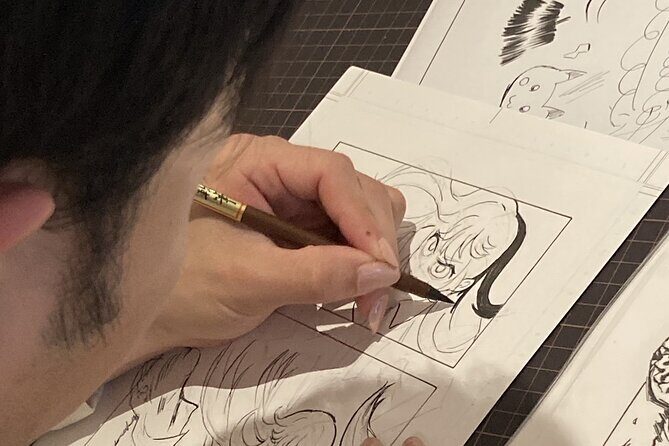
- A4-page production: you’ll create one full manga page as your main output
- Dip pen focus: sketching transitions into a classic manga tool and line control
- Finish-the-page skills: inking, painting black, effect lines, and screen tones are taught in sequence
- Small group limit (5 max): easier attention in a hands-on class
- Take-home souvenir: you leave with your finished manga page
Kichijoji location: near the Ghibli Museum, easy to plan
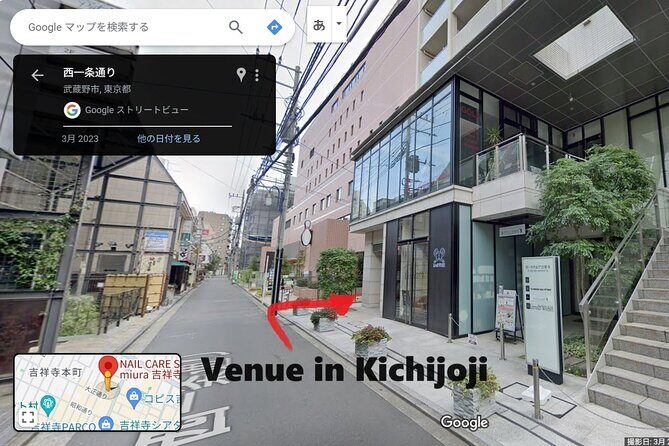
This workshop is in the Kichijoji area, in Honshu, Japan, and it’s a short walk from the Ghibli Museum area in Mitaka. If you’re already planning a Ghibli day, you’ll likely find the timing and neighborhood convenience make this class fit nicely.
Getting there is pretty straightforward once you have the exact address. Your meeting point is 8 minutes on foot from the north exit of Kichijoji Station. The specific address is 601 H-Square Kichijoji, 2-4-6 Kichijoji Honcho, Musashino-shi, Tokyo. The host also warns about a similarly named building—so don’t “wing it” when you arrive. Press the intercom/call for room 601 and the door will be unlocked.
The workshop happens in an apartment room (not a big studio), which is part of the appeal. You’re not just watching someone talk about manga—you’re working at your own desk with the tools you need.
A few more Tokyo tours and experiences worth a look


Price and what you’re really paying for ($129 for 3 hours)
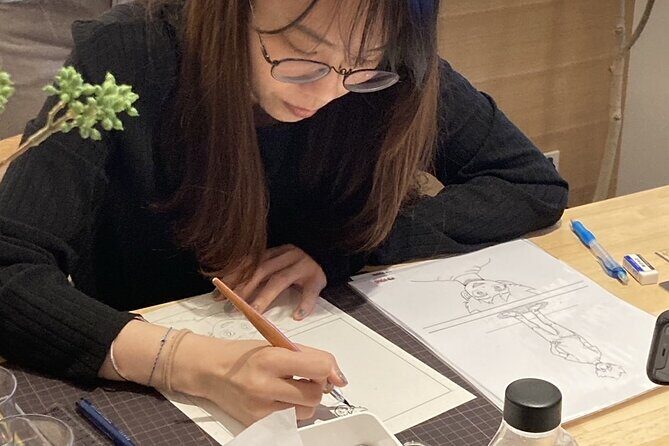
At $129 per person for 3 hours, you’re paying for a pro-guided, step-by-step workflow plus all materials. What makes this good value is that the class isn’t vague or scattered. It’s organized like an actual manga production sequence, and you finish with a tangible product you can carry home.
Included in the price:
- guidance from a professional manga artist
- all necessary manga drawing materials
- a one-page manga experience (your final A4 page)
- time to learn multiple manga techniques, not just one trick
Not included:
- transportation to/from the workshop
- meals and drinks
In other words, you’re not paying for a “come watch” cultural activity. You’re paying for instruction, tools, and enough structure that a beginner can still leave with something finished.
Small-group class in a real room: attention without the crowd
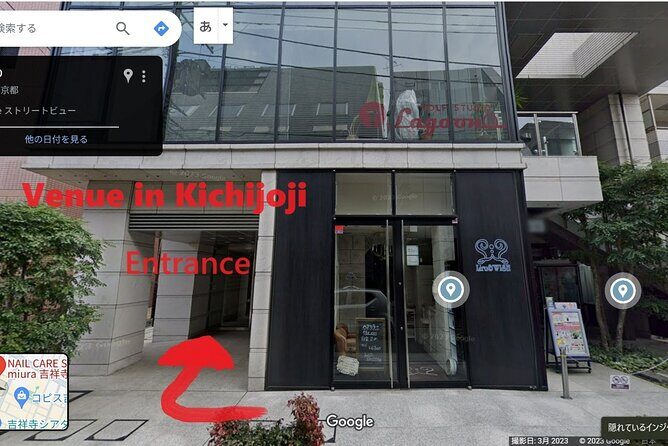
This is built as a small group experience with a limit of 5 participants. That matters more than it sounds. In a workshop like this, the difference between learning and frustration is feedback—quick corrections to hand position, line weight, and how to use the tools safely and cleanly.
The class runs in Japanese, but you’re not left totally on your own. During instruction, there are English slides, so you can follow the steps even if your Japanese isn’t strong. I like this setup because it’s practical: you’re learning the process with visuals and guidance, not trying to translate every word.
Two other details help you prepare:
- Wheelchair accessible (good to know if you need step-free access)
- No smoking in the workshop space
And from a comfort standpoint, plan on being in a working mood for the full session. This isn’t a “sit back and chat” experience.
What you’ll make: one A4 manga page you can take home
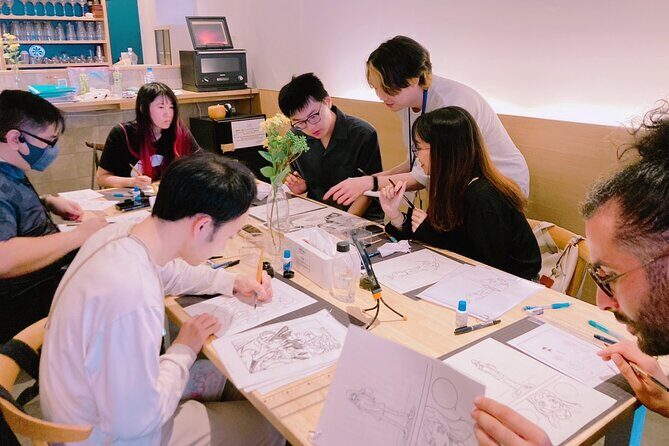
Your main deliverable is clear: you’ll create your own manga page and take it home as a souvenir of Tokyo. The workshop uses A4-size manga paper, and the curriculum is designed so the work builds as you go.
That matters because manga drawing often feels overwhelming at first—too many skills at once. Here, you get a path:
1) sketch planning on manga paper
2) practice with a dip pen
3) ink work
4) painting black areas
5) effect lines
6) screen tones
By the time you finish, you should have a completed page rather than a half-finished practice sheet.
If you like creative projects with a clear endpoint, this format is satisfying. You’re not just learning technique for technique’s sake—you’re producing a final page that you can show friends, keep as a personal souvenir, or use as a baseline for future practice.
Step-by-step breakdown: sketching to dip-pen control
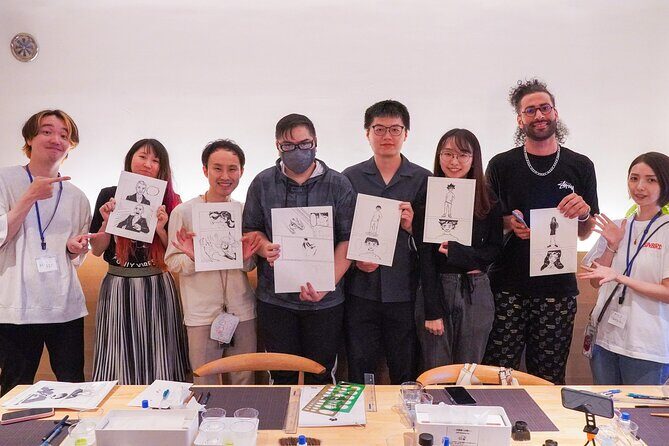
The workshop begins with sketching on manga paper (A4 size). Expect to start with shapes and composition rather than jumping straight into “final” lines. That’s a smart way to learn, because manga panels need structure: where your character or subject goes, how the framing supports the story moment, and how the lines will later translate into ink.
Next comes practice using a dip pen. This is where the workshop earns its keep. Dip pens don’t behave like most pens you use at home. They encourage control: steady movement, consistent line pressure, and awareness of how much ink you’re pulling onto the nib.
Even if you’re nervous, a short dip-pen practice segment is the right place to build confidence. If your lines wobble, it’s still useful. You’re learning how the tool responds. You’re not being graded—this is about getting technique into your hands.
You’ll also be given everything you need, so you don’t have to buy supplies before you go. The host explicitly says you just need to bring yourself.
A few more Tokyo tours and experiences worth a look





Inking, black painting, and effect lines: where your page starts reading
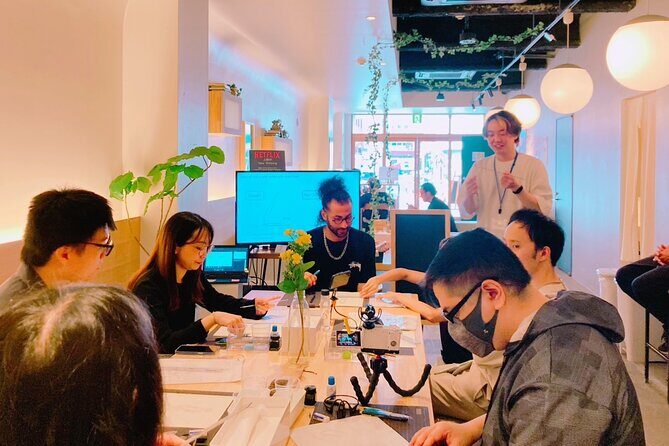
After sketch practice, the workshop moves into inking. This step is basically the moment where your rough ideas become manga-ready lines. Inking teaches you how to separate sketch marks from final linework, and how to make your page look intentional.
Then you’ll do painting black. This matters because manga isn’t just about outlines. Black areas add depth, emphasis, and clarity. Even simple shading or solid black shapes can make the page feel more “manga” instantly.
After that comes effect lines—the visual language for motion, emphasis, and impact. If you’ve ever wondered how manga panels communicate energy without long text blocks, effect lines are one of the biggest answers. This is usually where beginners start to feel the creative payoff: you’re no longer just drawing; you’re adding mood.
Throughout these stages, the class uses Japanese instruction with English support via slides, so you can follow the sequence and keep your attention on what your hand is doing.
One practical heads-up: ink may stain clothes and hands. Wear clothes you don’t mind getting dirty, and assume you’ll want to wash up right after.
Screen tones: finishing technique that turns line art into manga texture
The last major technique step is screen-tones. Screen tones are a big part of how manga creates contrast and atmosphere. They let artists add gradients, shading, and texture without overcomplicating the drawing.
For many people, screen tones are also the step that feels most “real.” It’s one thing to draw clean lines; it’s another to add the patterned shading that makes the page feel finished and publishable.
This is also where the workshop’s structure helps you. Because you learned the sequence—sketch, dip pen, ink, black, effect lines—you’re not trying to learn screen tones in isolation. You’re finishing a page that already has its key visual elements in place.
By the end, you’ll have the satisfaction of creating something complete in one sitting. And you’ll walk away with a souvenir you can keep, frame, or rework later.
How to get ready (and what to bring besides yourself)
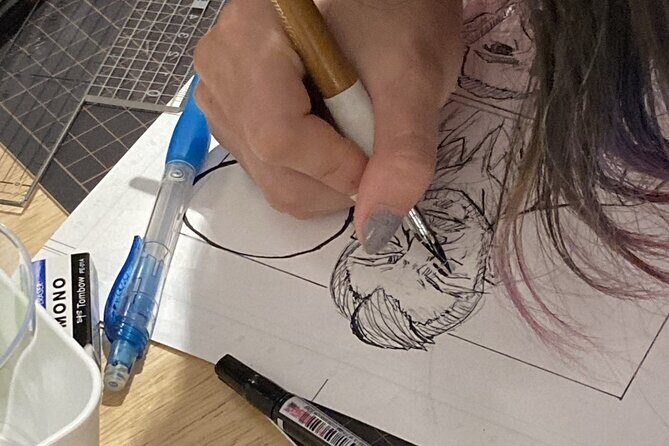
You don’t need to bring manga supplies. The workshop includes materials, and the host specifically notes that you just need to bring yourself.
Still, you’ll want to plan around two real-world issues:
- Ink stains: wear clothing you’re okay ruining a little
- Hand contact: you’ll likely get ink on your fingers, so think about how you’ll manage that during and after
If you’re picking outfits, choose something comfortable for sitting and drawing for three hours. Think of it as an art class, not a museum day.
Also, because the instruction is primarily in Japanese, it helps to come with a basic openness to non-verbal learning—watching the steps, copying what you see, and using the English slide support. Even if your Japanese is limited, the workflow is visual and hands-on.
Who this workshop is best for (and who might want a different plan)
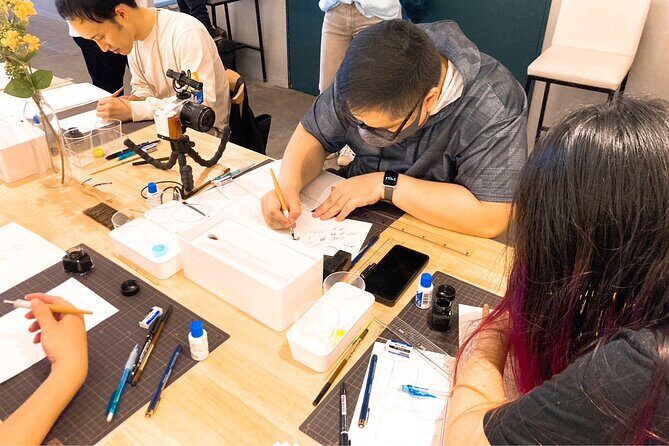
This workshop is a great fit if you:
- want a hands-on manga activity with a real professional guiding you
- enjoy structured creative tasks that end with a finished product
- like the idea of learning multiple techniques (not just one) in a single session
- want a Tokyo souvenir that isn’t mass-produced
It’s especially good for beginners. The course is designed to take you through the major steps that make manga look like manga—linework, black areas, impact effects, and tones.
If you want an activity where language barriers won’t matter at all, this might still work because of the English slides, but you should expect to hear Japanese explanations throughout. You’re drawing the whole time, so it’s not a “listen-and-learn only” format—but it is still a Japanese-led class.
Should you book the 3-hour manga drawing workshop in Tokyo?
I’d book it if you want one of the most practical, take-home creative experiences Tokyo offers. For $129, you’re getting a pro-led, small-group pathway to finish an A4 manga page, with materials included and multiple core techniques taught in sequence.
Skip it only if you:
- can’t handle getting ink on your hands or clothes
- need a purely English-led activity with no Japanese instruction
- prefer sightseeing-style activities over making something with your own hands
If your idea of a great Tokyo day includes learning a craft and leaving with proof you did it, this workshop is one of the cleanest bets. Add it to a Ghibli/Mitaka day in the area, show up ready to get a little messy, and you’ll walk out with a page you made yourself.
FAQ
How long is the manga drawing workshop?
It lasts 3 hours.
What will I create during the workshop?
You’ll create one manga page on A4-size manga paper, and you can take it home.
What’s included in the price?
The workshop includes professional manga artist guidance, all necessary drawing materials, and instruction through the full one-page manga experience and techniques.
What languages will I hear during the class?
The workshop is conducted in Japanese, and there are English slides during instruction.
Where do I meet the instructor and how do I enter?
Meet at 601 H-Square Kichijoji. It’s about an 8-minute walk from the north exit of Kichijoji Station. Press room 601 on the call button when you arrive; the door should be unlocked.
How large is the group?
It’s a small group with a limit of 5 participants.
Is transportation to and from the workshop included?
No. Transportation isn’t included, so you’ll need to arrange your own travel to the meeting point.
Are meals or drinks included?
No. Meals and drinks aren’t included.
Will ink stain clothes or hands?
Yes. Ink may stain clothes and hands, so wear clothes you don’t mind getting dirty.
What’s the cancellation policy?
You can cancel up to 24 hours in advance for a full refund, and you can also reserve now and pay later.