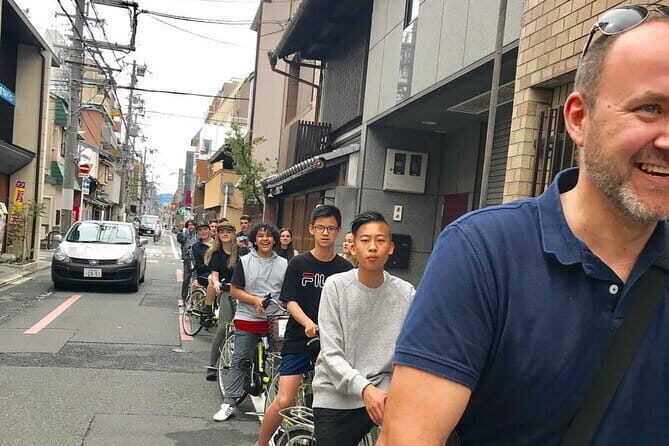
Two wheels beat Kyoto crowds and time. This private e-bike tour lets you cover big-name sights like Fushimi Inari and Tofuku-ji without turning your day into a long walk. I especially like the time-saver factor, and I like that you get real context from your guide (not just stop-and-snap). One thing to think about: you’ll need to comfortably ride a bicycle, and some parts of the route involve busy streets.
The guide work is a major reason this tour stays fun. I’ve seen guides like Yonnie, Yuhey, Yuichi, Mana, Polina, and Kento praised for tailoring the ride, telling culture and customs stories, and keeping things safe as you move through lively areas.
You’ll still be outside a lot, so plan for a full travel-day rhythm. If you want a totally laid-back sit-down sightseeing day, this may feel a touch active.
In This Review
- The KIYOTO Kyoto Private E-Cycling Experience at a Glance
- Why This Kyoto Private E-Cycling Tour Feels Faster Than Walking
- E-Bikes, Pace, and Safety: What Your Ride Really Means
- The Fushimi Inari to Tofuku-ji Kickoff: Torii, Valleys, and Calm Gardens
- Higashi Hongan-ji
- Fushimi Inari-taisha Shrine
- Komyo-in Temple (sub-temple of Tofuku-ji)
- Tofuku-ji Temple and Tsutenkyo Bridge
- Higashiyama to Gion by Bike: Pagodas, Hanamikoji, and Shirakawa Quiet Time
- Hōkan-ji Temple (Yasaka Pagoda)
- Yasui-Konpiragu
- Hanamikoji Street
- Tatsumi Bridge and Shirakawa Canal area
- River Terrace (Shirakawa Shinsui Terrace)
- Heian Jingu and Nanzen-ji: The Big Gate and the Brick Aqueduct
- Heian Jingu Shrine Otorii
- Nanzen-ji Temple and Nanzenji Suirokaku Aqueduct
- Philosopher’s Walk to Shimogamo: A Longer Day for People Who Like Roots
- Philosopher’s Walk
- Honen-in
- Shimogamo Jinja
- Kamogawa Delta (Kyoto Prefectural Kamogawa Park) and Stepping Stones at Kojin
- Kyoto Gyoen to the City Streets: Park Time, Shopping, and a Handy Finish
- Kyoto Gyoen
- Teramachi-dori Street and Sanjo Street
- What Makes the Guides Matter: Tailoring, Storytelling, and Photo-Friendly Stops
- Price and Value: What You’re Paying For at $198.15
- Who Should Book This Kyoto E-Cycling Tour (and Who Might Want Something Else)
- Best-Use Tips Before You Start Pedaling
- Should You Book KIYOTO’s Kyoto Private E-Cycling Tour?
- FAQ
- How long is the Kyoto private e-cycling tour?
- Is this tour private?
- Are electric bikes included in the price?
- Where does the tour meet?
- Do I need to pay for temple and shrine entrances?
- Is Fushimi Inari admission included?
- What fitness level do I need?
- Are kids bikes available?
- Will I get a mobile ticket?
- Is it near public transportation?
The KIYOTO Kyoto Private E-Cycling Experience at a Glance
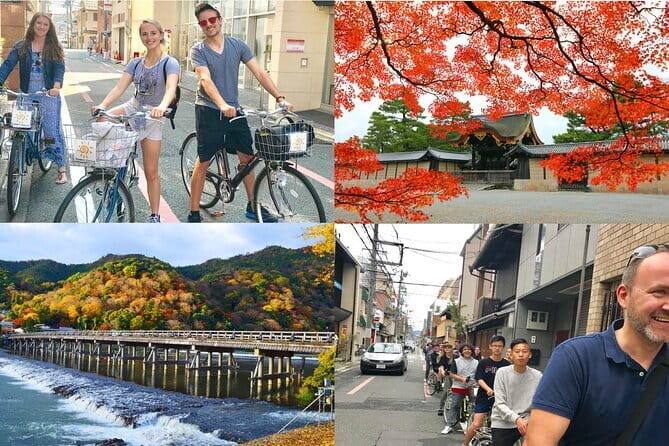
- Electric bike rental is included, so you skip the equipment hunt.
- Private means your pace is yours—you can slow down, speed up, or adjust stops.
- Major Kyoto landmarks plus quieter corners, including river walks around Shirakawa.
- Guide-led photo stops and practical history and culture talk as you ride.
- Free admissions show up often, but not everywhere (for example, Komyo-in isn’t included).
- Multiple guide options you may get based on the day, with strong feedback across names like Yonnie, Mana, and Yuhey.
Why This Kyoto Private E-Cycling Tour Feels Faster Than Walking
Kyoto is famous for walking. Also for lines. Also for streets that feel designed to punish your time. This tour solves that with an e-bike route that keeps momentum while still letting you actually enjoy what you’re seeing.
The big value here is efficiency. A typical walking plan can take forever just to move between districts. With electric help, you can hit multiple major places in a single outing and still arrive with energy for the details—especially the viewpoints that would be exhausting on foot.
Another value point: the e-bike rental is included. That sounds obvious, but it’s the difference between a smooth plan and a messy one. You’re not spending your precious Kyoto hours figuring out helmets, sizing, deposits, and checkout timing.
You can also read our reviews of more cycling tours in Kyoto

E-Bikes, Pace, and Safety: What Your Ride Really Means
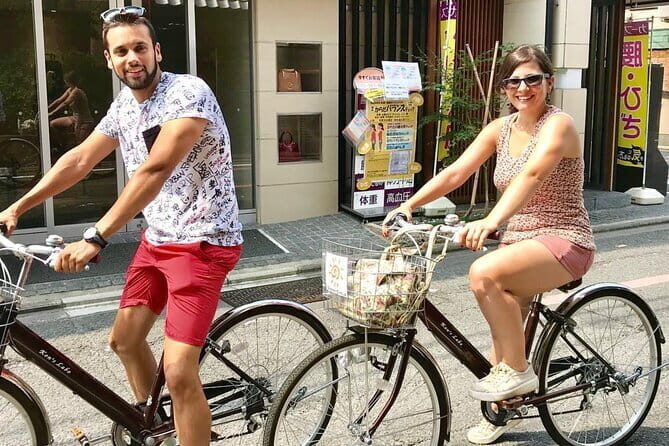
This is a private tour, and that changes how your day flows. In the reviews, people describe the pace as sightseeing-friendly rather than rushed. Guides also seem comfortable adjusting the route to what you haven’t seen yet, or focusing on your neighborhood interests, so the ride feels more personal than a fixed checklist.
You’ll be riding through a mix of temple areas and city streets, so safety matters. Multiple people praised guides for staying careful while navigating crowded Kyoto roads. That’s important because the charm of Kyoto also includes its narrow lanes and heavy foot traffic.
You’ll want moderate physical fitness and the ability to ride. If you’re planning to bring kids, there are non-electric kids bikes available, but units are limited—request ahead. There are also kids seats for children who can’t ride on their own, but again the supply is limited.
Finally, note the timing flexibility: the tour runs about 4 to 8 hours, depending on your plan and pace. That means it can work for a half-day style visit, but you should still expect it to feel like an active day.
The Fushimi Inari to Tofuku-ji Kickoff: Torii, Valleys, and Calm Gardens
Most starts here aim to check off Kyoto’s best-known Kyoto shrine moments early, while your energy is high and crowds are still manageable.
Higashi Hongan-ji
This is a major Jodo Shinshu Buddhist temple established in 1602. It’s the kind of stop that gives you scale fast—vast grounds and an impressive main hall (the Goeido). Even if you’re not a religious-history person, the setting helps you understand how Kyoto’s spiritual life is woven into the city.
What to watch for: this stop is a good warm-up. You’ll get oriented before you head into the more visually dramatic sights.
Fushimi Inari-taisha Shrine
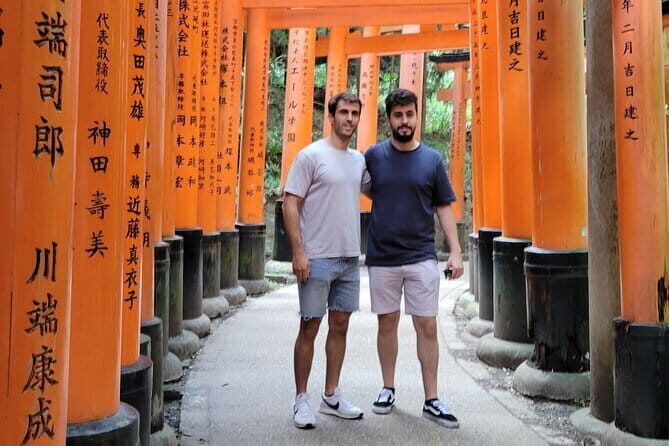
Then comes the icon: Fushimi Inari. This is the head shrine for thousands of Inari shrines across Japan, and the hallmark is the thousands of bright red torii gates stacked in tunnel-like trails up the mountain side.
Admission is listed as free here, and that’s a nice bonus. Expect it to be photo-heavy. Also expect people. Your guide can help you find where to pause for the best views without blocking traffic.
You can also read our reviews of more private tours in Kyoto
Komyo-in Temple (sub-temple of Tofuku-ji)
This stop focuses on quiet. Komyo-in is known for a tranquil garden, and it’s especially stunning in autumn thanks to maple leaves blending with mossy grounds.
A key practical note: the itinerary lists admission for this stop as not included, so you may pay an entry fee depending on the day. If gardens are your thing, it’s worth planning for; if you’re trying to keep costs tight, you may want to treat it as optional in your mental budget.
Tofuku-ji Temple and Tsutenkyo Bridge
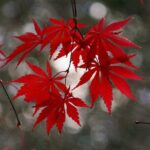
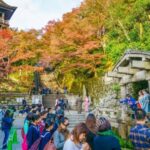
Tofuku-ji is where Kyoto’s autumn reputation gets physical. The Tsutenkyo Bridge spans a valley, giving panoramic views of maple color in fall.
Here’s why the e-bike matters: you can arrive at the bridge spot without turning the day into a long slog, and you can use the extra time to actually enjoy the view instead of rushing through photos.
Higashiyama to Gion by Bike: Pagodas, Hanamikoji, and Shirakawa Quiet Time
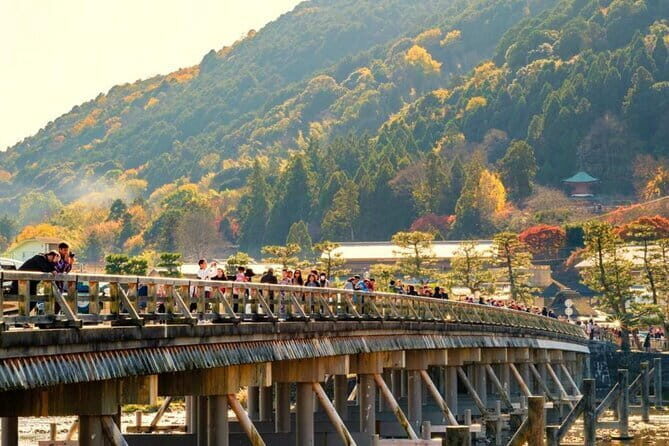
After Fushimi and southern temple zones, the route leans into the postcard Kyoto that most people picture: pagodas, canal views, and old-street atmosphere.
Hōkan-ji Temple (Yasaka Pagoda)
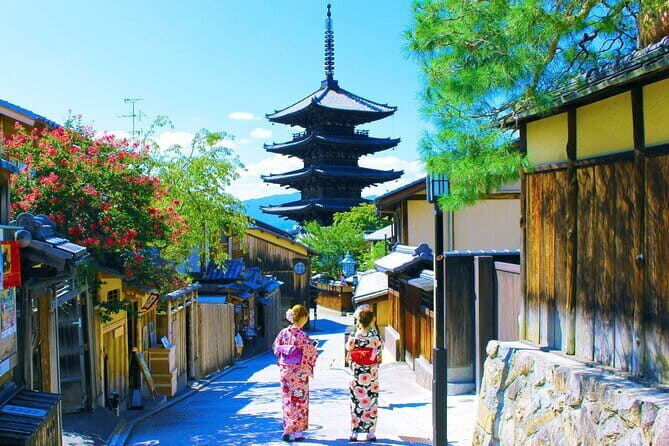
This stop is pure silhouette beauty. Hōkan-ji and the Yasaka Pagoda are famous for that ancient skyline look, especially with the Higashiyama district behind it.
Practical tip: this is a great pause spot. Your guide can usually time it so you get the photo without feeling stuck in one place too long.
Yasui-Konpiragu
This shrine adds a human, story-driven angle. Yasui Konpiragu is known for prayers connected to relationships—people come seeking help to cut off bad ties or bring good ones.
It’s a reminder that Kyoto isn’t only scenery. It’s also everyday belief and local tradition.
Hanamikoji Street
Hanamikoji is the classic Gion alley lined with traditional tea houses and restaurants. You get that historic atmosphere, and sometimes you may spot geisha culture in motion.
What to expect: this is not a silent museum alley. It’s a street, which means walking patience helps. The advantage of a bike tour is that you’re not forced to connect all the dots on foot—your guide handles the transitions.
Tatsumi Bridge and Shirakawa Canal area
Then the route shifts into more scenic, slower-feeling river views. Tatsumi Bridge is described as a small wooden bridge along the Shirakawa River that’s easy to miss if you’re only following big-tour paths.
After that, Shirakawa Canal gives you machiya houses, willow-lined water, and a serene stretch where geisha occasionally stroll. It’s one of those parts of Kyoto where your day’s pace actually needs to slow down a bit so it feels real.
River Terrace (Shirakawa Shinsui Terrace)
This adds a close-up element: a riverside walkway with the sound of water right next to your path. Again, it’s a practical win of e-bikes—your legs get rest while you still get the atmosphere.
Heian Jingu and Nanzen-ji: The Big Gate and the Brick Aqueduct
Kyoto keeps switching moods. After the river calm, the route turns toward grand structures and memorable architecture.
Heian Jingu Shrine Otorii
The Great Torii at Heian Shrine is massive—24.2 meters tall—and built in 1929 to commemorate Emperor Showa’s enthronement. The reinforced-concrete gate is bright vermilion and hard to forget once you’re there.
Admission is listed as free, which makes this one of those high-impact, low-cost stops.
Nanzen-ji Temple and Nanzenji Suirokaku Aqueduct
Nanzen-ji is a prominent Rinzai sect temple with a long history and gardens. Within it sits the Nanzen-ji aqueduct, the Suirokaku, completed in 1888—a brick water structure designed to transport water from Lake Biwa.
This is one of the best “architecture appreciation” stops on the route. The brickwork and scale make you look twice, even if you’re not chasing temples.
Philosopher’s Walk to Shimogamo: A Longer Day for People Who Like Roots
This portion leans into classic walking-style Kyoto paths, but on bike you can cover more ground without exhausting yourself.
Philosopher’s Walk
Philosopher’s Path is a scenic route about 2 kilometers long along the Biwa Canal. It connects the southern end at Wak… (the itinerary text truncates here), so you’ll likely be guided through the most photogenic segments.
If you like atmosphere, this is a strong mid-to-late stop. You’re moving through a corridor that feels made for quiet thoughts.
Honen-in
Honen-in is described as a peaceful Zen temple founded by Honen Shonin in the 13th century. It sits in a forest setting, so the mood changes again—less crowd energy, more calm.
Admission is listed as free here.
Shimogamo Jinja
Then you get one of Kyoto’s oldest Shinto shrine roots. Shimogamo Jinja—also referred to as Kamomioya Shrine—has origins traced to around 90 BC. This is an old soul stop.
Admission is listed as free, which helps if you want history without constantly paying in small chunks.
Kamogawa Delta (Kyoto Prefectural Kamogawa Park) and Stepping Stones at Kojin
This shifts from spiritual sites to local fun by the water. The Kamogawa Delta is where two rivers meet and it’s known for stepping stones shaped like turtles and birds.
Then the route includes the stepping stones at Kojin (Ebisugawa Tobiishi / Ebisugawa stepping stones). It’s the kind of stop where you can laugh, hop across, and take photos without needing to read a sign for context.
Kyoto Gyoen to the City Streets: Park Time, Shopping, and a Handy Finish
Near the end, you’ll get open air and then a more everyday Kyoto feel.
Kyoto Gyoen
Kyoto Gyoen is a large park area surrounding the old Imperial Palace. It’s popular with locals and includes historic buildings. It’s also noted for cherry blossoms, though it’s clearly a year-round relax zone.
This stop helps your day reset. After temples and torii, it’s nice to stretch in a park setting.
Teramachi-dori Street and Sanjo Street
Finally, the tour rolls into lively city streets. Teramachi-dori is a north-south shopping street with traditional Japanese goods, cafes, and fashion shops. Sanjo Street is an east-west hub lined with restaurants, cafes, and historic buildings.
These are helpful closing areas because you can keep your momentum going afterward—food, souvenirs, and a smooth transition back to your hotel plan.
Your tour ends back at the meeting point, Sunny CycleJapan, so it’s a clean loop.
What Makes the Guides Matter: Tailoring, Storytelling, and Photo-Friendly Stops
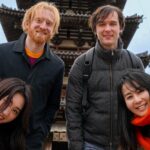
This tour’s strongest theme is the human touch. Guides get repeated praise for making the day feel both informative and enjoyable, and for helping families, not just couples.
Names that show up with strong feedback include Yonnie, Yuhey, Yuichi, Mana, Polina, and Kento. People highlight that guides explain local history and culture, share customs and daily-life context, and keep the schedule flexible.
The photo element also matters. Multiple reviews mention guides snapping great pictures. That’s not just nice—it’s practical. In Kyoto, good photos often require timing and positioning, and having someone else manage that saves you time.
The other key theme is customization. One review specifically mentions tailoring the ride to locations you wanted to add or nearby neighborhoods you hadn’t visited. That’s a big deal because Kyoto days often get stuck when the “official” plan ignores your real interests.
Price and Value: What You’re Paying For at $198.15
At about $198.15 per person, you’re paying for three things: a private guide, access to electric bicycles, and a route that strings together multiple zones efficiently.
If you were doing this by yourself, you’d still have to solve bike logistics (rental, sizing, and time). You’d also spend more time simply moving between scattered highlights. With this format, you get a guided connection between iconic places and calmer side stops.
There are still costs to consider. Food and drink are not included, and paid entrance to temples and shrines isn’t included either. The itinerary includes several stops marked free, but at least one temple option (Komyo-in) is not included, so I’d keep a small buffer in mind.
Overall, the price feels most fair if you want to see a lot without turning your legs into dust—and if you like learning while you travel, not after.
Who Should Book This Kyoto E-Cycling Tour (and Who Might Want Something Else)
This is a great fit if you:
- want a private day with an adjustable pace
- can comfortably ride a bicycle (electric or normal cycle)
- want to cover famous Kyoto sights plus river-and-street atmosphere
- appreciate guide storytelling, including history, culture, and customs
It might be less ideal if you:
- dislike active sightseeing and prefer mostly sitting stops
- are not comfortable cycling in busy city areas
- need strict low-cost predictability, since some temple admissions aren’t included and food is on your own
Families can do well here too. Reviews mention guides engaging with kids and adapting to group needs, which makes a difference when you’re trying to keep everyone happy.
Best-Use Tips Before You Start Pedaling
Here’s how to set yourself up for a smoother day based on what’s clearly part of the experience:
- Plan on being able to ride a bicycle and keep a moderate activity level.
- Bring your own plan for meals and drinks since they are not included.
- Expect that some temple entrances can cost extra; the route includes mostly free stops but not every stop is free.
- If you’re traveling with kids, request kids bikes or seats when booking because availability is limited.
- Use the mobile ticket on arrival, and meet at Sunny CycleJapan (600-8419 Kyoto, Shimogyo Ward, Ōhorichō, 477 1F). The tour ends back there too.
Should You Book KIYOTO’s Kyoto Private E-Cycling Tour?
Book it if your Kyoto wishlist includes Fushimi Inari, Tofuku-ji, Nanzen-ji, and the Shirakawa/Gion river side of the city—but you don’t want to spend half your vacation just getting from place to place.
Skip it (or consider a slower format) if you’re more interested in one area deeply, with lots of walking on your own terms. This tour works best when you want structure plus flexibility, and when you’re ready to ride.
One more nudge: the rating is very high—4.9 with 48 reviews and 98% recommended. Combine that with the repeated praise for guides like Yonnie, Yuhey, Mana, and Polina, and it’s a strong sign that the private-guide experience is the real product here, not just the bike.
FAQ
How long is the Kyoto private e-cycling tour?
It runs about 4 to 8 hours (approx.), depending on the route and your pace.
Is this tour private?
Yes. It’s a private tour/activity, so only your group participates.
Are electric bikes included in the price?
Yes. Electric bikes are included, and a normal (non-electric) cycle is also available.
Where does the tour meet?
The start is at Sunny CycleJapan, 600-8419 Kyoto, Shimogyo Ward, Ōhorichō, 477 1F. The tour ends back at the meeting point.
Do I need to pay for temple and shrine entrances?
Food and drink are not included, and paid entrance to temples and shrines isn’t included. Some stops are listed as free, but not all.
Is Fushimi Inari admission included?
Fushimi Inari-taisha is listed with free admission on the itinerary.
What fitness level do I need?
You should have a moderate physical fitness level and be able to ride a bicycle.
Are kids bikes available?
Kids bikes are available but limited. The itinerary notes non-electric kids bikes and that availability must be requested at booking. Kids seats are also available for children who cannot ride on their own, with limited units.
Will I get a mobile ticket?
Yes. The tour includes a mobile ticket.
Is it near public transportation?
Yes. The meeting point is noted as being near public transportation.