REVIEW · KYOTO
Kyoto: Nara & Traditional Matcha Experience Bus Tour
Book on GetYourGuide →Operated by Japan Panoramic Tours · Bookable on GetYourGuide
One day in Kyoto can feel like two different centuries. This bus tour pairs Nara’s UNESCO sights with the hands-on calm of Uji matcha-making in one smooth long outing.
I really like that you get both guided storytelling and practical freedom. You’ll tour with a professional English-speaking guide, use audio headsets in multiple languages, and also get real breathing room to walk, shop, and take photos.
My one caution is simple: the day includes stairs and hills, and the tour isn’t suitable for people with mobility impairments or wheelchair users.
In This Review
- Key Things That Make This Tour Worth Your Time
- The Big Idea: A UNESCO-Focused Day That Doesn’t Feel Random
- Meeting Point and Coach Ride: Start Easy, Ride Comfortable
- Todai-ji Temple: The Great Buddha and One Giant Wooden Hall
- Kasuga Taisha: Lanterns, Quiet Shrines, and Easy Photo Wins
- Nara Park Deer Time: Cute, Memorable, and Yes, Be Careful
- Lunch Break: Choose the Traditional Meal Option
- Byodoin Temple and Phoenix Hall: The 10-Yen Coin Moment
- Uji Free Time and the Matcha Experience: Tea Culture You Can Taste
- What the Timeline Feels Like in Real Life
- Guides, Audio Headsets, and How They Improve the Day
- Price and Value: Is $122 Worth It?
- Who Should Book This Kyoto Nara and Uji Tour
- Should You Book? My Straight Answer
- FAQ
- What time does the tour depart from Kyoto?
- Where is the meeting point?
- How long is the tour?
- What major sites are included in the day?
- Is lunch included?
- Do I make matcha myself?
- What’s included for temple entry?
- Are tickets or lines handled for temple entry?
- What languages do audio headsets support?
- Is the tour suitable for wheelchair users or people with mobility impairments?
- Can I bring a pet?
- What should I bring?
- What if I cancel?
- Is vegetarian lunch available?
Key Things That Make This Tour Worth Your Time
- Todaiji’s Daibutsuden Hall: a first-time wow moment with the Great Buddha inside one massive wooden structure.
- Kasuga Taisha’s 3,000 stone lanterns: a shrine scene that feels almost magical in person.
- Nara Park deer feeding: close-up fun, but keep a careful eye—deer can nip if you get too bold.
- Byodoin Temple and the Phoenix Hall: the same iconic image you’ve seen on Japan’s 10-yen coin.
- Uji matcha from scratch: you make your own tea, not just watch it.
- Comfortable coach with free Wi‑Fi: helpful on a long day with lots of transit.
The Big Idea: A UNESCO-Focused Day That Doesn’t Feel Random
This is the kind of day trip I like: you’re not just bouncing between photo stops. You’re building a story of old capitals, sacred spaces, and tea culture, with Nara and Kyoto’s World Heritage sites stitched into a single route.
The pacing is built for first-timers. You get enough time at each landmark to see what matters, plus guided context so you don’t wander around with zero idea what you’re looking at.
You can also read our reviews of more tours and experiences in Kyoto.



Meeting Point and Coach Ride: Start Easy, Ride Comfortable
You meet at Tully’s Coffee, Kyoto Avanti Store (31 Higashikujo Nishisannocho, Minami Ward). Check-in is at 7:50 AM, and the coach leaves at 8:00 AM, so don’t plan a late breakfast.
The coach is air-conditioned and has free Wi‑Fi, plus an antibacterial coating and regular ventilation. That matters because this is a long day (510 minutes), and you’ll be glad for a bit of comfort while you travel between areas.
On the way, the bus passes Fushimi Castle and Heijokyo Palace. Even if you’re not getting out for these, it helps you connect the dots as the scenery shifts from Kyoto into Nara’s historical zone.
Todai-ji Temple: The Great Buddha and One Giant Wooden Hall
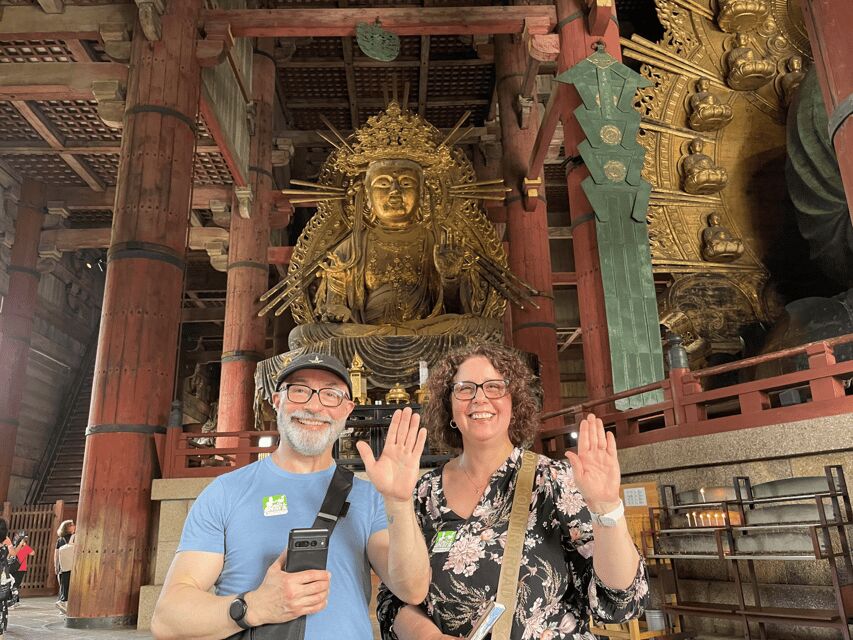
Tōdai-ji is the anchor stop, and it earns the early attention. You’ll spend about 50 minutes here, which is just enough time to understand the layout and absorb the main moment: the Daibutsuden Hall, home to the Great Buddha of Nara.
This is one of those places where scale hits you fast. If you’ve seen Buddha statues in photos, this is different because the hall itself is part of the impression—huge, wooden, and unmistakably old-school sacred.
Practical tip: wear shoes you can walk in comfortably. The area is a mix of open space and temple grounds where you’ll be moving steadily for your whole visit.
Kasuga Taisha: Lanterns, Quiet Shrines, and Easy Photo Wins
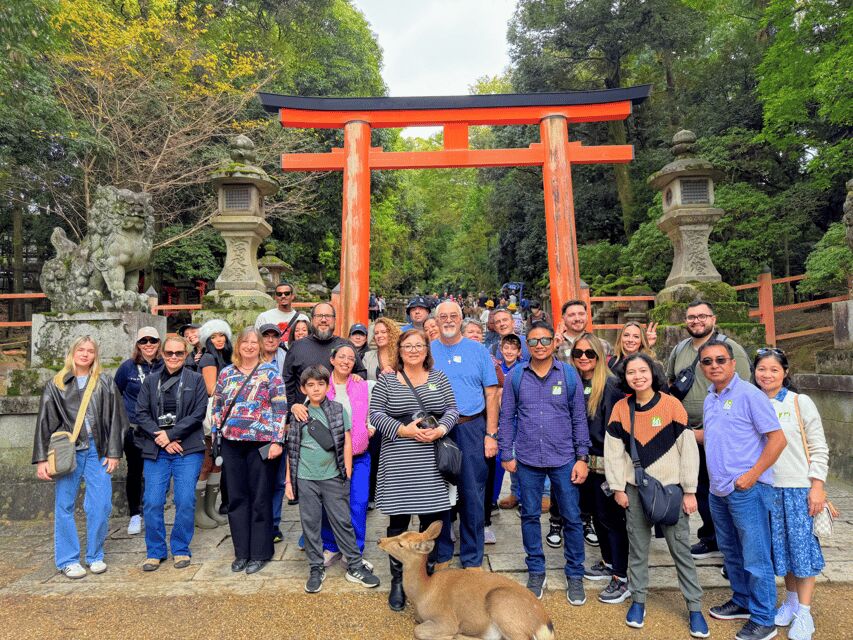
After Todai-ji, you head to Kasuga Taisha Shrine for about 30 minutes. The headline here is the famous stretch of 3,000 stone lanterns, which create a visually striking shrine atmosphere.
This stop is worth it even if you’re not a shrine-spotting superfan. Kasuga Taisha is visually “readable” fast: you arrive, you see the lanterns, you understand why people talk about it.
You’ll also get time to slow down a bit. That matters because the shrine experience is more about mood than ticking off a checklist.
Nara Park Deer Time: Cute, Memorable, and Yes, Be Careful
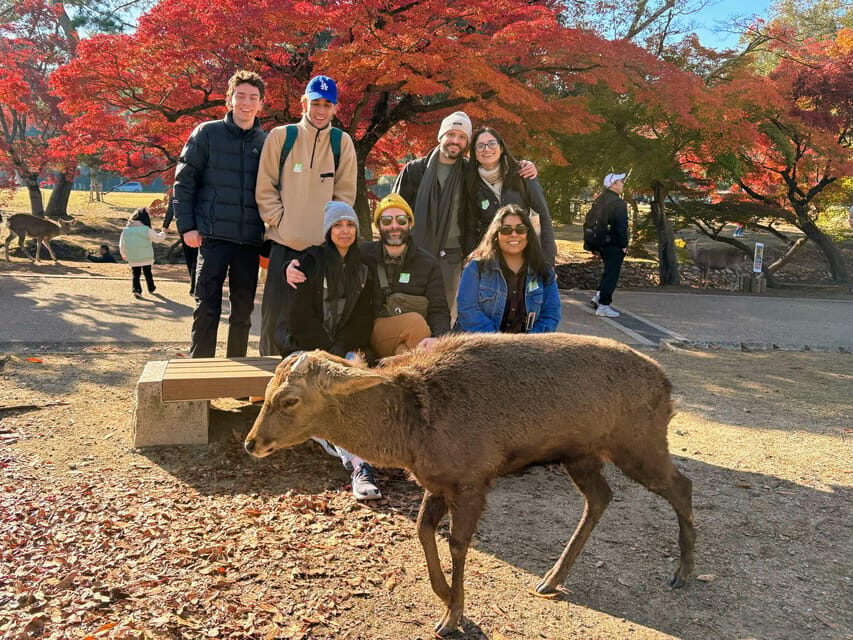
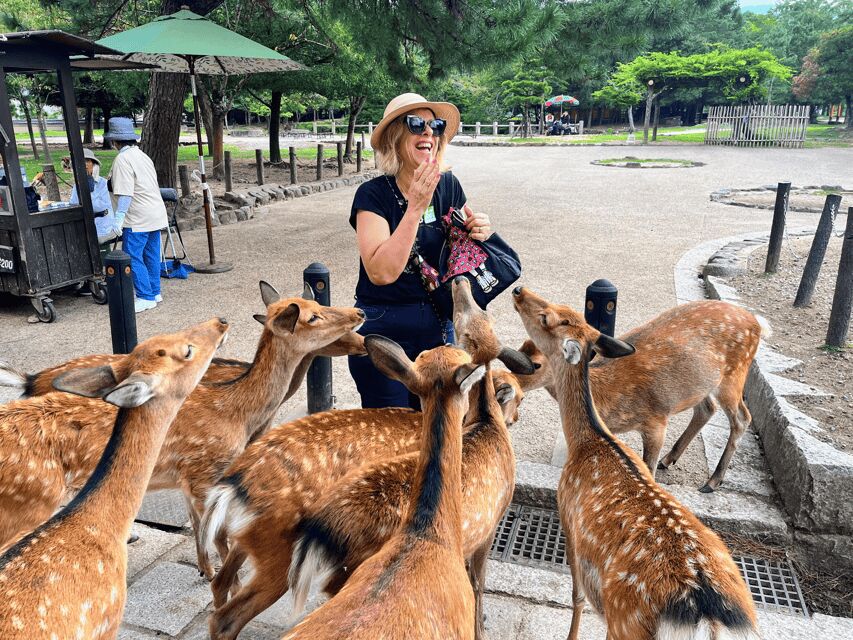
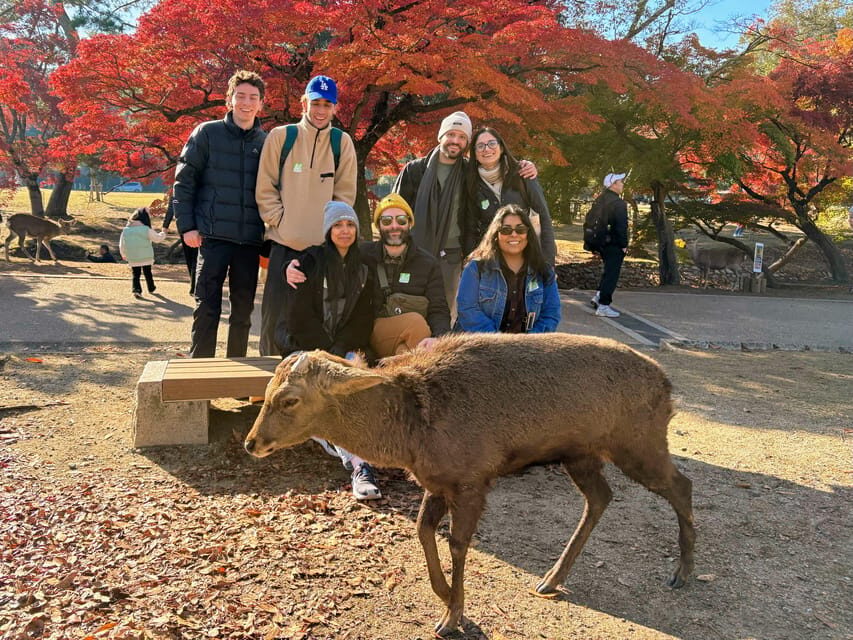
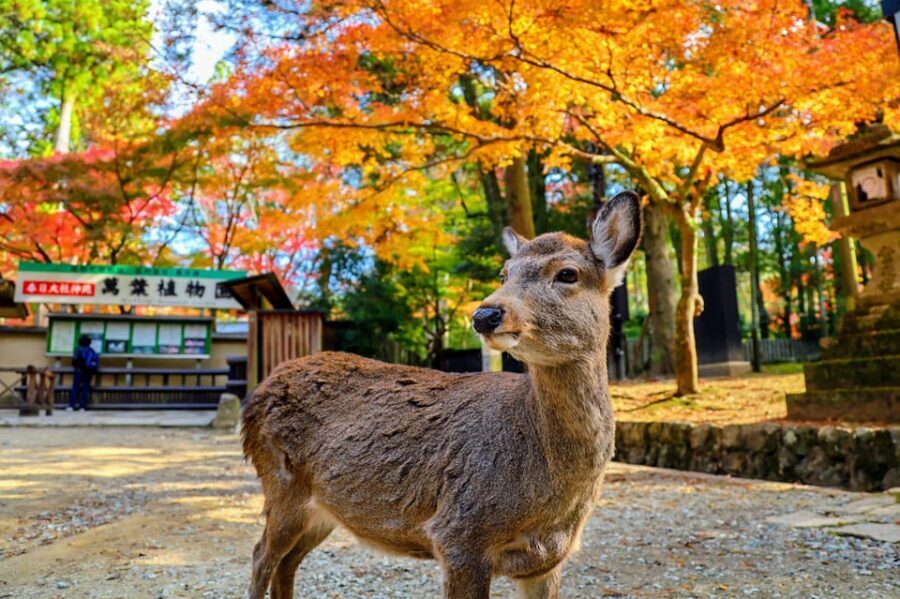
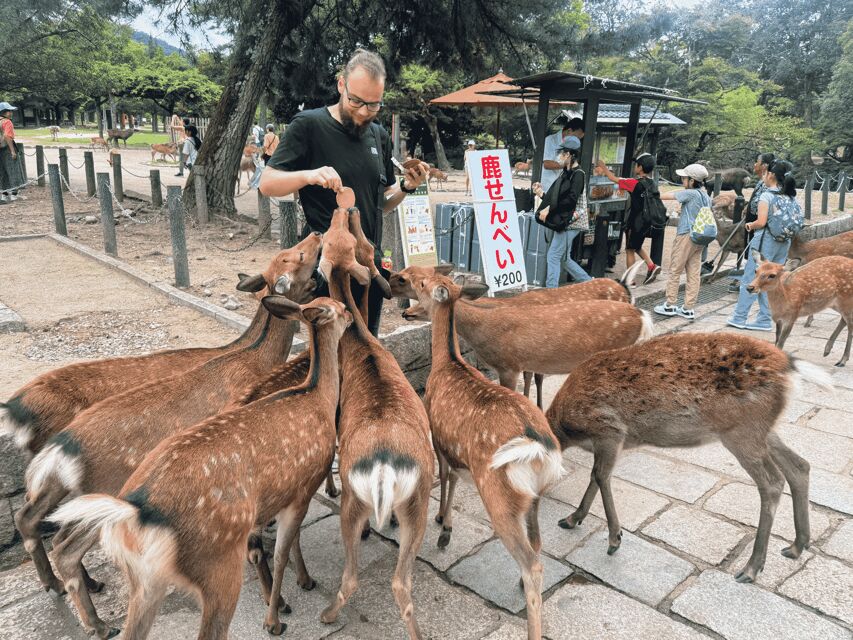
Nara Park is right next to Todai-ji, so it flows naturally. You’ll have around 30 minutes to wander and meet the stars of the show: the wild deer.
You can buy rice crackers at roadside stalls and near shrine areas. The good part is obvious—you’ll get close, and it feels more personal than the usual tourist animal encounters.
The caution is just as real. Some deer can be pushy, and bites happen if you treat it like a free-for-all. Keep crackers low, move carefully, and don’t let your guard down when the deer come in fast.




Lunch Break: Choose the Traditional Meal Option
For lunch you’ll have about 50 minutes at a local restaurant. If you booked the tour with the lunch option, you’ll get a Japanese lunch included.
This is a nice buffer in the day. Your earlier stops are packed with walking and standing around sacred sites, and a proper seated meal helps you reset before Uji and the tea activity.
If you need vegetarian arrangements, you can request them up to 2 days before. If it’s too last-minute, the tour notes that you’ll receive a regular meal.
Byodoin Temple and Phoenix Hall: The 10-Yen Coin Moment
Next up is Byodoin Temple, with about 1 hour here. This is where the tour really connects to something you might already recognize: the Phoenix Hall, famously depicted on the 10 yen coin.
The Phoenix Hall is also part of Japan’s historic UNESCO area. So this stop isn’t just a picture postcard—it’s tied directly to how you’re thinking about heritage in Kyoto and Nara.
One practical note: plan time to look at details, not just chase wide shots. The hall and its setting reward slow looking more than rushing.
Uji Free Time and the Matcha Experience: Tea Culture You Can Taste
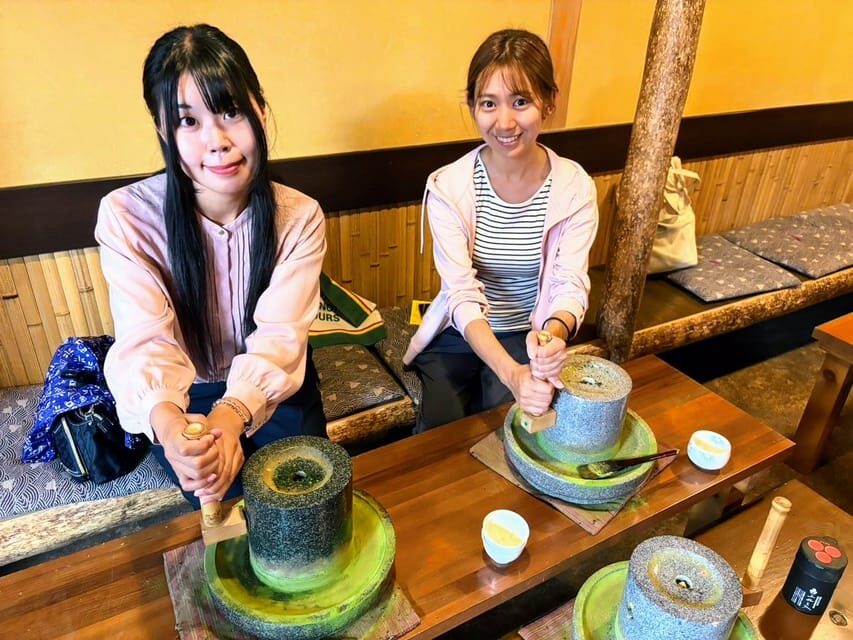
Uji is where the day changes tone. You’ll have around 70 minutes in the Uji area, including time for free exploration and tea experience.
Uji is famous as matcha country, and this is not a vague tea tasting. You’ll make Uji matcha from scratch, which means you learn how finely ground green tea powder fits into everyday Japanese food culture.
Matcha isn’t only for tea ceremonies. It shows up in sweets and cooking too, so this experience helps you understand why matcha tastes the way it does and why people talk about quality.
There’s also time near the matcha venue for shopping and snacks. That’s where you can pick up matcha tea for later, plus small souvenirs from the local shops.
What the Timeline Feels Like in Real Life
The structured stops make it easier to plan your day in Kyoto without burning hours. You start at 8:00 AM, then the day is a sequence of short, focused visits:
- Kasuga Taisha first (quick and visually strong)
- Nara Park and Todai-ji around each other (deer plus the big Buddha hall)
- Lunch with a proper break
- Byodoin (more time to absorb)
- Uji (free time plus hands-on matcha making)
The tour also notes that the order can shift due to traffic, weather, or operational reasons. That’s normal for Kyoto-area road travel, and it’s good to know upfront so you don’t stress if the schedule flexes.
You’ll also be walking stairs and hills during the day, so your shoes and water plan matter more than you might expect.
Guides, Audio Headsets, and How They Improve the Day
A tour lives or dies by how it explains what you’re seeing. This one includes a professional English-speaking guide and audio headsets for additional languages (Spanish, French, Italian, German, Portuguese, Ukrainian).
That combo is practical. The guide handles the flow and group needs, while the headset helps you catch details at your own pace, especially at large temple sites where it’s easy to miss a key point.
From the guide names I saw associated with this tour, you’ll likely get a lively style of instruction. For example, guides such as At-chan, Rino, Mai, Nanami, Yuta, Tsubasa, Harry, and Den were praised for clear explanations, helpful energy, and sometimes small extras like basic Japanese prompts.
Even if your guide is different, the pattern is the same: expect cultural context, not just logistics.
Price and Value: Is $122 Worth It?
At $122 per person, this isn’t a cheap “hop-on hop-off” kind of day. The value comes from the mix of three things you’d otherwise pay for separately:
- Entrance fees for Todai-ji and Byodoin
- The matcha experience fee in Uji
- A full-day guided route with a comfortable coach (plus free Wi‑Fi)
You’re also paying for time efficiency. Instead of figuring out buses and train connections between Nara and Uji yourself, you get a route that hits the major highlights while still giving you time to walk around at each stop.
If you’re the kind of visitor who wants “big sights + one hands-on cultural activity,” the price starts to make sense fast.
Who Should Book This Kyoto Nara and Uji Tour
This tour fits best if you:
- Want a single-day plan that covers Todai-ji, Kasuga Taisha, Nara Park, Byodoin, and Uji
- Like a guided explanation, but also want some free time for photos and shopping
- Are interested in tea culture and would enjoy making matcha yourself
- Prefer a coach day over juggling multiple transit legs
It’s not the right fit if you need wheelchair access or have mobility limits. The tour explicitly mentions walking stairs and hills, and it’s not suitable for mobility impairments.
Also, keep in mind that there’s no hotel pick-up. You’ll start from Kyoto Station-area at Tully’s Coffee, so plan your morning around getting there on time.
Should You Book? My Straight Answer
Book it if you want a day that feels like Kyoto’s highlights without the chaos of planning every step. The combination of UNESCO temple stops plus Uji matcha from scratch is a strong mix, and the included guide + headset setup is built to help you actually understand what you’re looking at.
Skip it if you want a slow, highly flexible day. This is structured, with set visit windows and a long total day in motion.
If you’re comfortable walking, you’ll likely love the arc of the day: sacred monuments first, deer moments in the middle, and then the calm focus of tea at the end.
FAQ
What time does the tour depart from Kyoto?
Check-in is at 7:50 AM and departure is at 8:00 AM from Tully’s Coffee at Kyoto Avanti Store.
Where is the meeting point?
You meet in front of Tully’s Coffee (Kyoto Avanti Store), 31 Higashikujo Nishisannocho, Minami Ward, Kyoto.
How long is the tour?
The duration is 510 minutes (about 8.5 hours).
What major sites are included in the day?
You’ll visit Tōdai-ji, Kasuga Taisha Shrine, Nara Park, Byodoin Temple, and spend time in the Uji area.
Is lunch included?
Lunch is included only if you select the lunch option. If selected, you get a Japanese lunch; lunch time is about 50 minutes.
Do I make matcha myself?
Yes. The tour includes a matcha experience fee in Uji where you make Uji matcha from scratch.
What’s included for temple entry?
Admission fees for Tōdai-ji and Byodoin Temple are included.
Are tickets or lines handled for temple entry?
Ticket line skip is included.
What languages do audio headsets support?
Audio guides are available in English through the main guide, and audio headsets support Spanish, French, Italian, German, Portuguese, and Ukrainian.
Is the tour suitable for wheelchair users or people with mobility impairments?
No. The tour is not suitable for people with mobility impairments or wheelchair users. The day includes walking up stairs and hills.
Can I bring a pet?
No. Pets are not allowed.
What should I bring?
Bring comfortable shoes and water, and have some cash available.
What if I cancel?
Free cancellation is available up to 24 hours in advance for a full refund.
Is vegetarian lunch available?
Vegetarian meal arrangements can be made up to 2 days before the tour date. If it’s last-minute, a regular meal is provided.