REVIEW · KYOTO
Samurai Training with Modern day Musashi in Kyoto
Book on Viator →Operated by Yushinkan Co., Ltd. (株式会社勇進舘) SETO Yushin · Bookable on Viator
Two-katana lessons in Kyoto, up close.
This Samurai Training with Modern day Musashi is what you come to Japan for: a real dojo session with Sensei Yushin, where you try sword fundamentals and an actual katana form, then finish by watching a power-packed performance.
I love how personal it feels, with small groups and lots of hands-on correction. I also like the focus on iaito-based safety while still giving you real technique and dojo etiquette, with instructors like Jordan and John helping keep things clear in English.
One consideration: mat cutting with a real katana isn’t currently offered, so this is about kata and controlled movements, not dramatic target cuts. It also takes place in a dojo in a basement-level setting, so plan for a more tucked-in, indoor feel.
In This Review
- Key Things to Know Before You Go
- Inside the Yushinkan Dojo in Kyoto: What Real Training Feels Like
- Dress the Part: Dōgi, Obi, and Hakama (and Why It Isn’t Just Costume)
- Sword Safety First: Sword Basics, Culture, and the “Why” Behind the Moves
- Practicing Katana Kata: Draw, Sheath, Wield, and Then Perform the Form
- Sensei’s Two-Katana Performance: The Big Finish (and What to Expect Instead of Mat Cutting)
- Jordan, John, and Sensei Yushin: The Teaching Style That Makes It Feel Worth It
- Price and Time: Is $132.65 for 1.5 Hours Good Value?
- Should You Book It? My Call for Who This Fits Best
- FAQ
- How long is the Samurai Training experience?
- Where do I meet for the experience?
- How many people are in a class?
- What age do I need to be to participate?
- Will I be able to cut mats with a real katana?
- Is the class physically demanding?
- What’s the cancellation policy if my plans change?
Key Things to Know Before You Go
- Small-group setup: typically 6 participants per class, with a cap of 9 total
- Full dress-up: dōgi, obi, and hakama are part of the experience
- Hands-on sword fundamentals: draw, sheath, and wield a katana-style sword
- Learn a real katana kata: you’re practicing an actual form, not only watching
- Sensei’s two-katana performance: a highlight you can’t really replicate on your own
- Dojo-based experience: practical instruction near public transportation in central Kyoto
Inside the Yushinkan Dojo in Kyoto: What Real Training Feels Like
Kyoto can be stunning outdoors. This experience is the opposite. It pulls you into a focused training dojo, where the session runs like practice, not a staged show.
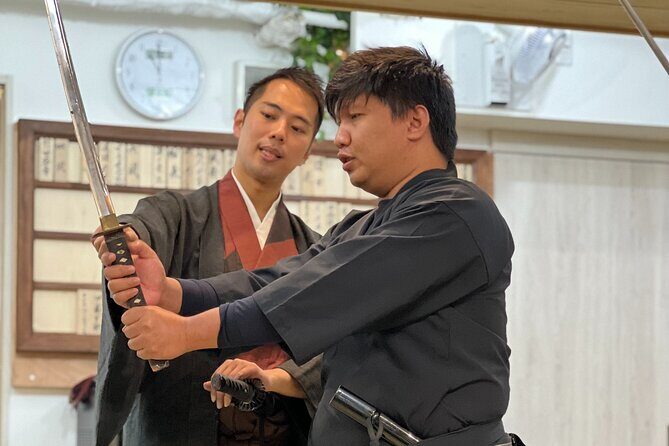
The teaching center is run by Musashi, and the class is led by Sensei Yushin, with Jordan (English support) and John (staff/interpreter) helping guide the flow. That matters, because sword work is all about small details: posture, grip, timing, and safety rules. When your instructor is right there in the room, you don’t guess—you adjust.
You’re also in a space that feels used by real students. One of the reasons people love it is that it doesn’t feel like a rented room. There are dojo elements that make the atmosphere feel serious: training gear stays put, the teaching space is organized for practice, and the session has a clear rhythm from start to finish.
And yes, it’s practical too. The meeting point is listed clearly at 452-4 Matsugaechō, Nakagyo Ward, and the area is described as near public transportation—so you’re not stranded in some hard-to-reach corner.
You can also read our reviews of more tours and experiences in Kyoto.



Dress the Part: Dōgi, Obi, and Hakama (and Why It Isn’t Just Costume)
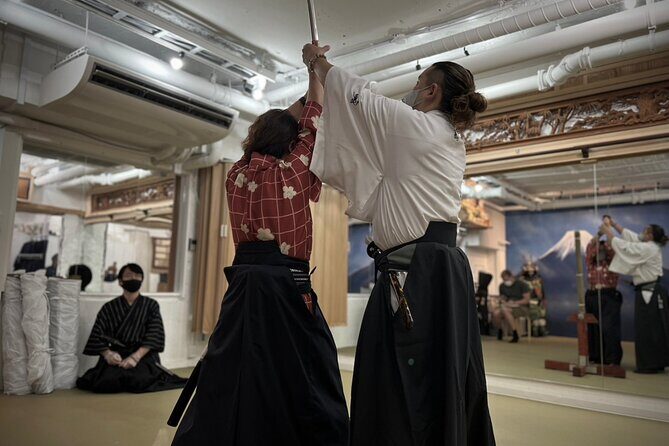
Before you touch a sword, you get dressed. You’ll put on the dōgi, obi, and hakama, the standard training outfit associated with traditional martial arts practice in Japan.
This part is more than photo time. The clothing helps you move the way the kata expects you to move. Hakama in particular changes how your legs and stance feel—so even if you’re starting from scratch, you can settle into the posture the instructor is teaching.
You’ll also get a quick introduction to etiquette along the way. That’s a big deal in dojo culture. If you’ve ever visited temples, you’ve seen how ritual and respect shape behavior. In a dojo, that same idea shows up in how you listen, how you hold your sword safely, and how you move when your instructor cues you.
One thing I like here is that the experience includes people across ages. The minimum age is 12+, and the class is described as suitable with moderate physical fitness. That combination makes it a strong option for families and for teens who want something active but still structured.
Sword Safety First: Sword Basics, Culture, and the “Why” Behind the Moves
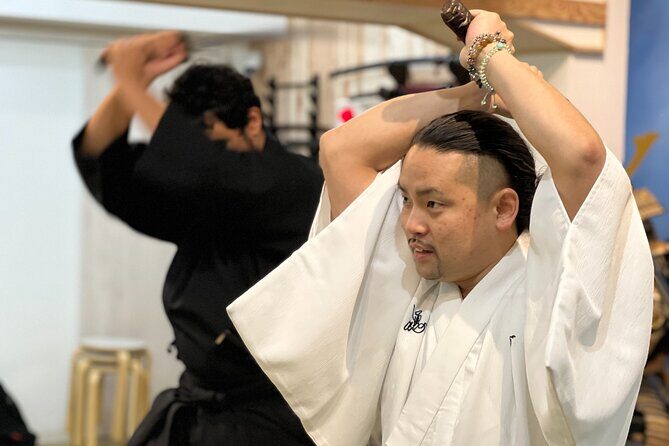
The class doesn’t start with fancy action. It starts with groundwork.
You’ll get lessons about samurai culture and swordsmanship, plus practical instruction on handling the sword safely. That includes learning how to draw and sheath correctly and how to wield the katana in a controlled way. You’re training technique with an eye to safe movement, not free-for-all sparring.
A key detail: the current program notes that mat cutting with a real katana is not offered right now. That keeps the session focused on kata practice and safe technique. It also means you can concentrate on what matters: form, control, and discipline.
During the teaching, you’ll likely learn more than just what your body is doing. The explanations include context like what swords were used for and how samurai training and honor code shaped martial practice. From the way the instructors teach, it’s clear they care about giving you a reason for the movement, not only the movement itself.
If you’re the kind of person who likes to understand what you’re doing, this is a good match. You’ll get historical and cultural framing alongside the practical “how.”
Practicing Katana Kata: Draw, Sheath, Wield, and Then Perform the Form
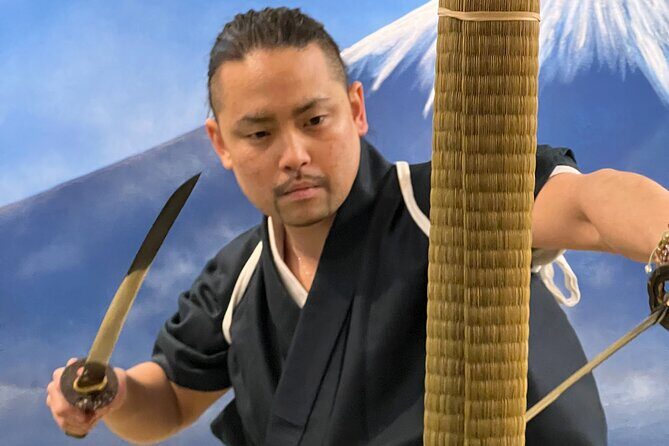
This is the heart of the experience: you’re not only watching a demo. You’ll learn a katana kata (form) and practice it with instructor guidance.
The step-by-step flow typically goes like this:
- you’re taught how to handle the sword safely
- you practice the mechanics of drawing and sheathing
- you practice wielding the sword in the way the form requires
- you learn and run the katana kata as a group (with corrections)
That “with corrections” part is why people come back for another class. The teaching style is hands-on and detail-driven. When you learn sword work, small issues—where your hands sit, how your hips turn, the angle of your cut line—change everything. Here, instructors can point out corrections while you’re still holding the sword.
Also, expect a strong focus on controlled movement. Kata work is about accuracy and repeatability. If you’ve been curious about Japanese martial arts but didn’t want something chaotic, this format is a smart entry point.
You should also know the session runs about 1.5 to 2 hours, depending on group size and pacing. That’s long enough to feel like you learned something real, but short enough to fit into a typical Kyoto itinerary.
Sensei’s Two-Katana Performance: The Big Finish (and What to Expect Instead of Mat Cutting)
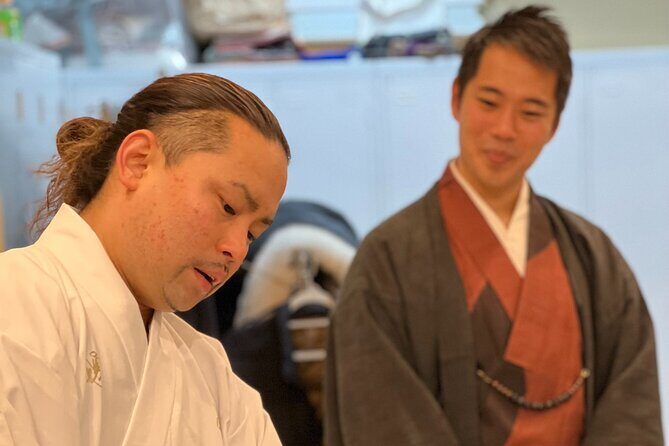
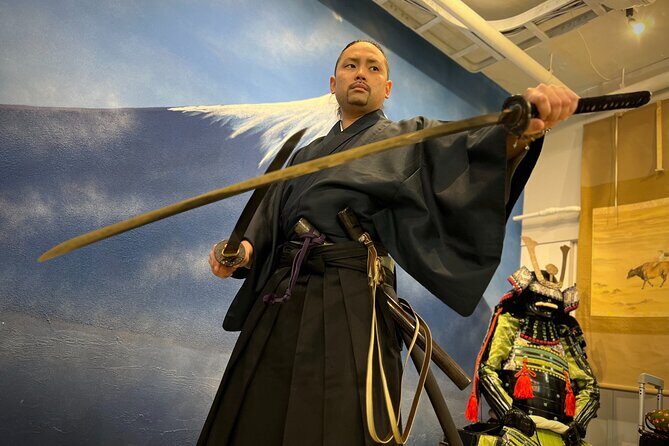
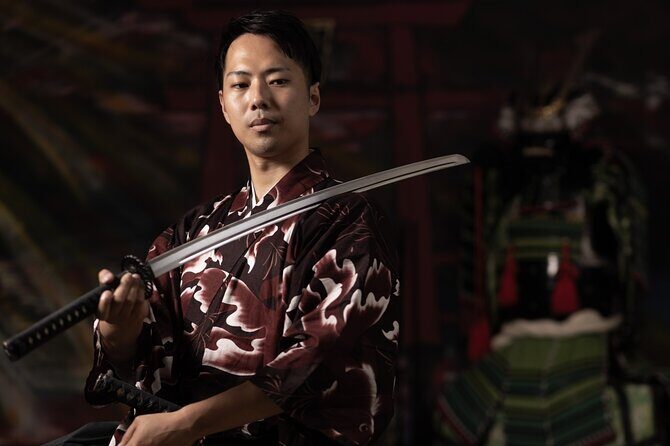
After you practice, you’ll watch Sensei’s performance. One of the standout claims for this class is a powerful two-katana performance by the master, and that’s exactly the kind of thing you don’t replicate by wandering around town.
In terms of what you’ll see: the program is structured around kata-style technique and sword demonstrations. You’ll also get to observe real sword handling and how the master demonstrates forms at a high level.
Here’s the part to read carefully: mat cutting with a real katana is not currently offered. So don’t plan your expectations around breaking down targets on the floor.
Instead, plan to watch technique, control, and precision. If your goal is learning and understanding sword kata as a martial art, that actually fits better. Cutting is flashy, but dojo kata is where the discipline lives.
If you’re bringing a camera, keep it ready. Some past participants mention opportunities to take photos and video during the learning and demonstrations. That’s not guaranteed in every moment of every class, but it’s a good bet that you’ll get at least some time to capture what you’re doing.






Jordan, John, and Sensei Yushin: The Teaching Style That Makes It Feel Worth It
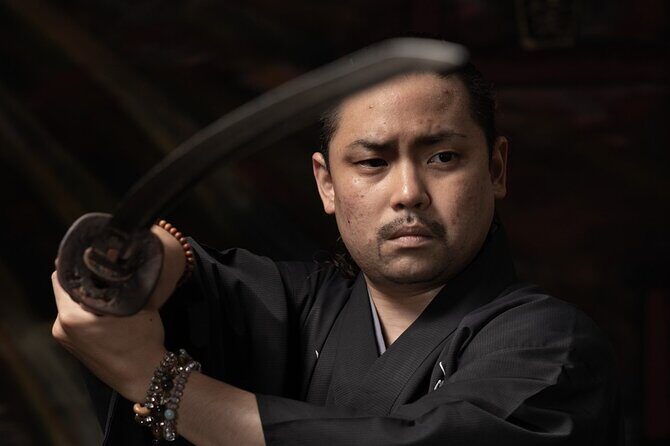
The best dojo classes feel calm, structured, and safe. This one does that by design.
Sensei Yushin leads with the traditional martial arts mindset, and Jordan helps explain in English so you’re not stuck guessing what the instructor means. John also supports many sessions as an interpreter and staff member, and that extra layer can make a huge difference for first-timers.
What you’ll notice quickly is that the instructors don’t just hand you a sword and point you toward a move. They correct your forms and take questions. That’s especially important because your body will be learning things it’s never done before—like specific grips and controlled draw/sheath timing.
Small group size is another big reason it lands well. The class is marketed as only 6 participants per class, with a note that there may be more if there aren’t many parties. Either way, the cap is maximum 9 travelers. In dojo work, that translates to more attention per person, less waiting, and fewer bottlenecks.
If you like interactive instruction, this is a strong option. If you’re expecting a lecture with minimal movement, it’s the opposite. You’re in the space doing technique.
Price and Time: Is $132.65 for 1.5 Hours Good Value?
At $132.65 per person, this isn’t the cheapest add-on in Kyoto. But it’s also not a 15-minute costume experience.
For your money, you get:
- guided sword handling and safety instruction
- dress-up in dōgi/obi/hakama
- practice time that leads to learning a katana kata
- a master’s performance, including two-katana showcasing
- a small-group setting so you’re not just a spectator
The “value” here is mostly about instruction quality and access. You’re paying for structured teaching from a dojo leader and their team, in a setting that’s described as a real training center (not a temporary venue). When you factor in that it’s 1.5 to 2 hours, the time cost doesn’t feel like you’re being rushed through the experience.
There’s also a practical value: you leave with understanding. Even if you never pick up a sword again, you’ll walk away knowing more about dojo etiquette, sword fundamentals, and why kata matters.
If you’re on a tight budget, you might choose a different Kyoto activity. If you want a hands-on skill experience that feels traditional and supervised, this pricing starts to look fair.
Should You Book It? My Call for Who This Fits Best
Book this if you want a real introduction to Japanese sword practice in Kyoto—hands-on, structured, and respectful of safety. The class works especially well for people who like instruction, want to ask questions, and enjoy learning what the movements mean.
It’s also a good family option. The minimum age is 12+, and the session is described as suitable with moderate physical fitness. If your teen or older kid is curious about samurai culture, they’ll likely get a lot out of the dress-up and the practice component—not just the watching part.
Skip it (or at least adjust expectations) if your main goal is dramatic cutting with a real katana. The program notes that mat cutting isn’t currently offered, so you won’t come for targets being struck. Also, if the idea of learning new movement patterns sounds exhausting, plan on taking it at a steady pace.
Finally, consider your time windows. The experience ends back at the meeting point, so it’s easy to plug into a day. Just remember it’s longer than a quick stop—aim for the full 1.5 to 2 hours.
FAQ
How long is the Samurai Training experience?
It lasts about 1 hour 45 minutes (approximately 1.5 to 2 hours). The exact timing can shift depending on the number of participants.
Where do I meet for the experience?
You meet at 452-4 Matsugaechō, Nakagyo Ward, Kyoto, 604-8034, Japan. The activity ends back at the meeting point.
How many people are in a class?
The experience is described as having only 6 participants per class, with a note that there may be more if there are only a small number of parties. The maximum group size is listed as 9 travelers.
What age do I need to be to participate?
You must be 12 years or older to join.
Will I be able to cut mats with a real katana?
No. The tour notes that mat cutting with a real katana is not currently offered.
Is the class physically demanding?
You should have moderate physical fitness. The session involves training movements and sword practice while in traditional gear.
What’s the cancellation policy if my plans change?
Free cancellation is available up to 24 hours in advance for a full refund. If you cancel less than 24 hours before the start time, the amount paid is not refunded.
If you tell me your travel dates and whether you’re bringing kids or going solo, I can help you decide where this fits best in a Kyoto day plan.