REVIEW · TOKYO
Kid-Friendly Sushi Making Class in Tokyo (English-Led)
Book on Viator →Operated by Tokyo Sushi-Making Tour · Bookable on Viator
Sushi gets more fun when you make it yourself. This English-led Tokyo class mixes sushi history, a kids-friendly quiz, and hands-on work with rice and rolling mats. It’s built for families and capped at 8 people, so the instructor can actually help.
I especially like two things: you’ll learn real techniques (not just watch), and you’ll finish by eating the sushi you shaped. A third plus is the added culture layer—basic Japanese phrases plus sushi etiquette and trivia.
One thing to consider: because the class uses raw fish options by default, you’ll need to plan ahead if you want a non-raw fish, vegetarian, or gluten-free menu.
In This Review
- Key highlights you’ll feel from the start
- A small-group class where kids can actually roll
- Meeting at Kita-Senju and getting productive fast
- What you make: vinegared rice plus four sushi styles
- Step one: perfect vinegared rice
- Step two: Decorative Sushi Roll
- Step three: California Roll
- Step four: Nigiri-Sushi
- Step five: Battleship Roll
- And yes, you eat it
- The quiz, etiquette, and travel-ready Japanese phrases
- The value question: what $68.97 buys you
- Dietary options: how to get the menu right before you arrive
- Who this class fits best
- Should you book this Tokyo sushi-making class?
- FAQ
- What’s the class duration?
- Where do we meet and what time does it start?
- What age is this class for?
- How many people are in the group?
- What sushi will we make?
- Do you have options if we don’t want raw fish?
- Is free cancellation available?
Key highlights you’ll feel from the start
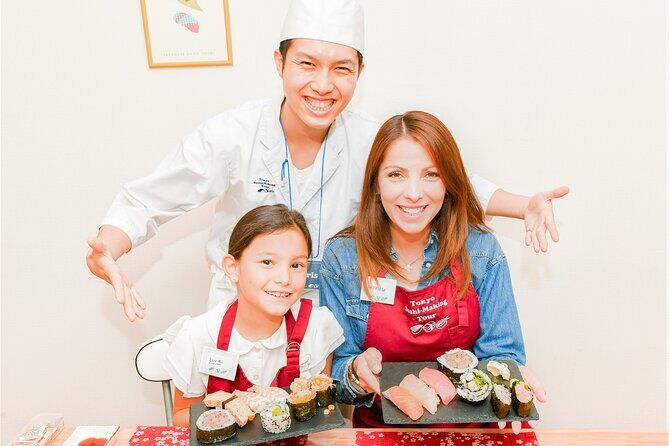
- Small group (max 8): more hands-on help, less waiting.
- Hands-on sushi skills: vinegared rice plus four different styles.
- Fun quiz first: sushi etiquette and trivia to get everyone engaged fast.
- Family-friendly pacing: designed for kids 8 and up.
- English-led instruction: instructors like Nat and Morris have been praised for clear English and patient teaching.
- Dietary options available: non-raw fish, vegetarian, and gluten-free with advance notice.
A small-group class where kids can actually roll
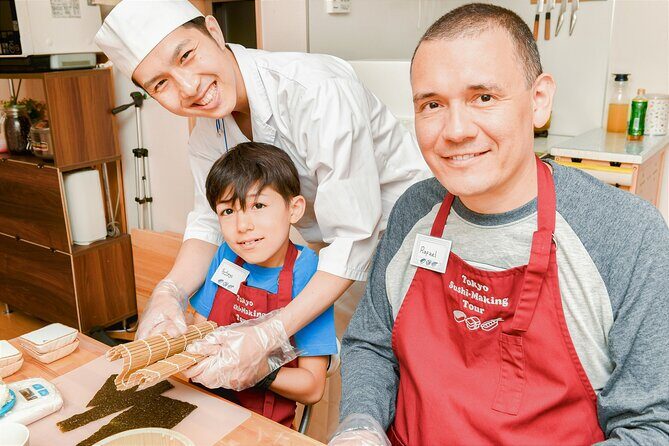
This isn’t a “stand back and observe” cooking show. Tokyo Sushi-Making Tour keeps the group small—up to 8 travelers—so you’re not shouting your questions across the room. For families, that matters. Kids can move, try, and get corrected quickly, without the whole table waiting.
The class is set up for kids ages 8 and up, and it has that calm, practical vibe that makes it work even if it’s your first time with sushi. I also like that it’s not only about making dinner. You’re learning how sushi is eaten and talked about in Japan—plus a few useful Japanese phrases so you can carry the experience home in your pocket, not just on your camera roll.
If your group includes adults who care about accuracy, you’re covered too. The focus on “getting sushi right” at home isn’t vague. They teach professional-style tips and tricks during the process, especially around the rice.
A few more Tokyo tours and experiences worth a look

Meeting at Kita-Senju and getting productive fast
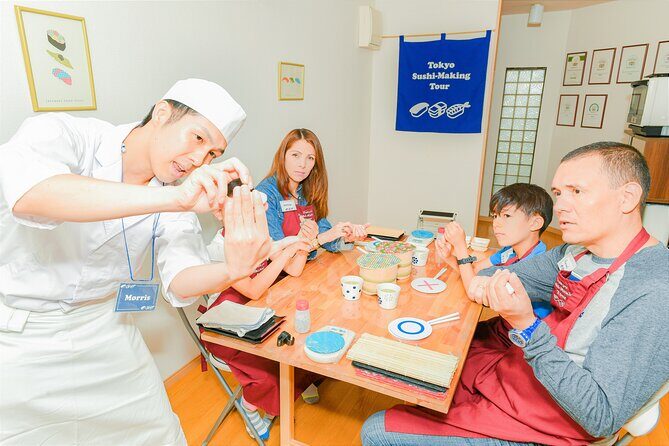
You meet at 3-5 Senjuasahichō, Adachi City, Tokyo 120-0026, with the start time listed as 10:30 AM. The meeting point is also described as the East exit of Kita-Senju station. It’s a sensible base if you’re coming from nearby areas like Asakusa, Akihabara, Ueno, and Ginza.
The class runs about 2 hours 30 minutes. That’s a great length for families because you get enough time to learn real steps, but you’re not stuck for half a day. You’ll also get a mobile ticket, which is one less thing to track when you’re juggling train lines and snack breaks.
Practical note: because this runs at a set start time, I’d plan to arrive early—at least 10 minutes. In Tokyo, that buffer helps you find the venue calmly instead of rushing with a kid who’s suddenly developed opinions about lunch.
What you make: vinegared rice plus four sushi styles
The heart of the experience is the meal you build. You craft four types of sushi, and you don’t just assemble them once—you learn how each style changes the technique.
Step one: perfect vinegared rice
First up is vinegared rice. This part is more important than people think. Sushi lives or dies by the rice: how it’s seasoned, how it’s handled, and how it stays right while you work.
Even if you’ve eaten sushi a hundred times, making rice at home is where the biggest lightbulb moments tend to happen. The class teaches the steps and the handling approach so you can recreate the result later, not just copy a shape.
Step two: Decorative Sushi Roll
Next is a Decorative Sushi Roll. The name hints at what makes it fun for kids: patterns and showmanship. Rolling well is one thing; rolling with intent is another. You’ll learn the mechanics while also focusing on visual presentation—so the final plate looks like you made it on purpose.





Step three: California Roll
Then you’ll do a California Roll style. This is a classic entry point for many people because it feels familiar, but it still forces you to practice clean rolling and portion control. For home cooks, this is the type of sushi you’ll likely want to repeat after the class because it’s straightforward and flexible.
Step four: Nigiri-Sushi
After rolls, you’ll make Nigiri-Sushi. This shifts the focus from rolling technique to shaping and balance. Nigiri is basically rice plus a topping, formed with care so the bite makes sense and the pieces hold together.
If you like the idea of sushi that looks simple but takes skill, nigiri is where you’ll feel that challenge in a good way. It’s also a great contrast to the roll work: different technique, same core goal—good texture.
Step five: Battleship Roll
Finally, there’s the Battleship Roll. It’s a fun, memorable shape—exactly the kind of activity that keeps kids engaged. But behind the playfulness is the real training: consistent rice spreading, neat handling, and tight rolling so the form holds until you slice and plate.
By the time you finish, you’ll have practiced multiple sushi fundamentals in one sitting: seasoning and handling rice, building and rolling, and forming nigiri. That’s a better payoff than a single sushi type class.
And yes, you eat it
You’ll savor the sushi you crafted. That’s not just a nice bonus. Eating what you make helps you understand what you did right and what you’d tweak next time—especially with rice texture and bite balance.
The quiz, etiquette, and travel-ready Japanese phrases
One of my favorite parts in classes like this is when the food learning connects to real-life behavior. Here, they build that in early with a fun quiz on sushi etiquette and trivia.
That quiz does two jobs:
1) It gets energy up before you start working.
2) It teaches the rules people actually care about when eating sushi in Japan—so you don’t have to guess later.
You also learn sushi history. The goal isn’t to recite dates. It’s to help you understand why sushi looks and tastes the way it does today. When you know a bit of the story, the experience feels less like a craft project and more like a cultural skill.
Then there are the language touches: you’ll pick up useful Japanese phrases and travel tips. You probably won’t become fluent in one session, but you will leave with phrases that make eating out feel less intimidating—especially if you’re planning more meals in Japan after this.
If you want a guide style cue from past classes, instructors such as Nat have been specifically praised for strong English and answering questions clearly. Morris has also been noted for making the class both fun and educational. That combination matters because kids need a guide who can explain without getting lost in complexity.
The value question: what $68.97 buys you
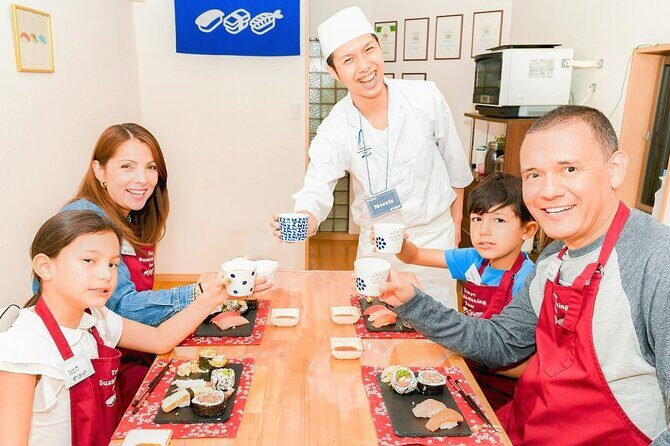
At $68.97 per person, you’re paying for more than ingredients. You’re paying for:
- direct, small-group coaching (max 8),
- structured instruction for rice and multiple sushi styles,
- the sushi you eat at the end,
- and the added cultural components (history, etiquette/trivia, Japanese phrases).
For families, the value is real because the class replaces a chunk of time and provides a full activity, not just a snack. A two-and-a-half-hour hands-on session also means fewer logistics headaches than trying to recreate sushi skills at home afterward with random tools and no guidance.
One more practical factor: the class is often booked ahead. It averages 40 days in advance, so if your dates are fixed, don’t wait for last-minute inspiration.
Dietary options: how to get the menu right before you arrive
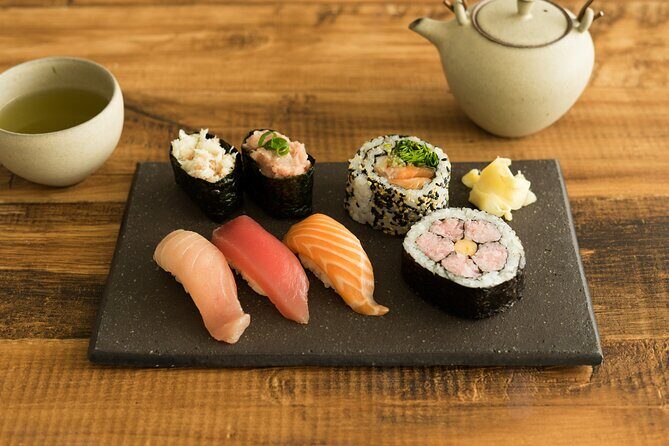
By default, the class notes that ingredients typically include raw salmon and tuna. The good news is they offer alternatives, including:
- Non-Raw Fish Menu
- Vegetarian Menu
- Gluten-Free Menu
The key detail is timing: you need to inform them in advance. If dietary needs are part of your planning, add it right after booking. That’s the difference between getting the correct menu and showing up with uncertainty.
If you’re traveling with picky eaters or allergy concerns, this is the part you’ll thank yourself for handling early.
Who this class fits best
This is a strong pick if:
- you’re traveling with kids 8+ and want a hands-on activity that keeps them engaged,
- you want sushi skills you can actually repeat at home,
- you like learning etiquette and small language basics alongside the food,
- your group wants a class that feels relaxed rather than rushed.
It’s also a good choice if you’re not a cooking pro. The class welcomes cooking novices and families, and the structure helps you learn step by step.
If you’re a sushi obsessive who already knows everything, you might still appreciate the guided practice—especially around rice and forming nigiri—though you may wish you could go deeper beyond the four styles.
Should you book this Tokyo sushi-making class?
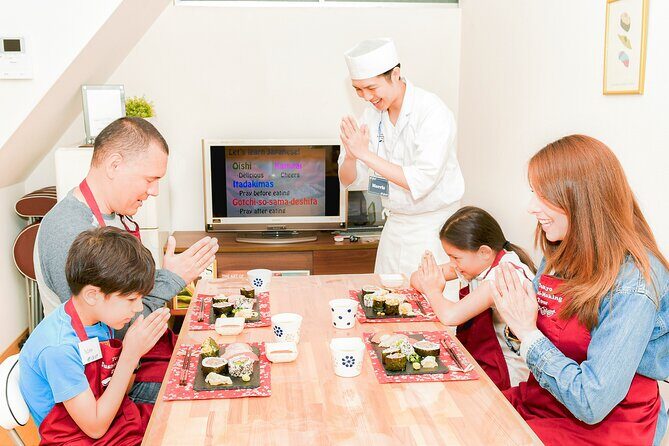
I think you should book it if you want a hands-on Tokyo experience that mixes food, culture, and kid-friendly pacing. The small group size, the ability to make four sushi varieties, and the fact that you eat what you craft make it feel like a full, satisfying session—not a quick demo.
Also, English-led instruction plus a quiz on etiquette is a smart combo. It prepares you for sushi meals during the rest of your trip, not just during the class.
I’d hesitate only if your schedule is very flexible but your dietary needs are complicated and you might forget to notify the organizers early. Otherwise, this is a practical family activity with real take-home skills.
FAQ
What’s the class duration?
It runs for about 2 hours 30 minutes.
Where do we meet and what time does it start?
The meeting is near Kita-Senju station (East exit), and the start time is 10:30 AM. The listed meeting address is 3-5 Senjuasahichō, Adachi City, Tokyo 120-0026, Japan.
What age is this class for?
It’s suitable for children aged 8 and above.
How many people are in the group?
The class has a maximum of 8 travelers.
What sushi will we make?
You’ll make vinegared rice and craft four sushi varieties: Decorative Sushi Roll, California Roll, Nigiri-Sushi, and Battleship Roll.
Do you have options if we don’t want raw fish?
Yes. There are Non-Raw Fish, Vegetarian, and Gluten-Free menus. You need to inform the provider in advance.
Is free cancellation available?
Yes, you can cancel for a full refund up to 24 hours before the experience start time.