REVIEW · IWATE PREFECTURE
Morioka City Cycle with local guide: Temples, Treats & Townscapes
Book on Viator →Operated by Northern Japan Horizons · Bookable on Viator
Two wheels in Morioka beats walking. This guided e-bike ride threads bridges, shrine grounds, and castle remnants into one easy loop, and it does it with smart local context from guide Katy. I love how the e-bike keeps the pace comfortable, and I love the way Katy turns place names into stories you can actually remember.
One thing to plan for: there are no meals or drinks included, so don’t count on snacks being handed to you mid-ride. Also, you’ll want your own cycling insurance since it’s not provided.
In This Review
- Key highlights you’ll feel on this Morioka ride
- Why an e-bike city cycle is the best way to sample Morioka fast
- Morioka Station Waterfall Square: your starting line and orientation
- Kaiunbashi Bridge and Odori shopping street: river views plus real town energy
- Morioka Castle Ruins Park and Iwate Park: feudal stones, easy pacing
- Sakurayama Shrine and castle grounds: turning a city ride into a story you can walk
- Mitsuishi Shrine and the Three Rock Deities: the Iwate name explained
- Passing Fukuda-pan: local treats without forcing a detour
- Price and value: is $97.73 worth it?
- Group size, comfort, and who this Morioka cycle suits best
- What to expect during the 3-hour loop (without the guesswork)
- Quick checklist before you go
- Should you book the Morioka City Cycle?
- FAQ
- How long is the Morioka City Cycle tour?
- What is the price per person?
- Where does the tour start?
- Where does the tour end?
- What transportation do you use during the tour?
- What’s included in the tour price?
- Are meals or beverages included?
- Do I need my own cycling insurance?
- How many people are in the group?
- What are the cancellation rules?
Key highlights you’ll feel on this Morioka ride
E-bikes that make distance feel small—you cover more than a walking tour, without burning your legs.
Katy’s story style—she connects sites like Mitsuishi Shrine to why the region is called Iwate.
Kaiunbashi Bridge first, then town streets—a great mix of river views and everyday Morioka.
Morioka Castle Ruins Park time—stone walls and leafy paths that give feudal-era context.
Mitsuishi Shrine and the Three Rock Deities—a legend-focused stop built around sacred stones.
Max 8 people—small group size means more questions and fewer long waits.
Why an e-bike city cycle is the best way to sample Morioka fast
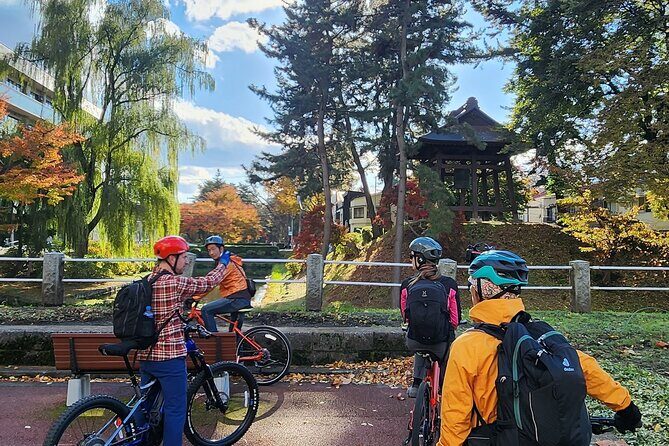
If you like your sightseeing efficient and your walking reasonable, this tour fits perfectly. The e-bikes do the heavy lifting, so you can spend your energy on noticing details instead of just surviving the ride.
What I like most is that the route is built for city flow: you’re not stuck in one museum room for three hours. You’re moving between bridges, shopping streets, and shrine/castle areas, which keeps the “what am I seeing next?” feeling alive. In practical terms, that means you’re likely to leave with a mental map of Morioka, not just a pile of photos.
And because the bike is electric, you don’t need to be a hardcore cyclist. You do need basic comfort riding in traffic-like urban conditions (slow streets, signals, stopping at spots), but the point here is accessibility for most visitors.
You can also read our reviews of more tours and experiences in Iwate Prefecture.

Morioka Station Waterfall Square: your starting line and orientation
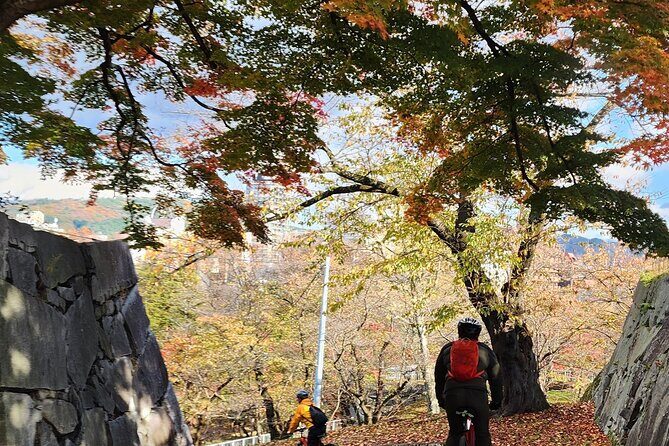
The tour meets at Morioka Station Waterfall Square, right at Moriokaekimaedori, so you’re not fighting across town to begin. The fact that it ends back at the meeting point matters too. You can plan your day without worrying about a weird pickup/drop-off location.
Once you’re sorted, you get underway with the instructor/guide. In a small group (maximum 8), that matters. You get room to ask questions early—how to handle the bike, how stops work, and what to watch for along the route.
One detail I really appreciate: e-bike stops are easier than you might expect. In the experience’s feedback, riders praised the bikes’ built-in lock feature, which is handy when you’re hopping off repeatedly for viewpoints, shrine moments, and short photo breaks. Translation: less gear anxiety.
Kaiunbashi Bridge and Odori shopping street: river views plus real town energy
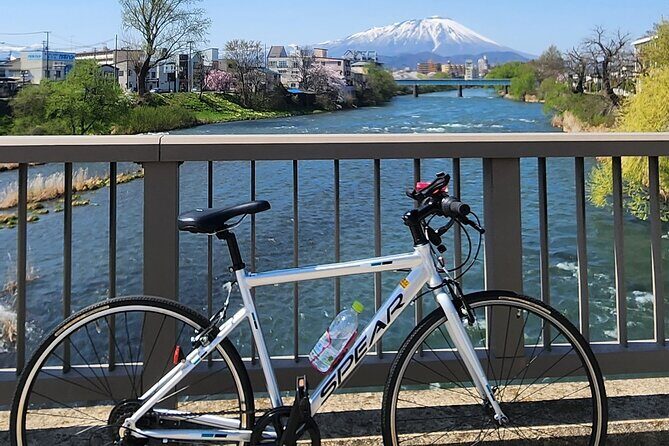
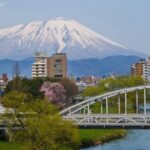
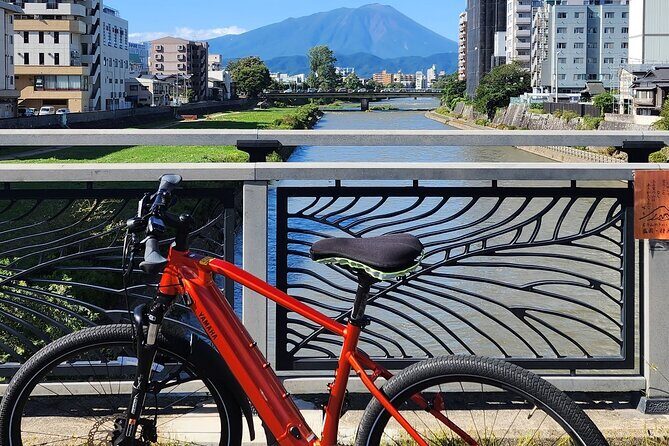
The ride starts with a classic Morioka view at Kaiunbashi Bridge, where you get a picturesque look toward the Kitakami River and Mt. Iwate in the distance. This is one of those places that instantly grounds you. You understand where you are in relation to the larger region, not just as a tourist dot on a map.
Then you shift from river scenery to daily life on Odori shopping street. This is where you see Morioka’s rhythm in motion—local boutiques, cafes, and the everyday street scene that doesn’t require a special ticket. It’s a nice reset after the big-view bridge moment. You go from “wow, the view” to “oh, this is how the city breathes.”
Practical tip: because this is a short, 3-hour loop, the ride mixes photo-friendly pauses with moving stretches. Don’t expect a long slow sightseeing crawl. You’re sampling—quick, clear, and frequent.
Morioka Castle Ruins Park and Iwate Park: feudal stones, easy pacing
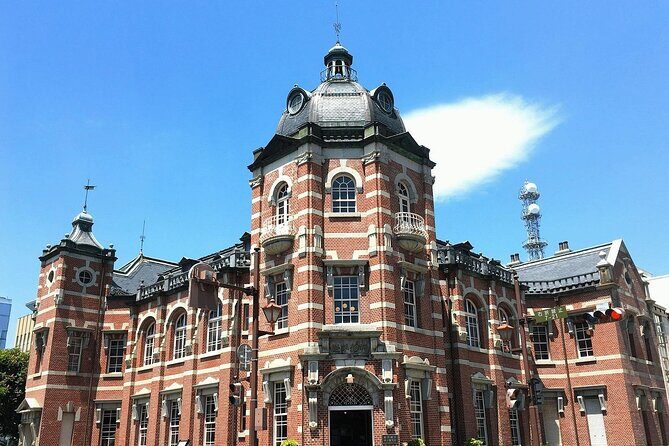
Next up, the tour heads to Morioka Castle Ruins Park as part of the Iwate Park area experience. This is a big deal in a city cycle because castle grounds give you history without feeling like a lecture. You’ll see stone walls and paths that hint at what the feudal-era layout must have felt like.
What I like here is the texture: it’s not just a single monument. It’s an area with walking paths and places to look around. For people who don’t want to wander alone, this guided stop helps you know where to look and why it matters.
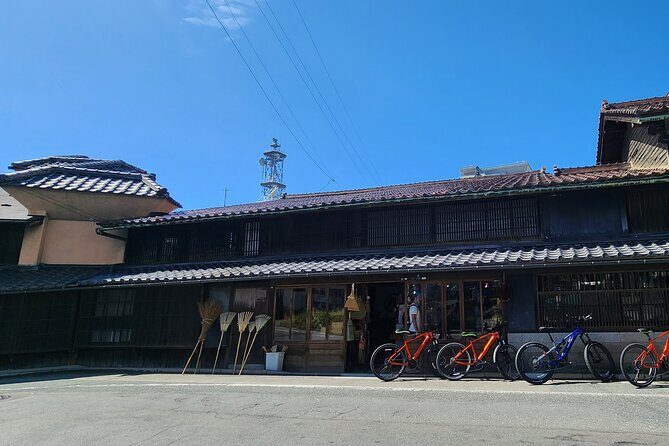
You’ll also get hints of historic city life through traditional machiya townhouses along the way. Even if you don’t know all the architectural terms, the shape and rhythm of the streets helps you picture what daily living looked like before modern streets took over.
If you’re the type who likes understanding a place at ground level, this stop is a win. If you’re expecting a long museum-style deep dive, it may feel like a taste—but that’s also the tour’s strength. It’s built for momentum.
Sakurayama Shrine and castle grounds: turning a city ride into a story you can walk
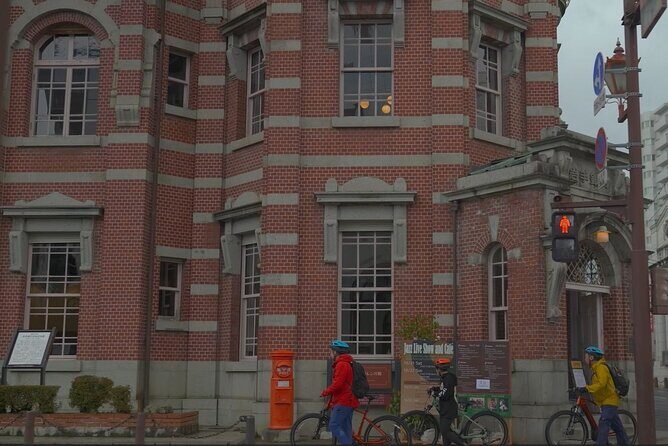
The tour includes a visit to Sakurayama Shrine and time around the castle grounds. Shrine stops on bike tours work best when they’re short but meaningful, and this one fits that pattern.
Instead of treating the shrine like a quick photo backdrop, the guide frames what you’re seeing in a way that makes the stop click. You’re not just moving past sacred places. You’re stepping into a small pause of local belief, then rolling on again.
I find this combination especially effective on an e-bike cycle. The ride itself gives you perspective—how the city connects these sites—while the shrine/castle time gives you context for why they’re arranged the way they are.
You can also read our reviews of more guided tours in Iwate Prefecture
Mitsuishi Shrine and the Three Rock Deities: the Iwate name explained
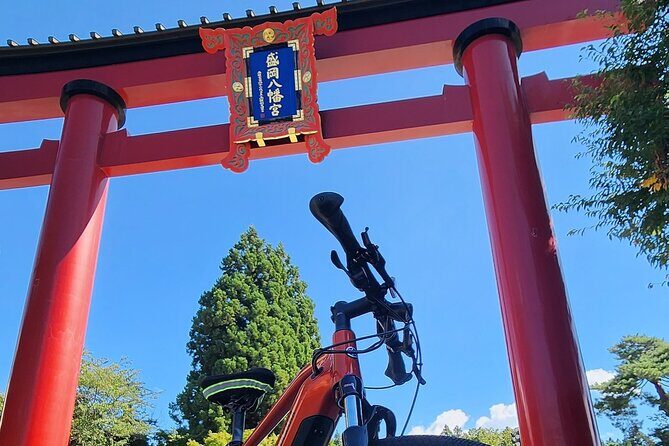
One of the most memorable moments is the stop at Mitsuishi Shrine, tied to the legend of the Three Rock Deities. This isn’t just mythology as trivia. The shrine is connected to the origin story of the Iwate name, so the legend becomes a way to understand the region’s identity.
Here’s what makes this stop valuable for you: it transforms “Iwate” from a label on a train timetable into a story with a place attached. That’s the kind of context that actually improves your trip after the tour ends. You’ll notice the name more around the prefecture, and you’ll know there’s a reason it carries meaning.
From a tour-experience standpoint, sacred stone sites also change the feel of the ride. It slows the pace emotionally, even if your bike is still moving. You get a different kind of attention—quiet, reflective, and brief enough to keep the tour on schedule.
Passing Fukuda-pan: local treats without forcing a detour
Along the route, you’ll cruise by Fukuda-pan, described as a beloved local bakery. It’s the kind of “see it, decide it” stop that works well on a city cycle.
Since meals and beverages aren’t included, this matters. You can keep the ride moving and still have the option to grab something if it fits your taste and timing. Just don’t build your entire plan around a specific snack stop, because the tour is designed to hit cultural sites, not turn into a food crawl.
Think of it like this: the bakery is a clue to Morioka’s everyday tastes, not a guarantee that you’ll have a full meal mid-ride.
Price and value: is $97.73 worth it?
At $97.73 per person for about 3 hours, the value is mainly in three things: the local guide, the e-bike rental, and the fact that you’re getting a route designed to cover multiple meaningful areas.
If you were to do this on your own, you’d still need to solve the e-bike logistics and figure out the best order of sights. Here, the route is already organized, and Katy’s guidance adds the context you’d probably miss wandering independently.
Also, this is a small group tour with a maximum of 8 travelers, which usually translates into less waiting around at stops. You get more interaction time, and the tour feels less like a herd moving from sign to sign.
Now for the honest consideration: because meals and drinks are not included, your budget shouldn’t stop at the tour price. Plan for your own snack strategy so you’re not stuck hungry while the group is still riding.
Group size, comfort, and who this Morioka cycle suits best
This tour is especially well matched to people who want:
- a guided introduction to Morioka’s highlights without committing to a full day
- an easier ride thanks to the e-bike
- more story context than you’d get from a self-guided walk
One review highlighted a family of five experience, and that’s a good clue about how the ride can work for mixed groups—as long as everyone is comfortable cycling and understands you’re following the guide’s timing.
Who might not love it: if you want long, slow museum-style stops or you’re hoping for a meal included in the schedule, you may feel the time is too short. The tour is built to be active and efficient.
What to expect during the 3-hour loop (without the guesswork)
The pacing is structured: you ride between stops, stop for photos and walking around, then get back on the bike. Key time points include:
- Kaiunbashi Bridge and Odori shopping street early in the route
- a longer feel at Iwate Park / Morioka Castle Ruins Park
- a shrine-focused stop at Mitsuishi Shrine tied to the Iwate name
You’ll also see the tour’s intended blend: riverside views, traditional streetscapes, shrine/castle grounds, and legend-led explanation. In other words, it’s not just movement. It’s movement with direction.
Quick checklist before you go
You’ll get a mobile ticket, and the meeting point is near public transportation, which keeps your pre-tour logistics calmer.
Bring your own plan for food and hydration since meals aren’t included. And don’t forget cycling insurance, since you’re instructed to purchase your own coverage.
Finally, wear comfortable clothes and shoes for short stretches of walking. You’re on an e-bike, but you’ll still step off for shrines and viewpoints.
Should you book the Morioka City Cycle?
Yes, if you want a smart first taste of Morioka with a local guide and you like seeing history and legends connected to real streets. The e-bike makes the whole day less tiring, and the guide’s explanations—especially around Mitsuishi Shrine and the Three Rock Deities—add meaning beyond what you’d pick up from signs alone.
I’d skip it only if you need guaranteed snacks/meals, or if you dislike cycling through city areas even at a slow pace. For most visitors who want efficient, authentic context in a short window, this is a strong choice—especially with a small group size and an e-bike that’s built to handle the stop-and-go rhythm.
FAQ
How long is the Morioka City Cycle tour?
It runs for about 3 hours.
What is the price per person?
The price is $97.73 per person.
Where does the tour start?
It starts at Morioka Station Waterfall Square, 1 Moriokaekimaedori, Morioka, Iwate, Japan.
Where does the tour end?
The tour ends back at the meeting point.
What transportation do you use during the tour?
You ride an e-bike provided as part of the experience.
What’s included in the tour price?
Included are the local guide/instructor fee and e-bike rental.
Are meals or beverages included?
No. Meals and beverages are not included.
Do I need my own cycling insurance?
Yes. Cycling insurance is not included, and you’re asked to purchase your own.
How many people are in the group?
The tour has a maximum of 8 travelers.
What are the cancellation rules?
Free cancellation is available up to 24 hours in advance for a full refund.