REVIEW · OSAKA
Osaka: UTAGE Modern Japanese Taiko Live Show
Book on Viator →Operated by TryHard JAPAN · Bookable on Viator
A 180cm taiko drum changes the room. At UTAGE in Osaka’s Tempo Harbor Theater, you’ll see Japanese music go modern—fast, loud, and built for participation, with a giant 180cm drum as the headline.
I love the high-energy drumming style and the way the cast keeps pulling the audience into the performance. I also like that the show doesn’t just stick to one sound; it mixes taiko, shamisen, shakuhachi, and shinobue with flashy stage elements that keep things moving.
One consideration: the theater is a bit out of central Osaka, so plan your metro time and don’t assume you’ll dash there last minute—especially if you want a meal first.
In This Review
- Key highlights at a glance
- Tempo Harbor Theater: small venue, big energy
- The 180cm giant drum: why the main instrument hits so hard
- Taiko plus shamisen, shakuhachi, and shinobue: what you’ll actually hear
- Audience participation: fun, not a test
- Visuals and pacing: why this doesn’t drag
- Price and value: is $19.82 worth it?
- Getting there and planning your Osaka evening
- Who should book UTAGE (and who might skip it)
- Should you book UTAGE Modern Japanese Taiko Live Show?
- FAQ
- How long is the UTAGE Modern Japanese Taiko Live Show?
- Where is the show located?
- What’s included with the ticket price?
- Does the show include audience participation?
- What Japanese instruments will I see?
- Is the ticket a mobile ticket?
- Is dinner included?
- What’s the cancellation policy?
- Is this show suitable for children?
Key highlights at a glance
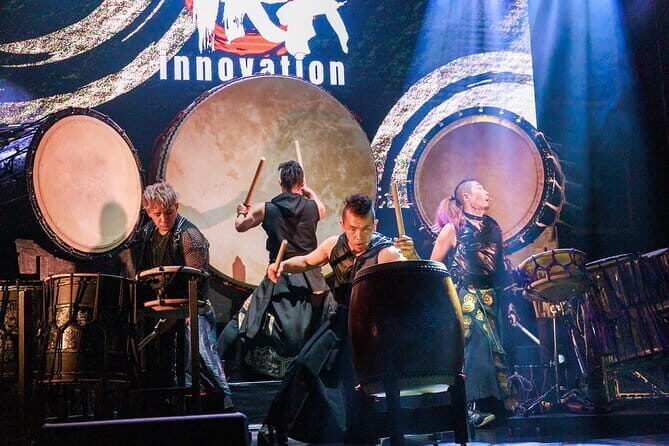
- 180cm taiko drum: the show’s big visual and sound anchor, billed as the largest in Kansai.
- Real hands-on participation: you’re invited on stage, including a chance to take part in one song.
- Old instruments, modern entertainment: taiko, shamisen, shakuhachi, and shinobue get rearranged into a fresh format.
- Kabuki-style lion dance arrangements: traditional movement and storytelling show up in unexpected ways.
- Comfortable, intimate theater setup: small venue feel, with seating that many people find easy to watch from.
- Value-priced, 45-minute show: includes soda/pop, and it’s short enough to fit into a busy Osaka day.
Tempo Harbor Theater: small venue, big energy

Tempo Harbor Theater is the kind of place that makes a taiko show land harder. The room is set up so you’re not watching from a distant stage; it feels more like you’re in the action. If you like performances where the cast actually works the crowd, UTAGE has the right format: music first, then conversation with the audience, then a final burst of sound.
There’s also a clear effort to make the experience easy to follow for English-speaking visitors. Between the stage interaction and the way the show is paced, you’re not left guessing what to do. That matters in Japan, where not every cultural performance is structured for tourists who don’t read the cues.
If you’re the type who likes a comfortable theater moment—cool inside, decent visibility, and a welcoming pre-show vibe—this venue seems built for that. One nice detail: people noted a friendly greeting on entry, including help with photos before the show begins.
A few more Osaka tours and experiences worth a look


The 180cm giant drum: why the main instrument hits so hard
Let’s talk about the star: the giant Japanese drum with a diameter of 180 cm, described as the largest in the Kansai region. This isn’t a “look at it from afar” prop. It’s presented as a performing instrument, meaning you feel its presence as part of the show’s rhythm and drama.
In taiko, the power isn’t only in volume—it’s in the timing and the physical way the drums communicate. A drum this large changes the feeling of the beat. Low hits tend to stay in your body longer than you expect. Even if you don’t know taiko terminology, you’ll understand the beat structure through how the performers cue the crowd and how the music swells and tightens.
The show also leans into visuals. Big drums are naturally cinematic, but UTAGE pairs the sound with stage moments so you’re not just hearing drums—you’re watching percussion become spectacle. That’s a key reason so many people walk away calling it loud, electric, and memorable.
Taiko plus shamisen, shakuhachi, and shinobue: what you’ll actually hear

UTAGE doesn’t pitch itself as a single-instrument demo. It’s a multi-instrument show that gives you quick variety: taiko for impact, shamisen for string texture, shakuhachi for breathy tone, and shinobue for bright melodic color. You may not get long “lesson time” on each instrument, but you do get an enjoyable contrast of sounds.
Here’s why that matters: traditional Japanese music can feel intimidating if you’re expecting one long, formal concert. UTAGE instead uses the instruments like characters in a storyline. Taiko often drives the energy and pace. The others add mood and flavor, so the show doesn’t turn into one texture for 45 minutes straight.
One especially cool element is the way UTAGE blends familiar traditional themes into modern entertainment. In particular, arrangements of lion dances that connect to Kabuki show up as part of the performance language. If you’ve seen Kabuki-inspired visuals before, you’ll recognize the influence even if the staging feels updated.
Some people also describe the overall mix as old and new together, with modern-style energy placed alongside traditional instruments. If you’re open to that crossover, you’re going to enjoy the way UTAGE keeps the show moving and surprising.
Audience participation: fun, not a test

This is one of the most important parts of the show. UTAGE invites audience members on stage to experience instruments and participate in one of the songs. That doesn’t mean you need to be “good at music.” It means you’re meant to be part of the moment—watching, cheering, and trying something with guidance.
If you’re traveling with kids, this is where the show can become a full family memory rather than just a stop on a schedule. The format naturally turns into participation, and when kids get a role—however small—it often sticks with them long after the last drum hits.
If you’re nervous about being pulled in, don’t worry too much. The show is built around crowd energy. Still, you’ll want to pay attention to the host cues so you know when to stand, when to clap, and when to follow along. The pacing is fast enough that you’ll want to stay alert, but it also feels friendly rather than awkward.
The best part: participation also helps you understand the music. When you’re asked to do something physical—simple rhythm, a moment of coordination—you start feeling why taiko is so bodily and why the other instruments are placed where they are.
Visuals and pacing: why this doesn’t drag

A 45-minute performance sounds short, but it’s the right length for this kind of high-energy format. UTAGE keeps the show moving with visual elements and dynamic stage moments. The giant drum brings drama, while the smaller instruments add texture that keeps the ears interested between big hits.
Another pacing advantage: the show doesn’t rely on complex explanations. Instead, it uses performance structure—rhythm changes, instrumental swaps, and audience call-and-response—to keep you oriented. If you’ve ever sat through a performance where you’re waiting for the “point,” you’ll appreciate how UTAGE is engineered for instant engagement.
You might also catch moments where the performers show visible love for playing. People frequently highlight enthusiasm, and you can feel that in how they energize the crowd and shape transitions between segments.






Price and value: is $19.82 worth it?

At $19.82 per person for a show that runs about 45 minutes, the value is strong if you want something active instead of passive. This is not a long museum-like lesson. It’s a live performance designed to keep you involved, including stage moments and audience participation.
The ticket includes entrance plus soda/pop. Dinner isn’t included, so you’ll likely want to handle food either before or after the show. That’s normal for Japan entertainment, but it matters for planning—especially if you’re hungry when the show ends.
Where the price really makes sense is in the combination:
- big production energy (giant drum and stage visuals)
- multiple Japanese instruments in one event
- participation, which many cultural shows skip
If your Osaka plan already includes nightlife or a family activity, UTAGE fits well because it doesn’t eat the whole evening. It’s also short enough to pair with other nearby attractions without needing a full day commitment.
Getting there and planning your Osaka evening

The theater sits in Osaka’s Minato Ward area, and yes, it can feel out of the way compared with central districts. The upside is that the neighborhood isn’t empty—it’s an easy place to kill time before the show.
People specifically point out that the venue is near Legoland, a giant Ferris wheel, and a mall. That’s a practical pairing: you can do an attraction first, grab something to eat nearby, then go inside without rushing across town.
If you’re relying on public transportation, you’re in good shape because the venue is described as near public transit. Still, I’d give yourself a little buffer. Entertainment venues run on tight timing, and you’ll want to arrive early enough to find your seat and get comfortable.
One small “pro move” idea: go a bit earlier than you think you need. In a neighborhood with multiple attractions, it’s easy to spend time wandering and then realize you’re late. With a 45-minute show, timing matters.
Who should book UTAGE (and who might skip it)

UTAGE is a great match if you want:
- a high-energy live show where you’re encouraged to react
- a taste of several Japanese instruments in one sitting
- something family-friendly where kids can join the fun
- a short evening plan that doesn’t require a big commitment
You might skip it if you’re looking for a quiet, formal concert experience with long technical explanations. UTAGE is structured around entertainment and audience involvement, not deep academic context.
If you’re already the kind of traveler who likes hands-on culture—festival spirit, stage presence, and performance you can feel in your chest—this show hits the sweet spot.
Should you book UTAGE Modern Japanese Taiko Live Show?
My take: book it if you want an Osaka night that’s loud in the good way, short enough to fit any itinerary, and structured for interaction. The 180cm taiko drum, the mix of taiko plus shamisen/shakuhachi/shinobue, and the clear crowd participation make this feel like more than just a “look at Japanese culture” stop.
If you’re unsure, base your decision on one question: do you enjoy being part of the show, even if it’s just clapping, cheering, and possibly trying an instrument? If yes, UTAGE is a strong use of your time in Osaka.
FAQ
How long is the UTAGE Modern Japanese Taiko Live Show?
The show runs about 45 minutes.
Where is the show located?
The venue is Tempo Harbor Theater in Osaka (Minato Ward), address: Kaigandori 1-5-10.
What’s included with the ticket price?
Your ticket includes an entrance pass and soda/pop.
Does the show include audience participation?
Yes. You can be invited on stage to experience Japanese instruments, and there is also an opportunity to participate in one song.
What Japanese instruments will I see?
The show features taiko, shamisen, shakuhachi, and shinobue, plus a very large Japanese drum (180 cm diameter).
Is the ticket a mobile ticket?
Yes, the show uses a mobile ticket.
Is dinner included?
No, dinner is not included.
What’s the cancellation policy?
Free cancellation is available up to 24 hours in advance for a full refund.
Is this show suitable for children?
Most people can participate, and reviews mention that families and kids enjoy the interactive format.