REVIEW · FUKUYAMA
Sea Kayak Tour to the History of Tomonoura in the Seto Inland Sea
Book on Viator →Operated by Attractive JAPAN · Bookable on Viator
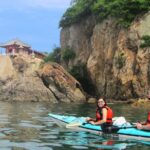
Tomonoura looks different when you paddle beside it. This sea kayaking route takes you along the Seto Inland Sea and toward Tomonoura, with stops tied to places you’d never reach the same way from land. You’ll get the movie-style coastline views from the water, including scenery that has inspired big screen stories like Wolverine and Ghibli’s Ponyo.
I especially like the beginner-friendly approach: you get instruction on paddling and safety before you head out. I also like that lunch and a local tasting are built in, including a stop to sample Homeishu brewed in Tomonoura for about 350 years.
One thing to consider: you’re on the water for about 8 hours, and conditions drive the route. Also, the guide’s English isn’t fluent, so it helps if you’re okay with slower communication and a few simple instructions.
In This Review
- Key points before you go
- Tomo to Tomonoura: the charm is seeing it from water
- Your kayak day schedule (and what matters most)
- Stop 1: Tomo start time and getting your bearings
- Stop 2: Tomo no Ura for paddling basics and safety
- Stop 3: Tomonoura coastal views, then Tashima Island lunch
- Stop 4: Paddling on toward Abuto Kannon (Bandai-ji Temple Kannondo)
- Stop 5: Homeishu tasting at Tomo Sake Brewery
- Stop 6: Kayaker’s CAFE and Tomonomachi at sunset
- What makes the price feel fair here
- Clothing, gear, and small details that make or break it
- Paddling level: beginner-friendly, but still physical
- Weather can change the day
- Who should book this kayak day
- Should you book this Sea Kayak Tour to Tomonoura?
- FAQ
- Do I need kayaking experience?
- How long is the tour?
- What’s included in the price?
- Where does the tour start and end?
- What should I bring?
- What do I wear in different seasons?
- What if the tour is canceled due to weather?
Key points before you go
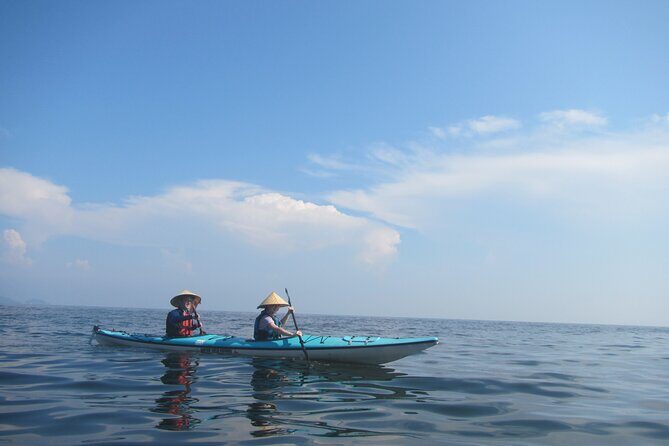
- Sea-only access: you’ll see places that are basically meant for boats, not just beach walks.
- Choose your start time: pick 8:00 or 9:00, and the day’s flow adjusts to sea conditions.
- Instruction first: you practice basics right away at Tomo no Ura with safety guidance.
- Tashima Island lunch break: you land, stroll, and eat on Tajima/Tashima Island.
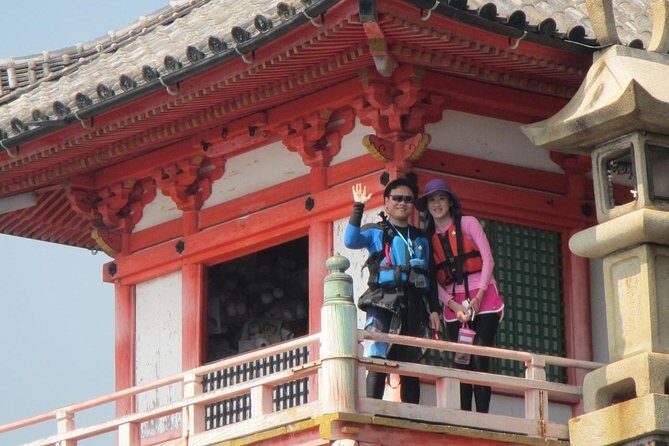
- Abuto Kannon from the water: a standout sea-facing temple setting you experience up close.
- Homeishu tasting: a practical, local break that fits the theme of Tomonoura history.
Tomo to Tomonoura: the charm is seeing it from water
This is a full-day sea kayak tour based in Tomo (meeting point: Kayaker’s CAFE in Tomochō, Fukuyama). The big idea is simple: Tomonoura’s story shows better from the water than from roads and shore paths. From your kayak, you pass seafront villages, island shrines, and even deserted-feeling beaches that look completely different once you’re floating beside them.
The setting also feels like it’s been made for slow movement. You’re not rushing through photos; you’re gliding close enough to notice small details—boat moorings, rock edges, and the way shoreline curves—without the noise of a bus route.
And yes, the coast here has real pop-culture pull. The coastline inspiration tied to Wolverine and Ponyo isn’t just marketing flavor. When you see the cliffs, coves, and sea-facing viewpoints from the kayak, you understand why filmmakers would want this look.
You can also read our reviews of more tours and experiences in Fukuyama.
Your kayak day schedule (and what matters most)
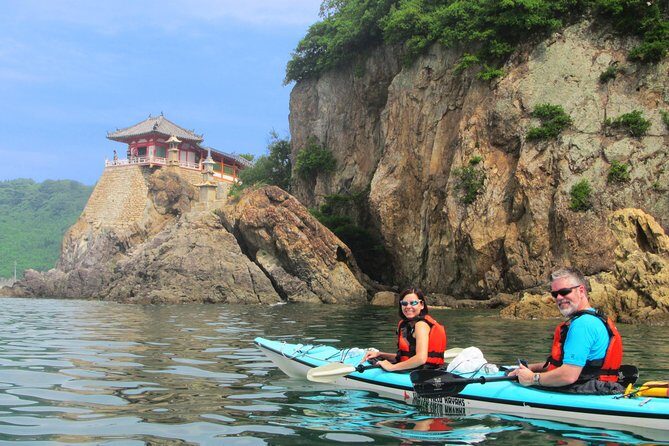
The tour runs about 8 hours 10 minutes. You choose a start time (8:00 or 9:00). During the day, the guide adjusts the course based on sea conditions and how everyone is feeling, so your exact paddling timing can shift a bit. The end time can vary, too.
It helps to plan for a steady day rather than a “soft stroll.” You’ll paddle through parts of the Seto Inland Sea, then land for lunch and temple/brewery stops. The rhythm is good if you’re the type who likes being active, but not so good if you need lots of sitting time.
Group size is kept to a maximum of 20, and the tour can be combined with other customers. That can matter for pacing—more people means more brief waiting in water for instructions or transitions between stops—but the stops themselves are designed around moving along by sea.
Stop 1: Tomo start time and getting your bearings
You’ll start around Tomo, and you’ll see this as the “setup” phase of the day. Even though the first stop is relatively short (about 30 minutes), it’s still important because sea kayaking needs confidence early.
Depending on the day, the guide may tweak the route after assessing conditions and participants. That’s not a problem—it’s the point. The Seto Inland Sea can change how you’ll paddle based on tide and wind, and this tour is designed to stay safe first.
Tip for comfort: wear your “work clothes.” This is not a dry-land experience. Even if the tour doesn’t feel rough, you’ll be on water for hours, and any dampness sticks around longer than you expect.
Stop 2: Tomo no Ura for paddling basics and safety
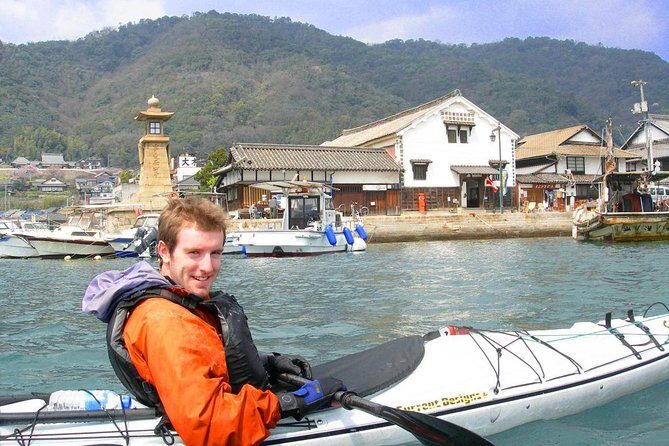
At Tomo no Ura, you begin the actual kayaking experience in front of the lighthouse. Before you go anywhere far, you get the safety talk and learn how to paddle.
This is one of the biggest reasons this tour works for beginners. You’re not thrown into the deep end. You’ll start with instruction, then transition into the longer paddling stretches along the coast.
You’ll then float toward Tomonoura, launching your kayak from the ganki, a historic Edo-period structure (part of the area’s heritage). That detail matters because it gives the day a sense of place. You’re not just doing “kayak sightseeing.” You’re moving through Tomonoura’s maritime culture.
What to expect: You’ll likely feel awkward for the first stretch, then quickly get the hang of it. Your guide’s role here is to keep that progression smooth. Since the guide’s English isn’t fluent, the best mindset is: watch first, then copy the motion.
Stop 3: Tomonoura coastal views, then Tashima Island lunch
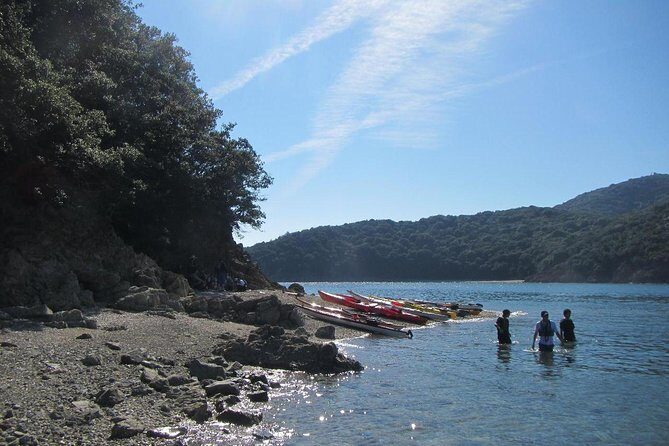
Once you’re out along the Tomonoura area, the water views do the heavy lifting. You’ll paddle past seafront villages and island shrines, with open water that makes the coastline feel bigger and more layered.
Then you land on Tashima Island (listed as Tajima/Tashima in the schedule) for lunch. This stop is about 1 hour 30 minutes, and it’s paced like a break rather than a hard landing-and-go.
While you’re on the island, you can stroll and take in the local fishing scene. Seasonal foods are mentioned as something you can eat there depending on what’s available. Even if you don’t go heavy on extra purchases, the landing itself breaks up the day in a satisfying way.
Practical note: bring spare clothes. You’ll thank yourself later if you’re damp and want to change before the afternoon paddling.
Stop 4: Paddling on toward Abuto Kannon (Bandai-ji Temple Kannondo)
After lunch, you depart the island and head for the most “sea dramatic” stop on the route: Abuto Kannon, also linked to the Bandai-ji Temple Kannondo.
This portion runs about 3 hours 30 minutes on the schedule (with a 12:30–13:30 window shown at Abuto Kannon). The main experience here is seeing a sea-facing religious site from the water and then experiencing the surroundings that go with it—rock edges, water color, and the feeling of being right at the waterline where the sea is part of the story.
This is where I’d expect most people to start slowing down mentally. By now you’ve had instruction, you’ve had a break, and you’re no longer thinking about basic paddling as much. Your attention shifts to the scenery and the sense of place.
Consideration: if you’re sensitive to long stretches of paddling after lunch, pace yourself early. The day isn’t a sprint, and your route can adjust based on participant condition anyway.
Stop 5: Homeishu tasting at Tomo Sake Brewery
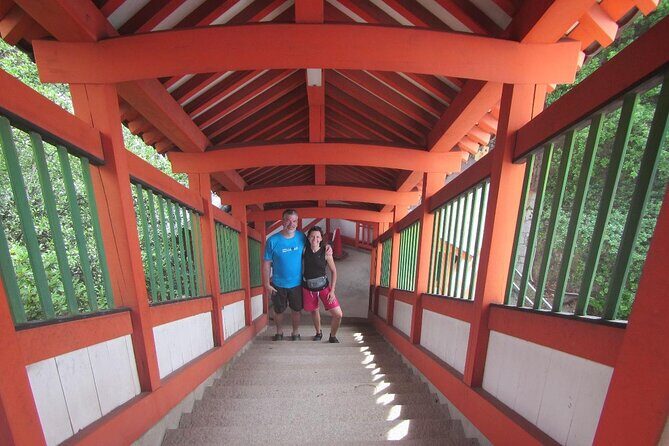
You finish the water portion and move into a very different kind of Tomonoura history stop: a visit to the sake brewery area, listed as Homeishu-ya Tomo Shuzo / Jurokumi Homeishu.
This is about 1 hour, starting around 15:00–16:00. You’ll taste Homeishu, which has been brewed in Tomonoura for about 350 years and is described as effective for relieving fatigue.
Even if you don’t treat that claim as a medical promise, it makes sense as a recovery ritual: you’ve been paddling for hours, you’ve landed and walked a bit, and now you’re doing something slow with a local flavor. This stop also breaks the day’s “only water” theme, which keeps the full-day format from feeling repetitive.
Budget note: the tour includes tasting as part of the experience, but souvenir costs aren’t included. If you like to take home bottles or small gifts, plan extra cash.
Stop 6: Kayaker’s CAFE and Tomonomachi at sunset
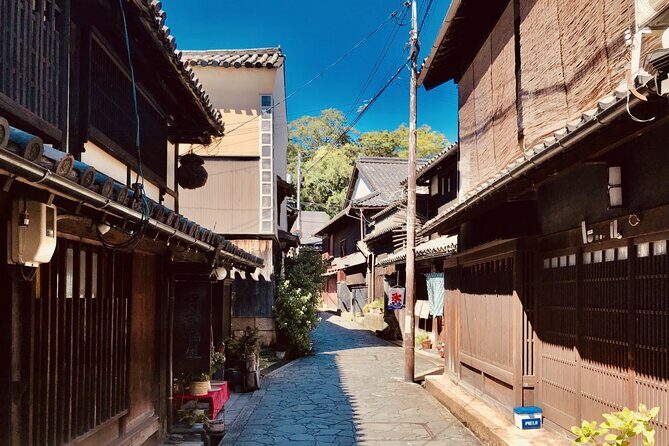
After your brewery visit, you end back at Kayaker’s CAFE, with the day closing around 16:00–17:00. The schedule notes that the beautiful Tomonomachi at sunset helps heal the fatigue from the day.
This is a nice way to finish: you don’t just stop the moment you’re tired. You wrap up with the area’s evening look, letting the “paddle day” settle into a calm ending.
You’ll return to the meeting point, and the whole tour ties back to where you started in Tomo—clean and straightforward.
What makes the price feel fair here
The price is $88.12 per person, booked on average 17 days in advance. What makes it feel like value is what’s included:
- Guide and rental fee of all kayak equipment
- Lunch
- The structure of a full-day route with multiple named stops (not just “go paddle around and good luck”)
If you had to price those pieces separately (equipment + guided activity + a meal), it’s usually not cheaper than a package. And because this tour is beginner-friendly, you’re also paying for that instruction and safety setup—something that keeps the experience from becoming stressful.
Clothing, gear, and small details that make or break it
You’ll be more comfortable if you treat this like a “you will get wet” day. The tour includes kayak shoes rental, and you’re asked to provide your shoe size when reserving.
Bring:
- Drinks
- Spare clothes (change of clothes)
- Towel
- Sunscreen
- Waterproofing measures for your smartphone
Season-by-season attire guidance is provided:
- Swimming season (June to October): wear clothes that can get wet (swimwear underneath), plus a hat and sunglasses.
- Spring and fall (November and around April–May): quick-drying T-shirts, nylon outerwear, comfortable pants, hat, sunglasses. Paddle jackets are available for rental.
- Winter (December to March): quick-drying tops, fleece/mid-layer, nylon outerwear, warm flexible pants, knit cap, nylon gloves. Once you land, down jackets or similar warmth are recommended.
My take: if you over-plan for dryness, you’ll end up uncomfortable. Instead, plan for warmth (when cold), quick drying (when mild), and sun protection (always).
Paddling level: beginner-friendly, but still physical
The good news: no kayaking experience is necessary. The instruction and safety session at Tomo no Ura are there for a reason.
The honest part: you still need moderate physical fitness. You’re paddling while seated for long stretches, then doing a land-and-stroll rhythm. This is a great activity if you’re comfortable with outdoor exercise, not ideal if you want zero exertion.
Also note:
- Participation is over 3 years old
- The guide can adjust the course based on sea conditions and participants’ condition
- The guide’s English isn’t fluent, so your communication will be mostly visual and simple instructions
In one example from real-world experience, the guide showed extra helpfulness if someone felt they needed a different plan after lunch. That suggests the day isn’t rigid when someone genuinely needs support.
Weather can change the day
This experience requires good weather. If weather is poor, the tour may be canceled, and you’ll be contacted by the organizer by 6:00 PM the previous day (light rain may still proceed). Since the sea conditions can change suddenly, the guide can decide to cancel for safety even after a go-ahead earlier.
That’s not a deal-breaker. It’s just part of sea-based activities. If you’re booking close to your travel deadlines, build in buffer time.
Who should book this kayak day
This is a strong fit if you:
- Want views you can’t get from a normal walk
- Like active sightseeing that mixes water, walking, and local culture
- Are a beginner who wants instruction, not a test
It’s also a good choice for people who like practical structure: pickup at Kayaker’s CAFE, planned stops, included lunch, then a return to the same meeting point.
If you hate getting wet, if you need fluent English support for every concept, or if 8 hours on the water sounds intimidating, you might find it harder than you expected. In that case, you’d want a shorter or easier option (if available on your dates).
Should you book this Sea Kayak Tour to Tomonoura?
I’d book it if you want a “once-in-a-while” way to see Tomonoura—history, coastline, and culture from the same vantage point. The included kayak rental and lunch make it feel like a complete day rather than a half-measure activity. And the Abuto Kannon sea-facing setting plus the Homeishu tasting gives you more than just scenery.
I wouldn’t book it if you’re mainly chasing comfort and dry sightseeing. This is an outdoor paddle day where the sea decides how the route feels.
If you’re okay with a wet, active day and you pack smart, this is the kind of trip that sticks with you long after your photos stop loading.
FAQ
Do I need kayaking experience?
No experience is required. The tour includes instruction and a safety explanation before you paddle.
How long is the tour?
It’s about 8 hours 10 minutes (approx.), and the end time can vary depending on conditions.
What’s included in the price?
You get the experience fee, guide fee, kayak equipment rental, and lunch.
Where does the tour start and end?
It starts and ends back at Kayaker’s CAFE in Tomochō, Fukuyama.
What should I bring?
Bring drinks, spare clothes (change of clothes), a towel, sunscreen, and waterproofing for your smartphone. You may also want to be ready for getting wet.
What do I wear in different seasons?
For June to October, wear clothes that can get wet with swimwear underneath, plus a hat and sunglasses. For spring/fall, use quick-drying tops, nylon outerwear, comfortable pants, hat, and sunglasses (paddle jackets are available for rental). For December to March, wear quick-drying layers, warm flexible pants, knit cap, nylon gloves, plus down jackets or other warmth once you land.
What if the tour is canceled due to weather?
If it’s canceled due to poor weather, you’ll be offered a different date or a full refund. If you cancel for any reason, it’s non-refundable and can’t be changed.