REVIEW · TOKYO
Tokyo: Classic Tsukiji Food Tour
Book on GetYourGuide →Operated by Arigato Travel KK · Bookable on GetYourGuide
Morning smells like fresh fish and smoke. This Tokyo Tsukiji Classic Food Tour turns the Tsukiji Outer Market area into a real lesson in Japanese food culture, starting with a proper local breakfast and then moving through seafood stalls and seasonal snacks with an English-speaking guide. I particularly love the way you get multiple tastings in a short window, and I also like the focus on stories and practical food know-how that help you eat more confidently in this maze of alleys. One possible drawback: the tour involves advanced walking and a fairly active pace, so it’s not ideal if you want lots of slow wandering.
If you’re up for an early, food-first morning walk, this tour can be a smart hit of Tokyo culture. But if you’re sensitive to crowds or you’re hoping for extended time to browse on your own, plan your expectations for a guided route rather than a free-form market stroll.
In This Review
- Key things I’d plan around
- Finding Tsukiji at the right hour
- Meeting point and how to start without stress
- The breakfast stop: why it’s more than a warm-up
- Walking Tsukiji’s alleys with an English guide
- What you’ll taste (and why)
- The shrine stop that adds real context
- How long it really takes: 3 hours of steady momentum
- Price and value: is $181 worth it?
- Who this tour suits best (and who should rethink it)
- Tips to get more out of your Tsukiji morning
- Should you book the Classic Tsukiji Breakfast Food Tour?
Key things I’d plan around
- A breakfast that sets the standard: you start with a local restaurant meal, not just snacks.
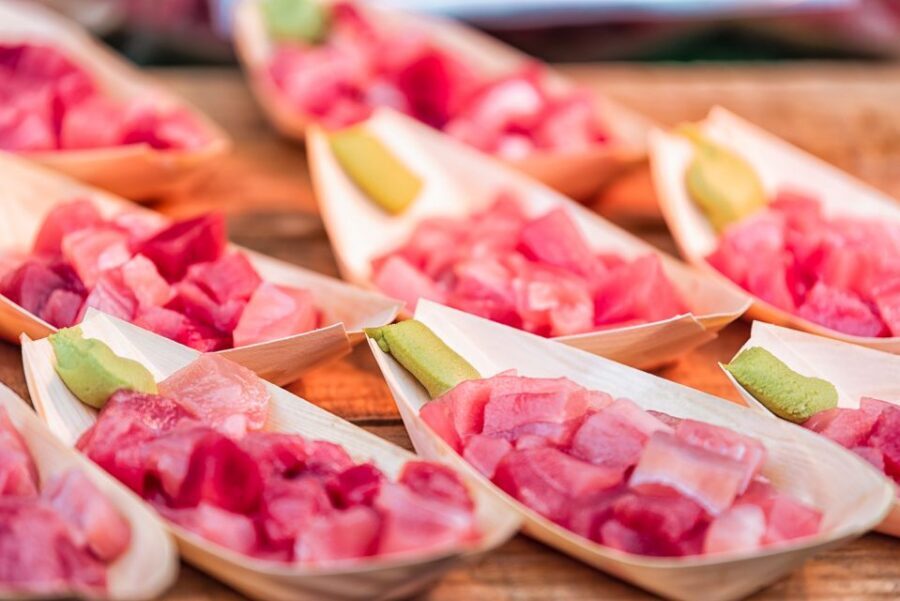
- Tsukiji Outer Market tastings: multiple stops for seafood and market foods you likely wouldn’t pick alone.
- Seasonal and regional variety: you’re not only tasting fish; you’re sampling across Japan’s flavors.
- Small-group format: limited to 10 participants, so questions and pace control are easier.
- English guide with real market confidence: guides like Yappy, Kay, and Sandra are repeatedly praised for navigation and practical recommendations.
- You’ll add context fast: the route includes a shrine stop with history to ground what you’re eating.
Finding Tsukiji at the right hour
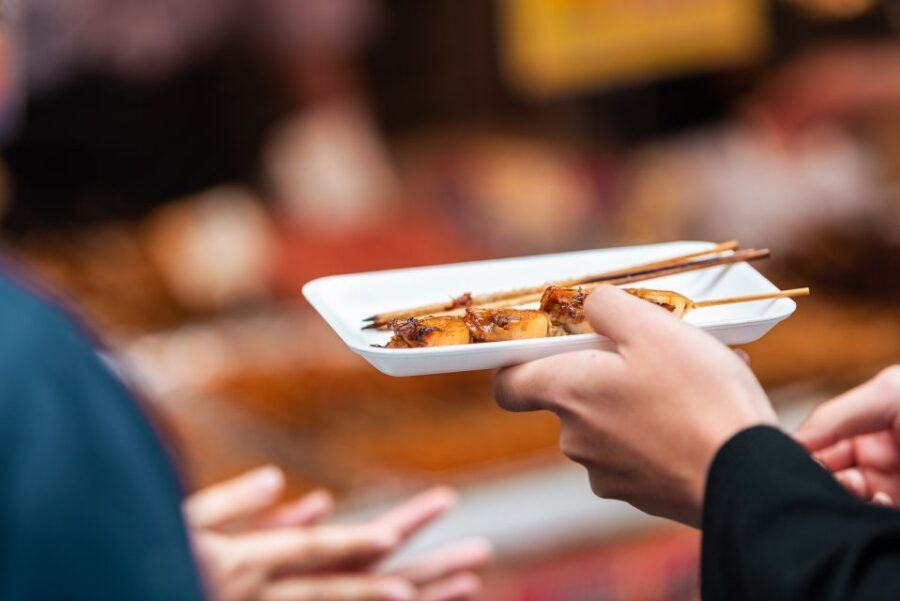
Tsukiji is one of those Tokyo places where timing matters. Go too late and the market vibe changes; go early and you get the energy when vendors are ready for customers and you can actually take in the sights without feeling completely swept away.
That’s exactly where this 3-hour classic breakfast tour works. You’re guided through the Tsukiji Outer Market area with a clear rhythm: eat first, then taste your way along the stalls. Most importantly, you’re not just looking at food. You learn how people buy and enjoy it—so when you come back later (or continue your day), you have a sense of what to look for and how to order.
The small-group size helps too. With up to 10 people, you’re not stuck behind a wall of strangers while the guide tries to explain what you should be tasting.
You can also read our reviews of more food & drink experiences in Tokyo

Meeting point and how to start without stress
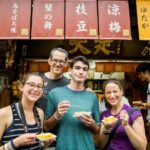
Your meeting point is Turret Coffee Shop in Tsukiji, near Exit 2. Your guide will be holding an Arigato Travel sign.
This matters more than it sounds. Tsukiji’s streets can feel confusing fast—narrow lanes, lots of foot traffic, and shops packed close together. Starting at the correct spot with an on-site guide avoids the most common early-morning travel problem: wandering around with your stomach already louder than the crowd.
Bring your passport as required, and wear comfortable shoes. Even if you’ve walked Tokyo before, this tour’s pace and the walking level are both set to “active morning,” not “casual stroll.”
The breakfast stop: why it’s more than a warm-up
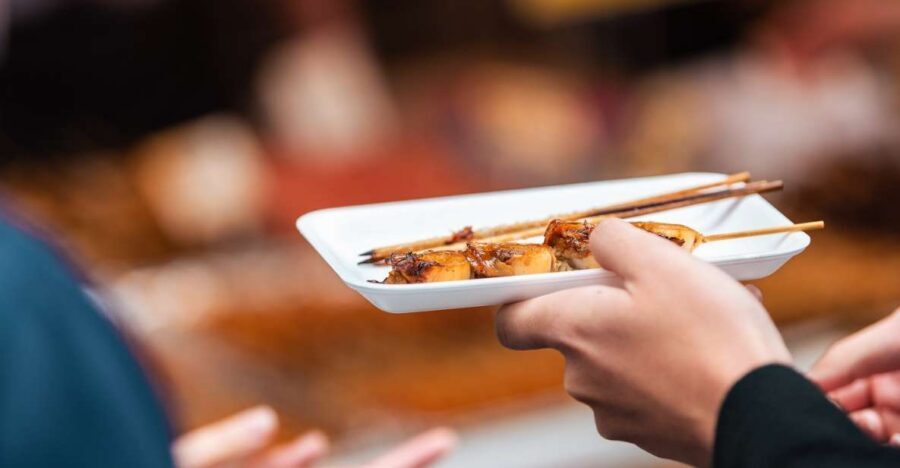
You begin with breakfast at a local restaurant, included in the price. The point here isn’t just that you get food right away. It’s that you get a Japanese meal structure before you start sampling market bites.
From guide-led examples mentioned in past tours, breakfasts can include grilled fish such as mackerel and black cod, along with miso soup and rice. One of the best parts is how the guide frames what you’re eating—why certain combinations make sense, how textures and saltiness work together, and what to pay attention to as you move on to the market.
If you’ve had trouble in the past ordering Japanese food without a plan, this breakfast anchor helps a lot. You’ll feel more oriented when you’re later faced with items you might not know the name of.
Also, you’re not leaving breakfast just full. You’re leaving breakfast with a better sense of what freshness should taste like. That makes the later tastings feel more meaningful instead of random.
Walking Tsukiji’s alleys with an English guide
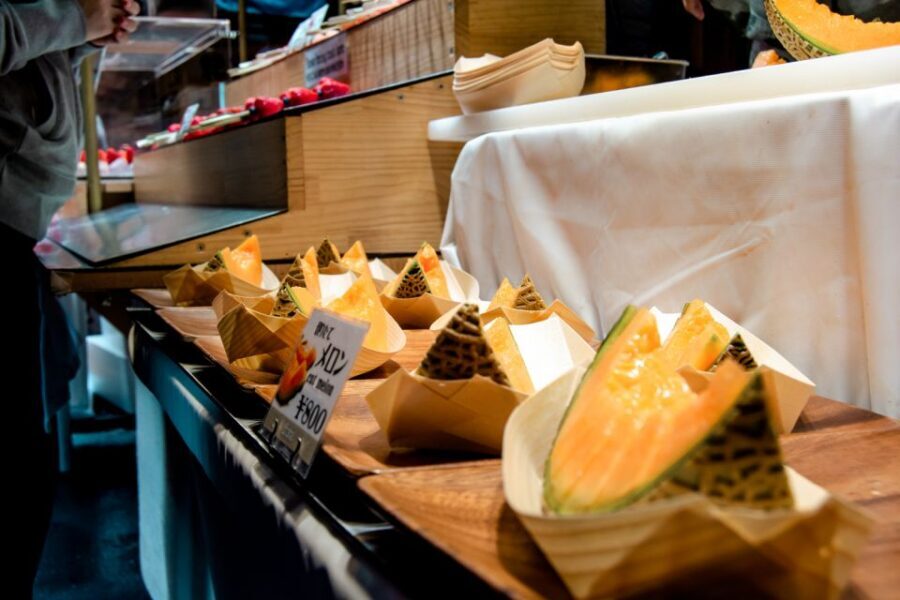
After breakfast, the tour shifts into the real Tsukiji experience: tasting and exploring the outer market area. This is where an English guide earns their fee, because the value isn’t only the food—it’s the decision-making.
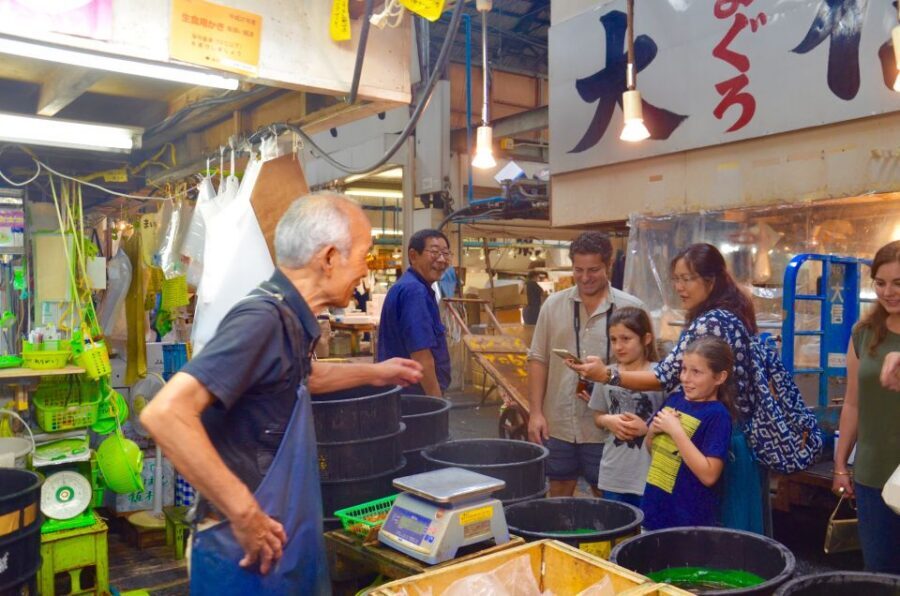
In multiple past tours, guides such as Yappy, Kay, Sandra, and Shigeki are praised for navigation through crowded lanes and for helping people taste things they wouldn’t easily choose on their own. That matters if you’re new to Japan, but it also matters if you’ve been before: Tsukiji can still feel overwhelming even when you know the basics.
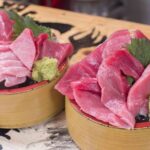
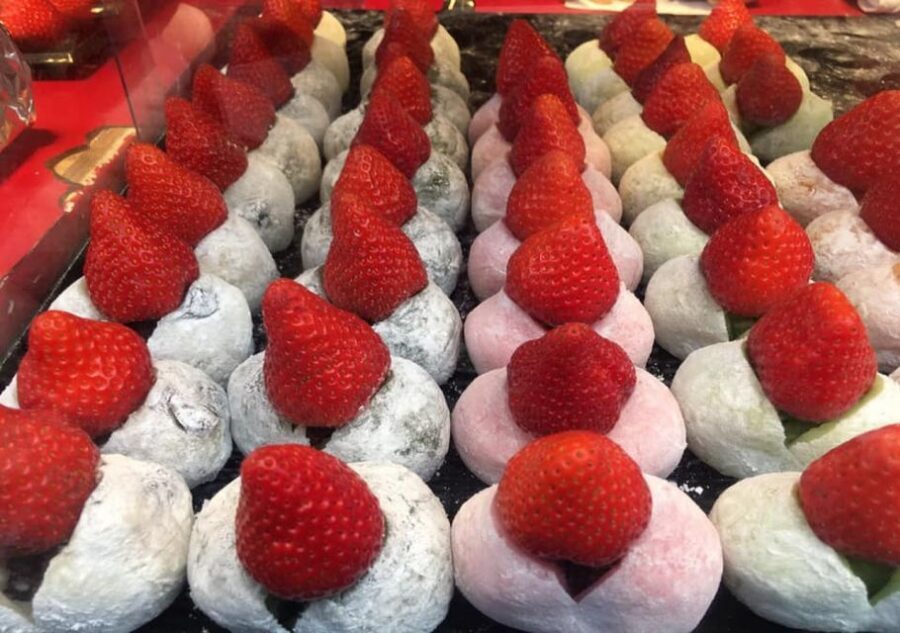
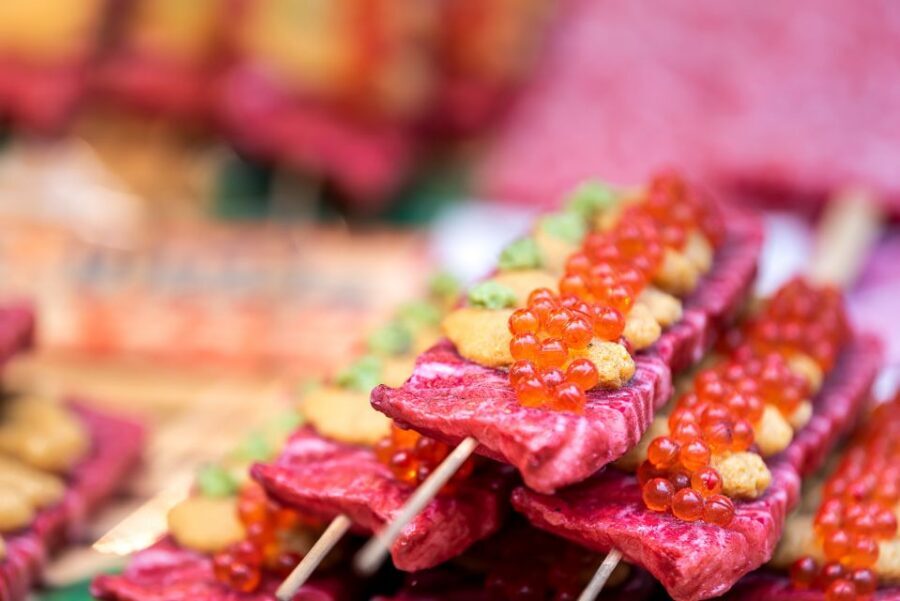
You should expect stops for fresh seafood-related bites, plus variety beyond raw fish. The tour also includes traditional Japanese sweets and regional/seasonal food from around Japan. In other words, it’s not a single-style tasting. You’ll sample different formats—hot and cold, savory and sweet—so you get a more complete picture of what this market feeds people with.
What you’ll taste (and why)
You’ll likely encounter items tied to seafood culture and market snacking. You may also get explanations around ingredients and how certain flavors are prepared.
One example that sticks out from past tours: a guide taking guests through how to grate fresh wasabi. That’s the kind of practical detail that turns a food tour from entertaining into useful. Once you understand how wasabi freshness changes the bite, you can better evaluate what you’re eating later in Tokyo.
And because this is a guided market route, you’ll also get help with buying patterns. One guide-style approach described in the past: learning and sampling during the morning, then doing shopping afterward (with guidance) to assemble an authentic lunch like a picnic of sashimi items. Not every tour will do exactly the same shopping outcome, but the bigger takeaway is clear: you’ll come away with the know-how to buy correctly.
A few more Tokyo tours and experiences worth a look



The shrine stop that adds real context
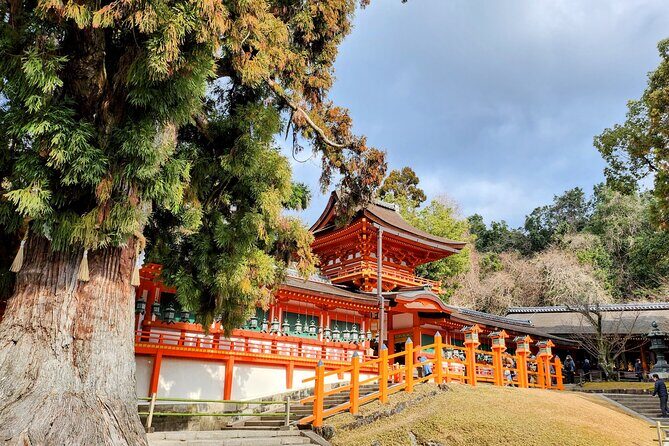
A food tour can feel shallow if it only focuses on eating. This one includes a stop at a shrine with more than 300 years of history, which helps tie the market experience to older Tokyo traditions.
I like this kind of detour because it changes your perspective. When you’re surrounded by seafood displays and vendor chatter, it’s easy to treat the market like a modern food theme park. The shrine stop slows you down just enough to remember there’s a deeper cultural layer to the area.
You’ll also get a chance to reset your senses between tastings. If you’re the type who gets overwhelmed by too many salty bites in a row, that pause can feel like a breather.
How long it really takes: 3 hours of steady momentum
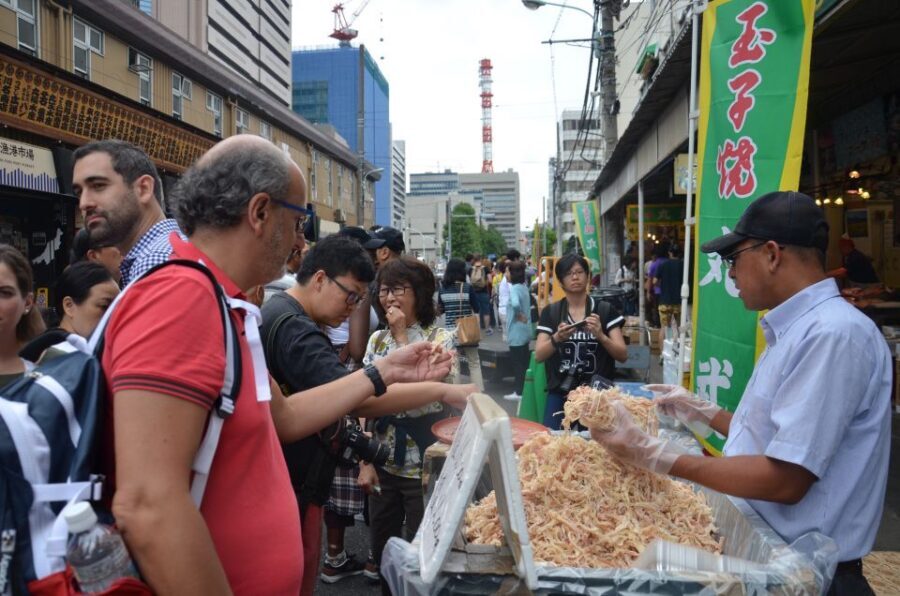
At 3 hours, this tour is designed to be efficient. You’re not scheduled for a half-day of casual market wandering. Instead, you’ll move through breakfast, tastings, sweets, and the shrine stop in a tight flow.
That’s why it’s so popular with both first-timers and repeat visitors: you can get a lot of Tsukiji context without losing your whole morning. It’s also why shoes matter. The “walking level advanced” note is there for a reason—you’ll be on your feet and navigating.
If you only like food tours where you can pause, linger, and read labels at your own pace, you might feel slightly rushed. One past experience noted that there could have been more time to walk around streets with kitchen shops. Keep that in mind and treat this as guided learning, not free exploration.
Price and value: is $181 worth it?
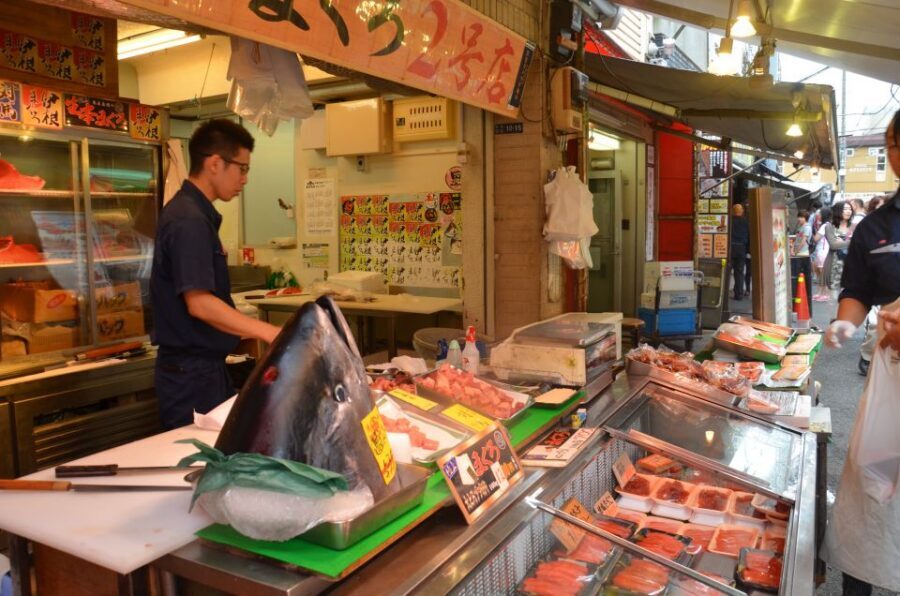
At $181 per person for 3 hours, this tour isn’t the cheapest way to eat in Tokyo. But it’s not priced like a casual street-food loop either.
Here’s the value logic that makes sense for this price:
- You get breakfast at a local restaurant (not just small bites).
- You get multiple tastings from the Tsukiji Outer Market area.
- You also get traditional sweets plus regional/seasonal food variety.
- You pay for an English live guide who handles navigation in tight alleys and helps you choose items confidently.
In practice, the guide is doing a lot of behind-the-scenes work: deciding what to stop for, timing your tastings, and keeping you oriented while you sample. If you tried to DIY this morning without a plan, you could still eat well—but you’d likely spend time guessing what to order, standing in lines without an obvious strategy, and missing the ingredients or preparation details that make the food experience click.
One more reality check from past tour experiences: people sometimes felt the tour was expensive for a small group (like four people). That tells you something important: this is best viewed as paying for expert guidance and tastings, not as a bargain.
Who this tour suits best (and who should rethink it)
This is a strong fit if you:
- Want a great introduction to Japanese food and culture
- Plan to eat in Tokyo but don’t want to struggle with menus and market navigation alone
- Like seafood and want a tour route focused on freshness and market specialties
- Enjoy a small-group format that stays interactive
It may be less ideal if you:
- Want lots of personal free time to wander without stopping for tastings
- Don’t handle early mornings or sustained walking well
- Prefer tours that are more relaxed and less structured
There’s also a practical fit note: you must have passport details for certain ages (especially for children aged 10 and above, where a copy is required). If you’re traveling with kids, check the age and supervision requirements before you go.
Tips to get more out of your Tsukiji morning
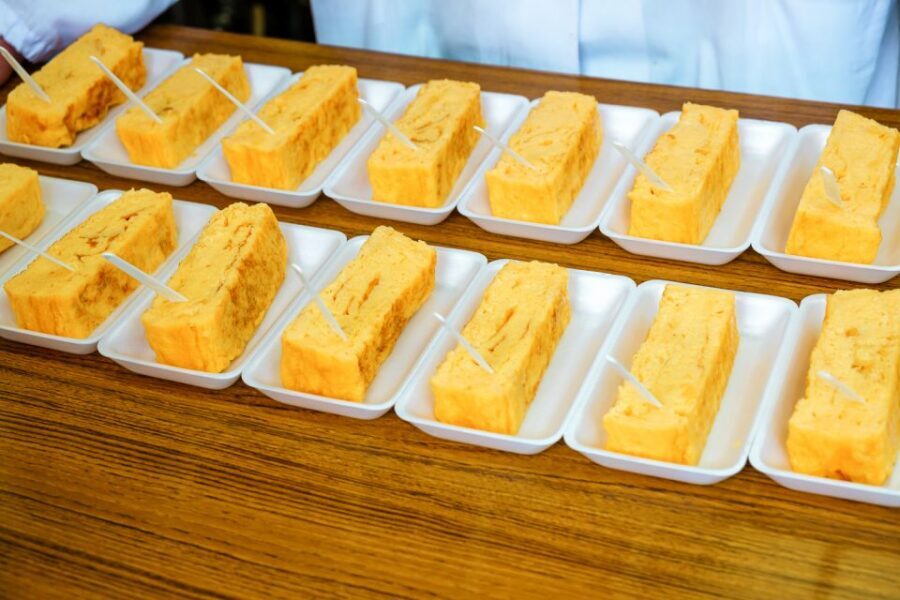
A few choices can make this tour feel smoother and more satisfying:
- Go in hungry. The tour includes breakfast and ample tastings, so you’ll do best if you don’t arrive already overfull.
- Wear shoes you can walk in for real. “Comfortable” here means supportive and non-slippery.
- Ask about how to enjoy what you’re tasting. The best guides explain not only what it is, but how to eat it.
- Use the guide for smarter shopping ideas. In past tours, guides like Yappy helped guests with recommendations beyond the market, including nearby shopping such as a historical knife shop when that interest came up.
- If you have phone-transit needs, ask your guide. One past experience specifically mentioned a guide helping set up Suica passes on phones. Not guaranteed for every guide, but it’s worth bringing up.
Should you book the Classic Tsukiji Breakfast Food Tour?
Book this tour if you want a structured, small-group way to learn Tsukiji through food: breakfast first, then market tastings, plus sweets and a shrine stop that gives you context. The English-guided navigation in tight lanes is the main selling point, and the consistently high feedback on guides like Yappy, Kay, Sandra, and Shigeki points to strong real-world execution.
Skip or reconsider it if you hate walking, you’re hoping for long independent time to browse, or you’re looking for a low-cost option. At $181, you’re paying for guidance and tastings—so if you value those, it’s a very reasonable bet for a Tokyo morning.