REVIEW · TAITO CITY
Tokyo: Karate Experience with Former All-Japan Champion
Book on GetYourGuide →Operated by Karate Comic Ryo · Bookable on GetYourGuide
Tokyo karate training starts with respect. In Ryo’s lesson, Ryo (a former all-Japan champion) guides you through manners and Kyokushin technique fundamentals, then rounds it out with safe practice that still feels real.
I especially like the step-by-step way you learn punches, blocks, and kicks, with clear stance work and correction when needed. I also like the mental side you practice first: bowing, deep breathing from your belly, and calm focus before anyone throws a strike. One thing to double-check before you go: the karate gi is included only if you book the PRIVATE/90min option with Karate Gi.
The format is built for different levels and ages, with English and Japanese support. Sessions run about 1 hour up to 90 minutes, with private or small-group options so the pace stays comfortable.
In This Review
- Key highlights worth caring about
- Meeting Ryo: what makes this Tokyo karate class feel legit
- The lesson flow: bowing, belly breathing, and stretching first
- Learning punches, blocks, and kicks without getting overwhelmed
- Pad work and non-contact kumite: real defense, safer practice
- Kata demonstration: patterns that connect the whole system
- Cost and value: is $58 worth it for 1–90 minutes?
- What to expect for beginners, kids, and experienced karate people
- Logistics that actually affect your day in Tokyo
- Should you book Ryo’s Tokyo karate session?
- FAQ
- How long is the karate experience in Tokyo?
- How much does the Tokyo karate experience cost?
- What will I practice during the lesson?
- Is the sparring contact-free?
- Do I get a karate uniform?
- What equipment is included?
- What languages does the instructor speak?
- Is this lesson good for beginners?
- Is this experience private or small-group?
- Can I cancel and get a refund?
Key highlights worth caring about
- Former all-Japan champion Ryo teaches rather than performs, so basics get attention
- Start-and-end bow etiquette and belly-breathing are taught as part of the training
- Stretching for hips, legs, shoulders, and chest comes before the strikes
- Kata demonstration shows patterns of techniques, not just random drills
- Non-contact kumite training builds defense skills without physical contact
- Punching/kicking pads and water are included for a practical workout
Meeting Ryo: what makes this Tokyo karate class feel legit
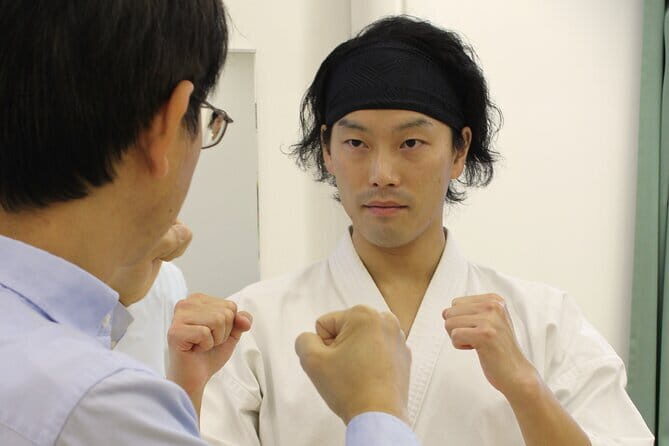
This isn’t a tourist show where someone tells you karate is cool and hands you a certificate. You’re training with a real instructor, Ryo, who has dedicated his life to Kyokushin Karate for 20 years. He’s not just a teacher in the abstract—he has real competition credentials: a 3rd-place finish at the KWU World Karate Championship (Bulgaria) in 2013, and an all-Japan championship in the Kyokushinkan International category (-80kg). He also passed his promotion exam for 2nd Dan in 2020.
What you feel in the room is that Ryo’s goal is understanding, not intimidation. He uses clear explanations, demonstrates techniques, and breaks movements into small chunks early on. That matters in a place like Tokyo, where it’s easy to assume you need to be “good” before you can participate. Here, the training is designed for beginners and for people who already do karate.
One more practical plus: the lesson is not only about hitting things. You’re also taught karate manners and the mindset behind the techniques. That turns the class from a workout into a cultural experience you can actually use.
You can also read our reviews of more tours and experiences in Taito City.
The lesson flow: bowing, belly breathing, and stretching first
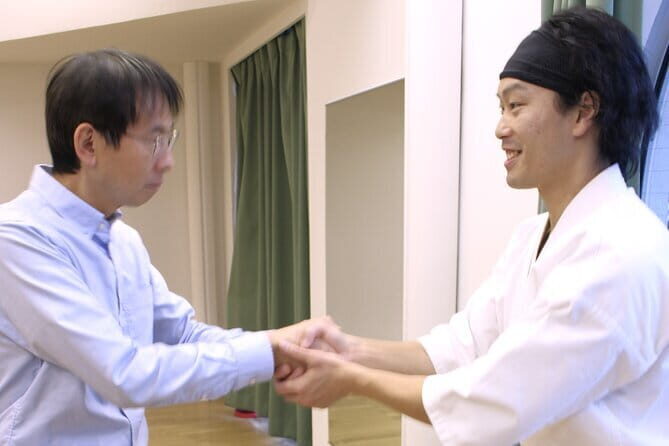
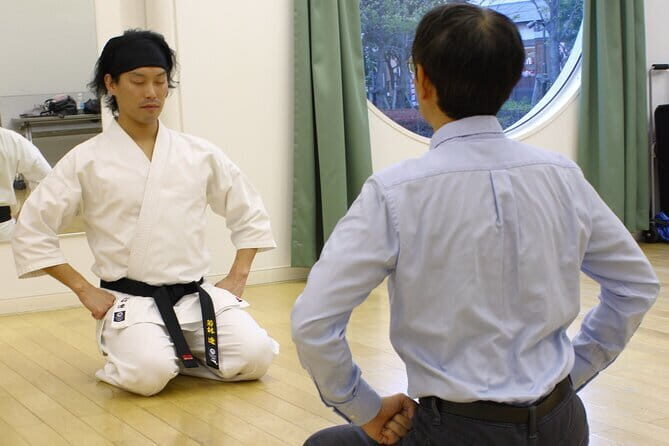
The session starts the way karate training is supposed to start: with bowing. You’ll learn the etiquette around it, including the idea that karate begins with a bow and ends with a bow. It’s simple, but it sets the tone fast. You stop treating the practice like a gym session and start treating it like training with rules.
Right after, you practice deep breathing from your belly. The purpose is focus and calm. You’re not doing breathing as a “wellness add-on.” You’re using it as a way to control your mind and your body so your stance and strikes feel more accurate.
Then comes stretching for the main areas you’ll use: legs, hip joints, shoulder blades, and chest. This is one reason the class works even if you’re not flexible. The instructor helps you get ready for the movements before you load your joints with kicks and strong stances.
If you’re someone who normally skips warmups, you’ll probably appreciate this part the most. It’s the difference between “I tried karate once” and “I can keep up and learn something.”
Learning punches, blocks, and kicks without getting overwhelmed
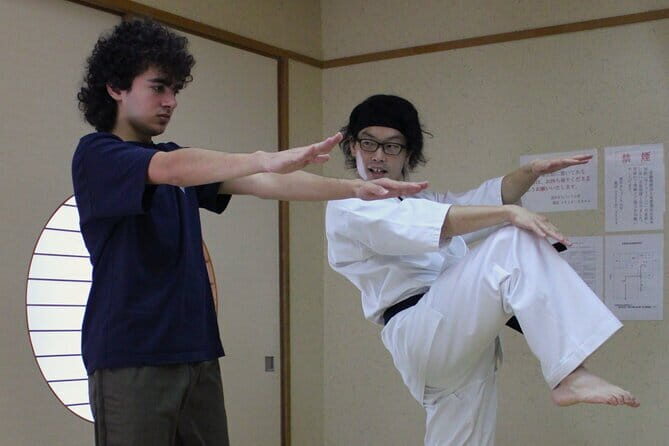
After warmup, you move into the core techniques: basic punches, blocks, and kicks, all built around proper stance. The training is structured so you don’t just watch and then copy. Each technique is divided into a few moves, so you can learn step by step.
When something needs fixing, Ryo demonstrates tips as necessary. That includes details like stance position, timing, and how to deliver the technique with control. In the feedback people shared after training, one pattern shows up again and again: Ryo pays attention to your movements and corrects you kindly and clearly.
The class pacing is also designed for mixed groups. One family mentioned bringing two boys (ages 8 and 10) and feeling confident they’d understand the instruction. Another parent noted that the pace helped their teen get comfortable, even when nervous at first. If you’re traveling solo and worried you’ll be the “slow one,” this style of teaching usually reduces that anxiety.
Pad work and non-contact kumite: real defense, safer practice
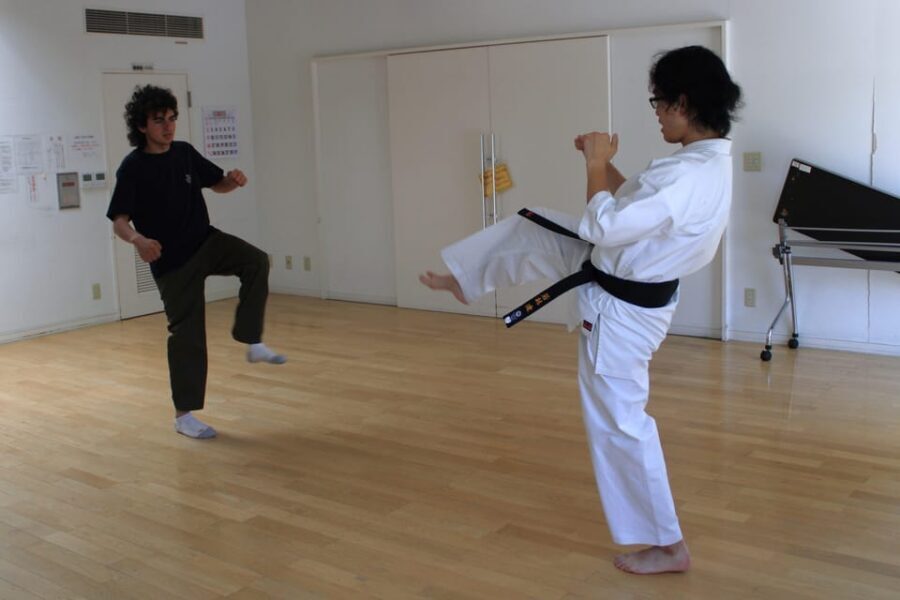
This is where the class becomes a workout. You’ll use punching and kicking pads, and you’ll practice the mechanics of strikes in a way that feels physical without being chaotic. Pads also help you learn power and placement—your focus stays on technique instead of wondering where the person in front of you will land.
Then you get kumite training, but with an important twist: it’s taught without physical contact. That means you can practice defense skills with reduced risk. Instead of worrying about injury, you can focus on the “how” and the “why.”
Ryo teaches defense against common attack types, including punches, front kicks, and low kicks. You’ll get tips aimed at maximum precision and efficiency. Even if you never plan to spar in a dojo, this is a useful travel skill: learning how to move, protect, and respond with clear body mechanics.
One of the best parts for many first-timers is that the training still feels like fighting practice. You don’t leave thinking, That was just stretching and etiquette. You leave thinking, I can defend and respond, even if only in a controlled, non-contact way.
Kata demonstration: patterns that connect the whole system
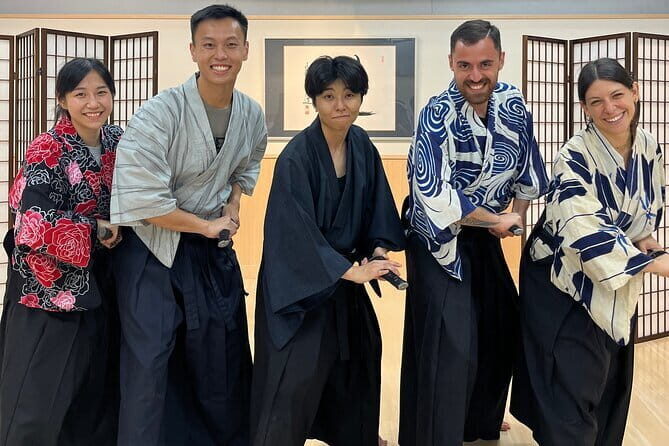
Kata is where karate stops being only about single techniques and becomes a system. In this experience, you get a kata demonstration showing patterns of a variety of karate techniques.
Even when you’re brand new, kata can help you connect the dots. A punch or block isn’t random—it’s part of a sequence with intent. Kata patterns also show how angles, stances, and timing combine into one coordinated idea.
Some guests also compared their own styles to what they learned here. If you’ve trained something like Goju Ryu or Shotokan, you’ll likely enjoy noticing what changes in posture, timing, and emphasis. If you’re completely new, kata can still be valuable, because it gives you a mental map of how the lesson’s techniques fit together.
One guest even highlighted board breaking as an empowering moment. That’s not listed as a guaranteed element of every session, so treat it as something you might see depending on the flow of your class and the instructor’s setup. Still, it’s a good example of how the session can go beyond basics without being unsafe.


Cost and value: is $58 worth it for 1–90 minutes?
At $58 per person, this sits in the “this is affordable for a real instruction session” category. You’re not paying for a broad overview. You’re paying for a guided lesson that includes training components (warmup stretching, basic technique breakdown, pads, kata demonstration, and non-contact kumite) plus an instructor with high-level Kyokushin experience.
Your value improves if you:
- learn best through hands-on coaching (not just watching),
- want structured instruction rather than freestyle practice,
- care about etiquette and focus, not only kicks.
Also, you’re getting water included and equipment in the form of pads. That’s small, but it matters when you’re traveling and trying to pack light.
One cost-related detail to watch: the karate uniform is included only with the PRIVATE/90min session option that specifies Karate Gi. If you book a session without that option, you’ll want to plan for the possibility you’ll be training in your regular workout clothes. (One participant specifically flagged a misunderstanding on this point, so it’s worth checking your booking choice before you arrive.)
What to expect for beginners, kids, and experienced karate people
This class is built for both beginners and experienced practitioners. That doesn’t just mean “you won’t be yelled at.” It means the technique instruction is step-by-step, and the training includes manners, warmup, and safe sparring basics.
For kids and teens, the most important factor is comfort. Multiple people shared that Ryo explains clearly enough for young students to understand, even with English as the teaching language. That’s huge if you’re traveling with family and want your child to enjoy the session rather than stare nervously at the floor.
For experienced karate students, the value is in seeing how Kyokushin approaches the same building blocks. Guests noted learning useful differences compared with styles like Goju Ryu and Shotokan. You can use those differences to refine your own technique or simply add perspective.
If you’re a martial arts fan coming from Muay Thai, you’ll probably appreciate the contrast too. One guest compared the two and enjoyed seeing how the kicking and stance work translates differently in karate training.
Logistics that actually affect your day in Tokyo
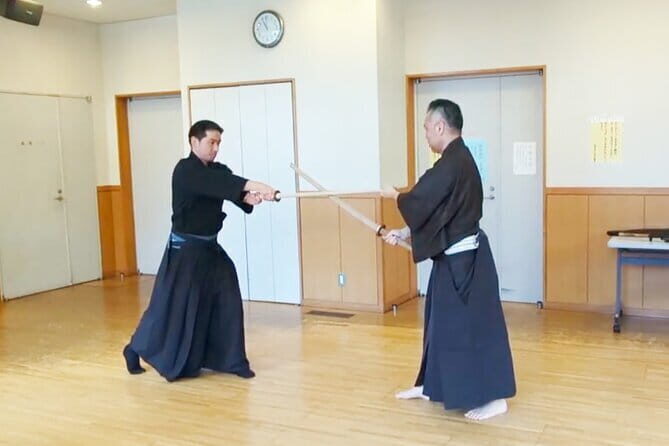
Timing is flexible: duration is listed as 1 hour to 90 minutes, depending on the session option and availability. You’ll also have choices for private or small groups, which helps if you want more direct correction or you’re traveling with family.
Meeting points can vary depending on the option you book, so don’t plan your next activity too tightly right after. Build in a buffer.
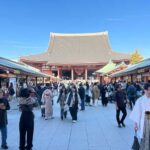
Where the session happens can matter if you’re sightseeing. One guest mentioned it’s in central Asakusa, which is convenient if you’re already spending time walking the older Tokyo streets and keeping your travel radius tight.
Should you book Ryo’s Tokyo karate session?
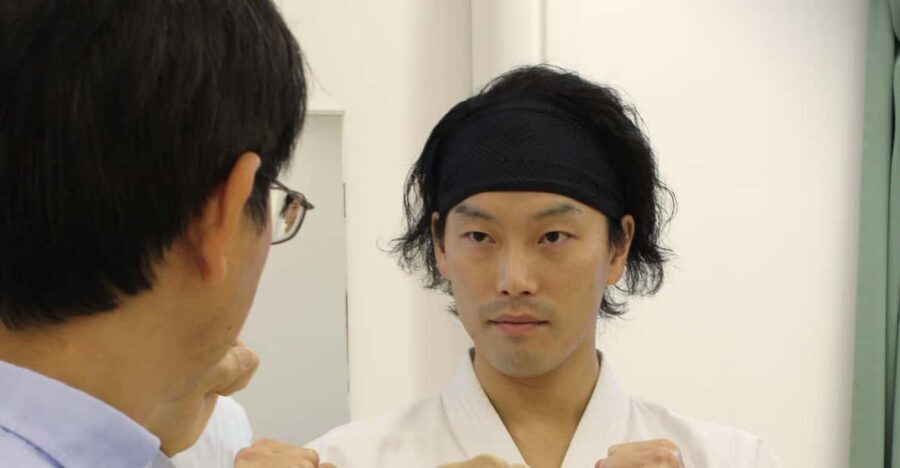
Yes, book it if you want a hands-on karate experience that’s not performative. You’ll get real instruction: bowing etiquette, belly breathing, stretching prep, step-by-step punches/blocks/kicks, kata demonstration, pads, and non-contact kumite for practical defense.
Skip or reconsider if you’re only looking for a passive cultural experience with photos. This is training time. You’ll move, sweat, and focus on technique.
The smart way to decide is simple: if you want to leave with better body control and a deeper sense of karate basics, this is one of the best-value ways to do it in Tokyo—especially because Ryo teaches with enough structure that beginners don’t get lost.
FAQ
How long is the karate experience in Tokyo?
The experience duration is listed as 1 hour to 90 minutes, depending on availability and the session option you choose.
How much does the Tokyo karate experience cost?
The price is $58 per person.
What will I practice during the lesson?
You’ll practice bowing etiquette, deep belly breathing, stretching, basic punches, blocks, and kicks with proper stance, and defense training through non-contact kumite. You’ll also see a kata demonstration.
Is the sparring contact-free?
Yes. The kumite training is taught without physical contact so everyone can practice with less risk of injury.
Do I get a karate uniform?
A karate uniform is included if you select the PRIVATE/90min Session with Karate Gi option when booking.
What equipment is included?
Punching and kicking pads are included, and you’ll also get a bottle of water.
What languages does the instructor speak?
Instruction is available in English and Japanese.
Is this lesson good for beginners?
Yes. The lesson is designed for both beginners and people who already have karate experience.
Is this experience private or small-group?
You can choose private or small groups, depending on the option you book.
Can I cancel and get a refund?
Free cancellation is available up to 24 hours in advance for a full refund.