REVIEW · NARA
Nara Highlight Walking Tour with Furoshiki Experience with Lunch
Book on Viator →Operated by Japan Wonder Travel · Bookable on Viator
Nara moves fast if you try to do it alone. This small-group Nara Highlight Walking Tour pulls you through the big UNESCO names, plus a hands-on furoshiki moment and lunch. You’ll get to see Kasuga Taisha and Todai-ji without wrestling with routes, and I really like how the pace stays human. Another strong point is the personal feel: when I saw how the guide worked with a tiny group, it felt like actual attention, not radio guidance.
For a possible drawback, plan for extra walking and one extra cost: the itinerary notes a bus fee (¥500) that isn’t included. If you’re hoping for zero transit at all, this is worth keeping in mind before you book.
Key tour highlights at a glance
- UNESCO and Shinto-heavy route: Kasuga Taisha, Todai-ji, and more stop-and-learn structure
- Hands-on furoshiki workshop: wrap your own cloth and take it home
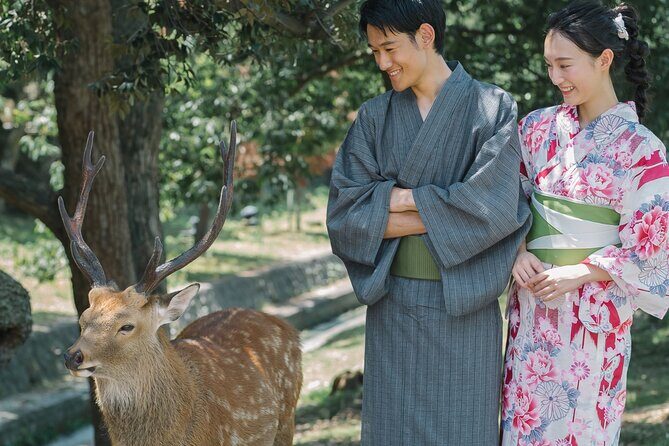
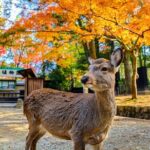
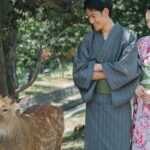
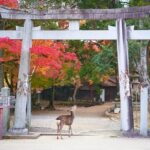
- Deer time in Nara Park: free-roaming deer are part of the experience
- Traditional lunch included (most options): Japanese lunch with freshly cooked rice and seasonal vegetables
- Small group (max 7): you’re not lost in a crowd
- Admission fees covered: temple and shrine tickets are included
In This Review
- Starting with a classic Nara welcome: the route from Hígyō Bosatsu
- Kasuga Taisha: the lantern forest effect
- Tamukeyama Hachimangu: a small shrine with a clear job
- Nigatsu-do inside the Todai-ji world: Omizutori timing
- Todai-ji and the Great Buddha: why scale hits different
- Lunch with Nara flavor at Shika no Fune Mayu
- Furoshiki wrapping workshop: the best souvenir is the skill
- Naramachi’s Nigiwai-no-Ie house: a calmer end to the day
- Price and value for a 5.5-hour UNESCO day
- What a small group of 7 changes for your day
- How to get the most from the deer and the walking
- Who should book this Nara highlight walking tour?
- Should you book it?
- FAQ
- What is the tour duration?
- Does the tour include lunch?
- Is furoshiki wrapping included?
- Are temple and shrine entrance fees included?
- Where does the tour start and end?
- Is the bus fee included?
Starting with a classic Nara welcome: the route from Hígyō Bosatsu
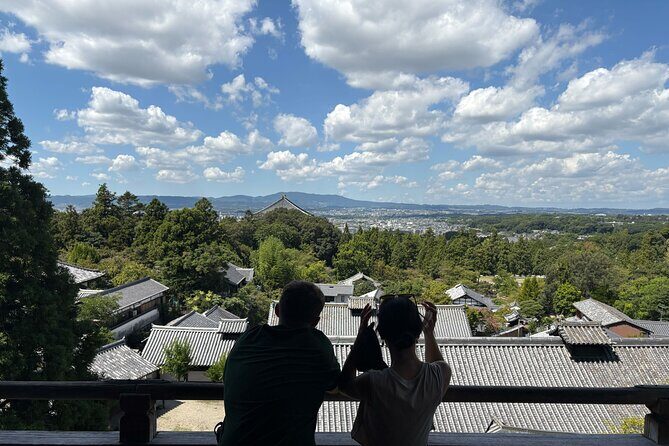
This tour starts at 行基菩薩像 in Higashimuki Nakamachi, Nara. From there, you’re set up for an easy-to-follow day: temples, shrines, old-town atmosphere, and then a practical break for lunch and crafts.
What I like about the meeting setup is that it keeps you inside the action from the beginning. And it ends in the shopping district area around Nakatanidou, which is handy because it’s close to JR Nara Station and Kintetsu Nara Station for your next move.
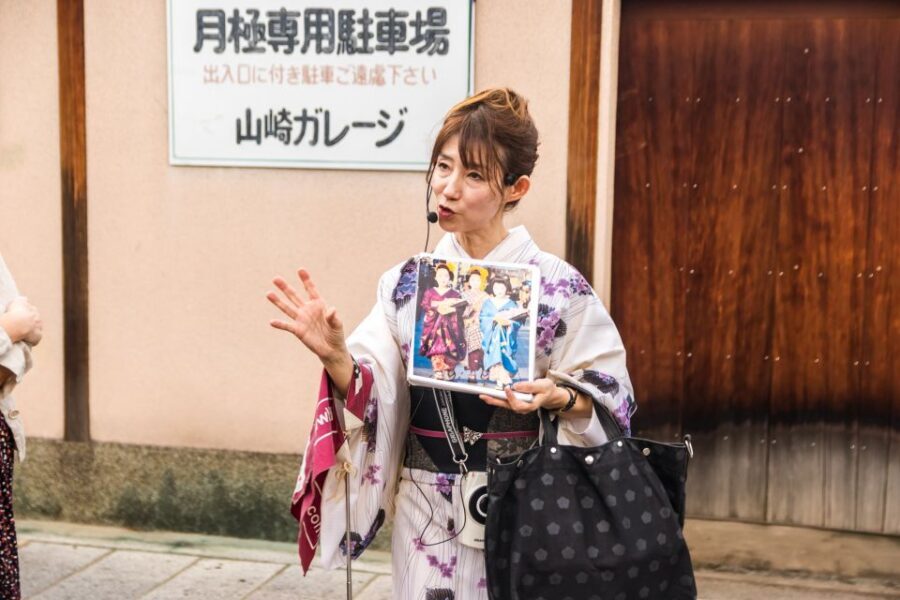
The group size matters here. With a maximum of 7 travelers, you’ll spend less time waiting around and more time actually looking at what you came for. And if you get a guide like Keiko, you’ll likely appreciate the extra context—she’s mentioned as staying engaging even when the group was as small as two.
Kasuga Taisha: the lantern forest effect
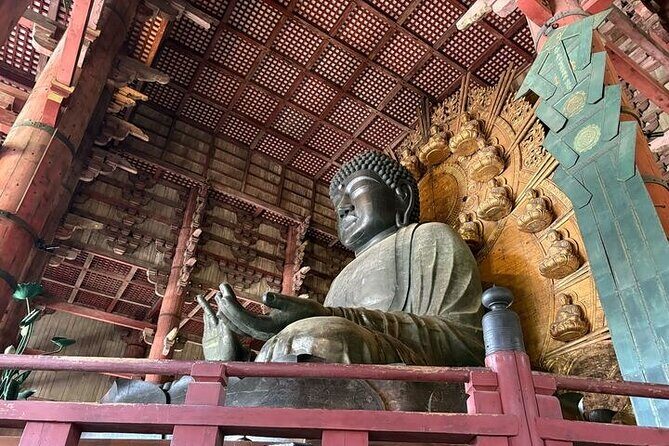
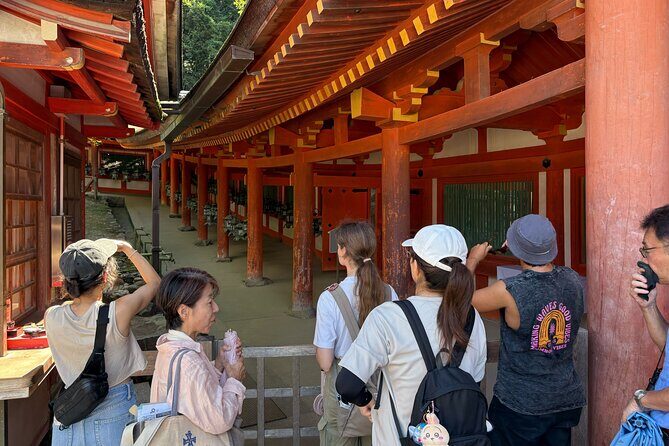
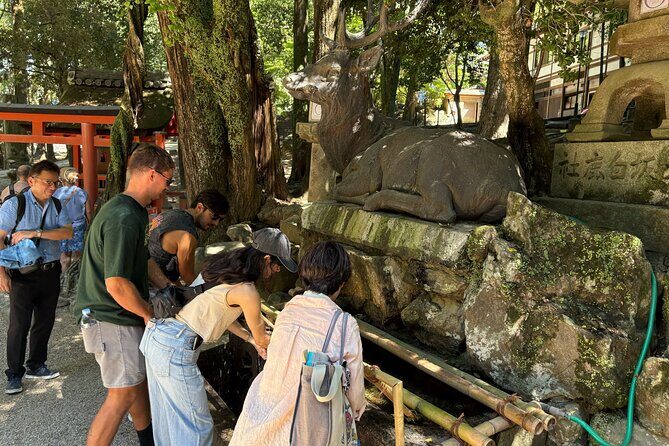
Your first stop is Kasuga Taisha, a major Shinto shrine in Nara. It dates back to 768, and the big visual clue is the sheer number of bronze and stone lanterns that line the grounds.
Kasuga Taisha’s lanterns aren’t just decoration. They’re tied to long-running tradition, and the shrine is especially known for lantern lighting during special festivals. Even if you’re not visiting on a festival day, you still get the sense of why this place has such a devoted following.
Time here is short—about 20 minutes—so don’t plan to read every plaque and photograph every inch. Instead, aim for the overall feeling: the lantern density, the shrine approach, and the way the architecture and setting work together.
Tip for your photos: if you want a cleaner shot, take one moment to step away from the main foot traffic before the group moves on. It’s a small habit that makes a big difference in Nara.
You can also read our reviews of more walking tours in Nara
Tamukeyama Hachimangu: a small shrine with a clear job
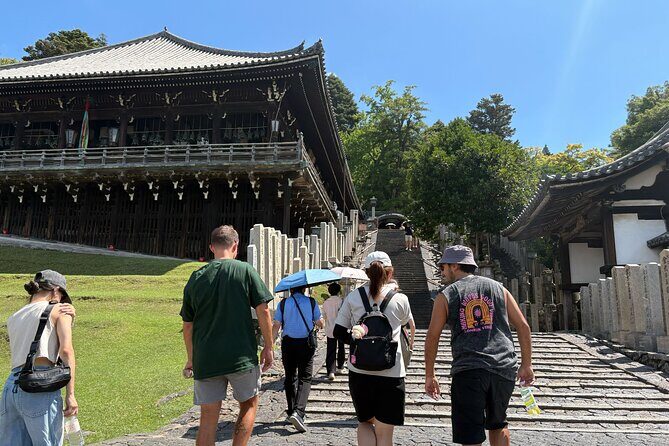
Next you’ll visit Tamukeyama Hachimangu, a smaller Shinto shrine built in 749. It’s dedicated to Hachiman, the god of war and protection, and the key point for your visit is its relationship to keeping watch over the nearby Great Buddha Hall of Todai-ji.
This stop works well because it adds a practical layer to what you’ll see later. Todai-ji is famous for its scale, but Shinto shrines like Tamukeyama help explain how spiritual life in Nara isn’t limited to one religion or one building type. It’s all interwoven through place, protection, and patronage.
You’re given about another 20 minutes here, so treat it like a “pause and recalibrate” stop. Look at the shrine’s position and imagine it serving as a guardian presence for the larger complex nearby.
Nigatsu-do inside the Todai-ji world: Omizutori timing
After Kasuga Taisha and Tamukeyama Hachimangu, the tour shifts into the Todai-ji orbit with Nigatsu-do Temple (often referred to as a hall within the Todai-ji complex). This stop focuses on the Omizutori (Water-Drawing) ceremony, held every March and described as over 1,250 years old.
Even if you aren’t visiting in March, the stop is still valuable because it gives you a time anchor. You’ll start noticing that many famous Japanese sites are not just about what they look like, but also about the traditions that keep running through centuries.
This is also a “short and meaningful” stop at about 20 minutes, and the ticket is free for this specific part of the experience. You’re not losing time by stopping; you’re getting a context clue that will make Todai-ji feel more alive when you reach the Great Buddha.
Todai-ji and the Great Buddha: why scale hits different
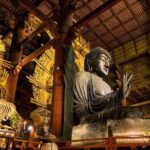
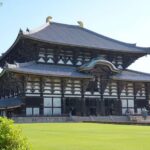
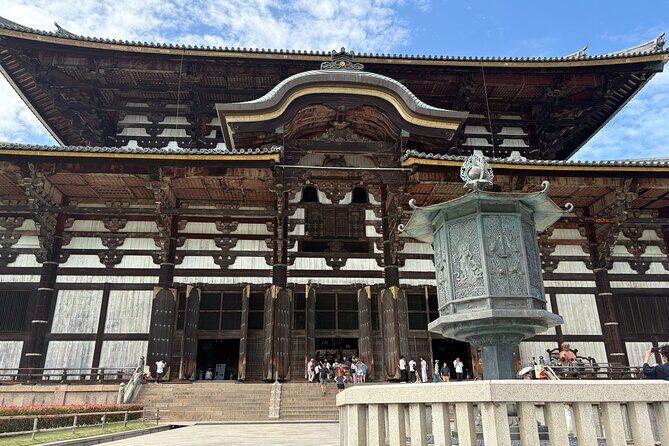
Now you reach the centerpiece: Todai-ji Temple, built in the 8th century. It’s a UNESCO World Heritage site and home to the Great Buddha, one of the largest bronze statues in the world.
When people say something is massive, they often mean it figuratively. Here, the scale becomes physical. The Great Buddha Hall isn’t something you can truly “get” from a quick snapshot. You need a little time to let your eyes adjust to the size relationship between the statue, the hall, and the people.
You’ll have about 40 minutes at Todai-ji, and that’s a good amount for a guided highlight visit. Use the time to:
- Look for the statue from different angles as you move with the group
- Notice the hall space around the Buddha rather than only the Buddha itself
- Listen for the guide’s framing of what makes it historically important (especially because this temple is at the center of Nara’s identity)
Entrance ticket for Todai-ji is included, so you’re not paying separately for this major stop. That’s part of the value of the tour format: your day stays predictable.
Lunch with Nara flavor at Shika no Fune Mayu
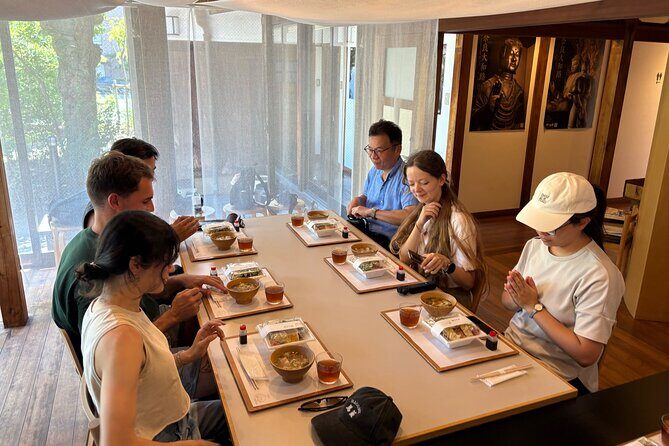
Lunch happens at Shika no Fune Mayu. This is the kind of practical break that makes a walking day work. You don’t get a token bite; the lunch is described as a traditional Japanese meal, including freshly cooked rice and seasonal vegetables from Nara.
A quick note: the tour info says lunch can depend on the option, and Wednesday is not included. So before you book, double-check your exact option if your travel date includes a Wednesday. If your lunch is included, it’s one of the best “keep it authentic” parts of the whole day—this isn’t just filling, it’s local rhythm.
If you’re a photo person, eat first, then photograph. Restaurants around tourist areas can be busy, and people often rush after the first course. A calmer move is to enjoy the rice and vegetables, then let your camera work when the room settles.

Furoshiki wrapping workshop: the best souvenir is the skill
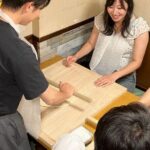
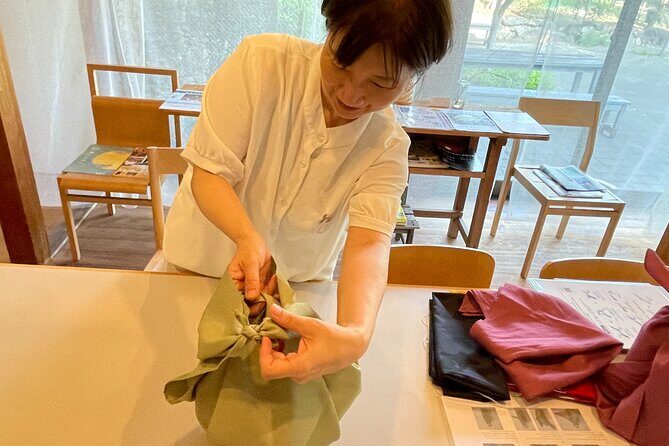
After lunch, you’ll do a furoshiki wrapping experience. You take your own cloth home, which is a smart souvenir choice because it doesn’t add weight like some mugs or keychains.
Furoshiki is more than craft time. It’s a window into everyday Japanese habits: wrapping, reusing fabric, and turning a simple square of cloth into something functional. In a tour like this, the workshop is also a nice mental reset between big monuments and old-town walking.
A detail that matters for your planning: the furoshiki component can depend on the option. If you specifically want the workshop and a take-home cloth, confirm that your booking includes it.
What I like most is that it gives you something to do with your hands during a day that otherwise lives in your eyes. It slows you down in a good way.
Naramachi’s Nigiwai-no-Ie house: a calmer end to the day
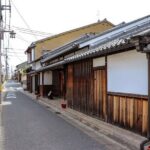
The last cultural stop is Naramachi Nigiwai-no-Ie in the old Naramachi district. This is a historic townhouse area that was built in 1917 by an antique dealer and is now a Registered Tangible Cultural Property.
Time here is short—about 15 minutes—but it’s a strong way to end. Todai-ji and Kasuga Taisha are about monuments and scale. Naramachi is about everyday spaces: the kinds of buildings people lived and worked in, and the lingering atmosphere of an older Nara streetscape.
This stop also helps your brain organize the day. After shrines and temples, your eyes need a softer landing. Old-town corners do that well.
Price and value for a 5.5-hour UNESCO day
The price is $37.00 per person for an experience around 5 hours 30 minutes. That might sound low for a day that includes major temples, at least one structured cultural workshop, and a traditional lunch (depending on option).
Here’s what you’re really paying for: convenience plus included admissions. The tour includes entrance fees for the temples and shrines on the route, plus an English-speaking local guide. That matters because the day’s most expensive parts are often the admission tickets and the time wasted figuring out where to go next.
The main “cost you still need to budget” is the bus fee of ¥500 per person, which is not included. Also watch the lunch note if your date falls on Wednesday. If your option includes lunch and furoshiki, the value feels especially solid for a guided, small-group Nara day.
In plain terms: if you want a Nara highlights route without the stress of planning, this is priced like a smart option.
What a small group of 7 changes for your day
A lot of sightseeing tours promise personalization. Here, the tour is capped at 7 travelers, which tends to show up in small practical ways.
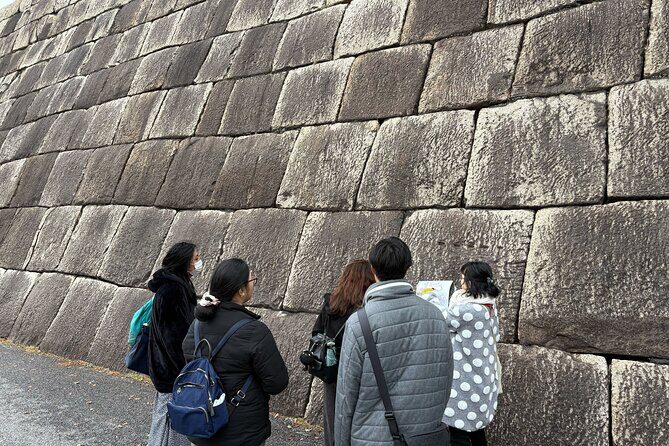
First, your guide can pace you. That sounds obvious, but when you’re moving between places like Kasuga Taisha and Todai-ji, the flow of people can be unpredictable. A smaller group makes it easier to stop, look, and move without getting trampled by the next wave.
Second, it supports better listening. If you’re the type who likes context—why a shrine exists, why a ceremony matters, why a temple is UNESCO-level—you’re less likely to feel like you’re hearing fragments.
There’s also a useful clue from how this experience has been described: Keiko is credited with keeping even a very small group engaged and offering thoughtful insight. That’s the difference between a checklist walk and a guided day where you actually understand what you’re seeing.
How to get the most from the deer and the walking
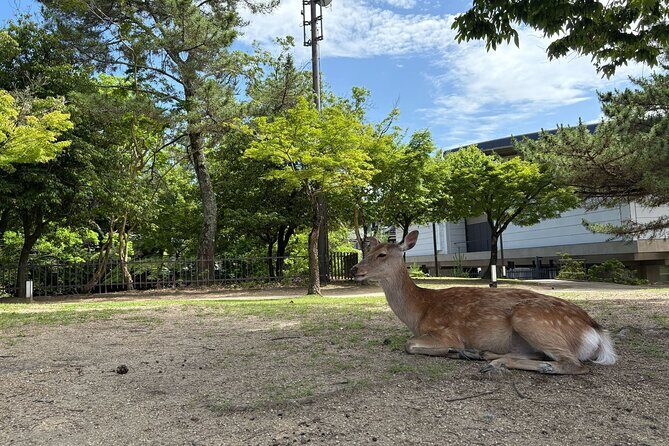
Nara Park is part of the story here. You’ll meet and interact with Nara’s free-roaming deer, and that adds fun and chaos in equal measure.
I suggest you go with a calm plan:
- Keep your snacks secured and follow your guide’s lead
- Don’t surprise the deer by reaching suddenly toward them
- Watch your footing near crowds and footpaths
And since it’s a walking tour, wear shoes you can trust. You’ll be stepping through several landmark areas in one day, plus time in old-town streets.
If you’re carrying a bag, keep hands free when possible. It helps when you move through temple precincts and when you do the furoshiki workshop later.
Who should book this Nara highlight walking tour?
You’ll likely enjoy this tour if you:
- Want UNESCO sights without building a complex route yourself
- Like a guided day with an English-speaking local guide who explains more than just facts
- Prefer a small group over large bus crowds
- Want a hands-on craft element with a take-home item (furoshiki)
- Appreciate a planned lunch stop so you don’t waste time hunting for food
You might consider a different option if:
- You’re trying to minimize walking and transit costs (there can be an extra bus fee)
- You’re traveling on a Wednesday and your chosen option doesn’t include lunch
- You only want the biggest monument photo ops and would rather go independently
Should you book it?
If you want a well-paced Nara day that mixes Kasuga Taisha, Todai-ji, deer time, and a real craft workshop, I think this is a strong buy. The $37 price works especially well because admissions and guidance are handled, and the small group limit keeps the experience from turning into a stampede.
My “green light” is strongest if you care about getting context while you walk, and if you’ll actually use the furoshiki skill as a souvenir (not just a photo prop). Just double-check your option if lunch on your travel day matters, and budget the potential ¥500 bus fee.
FAQ
What is the tour duration?
The tour runs about 5 hours 30 minutes (approx.).
Does the tour include lunch?
Lunch is listed as a traditional Japanese meal, but it depends on the option. The info also notes that Wednesday lunch is not included.
Is furoshiki wrapping included?
The furoshiki wrapping experience depends on the option. If it matters to you, confirm your specific booking includes it.
Are temple and shrine entrance fees included?
Yes. Entrance fees for the temples and shrines on the route are included.
Where does the tour start and end?
It starts at 行基菩薩像27 Higashimuki Nakamachi, Nara and ends around Nakatanidou29 Hashimotochō, Nara, near the shopping district and accessible to JR Nara Station and Kintetsu Nara Station.
Is the bus fee included?
No. A bus fee of ¥500 per person is listed as not included.