REVIEW · NARA
Nara: Great Buddha, Kasuga Shrine & Deer Park Tour
Book on GetYourGuide →Operated by DeepExperience, Inc. · Bookable on GetYourGuide
Deer, lanterns, and a giant Buddha. This 3-hour guided run through Nara hits the big emotional notes fast: feeding the sacred deer with shika senbei and walking Kasuga Taisha’s lantern-lined grounds in a forest that feels separate from the city. You also get a professional guide who helps connect the dots between Shinto and Buddhism, not just a checklist of stops. The main catch is simple: it is a short window with a lot of walking and some stairs, so you’ll want to plan for your legs.
The route is packed, so if you’re the type who likes long breaks, slow wandering, and zero time pressure, comfortable shoes and a realistic pace matter. On hot or rainy days, that effort is what can turn a great afternoon into a tiring one, even though the tour’s whole point is to make the most of limited time.
In This Review
- Key highlights at a glance
- Meeting at Himuro Shrine and Getting Oriented Fast
- Nara Park and Shika Senbei: The Sacred Deer Moment
- Kasuga Taisha: Lantern Paths Under Centuries of Devotion
- Todai-ji and the Great Buddha Hall (Daibutsuden)
- How Shinto and Buddhism Land Together in One Afternoon
- Walking Pace, Weather Reality, and What to Bring
- Price and Value: Why $77 Can Feel Fair Here
- Who This Tour Suits Best in Nara
- Should You Book This Nara Great Buddha, Kasuga Shrine & Deer Park Tour?
- FAQ
- Where is the meeting point for the tour?
- What stops are included in the 3-hour experience?
- What admissions are included?
- Are deer crackers provided?
- Is transportation to and from the meeting point included?
- Can I cancel for a full refund?
Key highlights at a glance
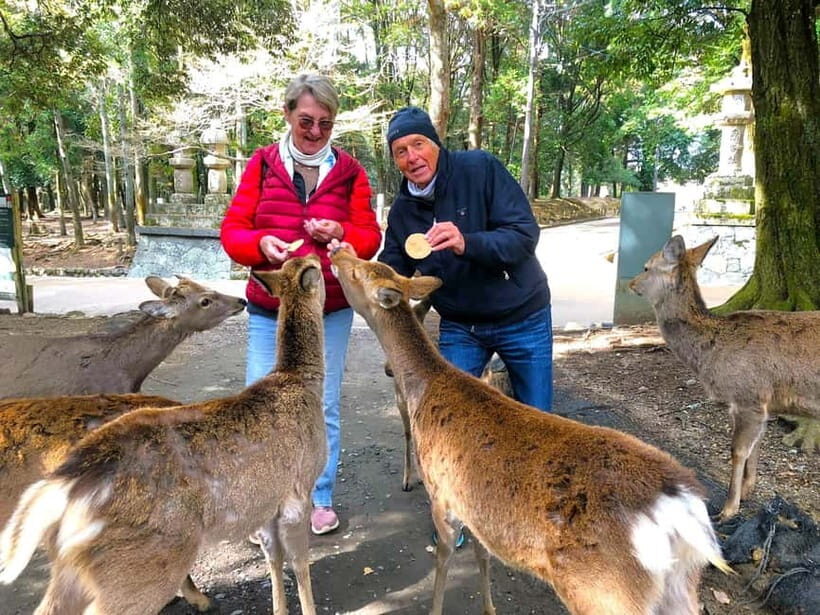
- Sacred deer moments in Nara Park with deer crackers (shika senbei)
- Kasuga Taisha’s lantern culture tied to generations of worshippers
- Todai-ji’s Daibutsuden scale and the colossal bronze Great Buddha
- World Heritage sites in one clean loop with guided context
- Private or small-group feel so you can ask questions and move at a human pace
Meeting at Himuro Shrine and Getting Oriented Fast
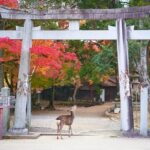
Your tour starts in front of the Torii gate of Himuro Shrine, where the guide holds a yellow sign with the DeepExperience logo. Starting at a shrine entrance matters more than you’d think. It sets the tone right away: you’re not just sightseeing Nara; you’re stepping into its spiritual geography.
From there, the tour flows into Nara Park first. That’s a smart opening because Nara Park is open and forgiving. It gives you time to settle in before the denser shrine and temple spaces kick in. Also, Nara Park is where the city’s famous character shows up immediately: deer roaming freely, as part of the sacred Shinto story tied to Kasuga Taisha.
You can also read our reviews of more tours and experiences in Nara.
Nara Park and Shika Senbei: The Sacred Deer Moment
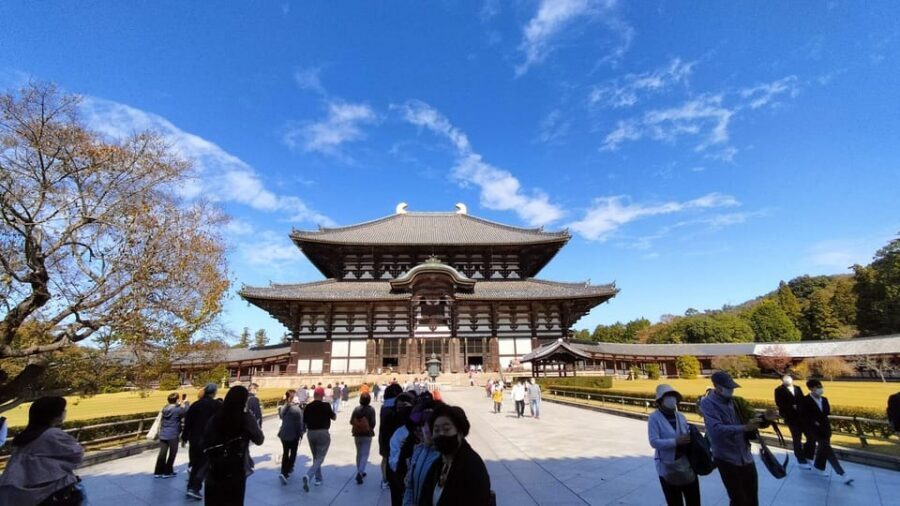
Nara Park is big, green, and famous for a reason: it’s where nature and religion overlap in a very practical way. The deer are considered sacred messengers in Shinto belief, and your guide explains that connection as you walk through the park.
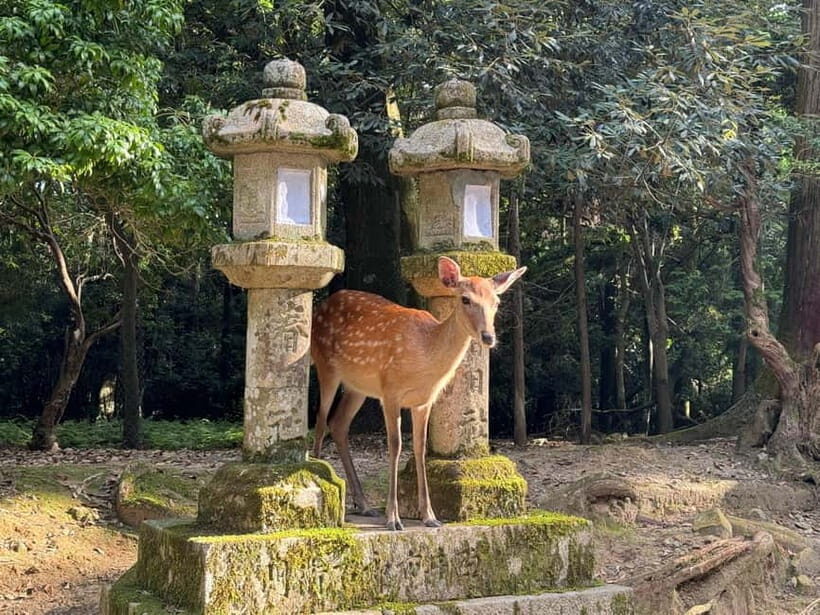
The real highlight is the chance to feed them deer crackers (shika senbei). It’s not just a photo opportunity. It’s the first moment where you understand that Nara treats these animals as part of daily sacred life, not a roadside attraction. Your guide also covers how the deer became protected symbols in the area, which helps you read the scene with more meaning.
Two small notes that affect how enjoyable this part feels:
- You’ll likely move with the group and stay alert in crowded paths, especially when deer gather near snack time.
- If you’re sensitive to busy animal interactions, keep a comfortable distance and let your guide handle the rhythm.
Kasuga Taisha: Lantern Paths Under Centuries of Devotion
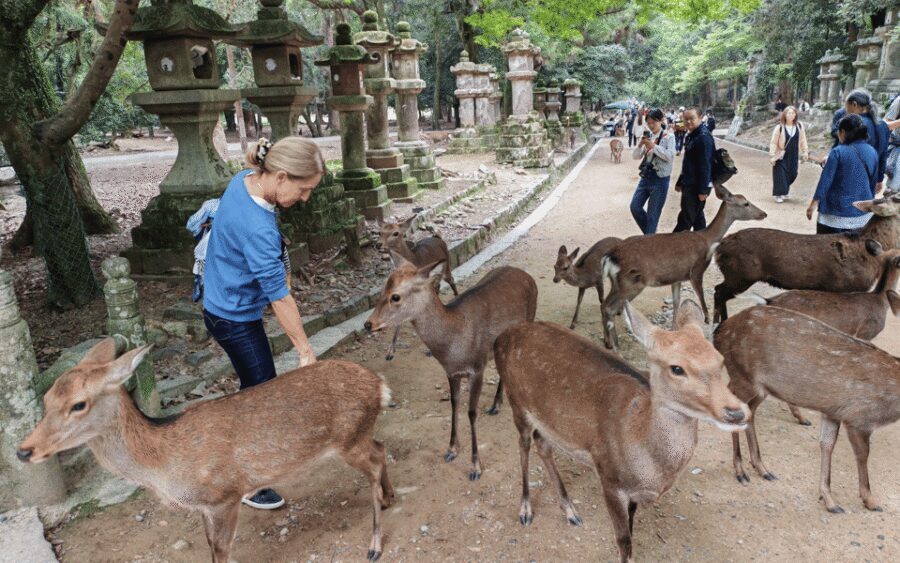
After Nara Park, you head to Kasuga Taisha, one of Nara’s most important Shinto sites. This stop has a different mood than Todai-ji. Kasuga Taisha sits amid preserved forest, and it’s the kind of place where the air feels quieter and older.
Kasuga Taisha dates back to 768 and has long been associated with the influential Fujiwara clan. Your guide gives you the background you need to understand why the shrine mattered politically and spiritually, not just religiously.
Then come the lanterns. Kasuga Taisha is renowned for thousands of bronze and stone lanterns that worshippers have donated across generations. Even outside of special festival timing, the density of lanterns makes the devotion feel tangible. Your guide explains how, during special festivals, the lanterns are illuminated, turning the shrine pathways into a moving light story of centuries.
If you’re wondering what to pay attention to here, focus on the rhythm of the walk. Lantern-lined paths guide your eyes deeper into the shrine grounds, and the forest setting makes the experience feel separate from modern noise. It’s also a relief to shift from the open deer grounds to shaded shrine paths, even when the day is hot.
One extra benefit that shows up in the real-world experience: guides can be especially helpful here with questions. I’ve seen guides named Teppei and Yayoi stand out for answering lots of topics, from shrine details to everyday Japanese life. When you’re dealing with Shinto terms and architecture that look symbolic rather than straightforward, that kind of explanation makes a big difference.
Todai-ji and the Great Buddha Hall (Daibutsuden)
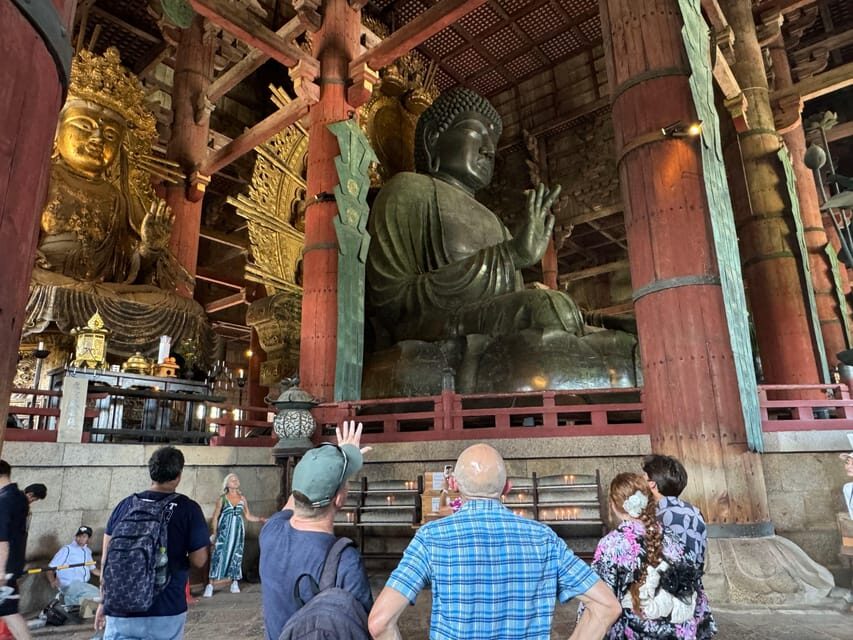
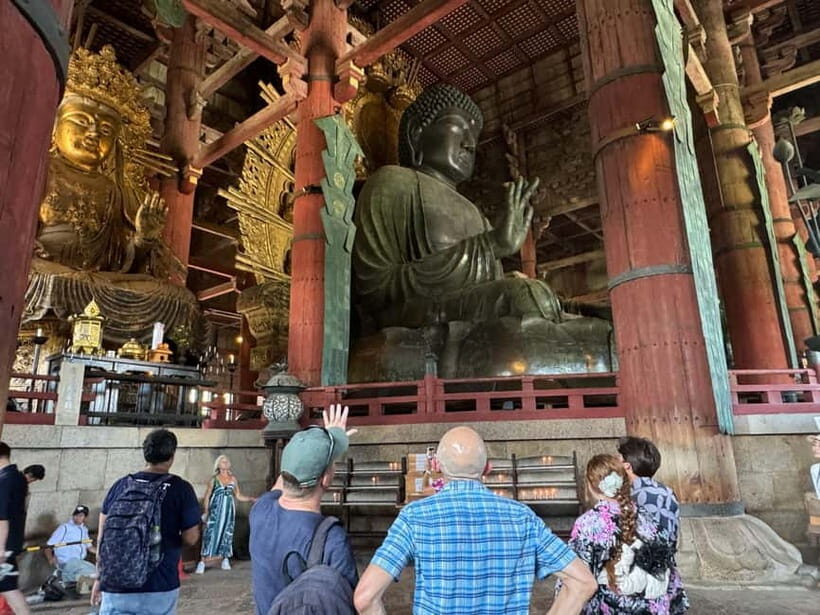
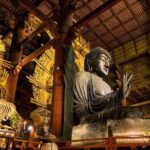
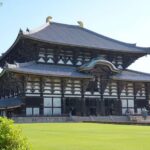
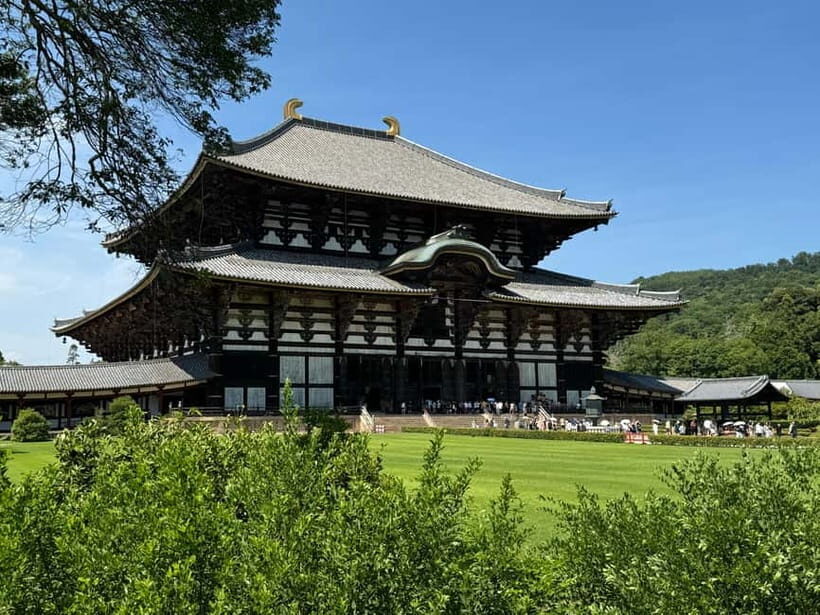
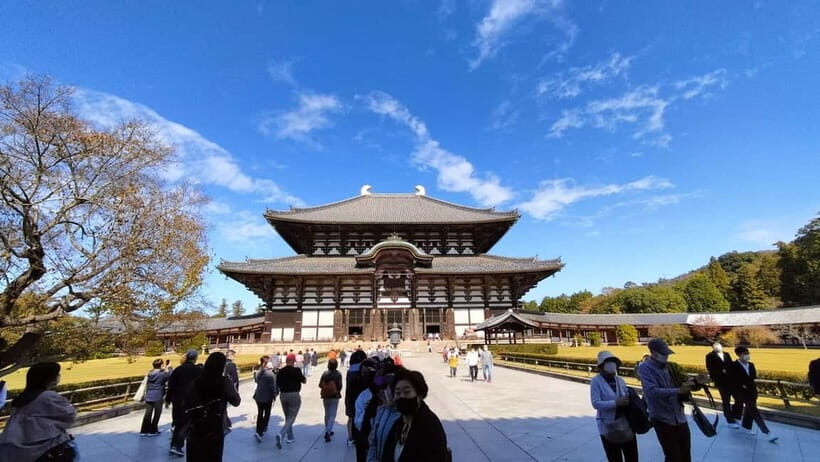
Todai-ji is the monumental finish, and it’s rightly the headline. This is one of Japan’s most significant Buddhist monuments, and a UNESCO World Heritage site. The highlight is entering the Daibutsuden (Great Buddha Hall), among the largest wooden structures in the world, and standing before the colossal bronze Great Buddha (Daibutsu).
What makes this stop work in a short tour is scale plus calm. The hall is vast, and the Great Buddha’s expression is steady. Your guide shares the story of its construction and the immense effort behind it, which helps you see the statue not only as art but as political and spiritual ambition.
A key detail your guide should bring into focus: the Great Buddha is Vairocana Buddha, cast in the 8th century. Your guide connects this to early Japan’s vision—why they built something so enormous in the first place. Once you have that frame, you notice how the hall’s size supports the sense of ceremony and authority.
If you want a practical tip for your own comfort: plan on moving slowly once inside. It’s easy to get swept up taking photos, but give yourself a few quiet minutes to look. The hall is crowded at times, yet that pause makes the experience feel less like a stop on a route and more like a moment you remember.
How Shinto and Buddhism Land Together in One Afternoon
The tour’s structure makes one big idea easy to grasp: Nara’s spiritual landscape isn’t one religion living in one building. It’s two traditions shaping how people experience place.
In Nara Park and Kasuga Taisha, you see Shinto’s connection to nature and sacred messengers. In Todai-ji, Buddhism shows up as monumental architecture and sculptural devotion. Your guide ties those threads together so you’re not just hopping from landmark to landmark.
This is why the tour can be worth it even if you already know the headline sites. Without guidance, it’s still impressive. With guidance, it becomes readable. You’ll understand why Kasuga’s lanterns matter, why the deer are treated as meaningful, and why Todai-ji feels like more than a single famous statue.
It also helps that guides on this tour tend to personalize the day. I’ve seen examples of guides like Eri and Nobu making extra time for questions, and even bringing small comforts during long outdoor walks, like neck coolers on hot days. Those touches don’t change the monuments, but they change your energy level—and that energy affects how much you take in.

Walking Pace, Weather Reality, and What to Bring
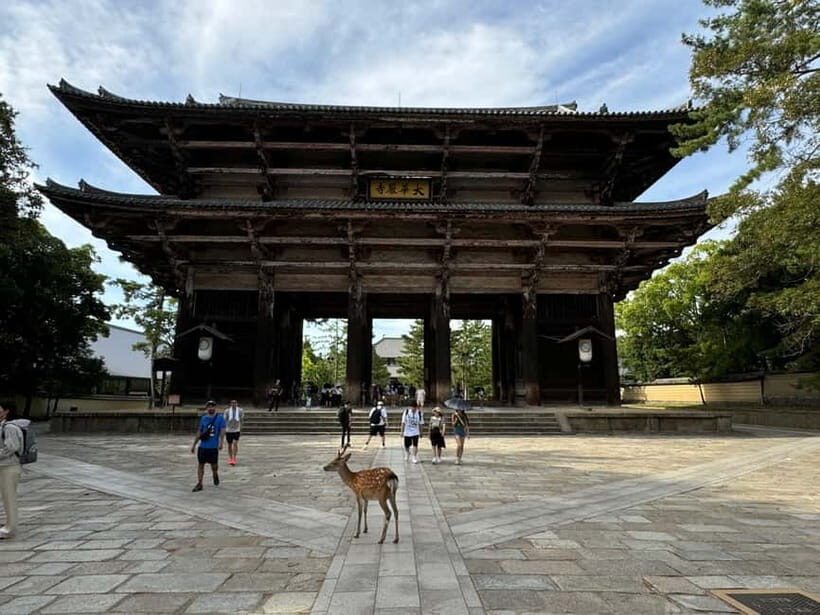
This is a 3-hour tour, so you’ll cover a fair amount of ground. Reviews associated with the experience point to lots of walking and steps, and that lines up with how these sites are positioned. Nara Park involves moving across open areas, and shrine and temple grounds include stairs and uneven paths.
So here’s what I’d treat as non-negotiable:
- Wear shoes that you can walk in for stretches, not just stand in.
- Bring weather basics since Nara can be hot or rainy, and the day can feel longer than the clock.
One nice thing: guides are often practical. Some have been described as patient on difficult weather days, and that matters when you’re trying to stay comfortable while keeping the schedule moving.
Price and Value: Why $77 Can Feel Fair Here
At $77 per person for a 3-hour tour, the value mainly comes from three things you’d otherwise pay for or struggle to coordinate:
1) A professional English-speaking guide who explains what you’re looking at
2) Admission fees for Todai-ji plus the Kasuga Taisha special inner shrine
3) Deer crackers (shika senbei) so you can take part in the deer feeding moment without hunting for them
That’s the heart of the cost. Without a guide, you can absolutely do Nara on your own. But you’d still need to manage admissions and figure out how to make sense of Shinto and Buddhist details quickly. This tour compresses that learning into a short time window.
What’s not included is also clear and worth planning for: transportation to and from the meeting point, plus any food or drinks and personal expenses. In other words, you’re paying for the guided cultural circuit and the paid entry points, not for the rest of your day.
Who This Tour Suits Best in Nara
This is a strong fit if you:
- Want the essential Nara triangle: Nara Park, Kasuga Taisha, and Todai-ji
- Like explanations that connect religion, art, and history instead of just pointing
- Travel in a way that benefits from a guide stepping in when you have questions
It also works well for first-time visitors because the stops are iconic but tied together by theme. The deer aren’t random. The lanterns aren’t decorative. The Great Buddha isn’t just big. They’re all part of the same Nara story.
And if you prefer quiet control over your pace, the fact that private or small groups are available can be a big deal. Smaller groups generally mean more room for conversation and photo breaks. Some guides are even described as taking time for questions and pictures, which is useful when you’re trying to understand intricate shrine and temple details.
Should You Book This Nara Great Buddha, Kasuga Shrine & Deer Park Tour?
If your goal is to see Nara’s most famous spiritual landmarks in one efficient 3-hour stretch, I think this is a good booking. The admissions included, the deer feeding moment, and the fact that the guide connects Shinto and Buddhism mean you don’t just collect stamps. You leave with a clearer sense of why these places matter.
I’d skip it only if you know you’ll resent time pressure. This tour moves through three major areas, and that means walking and stairs. If you prefer slow wandering with minimal structure, you may prefer a self-guided plan so you can spend extra time in the parts that call to you.
FAQ
Where is the meeting point for the tour?
The meeting point is in front of the Torii gate of Himuro Shrine. The guide will be holding a yellow sign with the DeepExperience logo.
What stops are included in the 3-hour experience?
You’ll visit Nara Park, Kasuga Taisha, and Todai-ji, with guided time at each stop.
What admissions are included?
Todai-ji Temple admission is included, along with Kasuga Taisha special inner shrine admission.
Are deer crackers provided?
Yes. Deer crackers (shika senbei) are included for feeding the deer in Nara Park.
Is transportation to and from the meeting point included?
No. Transportation to and from the meeting point is not included.
Can I cancel for a full refund?
Yes. Free cancellation is available up to 24 hours in advance for a full refund.