REVIEW · MATSUMOTO
From Matsumoto/Nagano: Nakasendo Trail Walking Tour
Book on GetYourGuide →Operated by Machinovate Japan Ltd. · Bookable on GetYourGuide
A misty hike on Japan’s historic road.
I love how this day trip pairs Tsumago and Magome with a real walking experience on the Nakasendo Trail, not just photos from a bus window. I also like the payoff: the trail’s quieter segments, then a break at the Odaki and Medaki waterfalls where you can feel the cool mist on your face.
One heads-up: the day is long and your legs will work. You’re looking at an 8 km hike with some moderate climbs and descents, plus a few hours of driving each way.
In This Review
- Key things that make this trip worth your time
- From Matsumoto to the Kiso Valley: the ride sets the mood
- Tsumago-juku: wooden post-town streets with a guided context
- The Nakasendo Trail hike: cobblestones, countryside, and Odaki–Medaki mist
- Magome: restored houses, a sloped street, and waterwheels
- How hard is this, really: pacing, shoes, and sun
- English guide value: more than names and dates
- Price and logistics: what $189 buys (and what to budget)
- Who should book this Nakasendo day trip from Matsumoto/Nagano
- Should you book this Nakasendo trail hike?
- FAQ
- Where do I meet the guide?
- How long is the tour?
- How long is the hike between Tsumago and Magome?
- Is lunch included?
- What should I bring?
- How long is the drive from Matsumoto to the trail?
- Is the tour suitable for children?
- Is the guide available in English?
- What is the cancellation policy?
Key things that make this trip worth your time
- Odaki and Medaki waterfalls: a misty pause that feels like a reward, not a gimmick
- Tsumago-juku guided town walk: restored wooden buildings and old-town atmosphere
- Edo-era cobblestones: you’re walking parts of a major route between what is now Tokyo and Kyoto
- 8 km of mixed trail and rural roads: scenic and manageable if you’re fit enough
- Magome’s sloped main street and waterwheels: traditional town sights with real context
- English live guide plus transport: you get history and logistics handled in one package
From Matsumoto to the Kiso Valley: the ride sets the mood
This tour starts with a meeting point in Matsumoto or Nagano (you can choose among Matsumoto Station, Nagano Station, or Kokusai 21). From Matsumoto to the Nakasendo trail area, the drive takes about 2 hours, and you should plan for a few hours in the car each way. There is a bathroom stop along the route, so it’s not a frantic long haul, but it’s still a day-trip commute.
What I really like about this part is the rhythm. You’re not just escaping the city; you’re easing into the Kiso Valley. The bus ride gives you time to mentally shift gears from train schedules and station navigation to mountain air and slower pace. You’ll also get scenery through the windows on the way to and from the walking area, which helps the day feel like more than a single hike.
You can also read our reviews of more walking tours in Matsumoto

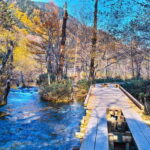
Tsumago-juku: wooden post-town streets with a guided context
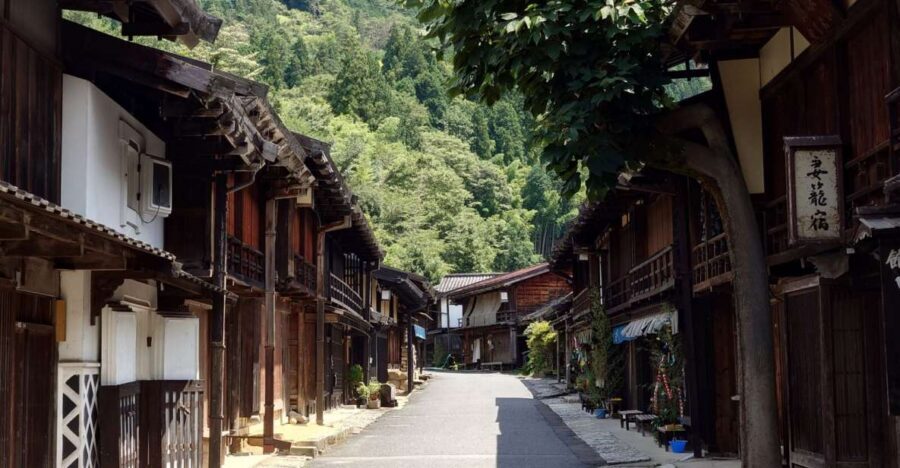
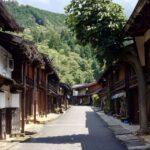
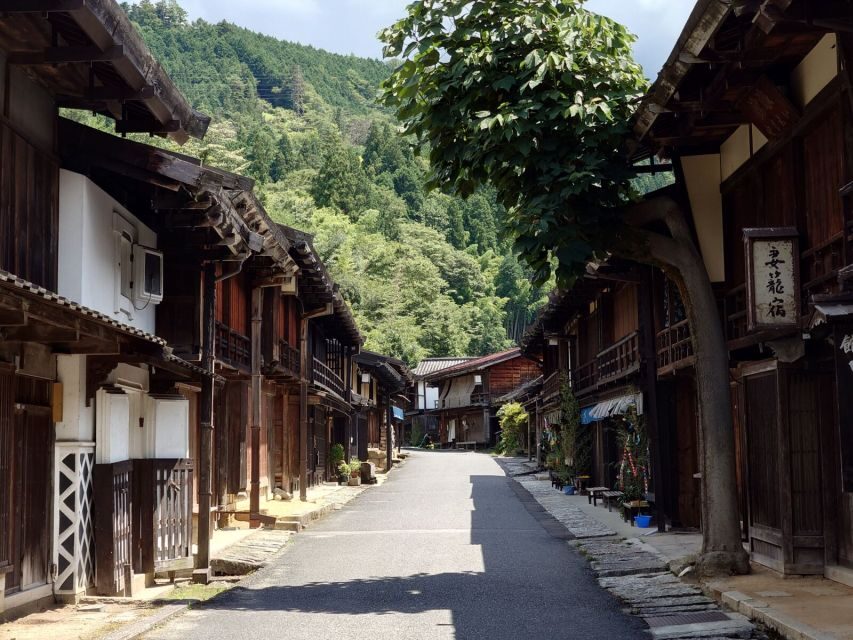
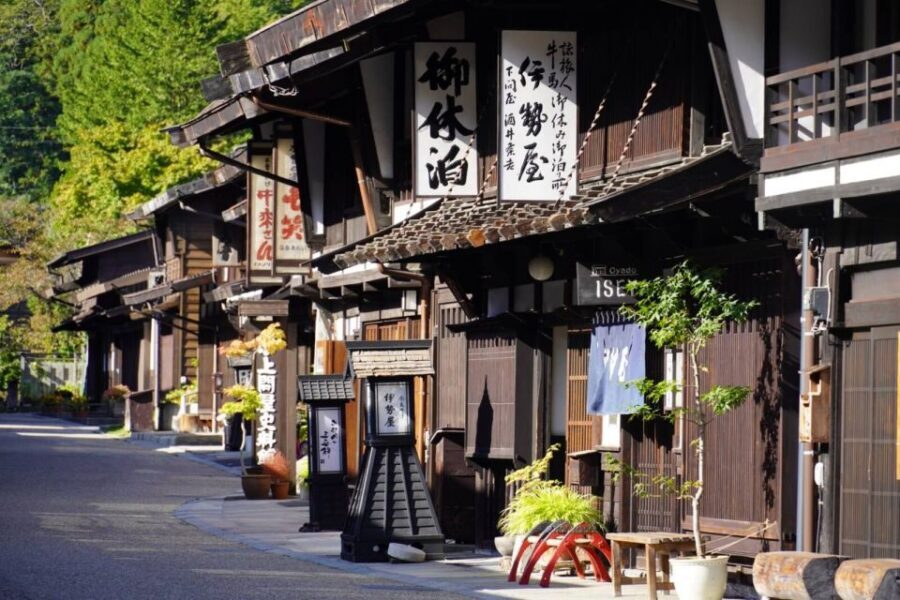
Once you reach Tsumago, you get about an hour to explore Tsumago-juku with a guide. This is one of those stops where the value isn’t only what you see, but how it’s explained. You’ll be walking around well-preserved, rustic streets with wooden buildings and mountain views, plus opportunities to step into some buildings that are open to the public to understand how life in the town used to work.
Tsumago also works as a mental warm-up for the hike. The town’s atmosphere prepares you for the trail’s slower tempo and quieter feeling. After you’ve got the basics from the guide, the next step feels smoother: you start the 8 km section with a better sense of what this old route meant and why the towns were so important.
There’s a practical drawback here: post-town areas aren’t described as easy for everyone to access. If you’re someone who needs step-free routes or minimal walking, this entire day is not the right fit. (More on that later.)
The Nakasendo Trail hike: cobblestones, countryside, and Odaki–Medaki mist
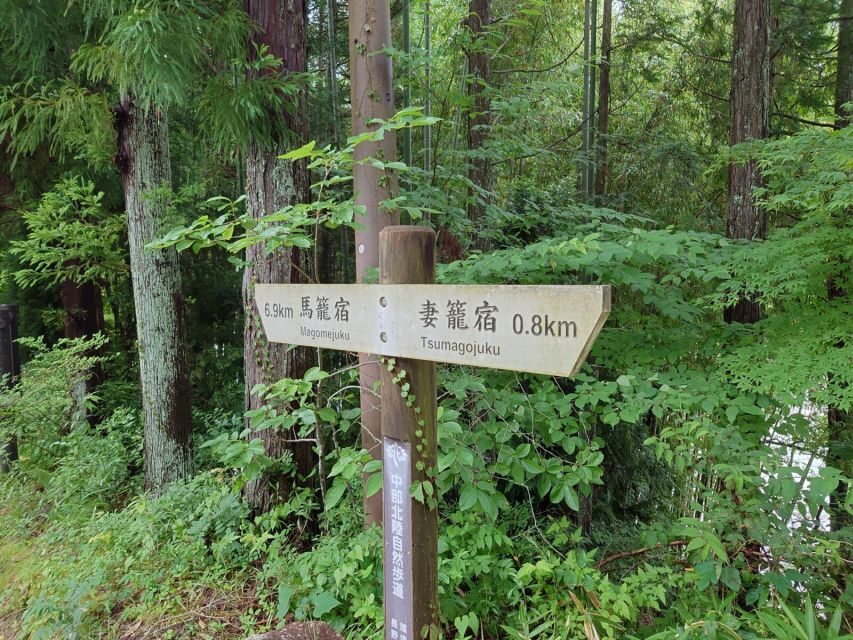
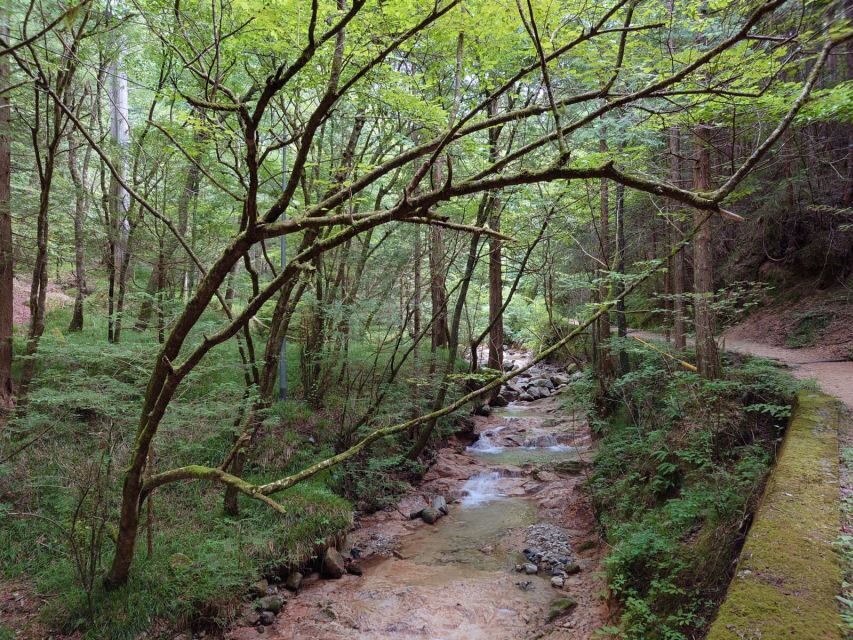
This is the heart of the day: a guided hike of about 8 km from Tsumago toward Magome. The hike runs roughly 3 hours, and you should expect moderate ascents and descents. The trail can include country paths as well as rural roads, so it doesn’t feel like a single uniform footpath the whole time.
One of my favorite parts of the Nakasendo is how the road history is still visible. Along the way, you’ll see sections lined with cobblestones from the Edo era (1600–1868)—when this route was a major connector between Tokyo and Kyoto. The difference today is calm. Instead of bustling commerce, you get a peaceful vibe and a sense of how travelers once moved between post towns.
Then you get the best break of the day. The route includes two adjacent waterfalls—Odaki and Medaki—and this is where you can pause, cool off, and enjoy that mist on your face. Some people will love the photo moment; I think the bigger win is the reset. You’ll come off the walk feeling refreshed, not just tired.
The guide also keeps an eye out for small wildlife sightings. The tour information specifically calls out possible birds, lizards, and even deer or badgers. You’re not going on a wildlife safari, but it’s a nice bonus that makes the trail feel alive instead of scripted.
And yes, you might have a short break option at traditional spots too. The route description mentions houses along the way where you can stop for water and relaxation. That’s a good reality check: you’re hiking in a real environment, not an indoor attraction where refreshments magically appear every ten minutes.
Magome: restored houses, a sloped street, and waterwheels
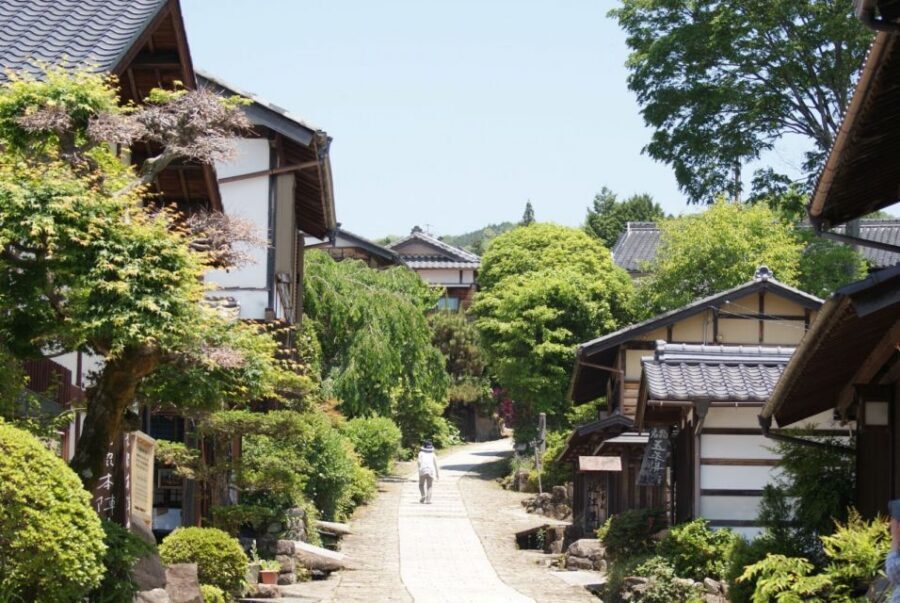
After the hike, you’ll head into Magome. You get some free time (about 40 minutes), which is short enough to keep the day moving, but long enough to soak in the post-town atmosphere and grab a snack.
Magome is known for its restored houses stretching along the sloped main street, and you’ll also see waterways on either side of the street that help power waterwheels. That detail matters. It’s not just scenery—it hints at how these towns functioned, how water was used, and why the streets are built the way they are. Standing there, you can start connecting the walking route you just did to the daily life of the townspeople.
This is also where you’ll feel the day’s pacing shift. The hike is steady, sometimes uneven. Magome is your reward phase: browse, snack, take photos, and enjoy the mountain views around you before you meet back up for the ride home.
One practical note: Magome is a historic town, which usually means you’ll be on your feet even during free time. If your plan is to do minimal walking after the hike, you’ll want to choose where you spend your minutes wisely.
How hard is this, really: pacing, shoes, and sun
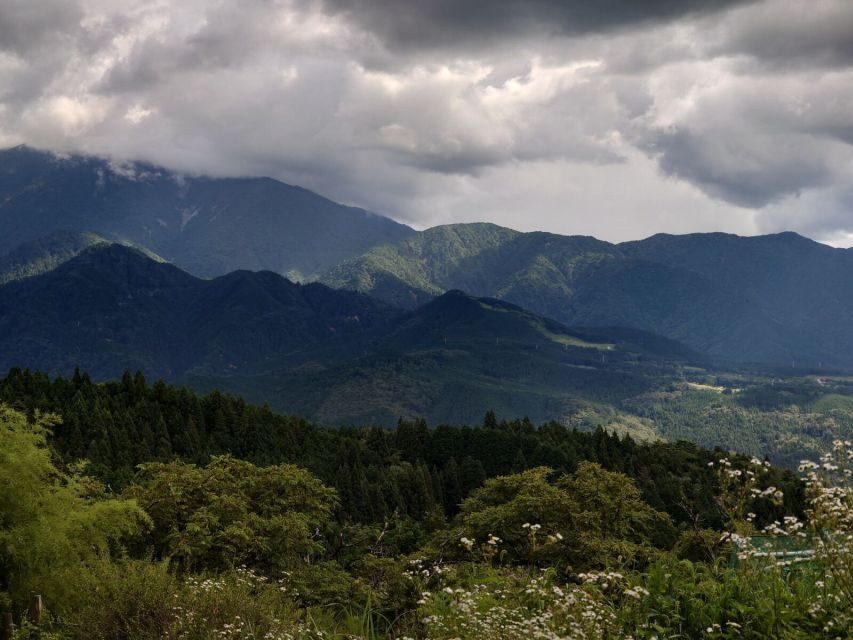
This tour is for people who can handle a solid walk. The details are blunt: there’s a significant amount of walking, over 8 km / 5 mi, with inclines and declines. It’s also not suitable for children under 7 and is not meant for wheelchair users or people with mobility impairments.
So what does that mean for you on the trail? Think “moderate day hike,” not “fitness bootcamp.” Several guides in recent groups were praised for keeping a comfortable pace and managing the group when people have different walking speeds. That’s important because the trail can include uneven footing and occasional road segments where walking flow changes.
Pack smart:
- Hiking shoes (not just sneakers)
- Water
- Weather-appropriate clothing
Also, plan for sun angles. One departure noted that the sun was in their eyes for much of the walk. You can’t control the sun, but you can control your response: bring sunglasses and consider a hat or cap if it’s a bright day. Your future self will thank you.



English guide value: more than names and dates
A big part of the experience is the guide—live and in English. The tour is designed so you don’t just move along the trail; you learn why you’re there while you walk. That includes explanations for what you’re passing (waterfalls, old-road segments, and the town layout) and why it mattered historically.
In the group stories, guides like Sijung, Devon, Kim, Shawn, Kevin, and Joyce show up as examples of what this can look like: friendly, attentive, willing to answer questions, and good at keeping everyone together. You’ll feel it most during those slower segments—when you’re standing at the edge of the path, watching the water, or pausing near Edo-era cobblestones.
Even if you’re not a history fanatic, this matters. It turns the day from a nice hike into a more complete experience where you understand what you’re seeing without needing to stop and research your phone for every second.
Price and logistics: what $189 buys (and what to budget)
At $189 per person for a 1-day outing, you’re paying for three main things:
- Roundtrip transportation from Matsumoto or Nagano
- A live English guide
- Guided time in Tsumago-juku, plus the guided hike and guidance in Magome
Lunch is not included, so you should budget extra for a meal or snacks. The good news is you’ll have opportunities in Magome’s post-town food spots, and also around the hike route where traditional refreshments may be available depending on the day.
Is it good value? For most visitors, yes—because you’re getting a guided cultural hike in a place that’s not exactly next-door from the city center. The transportation piece is also important. The day requires multiple hours of driving, and a guided package saves you the headache of coordinating transit, timing, and getting to the starting trail access point.
You also get a strong signal on quality. The tour is rated 4.9 out of 5 across 33 reviews, and 95% of reviewers gave transport a perfect score. That’s not just a number; it’s a big deal on a day that would be stressful if the logistics were shaky.
Who should book this Nakasendo day trip from Matsumoto/Nagano
Book this if you want a guided day that hits the best parts of the Nakasendo experience:
- You enjoy walking with history attached, not just sightseeing from a bus
- You like scenic breaks like the Odaki and Medaki waterfalls
- You want both post towns: Tsumago’s preserved vibe and Magome’s waterwheel streets
- You’re comfortable with a moderate 8 km hike and you’re able to handle a few hours in transit
You should skip it if:
- You need step-free or minimal walking
- You use a wheelchair (not suitable)
- You’re bringing kids under 7 (not suitable)
- You want a very easy stroll. This isn’t that.
Should you book this Nakasendo trail hike?
If you can handle moderate walking and you want an authentic slice of Japan that combines restored post towns with a real stretch of trail, I think you’ll like this one. The standout moments are clear: the mist at Odaki–Medaki, the guided structure that makes the Edo-era details click, and the payoff of reaching Magome with time to snack and wander the sloped main street.
If you’re unsure, use this simple test: can you confidently walk 8 km with some ups and downs, and can you spare the day’s transit time? If the answer is yes, this is a strong buy for the mix of culture, scenery, and guided pacing.
FAQ
Where do I meet the guide?
The meeting point can vary based on which start option you choose. Options include Nagano Station, Kokusai 21, or Matsumoto Station.
How long is the tour?
It’s a 1-day experience.
How long is the hike between Tsumago and Magome?
The hike is about 8 km and the walking portion is scheduled for roughly 3 hours.
Is lunch included?
No. Lunch is not included.
What should I bring?
Bring hiking shoes, water, and weather-appropriate clothing.
How long is the drive from Matsumoto to the trail?
The drive from Matsumoto to the Nakasendo trail area is around 2 hours, and there will be a bathroom stop. You should also be prepared for a few hours in the car overall.
Is the tour suitable for children?
No. The tour is not suitable for children under 7 due to the walking distances.
Is the guide available in English?
Yes. The live tour guide is in English.
What is the cancellation policy?
You can cancel up to 24 hours in advance for a full refund.