REVIEW · IRIOMOTE JIMA
Iriomote Culture Discovery. Indigenous culture on Iriomote Island
Book on Viator →Operated by Karola Mech · Bookable on Viator
Few tours beat village-to-village culture here. This half-day Iriomote outing focuses on indigenous religion you still see in daily life, plus traditional houses with real-world design details. The main thing to watch is access: at at least one shrine site, you won’t be allowed inside out of respect for locals.
I particularly like how the guide connects places to stories, not just facts. You get a short, paced route (about 3 to 3 hours 20 minutes) that fits when you’re short on time but still want something more than shoreline photos. One possible drawback: it’s a cultural walk, not a long, relaxed beach hang, so plan for steps and outdoor time.
This is also built for ease. Pickup can be arranged between Shirahama and Funaura, the group is capped at 20, and you’ll have coffee or tea with beach views during the tour.
In This Review
- Quick hits you will care about
- A half-day that turns Iriomote into more than beaches
- How Karola sets the tone with a small group
- Price and value: what $111 really buys you
- The coffee-and-tea pause with beach views
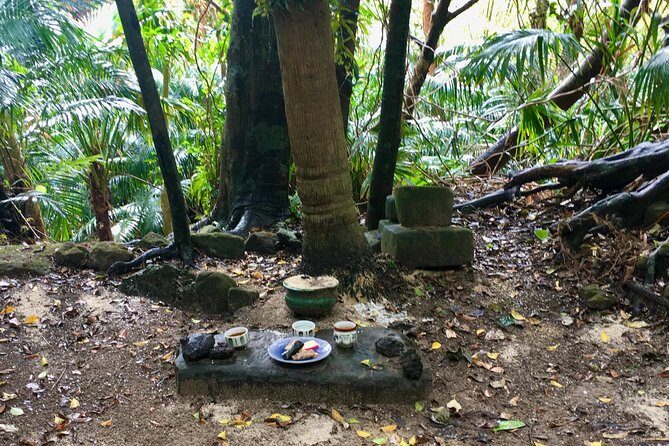
- Stop 1 at 前泊御嶽 Shrine: what you can see and why you can’t go in
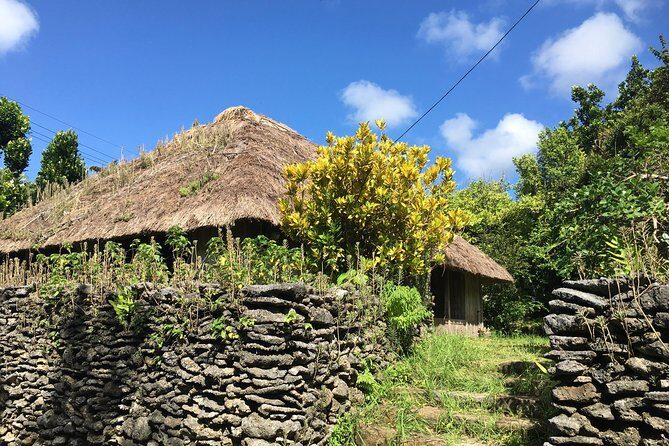
- Stop 2: Two traditional houses, including a historical monument site
- Stop 3: Old well and an old forest street walk
- What the route teaches you about indigenous culture
- Pickup, meeting point, and how to plan your timing
- Who should book this tour (and who might skip it)
- The best way to get more from the tour
- Should you book Iriomote Culture Discovery?
- FAQ
- Is pickup available for this Iriomote tour?
- Where does the tour start and end?
- How long is the tour?
- What stops do you visit?
- Is admission included for the sites?
- Is coffee or tea included?
Quick hits you will care about
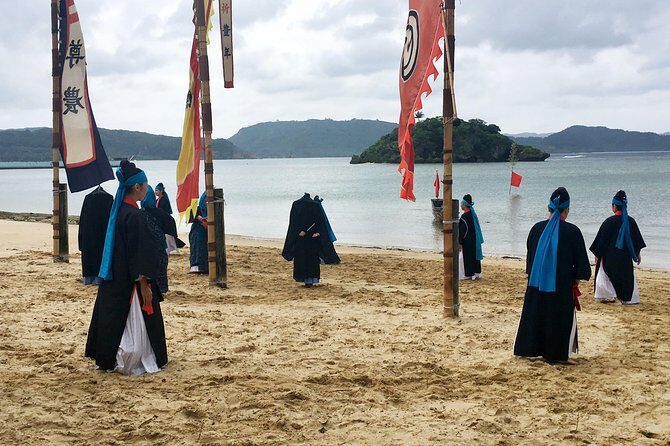
- Indigenous shrine time at 前泊御嶽, with guidance on religious practices and shrine construction
- Traditional houses on the old-village route, including one designated historical monument site
- A short walk to an old well and an old forest street, giving the area a lived-in feel
- Coffee/tea included with beach views, so you get a break mid-tour
- Small-group tour (max 20) with mobile ticket and group discount options
A half-day that turns Iriomote into more than beaches
Iriomote is famous for water and scenery, but if you only do the coast, you miss the island’s human layer. This tour is designed for a quick reset: you trade beach time for an old village route where people’s beliefs, homes, and everyday spaces show up in the details.
The pacing matters. With stops timed around 15 to 20 minutes each, you can see a few key sites without feeling rushed through the whole island. That’s a big deal when you have limited daylight or you’re juggling a ferry schedule.
What you get is culture you can actually observe. You’re not just hearing about history from behind a screen. You’re looking at shrines, houses, and older village elements while the guide explains how locals relate to them.
You can also read our reviews of more tours and experiences in Iriomote jima.



How Karola sets the tone with a small group

The experience is run by Karola Mech, and that shows in the atmosphere. The tour format is small (up to 20 people), so questions don’t feel like they land in a black hole. One review highlighted her as kind and helpful, with pickup that matched the rhythm of the day.
Karola’s style also seems tailored to curious travelers who want context. In particular, the tour leans into “why this is the way it is,” which is great if you like architecture, building materials, or how people adapt their designs to place.
There’s also a practical side. The tour includes a mobile ticket, and pickup can be provided between Shirahama and Funaura. If you’re staying anywhere along that stretch or using local transport, it reduces the friction of getting everyone to the start.
Price and value: what $111 really buys you
At $111 for roughly 3 to 3 hours 20 minutes, you’re paying for three things: access to local sites, guided interpretation, and convenience. Admission at the main stops listed is free, which helps the value feel more balanced.
You’re also getting coffee or tea with beach views, not a random snack stop. That included break gives you something pleasant after time outdoors, and it keeps the tour from feeling like a constant sprint.
And don’t overlook the group size. In a tour capped at 20, you usually get better communication than on larger, louder outings. If you care about understanding what you’re looking at, that’s where the value shows.
The coffee-and-tea pause with beach views
This tour includes a refreshment break: coffee or tea with beach views. That matters more than it sounds, especially on Iriomote where the air can feel warm even when you’re not in direct sun.
It also changes the feel of the route. You’re not only walking from one point to another; you get a calm moment to reset and take in the broader setting. Even if your main interest is indigenous culture, this small scenic pause keeps the experience from turning into pure lesson time.
If you’re the type who likes photos, this is also one of the safer moments to grab them. You’re settled, you’re not racing, and the view gives your camera something more than buildings and wood.
Stop 1 at 前泊御嶽 Shrine: what you can see and why you can’t go in
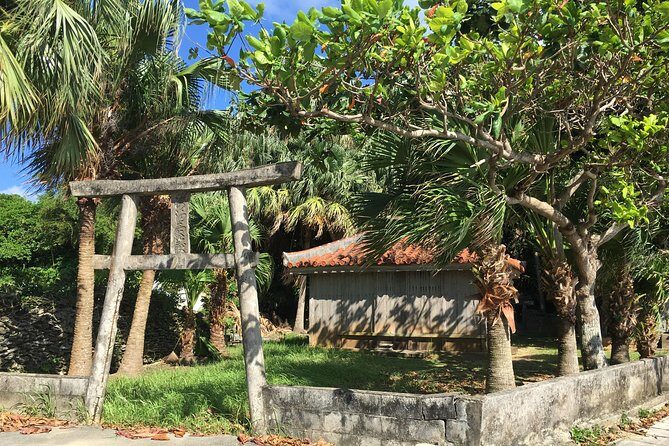
Your first site is 前泊御嶽, an original shrine where people still pray. This is the kind of place that makes the tour feel grounded and real, because the spiritual use is ongoing, not just a preserved exhibit.
The guide explains indigenous religion, local religious practices, and how a typical shrine is built. That is the difference between reading about culture and actually understanding the shape of it. When someone walks you through shrine structure, you start noticing details you’d otherwise miss.
There’s one important rule: you cannot go inside the shrine. The tour asks you to respect local practice, and that’s handled upfront. It’s a good reminder that you’re visiting a living place, not a set piece.
Duration at this stop is about 15 minutes, and admission is free.




Stop 2: Two traditional houses, including a historical monument site
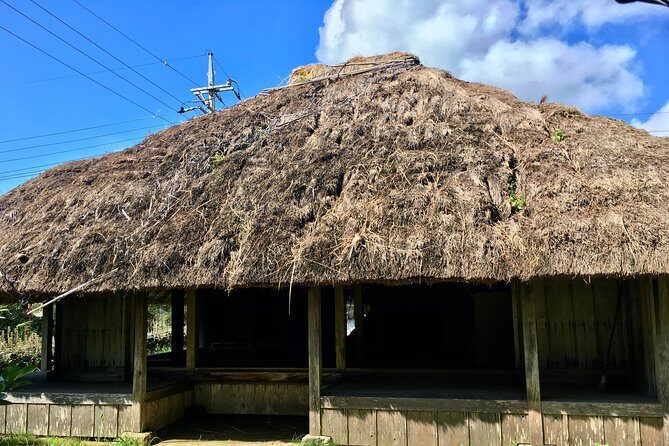
Next you move to a classic old-village area with two traditional houses. One of them is a designated historical monument, so you can typically explore the space on that side more closely than at ordinary homes.
This is where the tour can feel extra satisfying if you like how things were made. The guide describes what a typical household used to look like and talks about the materials used to build traditional houses. Even if you’re not a design nerd, you’ll probably start paying attention to construction logic: how materials and layout help the home do its job.
You also get a cultural layer beyond the building shell. Traditional houses on Iriomote aren’t only about shelter; they reflect local life patterns and the practical realities of where people lived.
Time here is about 15 minutes, and admission is also free.
Stop 3: Old well and an old forest street walk
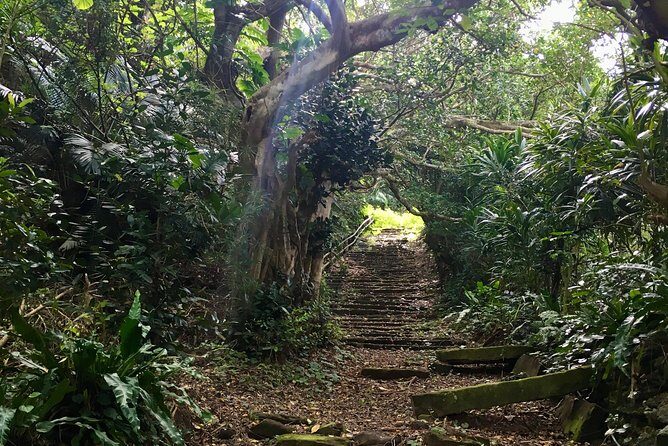
The last stop is quieter and more atmospheric: an old well and an old forest street. These aren’t usually the headline sights on postcards, but they do something valuable. They make the village feel older in a physical way, like the island kept its bones even as life changed.
This segment is timed at about 20 minutes, with admission listed as free. The walking is short, so you won’t feel stranded on a long loop, but it’s long enough to make a difference in mood.
If you want to come away with more than names and dates, this is often the part that sticks. You can picture daily routines here, even if you don’t get a full script. It’s a good fit for slow looking and respectful wandering.
What the route teaches you about indigenous culture
This tour is built around a simple idea: indigenous culture isn’t only in museums. It shows up in how shrines are arranged, how homes are constructed, and how people keep practicing their beliefs.
By combining shrine viewing with house context and then adding older village elements like the well and forest street, the tour gives a fuller sense of how different parts of life connect. It’s not only spirituality in one stop, and it’s not only architecture in another.
I also like that the guide uses folktales and personal storytelling in the mix. That approach helps the information feel less like a lecture and more like a conversation you can follow. It’s especially useful if you’re the type who learns better through stories than through bullet points.
Pickup, meeting point, and how to plan your timing
Pickup can be arranged between Shirahama and Funaura, which is a huge win if you’re trying to save energy. It also helps if you don’t want to fuss with local buses between ferry landings and the island’s interior areas.
If you’re not using pickup, the meeting point listed is:
まるまぼんさん節 歌碑689, Iriomote, Taketomi, Yaeyama District, Okinawa 907-1542, Japan
The tour ends back at the meeting point. So you can plan an easy continuation after the tour without needing to guess your return route.
Length is roughly 3 to 3 hours 20 minutes, so treat it as a real half-day commitment. It’s long enough to feel meaningful, short enough to work even on days when you want another activity.
Who should book this tour (and who might skip it)
This tour is a strong match for you if you want indigenous culture on Iriomote and you enjoy understanding places at a human scale. It also suits travelers who care about traditional building materials and design logic, since the guide covers what traditional homes looked like and what they were made from.
It’s also a good choice if you’re short on time. The tour is structured so you hit major village-style sites without spending your entire day in transit.
You might consider skipping or pairing it with something else if your priority is pure beach relaxation. This is an old-village walk with cultural stops, so it’s more “learning and observing” than “lounging.”
The best way to get more from the tour
Because you’re visiting active cultural spaces, come with the right mindset. Listen carefully at the shrine stop, especially since you can’t go inside. Respect the rule, and you’ll get more out of the explanations because the guide can focus on what you can actually see.
Wear comfortable shoes. The stops are short, but the experience is outdoors and you’ll be moving between points.
If you’re into architecture or design, this is one of those tours where your attention pays off. Ask about the materials and how the typical household used to be arranged. The details are part of the payoff.
Finally, take the coffee or tea moment seriously. It’s included for a reason: it gives you a breather so you keep your focus for the later sites.
Should you book Iriomote Culture Discovery?
Book it if you want a half-day that feels local and thoughtful. The combination of indigenous shrine context, traditional house viewing, and small-group pacing makes it good value for $111, especially with pickup options and a coffee or tea break with beach views.
I’d pass if your schedule demands only beach time or if you dislike cultural visits where you have limited access. The shrine rule is part of the experience, not an exception.
If you’re curious, respectful, and want Iriomote’s human story as much as its scenery, this is the kind of tour that makes the island feel more real.
FAQ
Is pickup available for this Iriomote tour?
Yes. Pickup can be provided between Shirahama and Funaura, and the tour is designed for travelers who want to save time getting to the sites.
Where does the tour start and end?
The tour starts at まるまぼんさん節 歌碑689 in Iriomote, Taketomi, and it ends back at the same meeting point.
How long is the tour?
The tour runs for about 3 hours to 3 hours 20 minutes.
What stops do you visit?
You’ll see an original shrine at 前泊御嶽 (with explanations of indigenous religion and shrine construction), two traditional houses (including one designated historical monument site), and then an old well and an old forest street.
Is admission included for the sites?
Yes. The listed admissions for the stops are free.
Is coffee or tea included?
Yes. The tour includes coffee or tea with beach views.