REVIEW · ONOMICHI
Onomichi Half-Day Private Trip with Government-Licensed Guide
Book on Viator →Operated by Japan Guide Agency · Bookable on Viator
Onomichi is best seen on foot. This half-day private tour lets you shape the route, from hillside temples to a legendary cable-stayed bridge. I like that it’s built around a government-licensed guide who can steer you to exactly what you care about.
Two things I’d bet you’ll enjoy right away are the mix of stops and the pace. You get time for on-the-ground views plus short, meaningful temple and art moments—without feeling rushed.
One possible drawback: it’s a walking tour with an “on-foot pickup,” so you’ll want comfy shoes and a realistic sense of how long 4 hours on foot feels. Also, entrance fees are not included for most sights, so your final cost may creep up a bit.
In This Review
- Key highlights worth planning around
- A private half-day that turns Onomichi into a choose-your-own-walk
- What you’re really booking: guide, ticket, and the walking format
- Choosing your 2–3 stops (or up to 3–4): how to pick without overthinking
- Senkō-ji Park: when temple bells and stair-step views set the mood
- Hirayama Ikuo Museum of Art: a focused break for Nihonga fans
- Tatara Bridge: a major view stop with real scale
- Neko no Hosomichi and the Fukuishi Cats: the short walk with a story
- Hondori Street arcade time: the everyday Onomichi flavor
- Kosanji Temple on Ikuchijima: a temple founded in the 1930s
- Innoshima Bridge and Mukaishima: the Shimanami Kaido vibe
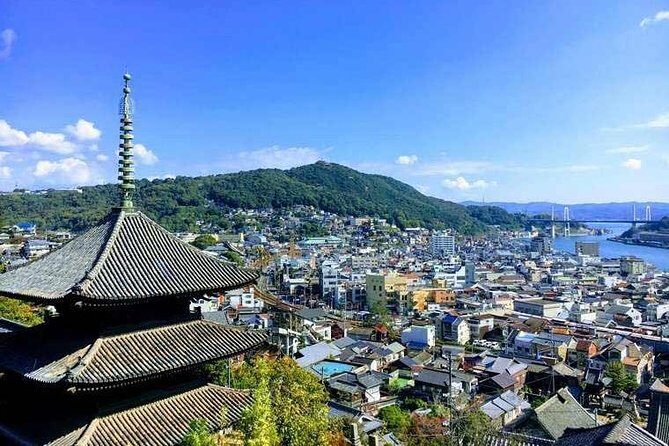
- Tennei-ji Temple: the pagoda anchor at the end of the cat path
- Price and value: is $107.50 per person a fair deal?
- Who this tour suits best (and who should tweak expectations)
- Practical tips to make the 4 hours feel easy
- Should you book this private Onomichi half-day?
- FAQ
- How long is the Onomichi half-day private trip?
- Is this tour private or shared?
- Does the tour include pickup?
- Can I choose which sights to include?
- Are entrance fees included?
- Is Tatara Bridge admission free?
- Is Neko no Hosomichi free to enter?
- Does the tour allow bicycles or a private vehicle?
Key highlights worth planning around
- Private, government-licensed guidance for a more personal Onomichi stroll
- Choose your sites (the tour is framed as 2–3 or up to 3–4 depending on your booking option)
- Iconic photo-and-walk stops like Tatara Bridge and Neko no Hosomichi
- Cat-path scenery at Tennei-ji area with the Fukuishi Cats trail
- Temple variety from Senkō-ji to Tennei-ji and Kosanji on Ikuchijima
- Hondori Street shopping arcade time for the everyday side of town
A private half-day that turns Onomichi into a choose-your-own-walk
Onomichi has that weathered seaport feel—old stone, narrow lanes, small temples, and sea-breeze air that makes you slow down. The best part is that you do not have to march through every famous stop to get the vibe. This tour is designed around picking a handful of places and spending enough time to actually notice things.
I especially like the flexibility. Your guide can tailor the route to your interests, so if you care more about views than temples (or the opposite), the walk can bend that way. The result is a tour that feels like a local plan, not a factory schedule.
The other big win is the structure. In about 4 hours, you can stack viewpoints and culture without losing your whole day. And because it’s private, you’re not stuck waiting for someone else’s pace.
You can also read our reviews of more guided tours in Onomichi
What you’re really booking: guide, ticket, and the walking format
This is a private activity, meaning only your group participates. You’ll meet the guide within a designated area in Onomichi, and pickup is described as offered but on foot—so plan on walking from your meetup point to the first stop area.
The guide is described as government-licensed and multilingual, with English speaking support. That matters more than people think. In places like temple precincts, small historical details add up fast, and good interpretation helps you see what you’d otherwise miss.
You also get a mobile ticket, which is simply convenient. No special “tech ordeal” is mentioned—just that you can use a mobile format for the experience.
And a practical note: there’s no private vehicle included, and bicycles are not allowed. This tour is meant to be walked.
Choosing your 2–3 stops (or up to 3–4): how to pick without overthinking
The tour description gives you flexibility to choose between 3 to 4 sites in the highlights, while the included section frames it as choosing 2–3 sites from the expected list. Either way, you’re selecting a small cluster of experiences, which is perfect for a half day.
Here’s a simple way to decide:
- If you want classic Onomichi visuals: pick Senkō-ji (temple), Tatara Bridge (big structure views), and Neko no Hosomichi (the cat path).
- If you’re more into art and culture: add Hirayama Ikuo Museum of Art, plus either Tennei-ji or Kosanji.
- If you love sea-route atmosphere: include the bridge-side stops like Tatara Bridge and the Shimanami Kaido-linked areas.
Try not to aim for everything. The strongest tours keep a little breathing room, so the “wow” moments stay wow, not “we barely looked” moments.
Senkō-ji Park: when temple bells and stair-step views set the mood
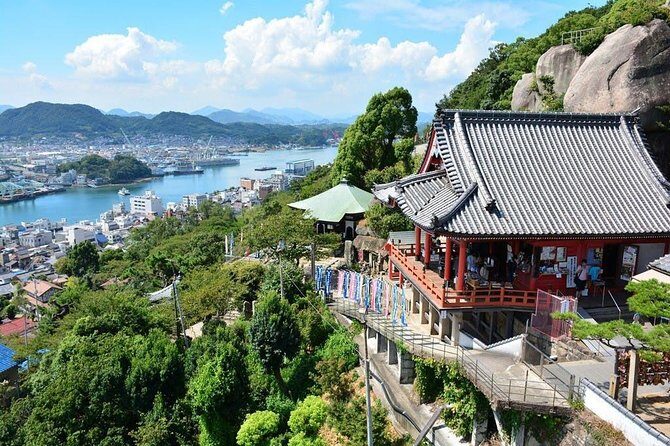
Senkō-ji is one of Onomichi’s best-known temple areas, and it’s built for atmosphere as much as sightseeing. One standout feature is the kyō-onrō, a bell tower whose bell is associated with the New Year. It’s a small detail, but it gives you a sense of how this temple space marks time and tradition.
What to expect in a short stop like this: you’re not here to read an entire textbook. You’re here to take in the scale, the setting, and the way temple buildings sit against the hills.
A drawback to consider: some temples can involve lots of steps and uneven ground. The tour is “most travelers can participate,” but comfortable shoes matter. If your feet tire quickly, you may want to prioritize viewpoint stops and keep temple time short.
Hirayama Ikuo Museum of Art: a focused break for Nihonga fans
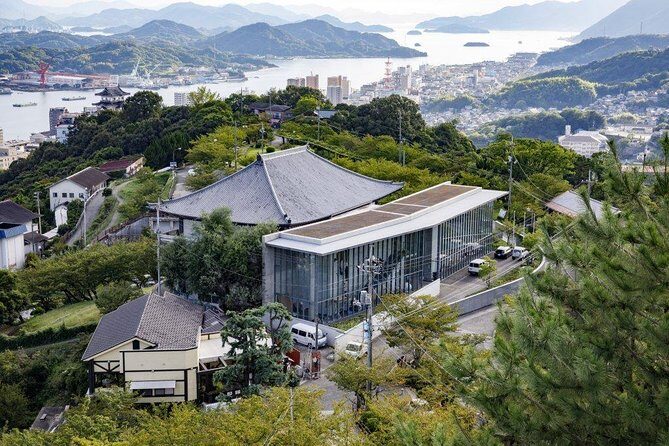
Hirayama Ikuo Museum of Art is a compact stop that makes sense if you like traditional Japanese art. The museum is tied to Hirayama Ikuo, known for working in the Nihonga style.
This stop works well when you want a calm pause. Instead of chasing views nonstop, you get a chance to reset inside a museum space, then go back outside when you’re ready.
The practical angle: entrance tickets are not included. So if you’re the kind of traveler who hates surprise add-ons, check the likely museum entry cost and decide if it’s worth it for you.
You can also read our reviews of more private tours in Onomichi
Tatara Bridge: a major view stop with real scale
Tatara Bridge is the kind of sight that makes you instantly understand why engineers get excited. It has a center span of 890 m, and it’s described as the second longest span cable-stayed bridge in the world.
In a half day, you’re usually there for two things: photos and the satisfaction of seeing a big structure in the real setting—not just on postcards. The guide can help you orient your eyes so you understand what you’re looking at.
One consideration: because it’s a bridge viewing stop, you’ll want a plan for wind and sun. Nothing in the tour data says it’s covered or sheltered, so dress for outdoor conditions.
Neko no Hosomichi and the Fukuishi Cats: the short walk with a story
Neko no Hosomichi is a walkway that stretches about 200 meters from the eastern side of Ushitora Shrine toward the three-floor pagoda of Tennei-ji Temple. The area gets its name because of the Fukuishi Cats—stone cat figures along the path.
This stop is memorable because it mixes easy walking with a quirky, specific detail. It’s not just a scenic trail; it’s a themed one, and that makes it fun even if you’re not a “cat person.”
Entrance is free for this part, which is a great value moment in an otherwise ticket-heavy day. The only drawback is the same as any outdoor stroll: keep an eye on your footing and don’t count on perfectly flat ground.
Hondori Street arcade time: the everyday Onomichi flavor
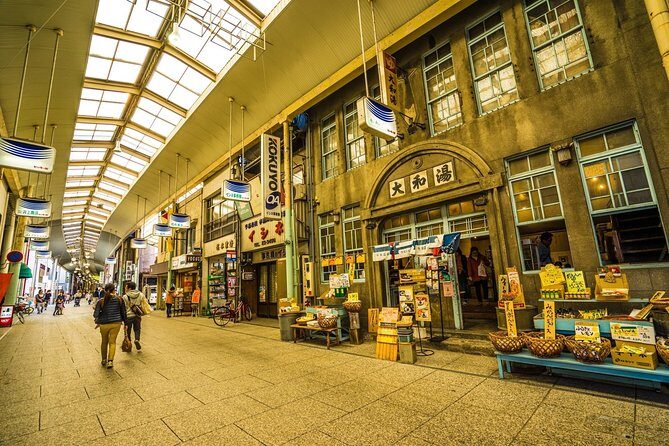
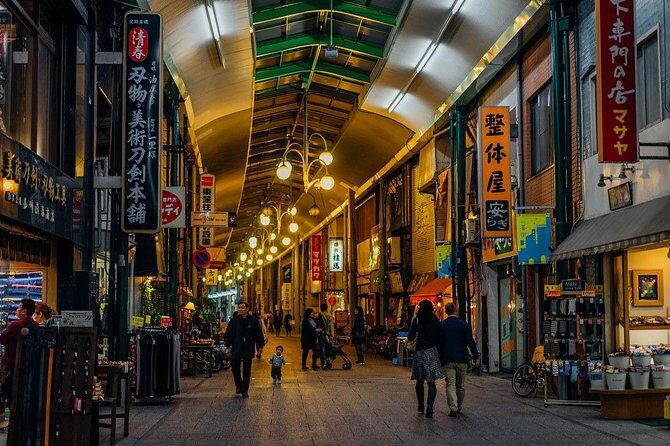
After temple and viewpoint energy, you’ll get a different kind of scene on Hondori Street. This is a pedestrian arcade closed to traffic and lined with shops and restaurants.
I like this stop because it grounds the day. After hills and monuments, you get the city rhythm: small storefronts, casual snack energy, and streets that feel lived in rather than staged.
No entrance fees are mentioned for the arcade itself, so this can be a low-cost, high-reward break. If you have a sweet tooth or you want a casual meal before another temple stop, this is a good moment to do it—just remember lunch isn’t included.
Kosanji Temple on Ikuchijima: a temple founded in the 1930s
Kosanji Temple sits on Ikuchijima Island and belongs to the True Pure Land Sect of Japanese Buddhism. The temple was founded in 1936 by a successful businessman, which is a detail that makes it feel more modern than many visitors expect.
What makes this stop interesting is that it’s not only about architecture—it’s about context. You can understand it as a place built with intention, tied to a specific sect and era, then set into an island setting.
Entrance fees are not included. If you’re trying to keep the day within a budget, decide now whether you want to pay for the temple entries or focus on the exterior viewing areas.
Innoshima Bridge and Mukaishima: the Shimanami Kaido vibe
The tour includes stops connected to the Shimanami Kaido route area. Innoshima Bridge connects Mukaishima Island with Innoshima Island and is described as one of the bridges that forms the Shimanami Kaido.
Mukaishima is described as the sixth island from Imabari City. That kind of detail helps you “place” where you are in the bigger network of islands and bridges.
You’ll likely experience these segments as viewpoint walking moments rather than long biking-time. The tour data also says no bicycles are allowed, so treat these as scenic stops you can enjoy on foot.
The trade-off: because this is still a walking tour, you’ll want to keep moving and not linger too long if you’re trying to fit in multiple ticketed sites.
Tennei-ji Temple: the pagoda anchor at the end of the cat path
Tennei-ji Temple ties the day together. It’s the destination connected to Neko no Hosomichi. The tour description says it was built by Yoshiakira Ashikaga, the second shogun in the Muromachi Period, in 1367 and founded by Fumyo Kokushi.
There’s also a Kaiun Pagoda mentioned as an important cultural property. If you like architecture, this is the part where the walk feels like it has an endpoint and a payoff.
Like other temple stops, entrance tickets are not included. If you’re budget sensitive, weigh this stop carefully based on what you enjoy most: bridge views, cat path charm, or deeper temple structures.
Price and value: is $107.50 per person a fair deal?
$107.50 per person for a 4-hour private, guided walking tour is not a bargain price, but it can be good value if you compare it to the real costs that stack up.
You are paying for:
- A government-licensed multilingual guide
- Private time (only your group)
- Customization (you choose your site mix)
- A short, efficient route that hits multiple “anchor” sights
The most likely way this price feels less worth it is if you end up paying multiple separate entrance fees during the tour. Since entrance tickets are not included for many stops, your total can rise.
The upside is clear: several of the best “experience moments” are free or low-cost. Tatara Bridge is specifically listed as free for admission ticket, and Neko no Hosomichi is free. Add those together, and you’re not buying every single highlight.
As for timing, the tour is often booked about 9 days in advance. That’s a good sign: it’s not always a last-minute fill. If your dates are flexible, you might still find space. If your dates are fixed, booking earlier keeps your options open.
Who this tour suits best (and who should tweak expectations)
This is a great fit if you:
- Want a private guide rather than a group bus shuffle
- Like mixing temples with scenic viewpoints
- Enjoy small, specific local details (cat stones are a great example)
- Prefer walking at your own pace with interpretation
You might want to adjust expectations if you:
- Hate walking or have limited stamina, because it’s a walking tour with on-foot pickup
- Prefer a fully included sightseeing day, because entrance fees and lunch are not included
- Want a vehicle or bike-supported route, since private vehicle service is not part of the experience and bicycles aren’t allowed
Practical tips to make the 4 hours feel easy
Since it’s built around walking and multiple hills are part of Onomichi’s charm, pack for comfort, not fashion. Comfortable shoes matter more than almost anything else here.
Also, think ahead about ticket budgeting. Some stops clearly say admission is free (like Tatara Bridge and Neko no Hosomichi), while others say admission tickets are not included. If you’re sensitive to costs, choose fewer ticketed stops and keep the free ones as your anchors.
Finally, if you want the tour to feel fun and memorable, lean into the guide’s style. One highlighted guide name is Miyoko, praised for being friendly and for adding nostalgic songs and jokes while walking through Onomichi’s alleys. That kind of local tone can turn a “see the sights” day into a story you actually remember.
Should you book this private Onomichi half-day?
Book it if you want a smart, personal Onomichi walk. The combination of a government-licensed guide, customization, and a route that mixes bridges, cats, and temples is a strong match for first-timers and returners alike.
Skip or choose a lighter stop mix if you’re trying to keep total costs very low. Since entrance tickets and lunch aren’t included for many sights, your final spend can rise quickly.
My decision rule: if you can handle walking and you like variety—temples plus viewpoint plus a town arcade—this tour is a solid buy for Onomichi.
FAQ
How long is the Onomichi half-day private trip?
It’s about 4 hours.
Is this tour private or shared?
It’s private. Only your group participates.
Does the tour include pickup?
Pickup is offered, but pick up is on foot within a designated area of Onomichi.
Can I choose which sights to include?
Yes. The experience is described as customizable, with options to choose 2–3 sites (and the highlights also describe choosing 3–4 sites).
Are entrance fees included?
No. Entrance fees are not included, and lunch is also not included.
Is Tatara Bridge admission free?
Yes. Tatara Bridge is listed as having a free admission ticket.
Is Neko no Hosomichi free to enter?
Yes. Neko no Hosomichi is listed as free.
Does the tour allow bicycles or a private vehicle?
No. A private vehicle is not included, and bicycles are not allowed.