REVIEW · NAMBA
Osaka Delights: Traditional Japanese Food Tour
Book on Viator →Operated by Amigo Tours Japan · Bookable on Viator
Osaka tastes best at street level. This 5:30 pm walking food loop pairs classic Osaka bites with a guided stroll through the neighborhoods that made them famous, ending under the Glico Man at Dotonbori. I love how the tour starts at Kuromon Market where takoyaki are cooked up for real-time cravings, and I love the payoff of finishing in Dotonbori for photos that feel like instant Osaka.
One thing to consider: this is not set up for mobility issues, and while the guide is bilingual (Spanish/English), group language mix can matter—so if you’re very specific about English, it’s smart to plan accordingly.
In This Review
- Key highlights worth knowing before you go
- A 5:30 pm Osaka loop that fits real dinner time
- Kuromon Market and Wanaka takoyaki: where the snack game starts
- Three-color dango at Mitoya: the sweet skewers with meaning
- Kushikatsu Yokozuna Hozenji: okonomiyaki and crispy skewers in one stop
- Egg tart at the 542-0077 bakery stop: your warm custard reset
- Dotonbori neon and Ebisu Bridge: photo stops with real atmosphere
- Price and value: $84 makes sense when you count tastings plus guidance
- The guide factor: how Paula, Angeles, and the others change the meal
- Who this suits best (and who should skip)
- Should you book Osaka Delights? My decision guide
- FAQ
- What’s included in the Osaka Delights food tour?
- How long is the tour and what time does it start?
- Where does the tour start, and where does it end?
- Is a mobile ticket used?
- Can I cancel for a full refund?
- Is the tour suitable for people with mobility issues?
Key highlights worth knowing before you go
- Kuromon Market takoyaki setup: a short walk in, then straight to one of Osaka’s most iconic snacks
- Three-color dango stop: sweet skewers tied to Japanese symbolism, not just sugar
- Okonomiyaki + kushikatsu combo: one stop covers two of Osaka’s comfort-food signatures
- Warm egg tart finish: custard in a crisp shell to balance the savory bites
- Dotonbori + Ebisu Bridge photo moment: neon streets and the Glico Man sign without guesswork
A 5:30 pm Osaka loop that fits real dinner time
This tour is built for the evening crowd rhythm. Starting at 5:30 pm means you’re eating when markets and street-food districts are fully awake, not when they feel sleepy or half-closed. The whole experience runs about 3 hours, so it’s long enough to try multiple specialties, but short enough that you won’t feel dragged through your night.
The price is $84 per person, and the big value is what’s included: a bilingual guide (Spanish and English), tastings of the specific foods you’ll encounter, and a guided neighborhood walk. You’re not paying just for walking. You’re paying for someone local to point you to the right stalls/eateries and to help you order, understand, and actually enjoy what’s in front of you.
One more practical note: the tour caps at 30 people and uses a mobile ticket. You’ll usually find this kind of format easiest when you show up ready to eat, wear comfortable shoes, and let the schedule do the work.
You can also read our reviews of more food & drink experiences in Namba
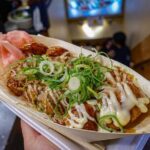
Kuromon Market and Wanaka takoyaki: where the snack game starts
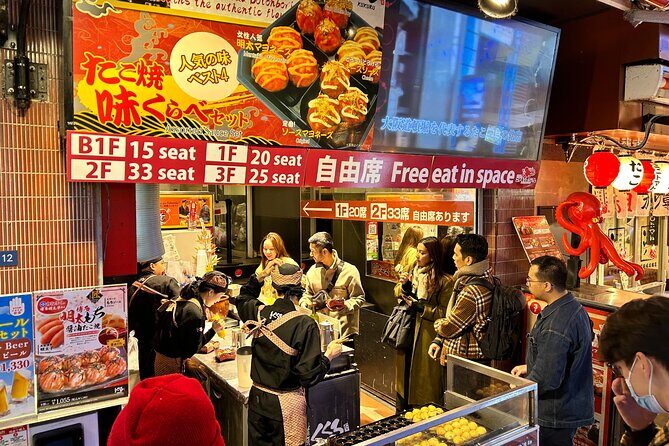
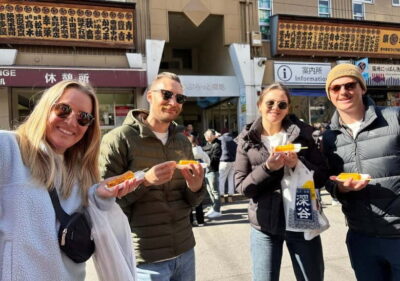
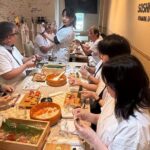
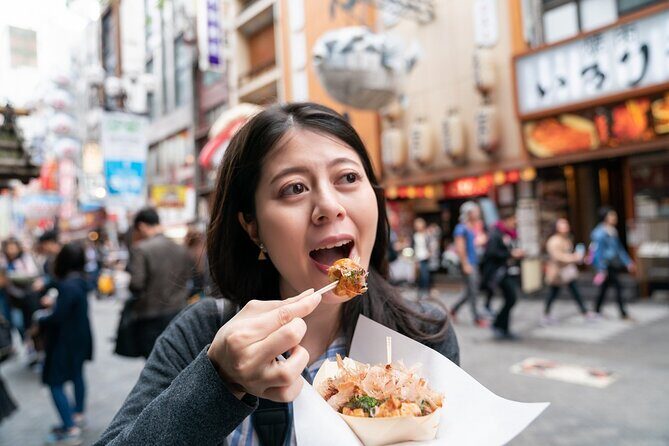
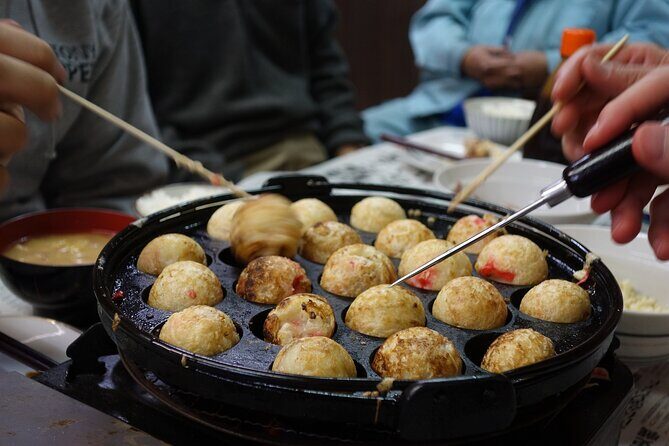
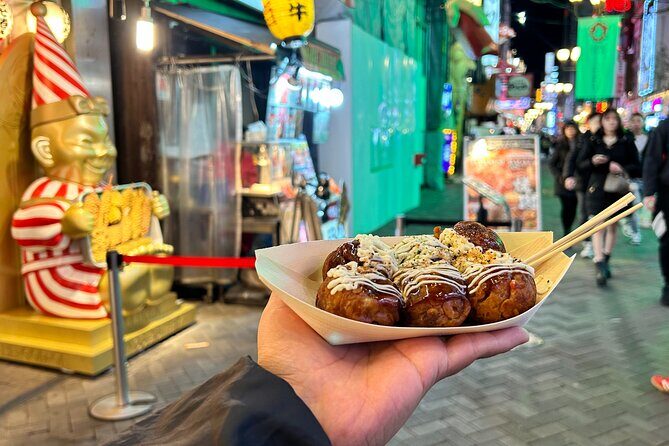
The tour begins with a short walk to Kuromon Market, often described as Osaka’s kitchen. It’s one of those places where the smells hit first and the chaos makes sense only after you know what you’re looking for. The first food stop centers on takoyaki from a well-known stall inside the market.
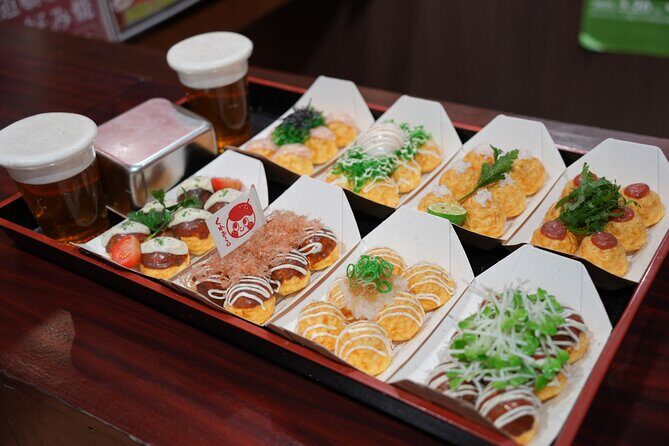
Here’s why this first stop matters: takoyaki is best when you can still feel the heat. These are crispy, savory dough balls filled with octopus, finished with sauces and bonito flakes. If you’ve had takoyaki before, you might remember it as just finger food. In Osaka, it’s more like a craft snack, with texture playing a big role—crisp outside, chewy inside, then sauce and flakes pulling it all together.
For your own comfort: expect to eat standing up and keep moving. That’s normal here. If you’re sensitive to strong smells, it’s still worth powering through for the first bite. This is the kind of food start that gets your appetite in sync with Osaka.
Three-color dango at Mitoya: the sweet skewers with meaning
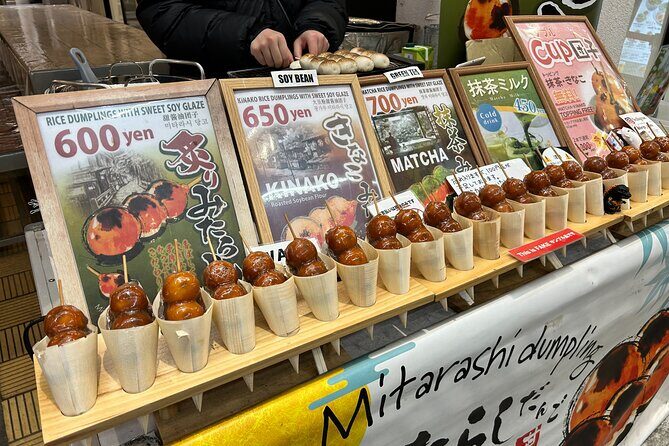
After takoyaki, you switch from savory to sweet with dango from Mitoya. These are rice dumplings served on skewers, traditionally presented in three colors. The colors connect to Japanese symbolism (you’ll get the meaning from your guide), so it’s not just dessert-as-afterthought.
Three-color dango is also a smart palate reset. Osaka’s savory foods are bold—so even if you’re excited to keep eating, a sweet stop gives your taste buds a breather. You’ll also get a different eating rhythm: takoyaki is all about bite-and-go heat, while dango feels slower and steadier, a snack you can enjoy while taking in the market area.
A tip for getting the most from this stop: don’t treat it like a sugary finisher. Think of it as part of the meal plan. When a guide places dango mid-tour, it helps you avoid the classic problem—eating too much savory too fast, then feeling stuffed before the real dinner hits.
Kushikatsu Yokozuna Hozenji: okonomiyaki and crispy skewers in one stop
Next comes the heavier Osaka comforts. At Kushikatsu Yokozuna Hozenji, you’ll try both okonomiyaki and kushikatsu. This is the stop where your “street food evening” becomes a proper dinner.
Okonomiyaki is the savory pancake that Osaka does with confidence—made with batter and typically topped with ingredients that vary by version. It’s filling, warm, and built to satisfy. Then you follow it with kushikatsu, the crispy skewered bites that are famous for their crunch.
This combo is practical for you because it covers two different textures and flavors in one time block. If you only did one, you’d miss the full Osaka balance: pancake comfort plus crispy snack energy.
One more consideration: this stop is about 50 minutes, so you’ll want to go in hungry and ready to take your time. The upside is you’re not rushed through; the downside is you’ll feel it in your legs by the end of the tour. Plan for that by wearing shoes you’d actually walk in all day.
Egg tart at the 542-0077 bakery stop: your warm custard reset
After savory, you’ll head to an egg tart stop for a warm pastry. This is one of those desserts that works because it’s straightforward: crisp flaky crust around a creamy custard filling. It’s sweet, but it doesn’t feel heavy in the way some desserts do—especially after all the fried and savory you’ve been eating.
This is also a smart final snack because it’s easy to enjoy while you’re still in motion. Your energy level matters here. You want enough room to enjoy the last part of the night in Dotonbori without feeling like you ate a dessert boulder.
If you have a sweet tooth, this stop will feel like the reward you expected. If you don’t, it still acts like a taste cleanser. Either way, it’s a good way to close the food chapter before you switch to lights, photos, and the canal area.
A few more Namba tours and experiences worth a look
Dotonbori neon and Ebisu Bridge: photo stops with real atmosphere
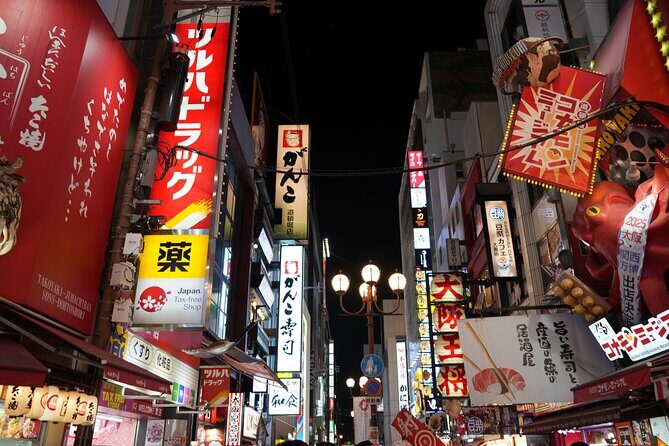
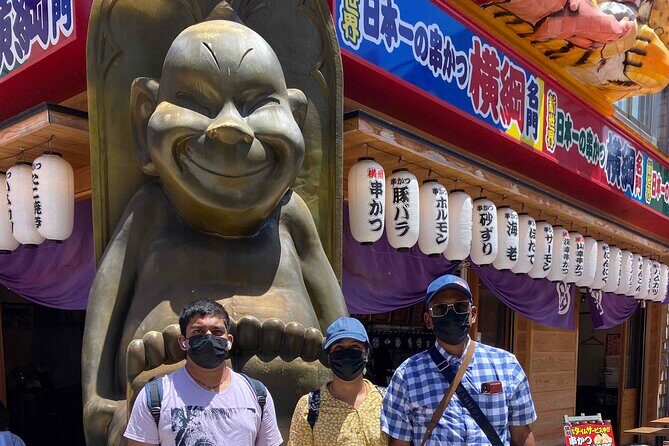
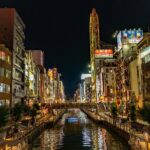
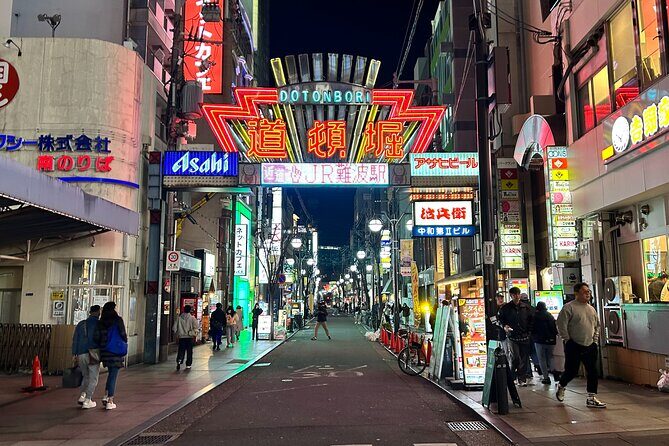
Then the tour changes gears. You’ll walk into Dotonbori, Osaka’s most iconic nightlife zone—bright neon streets, people out doing their evening thing, and landmarks you can recognize even if you’ve never visited before. The goal here isn’t just sightseeing. It’s context: you’ll understand how the city’s food culture connects to its street life.
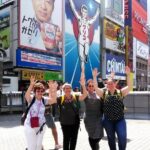
Your final stop is Ebisu Bridge along the canal, famous for the Glico Man sign. This is a classic “stand here, get the shot” moment. The good news is you don’t have to hunt for it. The better news is you get the timing right, while the area still feels alive and photogenic.
Practical advice for you: keep your phone charged. Neon lights make everything look better, but battery life drops fast when you’re snapping in low light. Also, don’t overthink the photo angle. From Ebisu Bridge, it’s usually all about getting yourself in front of the sign and capturing the canal vibe.
Price and value: $84 makes sense when you count tastings plus guidance
Let’s talk value without pretending every dollar is equal. At $84, you’re paying for:
- A bilingual guide (Spanish/English)
- Included tastings of the dishes tied to each stop (takoyaki, three-color dango, okonomiyaki, kushikatsu, egg tart)
- A guided walk through recognizable Osaka food and nightlife areas
- A route that ends back at the meeting point near Namba
If you tried to DIY this with no guidance, you might save money—sometimes. But you’d also spend more time deciding where to eat, figuring out what to order, and dealing with lines while you’re hungry. This tour is built to reduce that friction.
Booking timing matters too. The tour is often booked about 42 days in advance, so if your dates are fixed, plan ahead. Popular food and photo-night activities sell out faster than you’d expect.
Also, you get a mobile ticket, and the meeting point is the Hotel Royal Classic Osaka area in Namba. That’s helpful for your first evening in town because you’re not trying to coordinate with strangers at a random corner.
The guide factor: how Paula, Angeles, and the others change the meal
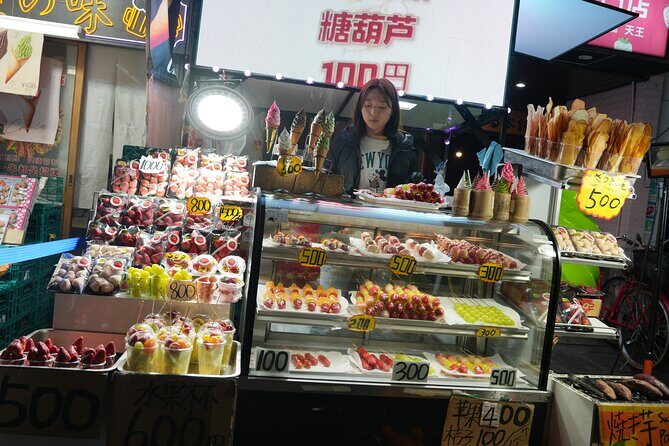
Food tours live or die by the guide. This one is led by bilingual guides, and names that come up often include Paula, Angeles, Heli/Helimar, and Eli. When the guide does well, you get more than translations—you get a way to understand what you’re eating and why Osaka treats it like a signature.
A standout theme from strong experiences: the guide’s explanations make dishes feel clearer, and ordering feels easier. Another positive detail is that some guides help with practical planning like arranging for access at popular places ahead of time, which can matter when stalls and eateries are in demand.
Still, here’s the balanced part. One downside that can happen on any mixed-language tour is group language imbalance. Since this is bilingual, you may end up in a group composition that doesn’t match your ideal language flow. If English clarity is important to you, I’d treat booking confirmation as your checkpoint and plan to arrive with patience.
Who this suits best (and who should skip)
This tour is a great match if you:
- Want a walk + food evening without building a route from scratch
- Like trying multiple Osaka specialties in one go
- Feel comfortable eating street-style and moving between stops
- Want a guide to help you understand dishes beyond just the ingredients
It’s less suitable if:
- You have mobility issues, because the tour involves walking and can’t accommodate that need
- You prefer very quiet, sit-down dining only (this is a walking tastings format)
- You need guaranteed one-language-only guidance during the whole tour (bilingual guidance is included, but group mix can shift)
If you’re on your first night in Osaka, this tour is especially efficient because it introduces you to Namba/Dotonbori energy while feeding you along the way.
Should you book Osaka Delights? My decision guide
Book it if you want a focused Osaka food night with a clear plan, included tastings, and an ending at the Glico Man photo zone. The route is short and doable, and the food sequence makes sense: savory heat first, sweet reset mid-way, heavy comfort foods next, then dessert to close.
Skip it if you can’t do walking well, or if language immersion in the middle of a mixed group would genuinely stress you out. In that case, you’ll likely be happier choosing a tour that clearly matches your language preference and pace.
If you’re deciding last minute, do the simple math: $84 feels fair when you compare it to the cost of multiple Osaka specialties plus the time you’d spend figuring it out yourself. Add the fact that you end back near where you started, and it becomes an easy “yes” for most first-timers.
FAQ
What’s included in the Osaka Delights food tour?
The tour includes a bilingual guide in Spanish and English, tastings of the dishes mentioned in the itinerary, and a tour of local neighborhoods full of life and tradition.
How long is the tour and what time does it start?
It runs about 3 hours and starts at 5:30 pm.
Where does the tour start, and where does it end?
It starts at Hotel Royal Classic Osaka (Namba, Chuo Ward) and ends back at the same meeting point.
Is a mobile ticket used?
Yes, the tour uses a mobile ticket.
Can I cancel for a full refund?
Yes. Cancellation is free if you cancel at least 24 hours in advance of the start time for a full refund.
Is the tour suitable for people with mobility issues?
No. The tour cannot accommodate travelers with mobility issues.