Osaka looks different with a guide. This private 6-hour walk pairs a government-licensed, multilingual-style English guide with a choose-your-stops plan, so you see more than the usual highlights. I love the flexibility to shape the day around your interests and the calm competence guides like Nori Yamashita bring when you are trying not to get turned around. The trade-off is simple: it is a walking tour, and transportation plus meals and any entrance fees are not covered.
You get a tight mix of big-street energy and older, quieter corners. One moment it is Dotonbori billboards and snack stalls; the next it is small alleyways near Hozenji Temple, or shopping streets that feel like they have been there forever. I also like that you can stop for photos and ask questions as you go, instead of being rushed through.
Timing matters too. The tour is priced at $152.83 per person, and it is commonly booked about 79 days ahead, so if you want a specific date, earlier is smarter. And because you pick 3–4 stops, you will want to think about your priorities before you arrive.
In This Review
- Key highlights worth planning around
- Why this tour feels practical: licensed guiding plus a flexible route
- Price and logistics: what $152.83 gets you (and what you pay extra)
- Dotonbori and Shinsaibashi-suji: the Osaka neon starter course
- Kuromon Market: snack your way through seafood seasons
- Ikuno Korea Town and Shinsekai: contrast that makes Osaka feel real
- Hozenji Yokocho and the kitchen-tools streets: small lanes with big payoff
- Tenjimbashi-suji and America-mura: shopping without the same feel twice
- Sumiyoshi Taisha Shrine: a calm cultural anchor in the middle of the city
- How a guide like Nori keeps the day from turning into random wandering
- Who this private Osaka tour is best for
- Should you book this Osaka off-the-beaten-path private tour?
- FAQ
- How long is the Osaka off the beaten path private tour?
- Is this a private tour or a group tour?
- Is it a walking tour?
- Are meals and drinks included?
- What about entrance fees?
- Can I customize which places we visit?
- Does the tour include transportation?
- Is there a licensed English-speaking guide?
- What is the cancellation policy?
Key highlights worth planning around
- Licensed local English guide who can explain culture and history, not just point and walk
- Choose 3–4 sites from a longer menu, so the route matches your pace and tastes
- Food-stop flexibility with snack and drink options suggested along the way
- Old Osaka plus modern street life, from Shinsekai to Tenjimbashi-suji
- Photo spot guidance that helps you frame the streets without hunting for viewpoints
- Private group experience, so questions and detours do not get awkward
Why this tour feels practical: licensed guiding plus a flexible route
The biggest reason this works is the combination of a licensed guide and a private format. When you have someone with strong cultural context, the same street signs and temple gates start making sense fast. You spend less time guessing which alley is worth it and more time enjoying what is in front of you.
The second reason is choice. The tour is built around customizing an itinerary from a set of possible stops. In a 6-hour day, that matters. If you try to cram every location, you burn time moving between areas. Here, you can pick 3–4 stops that match your mood: neon and food, shopping streets, back alleys, or a shrine visit.
I also like the feel of the “walk with the guide” approach. It is not just sightseeing from a distance. You are actually moving through the areas, seeing how people live and shop. That is where the off-the-beaten-path part shows up, because the small details get explained while you are there.
You can also read our reviews of more guided tours in Okayama Prefecture

Price and logistics: what $152.83 gets you (and what you pay extra)
Let’s talk value without hand-waving. At $152.83 per person for about 6 hours, you are paying for three things: private time, a licensed guide, and a route designed around your selections. If you are a small group, this is usually a better deal than piecing together separate activities and trying to manage navigation on your own.
What is not included is also clear, and it helps you budget cleanly:
- Transportation fees (and private transportation) are not included
- Entrance fees are not included
- Lunch and personal expenses are not included
One more logistics detail that can surprise people: this is a walking tour. Even if pickup is offered, the setup is still on-foot. So I recommend wearing comfortable shoes and planning on some steady walking, not museum-style shuffling.
Dotonbori and Shinsaibashi-suji: the Osaka neon starter course
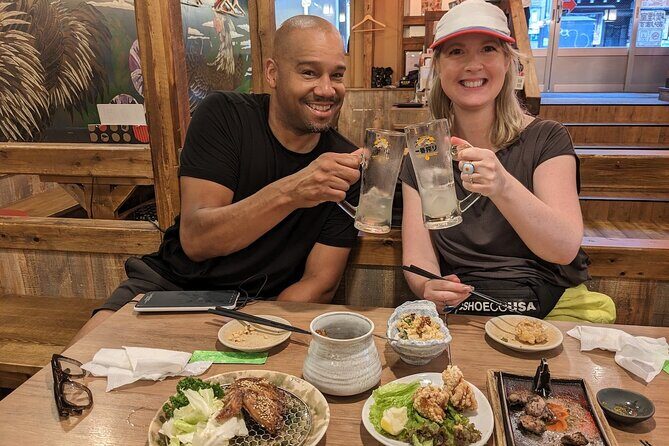
If you choose Dotonbori, you get the classic Osaka street scene, but with context. Expect huge billboards, dense restaurant rows, and food stalls. The guide can help you focus on the local favorites that make sense for you in the moment, including takoyaki and okonomiyaki, which are the go-to street foods here.
Dotonbori can feel like sensory overload at first. That is exactly why a guide helps. Instead of wandering randomly, you get a simple route through the area and photo stops that do not require you to keep backtracking.
Pair it with Shinsaibashi-suji if you want a more linear “walk-and-shop” vibe. This shopping arcade runs about 600 meters and is known for cosmetics, apparel, and restaurants. It is lively and commercial, but it is also a great way to get oriented because the street rhythm is easy to follow. Shinsaibashi-suji works well as a warm-up before you move into older neighborhoods.
Drawback to consider: if you hate crowds or bright signage, Dotonbori and Shinsaibashi-suji can be intense. Picking one of them instead of both can make the day more comfortable.
Kuromon Market: snack your way through seafood seasons
Kuromon Market is one of those places where a guide changes the experience from browsing to understanding. It is a lively, roofed market where seafood is the headline. The specific seasonal highlights are useful for planning what you might want to eat.
Here is the practical cheat sheet you can use when deciding:
- In summer, conger pike is a standout
- In winter, fugu shows up as a major draw
You will also find many seafood shops that specialize in fugu and hamo, so the guide can point you toward places that match what you are curious about.
Even if you are not buying much, Kuromon is still worth a stop. You learn how the market is organized and what people consider normal day-to-day food choices in Osaka. That alone beats “look and leave” tourist stops.
Budget note: market snacking is not included, so treat it like a flexible expense. You can keep it small (one bite, one drink) and still feel like you participated.
Ikuno Korea Town and Shinsekai: contrast that makes Osaka feel real
Ikuno Korea Town is for when you want Osaka as a patchwork of cultures, not only Japanese classics. It has a strong food identity, with lots of Korean items and fermented foods. If you have seen Korean variety shows, this area can click fast because it feels familiar in theme while staying local in texture.
Expect lots of packaged goods and snacks, and think of it as a browsing stop that turns into a taste stop. Your guide can suggest what to try based on your comfort level with flavors you might not recognize.
Then you can jump to Shinsekai if you want older, nostalgia-heavy Osaka. Shinsekai was developed before the war and later went through a long period of neglect. That history shows in the atmosphere. At the center is Tsutenkaku Tower, a landmark that gives the district its identity and a clear focal point for photos.
Shinsekai is also one of those places where the streets feel like they have routines. If you like people-watching and small storefront energy, you will probably enjoy the slower feel compared to Dotonbori.
Potential drawback: if you are expecting a polished, museum-like experience, these districts are about lived-in street life. That is the point. Just go in with the right mindset.

Hozenji Yokocho and the kitchen-tools streets: small lanes with big payoff
Hozenji Yokocho is the kind of place that is easy to miss if you are only chasing the most famous streets. Behind Hozenji Temple, it is a group of small traditional alleyways that locals have enjoyed since the 17th century. What I like about adding this stop is the contrast. After neon and markets, you get quieter lanes with an older rhythm.
Hozenji Yokocho is also a top choice for photos because it has depth. You can step into the lane and instantly feel like the scene is layered—temple area in the background, shops and lantern-like vibes up close.
If you also want something practical and quirky, consider Sennichimae Doguyasuji Shopping Street. It is a shorter street (about 150 meters) lined with specialty shops for cooking utensils and kitchen items. It is the kind of place that makes sense if you love gear, gadgets, and the idea of taking home a useful souvenir that fits Japanese cooking culture.
And there is an event angle too: the Doguyasuji Festival on October 9 (Tool Day) is known for tool sales. Even if you are not there during the festival, the street theme is still the fun part.
These small lanes and specialty streets can be the highlight of the day because they are specific. They feel like Osaka has a personality, not just a brand.
Tenjimbashi-suji and America-mura: shopping without the same feel twice
Tenjimbashi-suji is a different shopping experience from Shinsaibashi-suji. It feels older and, at least at certain times, calmer. It is often described as a relic of an old shopping street layout, and you can find it easier to enjoy in the evening than you might expect.
If you want a date-night kind of stroll or just a break from heavier crowds, this is a smart selection. It also helps balance the day so it is not all food stalls and neon signage.
America-mura, or America Village, gives you yet another mood. The name comes from America plus the local term mura for village or neighborhood. It tends to feel more youth-oriented and fashion-leaning, compared to traditional street commerce. If you like browsing and people-watching, it is a good place to spend around 30 minutes as a palate cleanser after temples or markets.
How to choose between them: if you want quiet and old-school commerce, pick Tenjimbashi-suji. If you want trendier street energy and browsing, pick America-mura. Picking both can work, but only if you still have space for the Osaka “big ideas” you really care about.
Sumiyoshi Taisha Shrine: a calm cultural anchor in the middle of the city
If your route includes Sumiyoshi Taisha Shrine, you get a reset button. This is one of Osaka’s oldest shrines, founded in the 3rd century before the introduction of Buddhism. The architecture is known for being unique in style, so it is not just a quick photo stop.
A shrine visit also changes how you move through the city. Instead of treating Osaka like a giant shopping and eating machine, you take a moment for cultural context. A licensed guide helps here, because the shrine is part of the city’s identity, not a random detour.
If you are planning your day: adding a shrine can help you avoid “only streets, only signs” fatigue. It gives the schedule a natural pause and makes the later walking feel more relaxed.
How a guide like Nori keeps the day from turning into random wandering
One of the strongest signals from the guidance style shared by this tour’s guides is how much they prioritize direction and usefulness. Nori, for example, is described as giving clear information and helping people not feel lost. That is not small. In a big city like Osaka, getting your bearings fast turns a good day into a great one.
People also highlight flexibility. In practice, that usually means your route stays aligned with your interests instead of sticking rigidly to a script. You can ask for better photo spots and adjust based on what you see around you.
I recommend using that flexibility with intention. Before you start walking, tell your guide:
- which kinds of streets you want most (food, shopping, alleys, shrine)
- whether you prefer busier areas or calmer ones
- your comfort level with seafood snacks if Kuromon is on your plan
When you do that, the guide can help you build a day that feels like it was designed for you, not poured into a template.
Who this private Osaka tour is best for
This tour fits best if you want three things:
- A private experience where you can move at your pace
- A guide who can explain what you are seeing in plain English
- A route that includes both famous stops and the quieter, older-feeling side streets
It is especially good for:
- first-time visitors who want to understand neighborhoods fast
- food lovers who want snack ideas without committing to a formal meal
- couples and small groups who prefer customizing over checking boxes
If you have mobility limits or you want minimal walking, this is probably not your best match. Since it is built around walking and multiple streets, you would want to be realistic about daily comfort.
Should you book this Osaka off-the-beaten-path private tour?
Book it if you like the idea of a day that mixes iconic Osaka with older side streets, and you want a licensed guide to help you choose what matters. The biggest value is not any single stop. It is the way the route can be tailored to you, with guidance that helps you stay oriented while you eat, shop, and wander.
Skip it or rethink your plan if:
- you are hoping for a tour with lots of included meals and transit (that is not how this one is set up)
- you strongly dislike walking
- you want everything on one checklist without choosing your own 3–4 highlights
One more smart move: because the tour is often booked well ahead, lock in your date early. Then spend a few minutes before you go picking your top stops—Dotonbori and Kuromon for food, Shinsekai and Hozenji for character, Tenjimbashi-suji for calmer streets, and Sumiyoshi Taisha for a cultural pause.
If you do that, you get the best kind of Osaka day: not just where to go, but why it feels like Osaka.
FAQ
How long is the Osaka off the beaten path private tour?
The tour runs for about 6 hours.
Is this a private tour or a group tour?
It is a private tour/activity. Only your group will participate.
Is it a walking tour?
Yes. It is described as a walking tour, and the pickup is on foot.
Are meals and drinks included?
Lunch and other personal expenses are not included. The guide can help you find foods and drinks along the way, but you should plan to pay for them.
What about entrance fees?
Entrance fees are not included. Entrance-related costs are something you should budget separately.
Can I customize which places we visit?
Yes. You can customize your itinerary by selecting your must-see spots. The plan is built around choosing 3–4 sites from the available options.
Does the tour include transportation?
No. Transportation fees and private transportation are not included.
Is there a licensed English-speaking guide?
Yes. The tour includes a licensed local English-speaking guide.
What is the cancellation policy?
You can cancel up to 24 hours in advance for a full refund. If you cancel less than 24 hours before the start time, the amount paid will not be refunded.