Fake food starts with real curiosity. This private car day trip pairs retro vending machines in Sagamihara with the hands-on Atelier Stella fake food workshop, then wraps it up with an easy, guided dinner in Machida.
What I really like is how the guide work makes the day feel simple: you get help photographing the weird and wonderful vending machines, and you also get clear English support while you build your own realistic-looking food replica. One consideration: the schedule is tight and the experience needs good weather, so if you’re hoping to wander slowly between stops, this style may feel a bit paced.
In This Review
- Quick Reality Check: What This 5-Hour Day Actually Gives You
- Stop 1 in Sagamihara: Retro Vending Machines in a Used Tire Market
- Stop 2 at Atelier Stella: Making Realistic Fake Food for Your Japan Souvenir
- Choosing your food replica
- Workshop length and what to expect
- Stop 3 in Machida: Guided Dinner That Matches Your Style
- How the included dinner budget helps
- Private Car + Licensed English Support: Why This Feels Easy
- Price and Value: Is $82 Worth It?
- Practical Tips to Get the Most Out of the Day
- Bring curiosity, not perfection
- Plan for a hands-on workshop
- Decide your dinner mood before you’re hungry
- Know what’s included for food
- Weather matters
- Who Should Book This Quirky Cuisine Journey
- Should You Book This Tour or Skip It?
- FAQ
- How long is the tour?
- How much does it cost, and what’s included?
- Is pickup available, and is this a private tour?
- What can I make at the Atelier Stella workshop?
- Are kids allowed?
- What happens if weather is bad, or I need to cancel?
Quick Reality Check: What This 5-Hour Day Actually Gives You
This is a quirky cuisine experience, but it’s not random. It’s built around three scenes that connect through Japanese everyday culture: the nostalgic vending machine world, the ultra-realistic food replicas that restaurants use to lure you in, and a final meal where your guide helps you order without stress.
You’re on the move for about 5 hours total, with stop times that roughly add up to the day: around 1 hour at the Sagamihara Used Tire Market, about 2 hours for the Atelier Stella workshop (depending on your session), and about 1 hour 30 minutes for dinner. Because it’s private, you’re not sharing the van with strangers.
Stop 1 in Sagamihara: Retro Vending Machines in a Used Tire Market
Your first stop is the Used Tire Market Sagamihara Vending Machines Corner—an unexpected setting that feels like a time machine. Instead of a mall arcade, you get rows of older vending machines (Showa-era style) still in service, plus a shop-and-gallery vibe that’s fun to roam even if you’re not a hardcore collectible hunter.
This is where the tour earns its quirky name. You can see machines stocked for all sorts of cravings: hot udon, toast, capsule toys, and bottled drinks. It’s also the kind of place where you’ll notice details you’d never catch from photos alone—machine labels, button layouts, and those perfectly preserved facades that make the whole room feel staged by nostalgia.
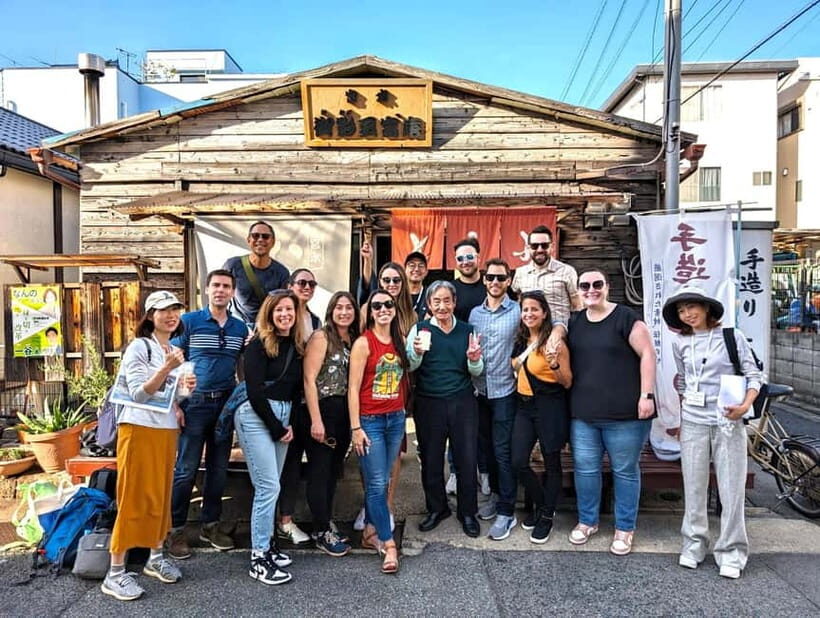
I like that the guide doesn’t just say where to stand. Yuga-kun (your English-supported guide) helps with photos, so you spend less time figuring out angles and more time actually enjoying the experience. One tip: wear shoes you can walk in comfortably. You’ll likely want to stroll the aisles more than once.
What could be a downside here: if you’re the type who hates crowds or fast wandering, this stop can feel like you’re moving through a busy, small-feeling area. It’s not chaotic, but it’s not a big quiet museum either.
You can also read our reviews of more tours and experiences in Tokyo Prefecture.

Stop 2 at Atelier Stella: Making Realistic Fake Food for Your Japan Souvenir
Then you switch from observing to creating at 食品サンプル教室 アトリエステラ (Atelier Stella), a food sample workshop focused on making ultra-realistic replicas like the ones you see in Japanese restaurant windows.
The experience is hands-on and beginner-friendly. You choose what to make—common options include sushi, takoyaki, rice crackers, and the popular toast-shaped clock. In at least some sessions, you can also end up making small items like a senbei magnet, which turns your snack obsession into a souvenir you can actually take home.
What makes this workshop work (especially if you’re traveling solo or with kids) is the teaching style. The artisan instructor provides guidance, and English support keeps you from feeling lost. The tour information notes participation for beginners and kids age 6+, which tells you the pacing is designed for real people, not just expert craftspeople.
Choosing your food replica
Your choice matters because it changes what the day feels like in your hands. If you pick something like toast-shaped items, you’ll likely enjoy the playful design aspect. If you choose sushi or takoyaki, you’ll probably get satisfaction from getting the shapes and textures to look right.
A smart strategy: pick the item you’d actually recognize from real restaurants. If you love takoyaki street snacks, go for that. If bread or bakery aesthetics are your thing, pick the bread-clock option. It makes the finished piece more meaningful.
Workshop length and what to expect
The workshop runs as a session of either 1 or 2 hours. The tour includes the food sample making experience fee, so you’re not stuck with surprise add-ons just to participate. During class time, you’ll move from instructions to actual shaping and finishing, then you’ll place an order during the process (the tour includes making, plus ordering at the workshop).
What I like most: the workshop gives you a souvenir with a story. It’s not a generic trinket. It’s something you made while learning why fake food is such a big deal in Japan.
Stop 3 in Machida: Guided Dinner That Matches Your Style
At the end of the day, you head to dinner in Machida at もんじゃ お好み焼き サカフネオヤジ, a spot where you can land on a Japanese dinner mood that fits you.
This is where your guide becomes really useful. Instead of guessing from menus in Japanese, you get help choosing and ordering. The dinner options are broad in spirit: you might go with izakaya-style food, traditional washoku, or go all-in on monjayaki/okonomiyaki territory.
Here’s the practical value: the tour fee includes a maximum dinner budget of 5,000 yen per person. That means you can keep the day anchored to a known amount, while still getting a local meal that feels like a reward instead of an obligation.
How the included dinner budget helps
Without guidance, restaurant decisions can turn into stress. With guidance, you get to focus on enjoying. The included budget also helps you plan without doing constant mental currency math, especially after a day that already involved travel time and workshop steps.
Possible downside: if you’re a very picky eater or you’re strict about specific dietary needs, you’ll still need to communicate clearly. The tour says English support is available, but the final meal choice depends on the restaurant’s offerings.
Private Car + Licensed English Support: Why This Feels Easy
This is a private tour, so you and your group have the air-conditioned vehicle to yourselves. That matters more than it sounds. You’re visiting a tire-market vending corner, then moving to a workshop, then finishing with dinner. Those are the exact moments where group tours can turn into constant waiting.
Because you’re not sharing the van, the tour can feel more like a structured day with room to breathe. The guide interpreter is nationally licensed, and that shows up in the workshop and meal parts: you’re not just handed a route map.
Pickup is offered, and the tour uses a mobile ticket. Put simply: it’s set up for low friction.
Price and Value: Is $82 Worth It?
At $82.03 per person, this tour is unusually good value for a private day that includes:
- a licensed guide interpreter
- a full food sample workshop fee
- an included meal budget (up to 5,000 yen per person)
- an included snack food and drink charge of 1,000 yen
- an air-conditioned private vehicle
Now, let’s be honest about what you should watch. Parking fees aren’t included, and you may spend extra on top of the included food and drink allowances if you want more from vending machines or if you push past dinner limits.
Still, the pricing is hard to argue with because you’re buying three things at once:
1) access to a specific local vending machine environment
2) a hands-on workshop that creates a take-home item
3) a dinner experience that doesn’t require menu translation stress
If you care about authentic, everyday Japanese culture (not just the big landmark stuff), this one hits your interests directly.
Practical Tips to Get the Most Out of the Day
Here are a few ways to make the experience smoother and more fun.
Bring curiosity, not perfection
The vending machine stop is about atmosphere: old labels, capsule toys, old game machines (some sessions include the chance to play old games), and that surreal feeling of seeing it all in a real working space. Go with the mindset that you’re collecting moments, not just pictures.
Plan for a hands-on workshop
Fake food making can be messy or at least hands-on. Even if the materials aren’t described in the tour details, assume you’ll be shaping items and handling workshop tools. Wear clothes you don’t mind a little activity in.
Decide your dinner mood before you’re hungry
Monjayaki and izakaya options can feel more appealing once you’re already seated and ready. You’ll have a guide helping you pick, but you’ll enjoy it more if you’ve thought about whether you want something cozy and traditional or something sizzling and local.
Know what’s included for food
You’ll have:
- a 1,000 yen food and drink charge for snacks
- dinner with up to 5,000 yen per person included
If you want extra, you can buy it yourself—but budget time thinking beats budget money.
Weather matters
The tour requires good weather. If conditions are poor and the tour gets rescheduled, you’ll want backup flexibility. If weather is usually unpredictable for your travel dates, consider building a little slack into your Tokyo-area plan.
Who Should Book This Quirky Cuisine Journey
This is a strong match if you want:
- a break from standard sightseeing
- a hands-on cultural activity with a real souvenir payoff
- an English-supported guide for ordering and workshop instructions
- a private format that keeps waiting time low
It’s also a good idea if you’re traveling with kids (age 6+) who enjoy craft projects and silly-but-real food details. And if you’re a solo traveler who doesn’t love stepping into unfamiliar places alone, the guide presence helps you feel comfortable moving through spaces like the vending machine corner.
Should You Book This Tour or Skip It?
Book it if you like quirky, tactile Japan—machines you can’t find everywhere, restaurant food replicas, and a local dinner that a guide can translate into a real plan.
Consider skipping if you’re only interested in classic Tokyo landmarks or if you hate structured schedules. This day is built around three fixed stops and a workshop session. Also, if you’re traveling during a period of likely bad weather and you can’t move dates, that weather requirement may be a factor.
For the right traveler, this tour is the kind of day you remember because you made something and you ate something, not just because you looked at it.
FAQ
How long is the tour?
The tour lasts about 5 hours.
How much does it cost, and what’s included?
It costs $82.03 per person. The tour includes a 1,000 yen food and drink charge (snacks), a licensed guide interpreter, an air-conditioned private vehicle, and the food sample making experience fee. Dinner is also included with a maximum of 5,000 yen per person.
Is pickup available, and is this a private tour?
Yes, pickup is offered. It’s a private tour, so only your group will ride in the vehicle.
What can I make at the Atelier Stella workshop?
You can choose to make items such as sushi, takoyaki, rice crackers, or the popular toast-shaped clock. Some sessions may include other small food-sample style items like a senbei magnet.
Are kids allowed?
Yes. The experience notes participation for kids age 6+.
What happens if weather is bad, or I need to cancel?
The experience requires good weather. If it’s canceled due to poor weather, you’ll be offered a different date or a full refund. You can cancel for a full refund up to 24 hours before the experience start time.