REVIEW · TOKYO PREFECTURE
Tokyo: Samurai Sword Academy in the Hometown of the Last Samurai
Book on Viator →Operated by Samurai Sword Academy in the Hometown of the Last Samurai · Bookable on Viator
Steel, rituals, and real dojo training. This session is interesting because it focuses on Tennen Rishin-ryu swordsmanship in an authentic dojo setting, and you can actually handle a Japanese sword. I especially like how the class starts with basic forms and etiquette, so you understand what the movements are trying to do, not just copy shapes. The main drawback: this is not casual sightseeing, so expect a serious, disciplined atmosphere and some physical work.
Led by chairman Masao Inoue, a descendant of the Shinsengumi executive Genzaburo Inoue, the experience has a personal connection to the people and story you came for. In a small group (up to 4 travelers), you should get more attention than you would at most short, tourist-style activities.
You meet at the Genzaburo Inoue Shiryokan in Hinohonmachi, Hino, then train in the dojo environment where the style is practiced today. It’s a clean break from the usual Tokyo routine, and if you like hands-on learning with real feedback, you’ll likely enjoy it.
In This Review
- Key highlights at a glance
- Tennen Rishin-ryu and the Shinsengumi link you can feel
- Where you start: Genzaburo Inoue Shiryokan in Hino
- What the “real dojo” training actually focuses on
- A note on fitness and readiness
- Your instructor and the English support piece (Yu Ma)
- The itinerary: from meeting to forms practice (and what to expect)
- Etiquette matters: why the serious tone is part of the payoff
- Price and value: is $118.60 worth it?
- Who should book this (and who might want a different option)
- Practical tips so you get the most from the lesson
- Should you book Samurai Sword Academy in the Hometown of the Last Samurai?
- FAQ
- How long is the Samurai Sword Academy experience?
- Where do I meet for the experience?
- Is the experience beginner-friendly?
- Who leads the program?
- Will there be English support?
- How many people are in each group?
- What kind of physical fitness is needed?
- Do I need a paper ticket?
- What is the cancellation policy?
- Is there a cancellation fee if I cancel late?
Key highlights at a glance
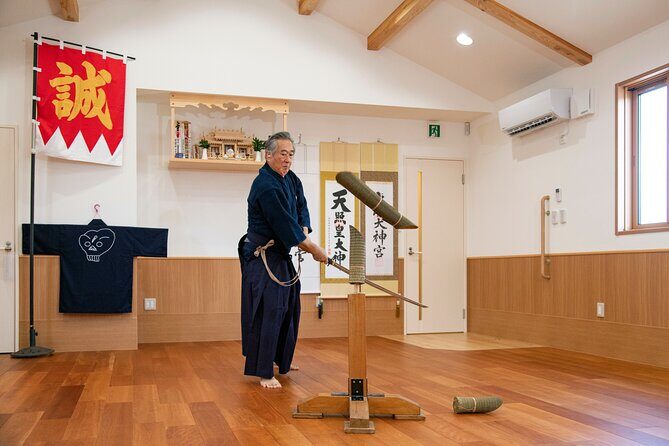
- Authentic Tennen Rishin-ryu practice rather than a staged demonstration
- Guided by Masao Inoue, connected to Shinsengumi leadership history
- Small group size (max 4) for more direct instruction
- Hands-on sword handling as part of the learning process
- Etiquette and stance basics so the technique makes sense
- English support may be available with Yu Ma helping during the program
Tennen Rishin-ryu and the Shinsengumi link you can feel
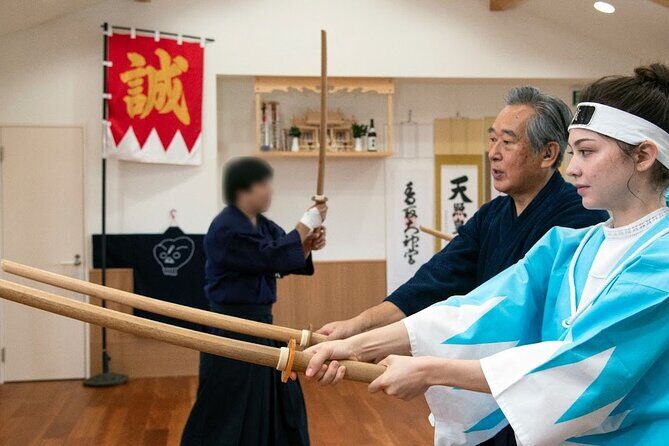
This experience is built around Tennen Rishin-ryu, a kenjutsu style traced back to the Edo period and still practiced today. That matters because many Tokyo “samurai” activities are all costume, photo ops, and a quick demo. Here, the point is practice: you learn the essence of the style in the kind of setting where it’s meant to be trained.
The story connection is also clear. Sword paths matter because of what they were used for, and the Shinsengumi were active at the end of the Edo period. They’re often described as one of the strongest groups of swordsmen of that era, and they’re tied to the “Last Samurai” narrative many people come to Japan wanting to understand. This program specifically connects the style practiced in Hino City to that Shinsengumi legacy.
One detail I appreciate: the guide isn’t just a presenter. Chairman Masao Inoue leads the program, and he is a descendant of Shinsengumi executive Genzaburo Inoue. When you hear that kind of family lineage while you’re being coached on posture, grip, and movement, the training feels less like a performance and more like continuity. You’re learning a craft that has rules, roles, and seriousness.
You can also read our reviews of more tours and experiences in Tokyo Prefecture.

Where you start: Genzaburo Inoue Shiryokan in Hino
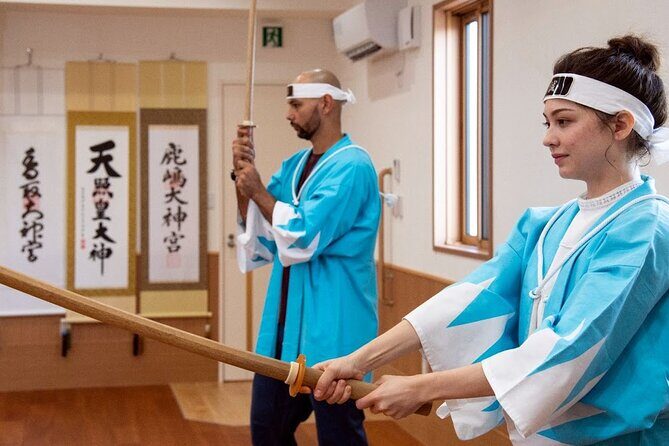
Your meeting point is the Genzaburo Inoue Shiryokan at Hinohonmachi, Tokyo (191-0011), Hino, 4-chōme 11-12. It’s in the Hino area, which is part of why this doesn’t feel like generic Tokyo tourism. You’re spending your time in the locality that’s presented as a hometown link for the Shinsengumi story.
The location is also described as being near public transportation, which is practical. For a 2-hour activity, you want minimal transit stress. Tokyo has enough surprises already, so it helps that this one is designed to be reachable without a long slog.
Also, this is a small group experience, with a maximum of 4 travelers. That changes how the session will feel. In a tiny class, instructors can notice if your stance is off or if your grip is tense. It also reduces the “watch from the side” feeling that can happen with larger groups.
What the “real dojo” training actually focuses on
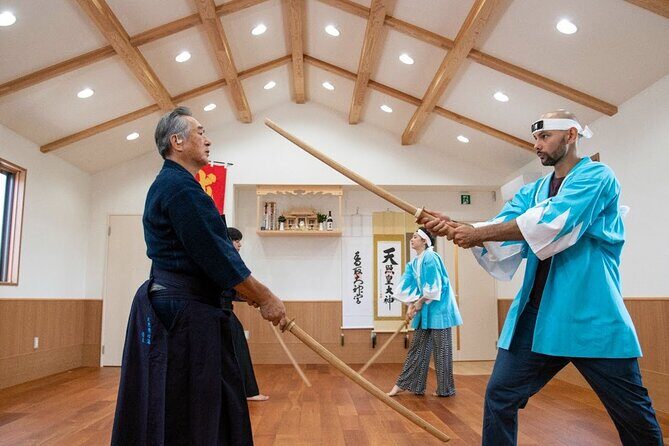
This is not a leisure activity dressed up as a lesson. The program is presented as real swordsmanship practice at an authentic dojo, and the emphasis is on learning basics. You should expect instruction around how to handle a Japanese sword, how to hold it, and how to move through the initial forms of the style.
Tennen Rishin-ryu training is structured around forms, and that’s where the value is. Forms aren’t just “pretty choreography.” They’re a way to train timing, distance, body alignment, and discipline in a controlled way. If you’re a beginner, forms are a friendly starting point because you can build muscle memory without needing to spar immediately.
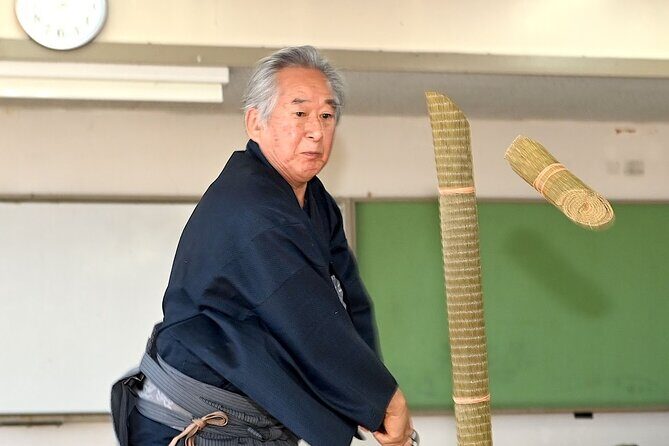
One review highlighted that the session included repeated instruction covering礼儀作法 (etiquette), sword posture, katas, and even a real-sword trial cut. I can’t guarantee every session includes that specific element, but the overall pattern is clear: instructors teach carefully, and you’re not just watching others do the basics.
Also keep in mind the tone. The training can feel tense in a good way. One participant described feeling a strong sense of seriousness, and that makes sense: you’re holding a sword-like implement, learning correct posture and control, and being coached on behavior and respect in the dojo environment.
A note on fitness and readiness
The activity asks for moderate physical fitness. You don’t need to be an athlete, but you should be able to stand, move through basic positions, and follow coaching that may involve controlled steps or repeated stances. If you’ve got injuries that limit your ability to stand or move comfortably, I’d consider that before booking.
Your instructor and the English support piece (Yu Ma)
What makes this class feel grounded is the instruction leadership. Chairman Masao Inoue leads the program, and he’s described as the chairman of the Tennen Rishin-ryu Hino Dojo. Reviews also refer to instruction by Master Inoue Genzaburo, which fits the same lineage emphasis and reinforces that you’re not getting a substitute teacher who only explains the story.
If you’re not fluent in Japanese, that matters. One review specifically mentioned English guidance with Yu Ma, and that kind of support can turn the session from confusing to meaningful. Even with translation, dojo practice still has a physical language component, but understanding the why behind the movement helps you correct faster.
In a small group, the coaching style tends to be direct. You’ll likely get attention on the details that beginners miss: how your weight sits, whether your shoulders are tense, and how your hands communicate the movement. If you love learning from feedback, this is the setup that makes feedback actually useful.

The itinerary: from meeting to forms practice (and what to expect)
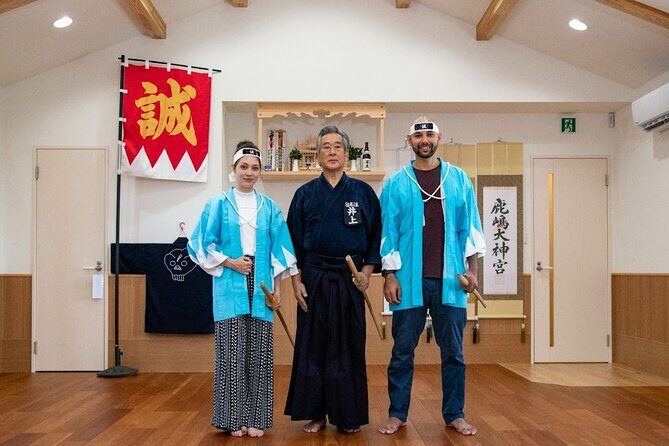
The schedule is simple: you start at the Genzaburo Inoue Shiryokan and the activity ends back at the meeting point, with a start time around 1:00 pm and an approximate duration of 2 hours.
There’s no multi-stop hopping. That’s good. It keeps the experience focused and reduces the chance you show up late because you got sidetracked by one more snack or photo spot. You’ll spend your time in practice mode: instruction, handling, forms, and guided repetition.
Because the training is described as happening in the real dojo environment where Tennen Rishin-ryu is practiced, you can expect the session to feel like a class. You’re not moving from station to station collecting “experiences.” You’re learning a craft in a single, consistent space, which helps your understanding.
If you’re hoping for a wide variety of activities, be aware: the core of the value is that you go deeper into kenjutsu basics and sword handling rather than doing many different mini-things.
Etiquette matters: why the serious tone is part of the payoff
One of the most praised parts of this experience is the feeling of authenticity and seriousness. That matters because sword training historically isn’t just technique. It includes etiquette, posture, and discipline. In a dojo setting, respect isn’t a decorative idea. It’s how the environment stays safe and how instructors can correct your form.
You’ll likely notice this in how the class begins and how instructors explain the movements. Even if you don’t understand every word, you can usually tell what matters most by the structure of the lesson: who demonstrates, when you mirror the movement, and what kind of corrections are repeated.
A participant even described the experience as something they could never taste in everyday life. That’s the right expectation to have. You’re stepping into a world with rules. It can make you nervous at first, but it’s also why the experience feels real instead of performative.
Price and value: is $118.60 worth it?
The price is $118.60 per person, and it’s commonly booked about 31 days in advance. At first glance, this may feel steep compared to generic “samurai sword” attractions.
But the value logic here is clearer when you match price to what you’re buying:
- Authentic dojo instruction (not a one-person show)
- Small group size (max 4), which affects how much attention you can get
- Hands-on sword handling and learning forms, rather than only watching
- Leadership by Masao Inoue and the dojo’s active connection to Tennen Rishin-ryu practice
- A program that takes about 2 hours, which is long enough to teach, practice, and correct
In other words, you’re paying for coaching time and for the real access to a living martial tradition. If you want a quick souvenir photo, you’ll likely feel it’s overpriced. If you want a disciplined skill lesson in a real setting, the price starts to make sense.
Who should book this (and who might want a different option)
This experience fits best if you:
- Want a hands-on introduction to kenjutsu and basic forms
- Like historical connections you can actually practice, not just read about
- Prefer small-group instruction with direct coaching
- Appreciate dojo etiquette and are okay with a serious atmosphere
It may be less ideal if you:
- Want something purely relaxed or entertainment-first
- Have limited mobility and struggle with moderate fitness demands
- Expect a casual workshop where you can “dip in” and out without following dojo discipline
And if your main goal is to learn samurai history through storytelling only, you might find that the session focuses more on physical learning and etiquette than long lectures. You’ll get the connection, but the training is the centerpiece.
Practical tips so you get the most from the lesson
A few things to do before you arrive can make the session smoother:
- Plan to show up a bit early at the Genzaburo Inoue Shiryokan meeting point so you can settle in.
- Wear comfortable clothing you can move in, since this is practice-based and you’ll hold stances.
- If you need English support, consider that Yu Ma has been mentioned as helping with English in the program. If translation isn’t your strength, ask ahead in the booking process if English support will be available for your slot.
- Bring a mindset of learning, not performance. You’re there to practice basics and receive corrections.
Also, this is a mobile ticket experience. Keep your confirmation accessible on your phone so check-in stays quick.
Should you book Samurai Sword Academy in the Hometown of the Last Samurai?
I think you should book it if you want more than a themed photo. This is one of those Tokyo experiences where the craft is the attraction: Tennen Rishin-ryu, dojo etiquette, and structured basic forms led by Masao Inoue in a small group.
Choose it when you’re ready to take the session seriously and treat it like a real class. If you do that, the odds are high you’ll leave with a better understanding of why sword training isn’t just about the blade.
Skip it if you want a lightweight, low-effort activity or if you’re uncomfortable with the physical and mental seriousness of dojo practice. In that case, your time (and money) might be better spent elsewhere.
FAQ
How long is the Samurai Sword Academy experience?
It lasts about 2 hours.
Where do I meet for the experience?
You meet at Japan, 191-0011 Tokyo, Hino, Hinohonmachi, 4-chōme 1112.
Is the experience beginner-friendly?
Yes. The program is presented as something anyone can learn in a true dojo setting.
Who leads the program?
The experience program is led by Masao Inoue, chairman of the Tennen Rishin-ryu Hino Dojo.
Will there be English support?
English guidance is mentioned in connection with Yu Ma.
How many people are in each group?
There is a maximum of 4 travelers.
What kind of physical fitness is needed?
Travelers should have a moderate physical fitness level.
Do I need a paper ticket?
No. The experience uses a mobile ticket.
What is the cancellation policy?
Free cancellation is available. You can cancel up to 24 hours in advance for a full refund. Cancellation cutoff times are based on local time.
Is there a cancellation fee if I cancel late?
If you cancel less than 24 hours before the experience’s start time, the amount you paid is not refunded.