Fukuoka changes fast on foot. A private local guide can steer you through the parts of town you actually care about, from busy streets to quiet park paths. The key here is that it’s meant to be personalized, not one-size-fits-all.
Two things I really like: you get a pre-tour questionnaire plus direct messaging to shape the day, and you can build your route around food and neighborhood life—especially the Nakasu yatai scene and the market stop.
One thing to keep in mind is that this is mostly walking, so summer heat or a bad rain window can change what feels comfortable. Also, timing matters for anything food- or stall-based, so you’ll want your guide to steer you to the right place at the right time.
In This Review
- Key things that make this tour work
- Private Fukuoka on your schedule, not a fixed route
- Price and value: what $66.83 really buys
- Where you meet in Hakata (and why it’s smart)
- How the itinerary gets personalized before you even step outside
- Canal City Hakata: shopping, dining, and a short culture reset
- Nakasu District and the yatai street-food night scene
- Yanagibashi Rengo Market: seafood and real ingredients
- Fukuoka Castle Ruins in Maizuru Park: history without the museum fatigue
- Ohori Park: calmer walking, bridge views, and paddleboats
- Walking comfort, heat, and rain: how to plan without losing your day
- Guides can make or break the experience (and Fukuoka has plenty of strong hosts)
- Transportation between stops: mostly on foot, sometimes not
- Who should book this private Fukuoka walking tour
- Should you book this private Fukuoka tour?
- FAQ
- How long is the tour?
- Where do we meet for the tour?
- Is this tour private?
- How do you personalize the itinerary?
- What’s included, and what’s not?
- Will there be transportation between stops?
- Can I cancel for free?
Key things that make this tour work
- Choose your hours (about 2–8) and pace the day so you’re not rushing like a stampede
- Pre-tour questionnaire + messaging turns your interests into a real route
- Nakasu yatai street-food focus adds a fun local-food angle to sightseeing
- Yanagibashi Rengo Market gives you a practical look at everyday Fukuoka ingredients
- Parks plus castle ruins balance the city energy with calmer walking breaks
Private Fukuoka on your schedule, not a fixed route
Fukuoka is one of those cities that rewards walking and short detours. This private tour is built for that. You pick the duration, then your guide maps the day around what you want—history, street food, parks, shopping, or a mix.
What makes the experience feel different is the setup. Before you meet, you fill out a short questionnaire and can message your host directly. That matters because Fukuoka has multiple “faces.” Hakata is practical and transit-connected. Canal City is a big destination with shops and entertainment. Nakasu is where you go for the evening buzz and food stalls. If you don’t plan, you can end up seeing only the most obvious spots.
You can also read our reviews of more private tours in Fukuoka

Price and value: what $66.83 really buys
The price is $66.83 per person, and the tour runs about 2 to 8 hours depending on what you choose. The value comes from the format: it’s private and walking-based, so you’re paying for one guide’s time and local routing skills rather than paying for a bunch of entry tickets you might not want.
A quick way to think about it: at the shorter end (say 3 hours), you’re paying mostly for the guide. At the longer end (6–8 hours), that same guide time spreads out, which is when this kind of tour can feel like a real bargain—especially if you’re trying to fit a lot into a limited stopover.
Also, you’re not stuck with food costs or attraction tickets bundled in. Food and drinks aren’t included, and attraction tickets aren’t included either. That’s actually helpful. You can eat where you want, skip what you don’t, and still get the local guidance that makes the day flow.
Where you meet in Hakata (and why it’s smart)
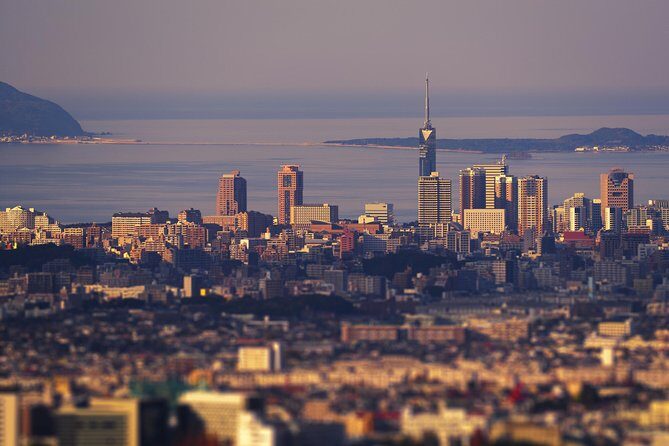
Your meeting point is Tully’s CoffeeJapan, at Hakataekichūōgai, on the 1F of Hakata Marui. This is a convenient spot because it’s close to the Hakata station area. You avoid the awkward “meet at some random alley” problem.
The tour ends back at the meeting point. That’s practical for figuring out your next plan—whether you’re catching a train, grabbing dinner, or heading back to your hotel. If you’re using public transport, this setup usually keeps logistics simple.
How the itinerary gets personalized before you even step outside
The tour is private, and your guide plans around your preferences using the pre-tour questionnaire and ongoing communication. In real terms, that means you can say things like:
- I want mostly food stops and easy walking
- I want history, but not museum-heavy
- I’m tired in the afternoon, so keep it lighter
- I want nightlife energy, but I don’t want a long commute between spots
A big win: the guides can adjust while you’re out there. One guide (Eli) is noted for being well prepared and flexible, while others (like Chris and Mark) are praised for tailoring around the timeline people had—especially when someone only had a few hours in Fukuoka.
Canal City Hakata: shopping, dining, and a short culture reset
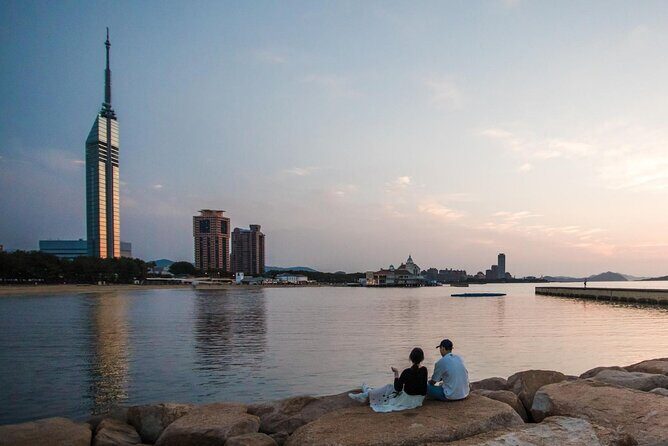
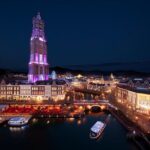
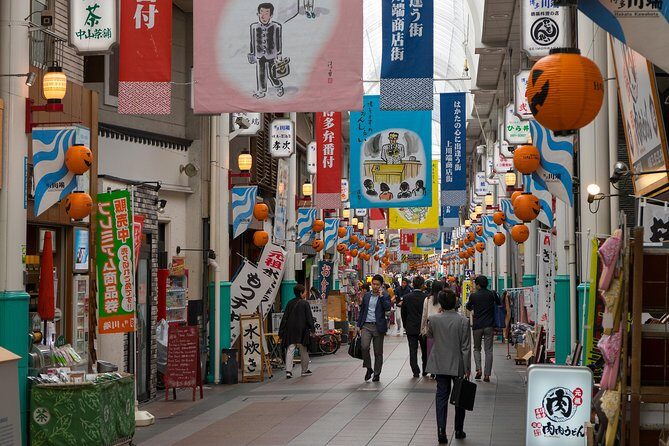
Canal City Hakata is often the first “big wow” stop on many routes. It’s a major entertainment complex with shopping and dining options, and it’s a useful place to orient yourself. You’ll see how Fukuoka mixes commercial life with public spaces where people actually hang out.
Why it’s a good tour stop:
- It gives you energy right away without requiring advance tickets
- It’s a visual introduction to the city’s modern side
- If weather is turning, you have indoor options nearby
Possible drawback:
- It can feel touristy if you’re expecting only local streets. Your guide should help you treat it as a jumping-off point, not the whole day.
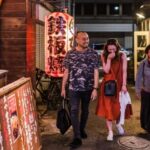
Nakasu District and the yatai street-food night scene
Nakasu is where Fukuoka leans into the night. This stop is built around the yatai—street-side food stalls that turn the district into a social place, not just a dinner stop. Your guide helps you find the best stall options based on what you like to eat and what time you’ll be out.
What to expect:
- A lively district atmosphere with plenty to look at while you eat
- A street-food experience that feels local instead of staged
- Your host can guide you through choices without overwhelming you
Why this is a standout:
Even if you’ve tried Japanese street food elsewhere, yatai culture has a different rhythm. It’s casual, it’s flavorful, and it’s a great way to learn the city through daily life rather than a checklist.
Timing note (worth taking seriously):
One review-based lesson from similar tours is that market and stall timing can make or break the experience. For Nakasu, you’ll generally want your guide to schedule this for when the yatai scene is actually active—especially in hot or rainy seasons.
Yanagibashi Rengo Market: seafood and real ingredients
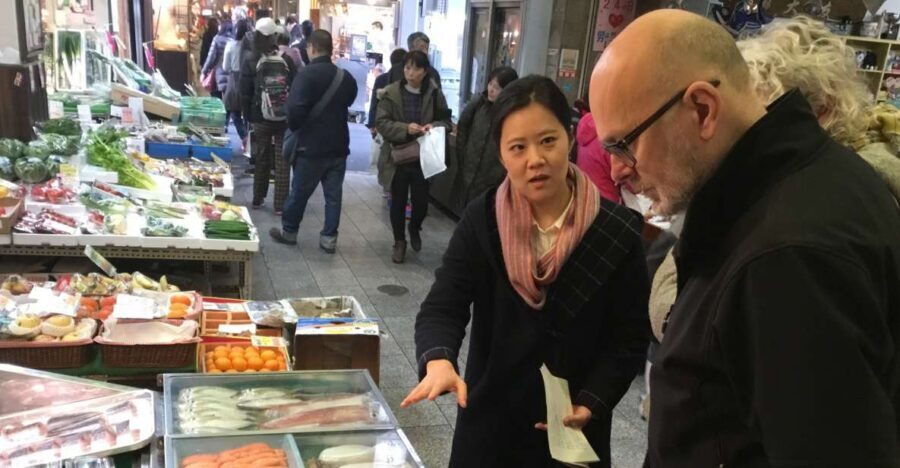
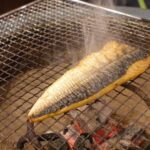
If Nakasu is the evening mood, Yanagibashi Rengo Market is the daytime food backbone. This stop is described as a place with local vendors and standout seafood stalls, plus artisan produce.
This is where the tour shifts from “where should we eat?” to “what does Fukuoka eat with, and why?” Markets are one of the fastest ways to understand a city’s food habits. Even if you don’t go crazy purchasing souvenirs, you’ll get a stronger sense of the ingredients and flavors that power local cooking.
What you’ll likely enjoy:
- Seeing how vendors present seafood and produce
- Getting guidance on what to try based on your preferences
- A quick, high-impact stop that adds context to the rest of your food day
Possible drawback:
Markets can be crowded, and your guide’s pacing matters. If you’re sensitive to crowds or you’re traveling with kids or mobility needs, tell your host in advance so they can plan the route accordingly.
Fukuoka Castle Ruins in Maizuru Park: history without the museum fatigue
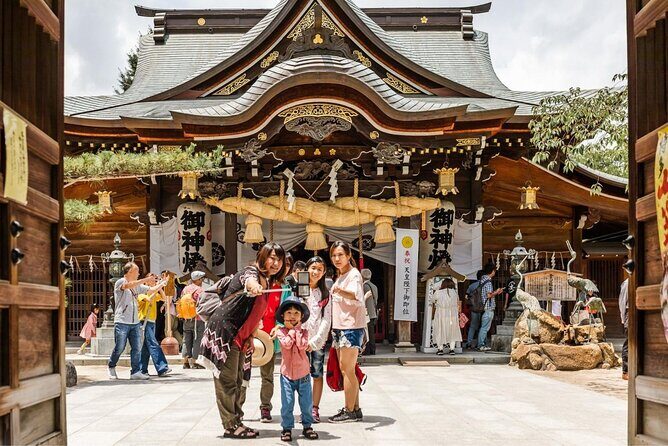
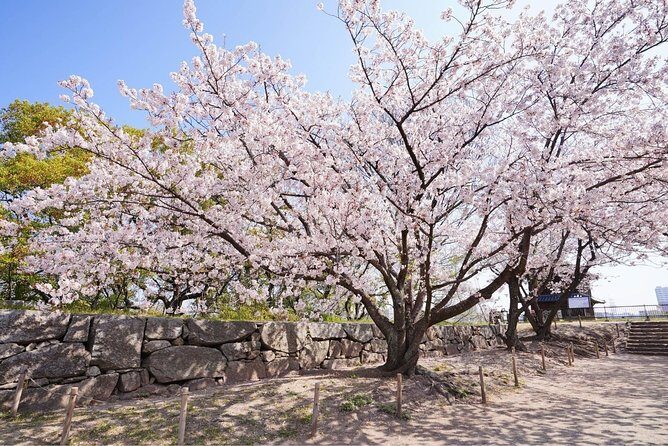
The Fukuoka Castle Ruins sit within Maizuru Park, which helps. You don’t just “stand and read.” You walk in a calmer setting and your guide shares stories tied to samurai-era leadership and the castle’s former role.
This stop works for a lot of travelers because it offers history in an outdoor format. It’s also a nice counterbalance after the city energy. If you’ve been shopping or eating for hours, Maizuru Park can feel like your brain gets a breather.
What makes it special on a tour like this:
- Your guide turns the area into a story, not just a landmark
- You get space to slow down and take photos without feeling rushed
- The park setting helps the day feel more complete
Possible drawback:
Outdoor stops can be affected by weather. On hot days, this is where you’ll want shade and smart breaks. On rainy days, your guide may swap the order or adapt the pacing.
Ohori Park: calmer walking, bridge views, and paddleboats
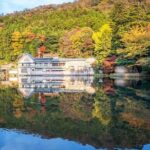
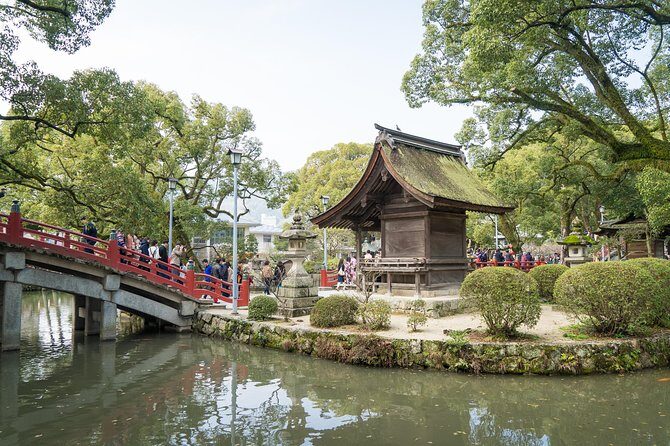
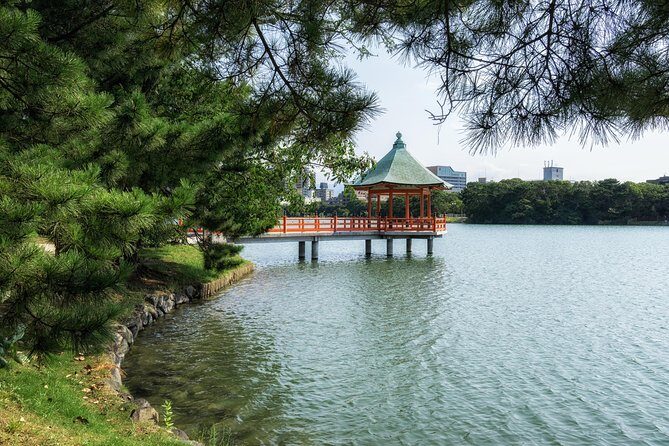
Ohori Park is the soothing chapter. It’s inspired by classical Chinese gardens, and it includes scenic areas like bridges and places to watch the water. If your tour timing allows, your guide will point you toward good spots for views and mention popular paddleboating opportunities.
This stop is a strong pick if you want a softer rhythm and a bit of greenery between food stops. It’s also a good way to see a different side of Fukuoka that feels less like shopping and more like daily park life.
What you’ll likely appreciate:
- Easy scenic walking breaks
- A chance to reset after busy districts
- Photo angles that don’t require climbing stairs or hunting tickets
Possible drawback:
If you’ve chosen a shorter tour window, your guide may need to keep the park portion compact. That’s not bad, but it’s something to consider if parks are your top priority.
Walking comfort, heat, and rain: how to plan without losing your day
This is a walking tour. That sounds obvious until you’re in full sun or steady rain. One thing that comes up in similar experiences is that summer heat can limit what you want to do and can even shift you into more indoor shopping or underground areas for comfort.
So here’s the practical way to make this work:
- Wear shoes you trust for uneven sidewalks and long stretches
- Carry water and a light layer, especially in summer
- If it’s hot or wet, tell your guide your comfort level early
- For market or stall stops, ask your guide to prioritize opening times and active hours
Your guide can also reroute to keep you moving. The goal is to avoid dead time—like arriving at a street market before it opens—and instead spend your hours where things are actually happening.
Guides can make or break the experience (and Fukuoka has plenty of strong hosts)
The biggest theme in the feedback is that the best tours feel like hanging out with someone who knows the city. Guides named Eli, Ai, Mark, Luis, Mike, Chris, Bruce, Yu, Mone, Shino, Taiyo, Mai, Sumiré, and Alex are repeatedly described as friendly, flexible, and great at shaping the day to your timeline.
A few practical takeaways from those examples:
- Communication before you meet helps you start smoothly.
- Flexibility on the fly helps when weather or energy levels change.
- Food guidance is a major strength—especially when the route includes Nakasu yatai and the market stop.
- Some guides are noted for very strong English support (for example, Eli and Bruce are specifically praised for language ability), which matters if you want fewer misunderstandings and faster decisions on where to eat.
If you’re picky about your interests, this setup is a plus. You can steer. Your guide supports.
Transportation between stops: mostly on foot, sometimes not
The tour is primarily a walking experience and doesn’t include a private vehicle. That said, public transport or local taxis may be used to transfer between sites, especially if you’re combining areas like Canal City, Nakasu, and market zones.
What this means for you:
- You should budget a bit of time for short transit hops if needed
- You should be ready to cover small transportation costs if your guide uses trains or taxis
The tour is designed to avoid long, tedious commutes. Still, it’s smarter to ask your guide how the day will move—especially if you want to stay near certain districts.
Who should book this private Fukuoka walking tour
This works best if you fit one (or more) of these profiles:
- You have limited time in Fukuoka and need a plan that doesn’t waste hours
- You like food-focused sightseeing, especially street-stall culture
- You want a mix of modern and classic stops (Canal City + parks + castle ruins)
- You prefer flexibility over rigid schedules
- You’re traveling with family or want a pace that isn’t too intense (including children, based on the kind of feedback this tour has received)
If you hate walking, dislike crowds, or want a mostly indoor, ticket-heavy itinerary, this may not be your best match. But if you’re happy to cover distances with breaks, it’s a strong format.
Should you book this private Fukuoka tour?
If you want Fukuoka to feel personal instead of prepackaged, I’d say yes. The combination of a private guide, a clear food-and-neighborhood route, and the ability to set your own hours is a winning mix—especially when you’re trying to see Nakasu yatai, Yanagibashi Rengo Market, and calm park time in the same day.
Book it if:
- You enjoy street food and markets
- You want a guided route that adapts when the weather (or your energy) changes
- You’d rather spend time experiencing neighborhoods than waiting in lines
Skip it if:
- You need fully indoor sightseeing
- You don’t want to walk between multiple areas
- You’re only interested in one single attraction and nothing else
FAQ
How long is the tour?
You can choose a duration for the private tour, with options listed from about 2 to 8 hours (with common choices stated as 3 to 8 hours).
Where do we meet for the tour?
The meeting point is Tully’s CoffeeJapan in the Hakata Ward area, at Hakata Marui 1F (Hakataekichūōgai). The tour ends back at the meeting point.
Is this tour private?
Yes. It’s a private tour/activity, and only your group participates.
How do you personalize the itinerary?
After booking, you receive a short questionnaire to share interests and must-sees. You also have direct communication with your host, who uses that info to craft a customized itinerary.
What’s included, and what’s not?
Included: a private personalized walking experience, insider tips, flexible duration options, the pre-tour questionnaire, and direct communication with your host. Not included: food, drinks, attraction tickets, and transportation (walking is the main mode; transit/taxis may be used).
Will there be transportation between stops?
The tour is mainly walking, but public transportation or local taxis may be used to transfer between sites. Any exact costs can be discussed with your host after reservation is finalized.
Can I cancel for free?
Yes. Free cancellation is offered up to 24 hours in advance for a full refund. If you cancel less than 24 hours before the start time, the amount paid isn’t refunded.