REVIEW · TOKYO
Tokyo Zen Meditation at Private Temple with Monk
Book on Viator →Operated by Travel Japan Together Tokyo · Bookable on Viator
Zen sounds simple, until you meet the monk. In Asakusa at Kinryu-ji, you get monk-led Zazen plus a matcha tea ceremony in a temple that isn’t open to the general public. It’s set up so you can ask questions and still follow along even if your Japanese is zero.
I also love the way the session feels structured, not random: instruction, practice, and then time with the monk for a free talk. One possible drawback: the meeting address can be a little tricky to find at first, so plan to arrive early and confirm the exact spot.
In This Review
- Key takeaways before you go
- Why Kinryu-ji Zen feels different from a standard temple tour
- Price and time: what $56.16 really buys you
- Getting to the meeting point at Kotobuki (and avoiding confusion)
- The experience flow at the temple: Zazen first, then tea and conversation
- Meditation instruction that actually helps your body
- Calligraphy and sutra copying: Zen practice you can see
- Matcha tea ceremony: the calm landing after zazen
- Photos with the monk: get memories without turning it into a spectacle
- Small group size and the private temple feel
- Who should book this Zen meditation experience in Asakusa
- Should you book Tokyo Zen Meditation with a monk at Kinryu-ji?
- FAQ
- How long is the Zen meditation experience?
- Where does the tour take place?
- Is the temple open to the general public?
- Do I need Japanese to participate?
- What’s included in the price?
- Is there matcha tea and a tea ceremony?
- Can I take photos during the experience?
- What is the group size limit?
- Where do I meet, and does it return to the start?
- What is the cancellation policy?
Key takeaways before you go
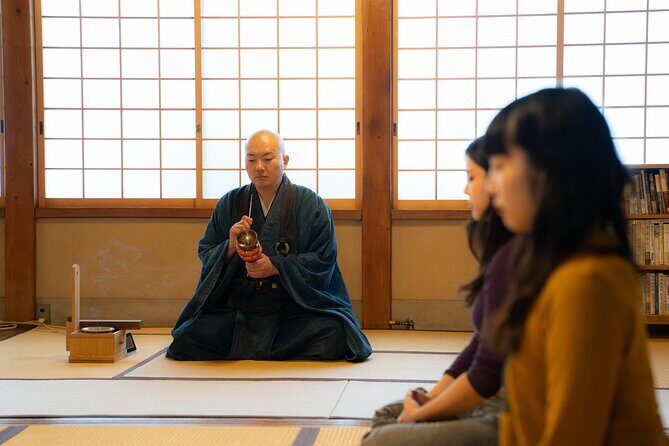
- A private, non-public temple experience in Asakusa with a monk
- English support from an English-speaking guide for meditation and questions
- Zazen practice at a real temple setting, not just a classroom talk
- Tea ceremony and sweets after you sit
- Photos with the monk and time to take pictures inside the temple
Why Kinryu-ji Zen feels different from a standard temple tour

If you’ve done the typical temple “see and snap a photo” route, this is a different kind of visit. The whole point here is that you’re not just looking at Zen from the outside—you’re learning how seated meditation works and then trying it yourself in the same kind of setting monks practice in.
Kinryu-ji is in Asakusa, Tokyo, and the temple connection matters. This is a temple that isn’t open to the general public, and the experience is offered because the operator has a strong relationship with the site. That’s why you get more of a behind-the-scenes feel without turning it into a performance.
A few people come for the spirituality angle, and that’s fair. But I think the practical value is just as real: you learn the basic principles and techniques for zazen (seated meditation), and you can ask questions about Zen Buddhism with an English-speaking guide and monk support.
Also, yes—taking photos is part of the package. You’ll be able to capture images within the temple and even get pictures with the monk, which helps you remember a calm experience that can otherwise blur into one more Tokyo blur.
You can also read our reviews of more private tours in Tokyo

Price and time: what $56.16 really buys you
At about $56.16 per person for roughly 1 hour 30 minutes, you’re paying for more than “entry.” You’re paying for a guided meditation session with translation, access to a temple that isn’t open to everyone, and a monk-led component where questions are welcome.
Here’s what your money covers, based on what’s included:
- Zen experience with instruction and practice
- Entrance ticket
- Matcha tea and snacks
- Pictures with the monk
- An English-speaking guide
That combination is the value. In many places, you can pay for a temple guide and still never sit down to actually practice anything. Here, you don’t just learn terms—you go through the sequence: you’re taught, you try, then you round it out with tea and conversation.
The short duration is also a plus. You’re not signing up for a half-day of “cultural enrichment.” It’s long enough to feel meaningful and organized, and short enough that it won’t wreck your Tokyo schedule.
Getting to the meeting point at Kotobuki (and avoiding confusion)
Your meeting location is listed at:
Japan, 111-0042 Tokyo, Taito City, Kotobuki, 2-chōme 113 偕楽ビルディング
The tour starts there and ends back at the same point. It’s also noted as being near public transportation.
Here’s the practical caution from past experiences: the address can sometimes point people to the wrong nearby landmark (one group noted confusion around a Family Mart). So don’t treat the address as “guaranteed foolproof.” Do this instead:
- arrive a little early
- double-check you’re at the correct building number
- confirm the exact meeting spot in advance if anything looks off
If you’re already good at navigating Tokyo on foot and train, you’ll be fine. The key is to show up early enough to troubleshoot, not late enough to feel rushed.
The experience flow at the temple: Zazen first, then tea and conversation
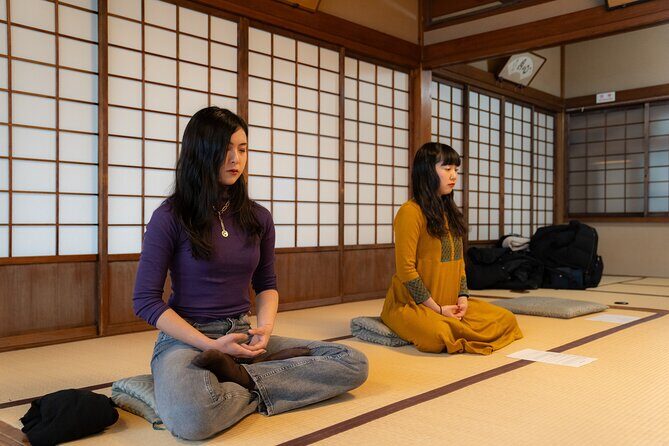
This is a guided sequence that starts at the temple itself. You’ll begin with a brief orientation about Japanese culture and Zen, then you’ll move into the core: seated meditation.
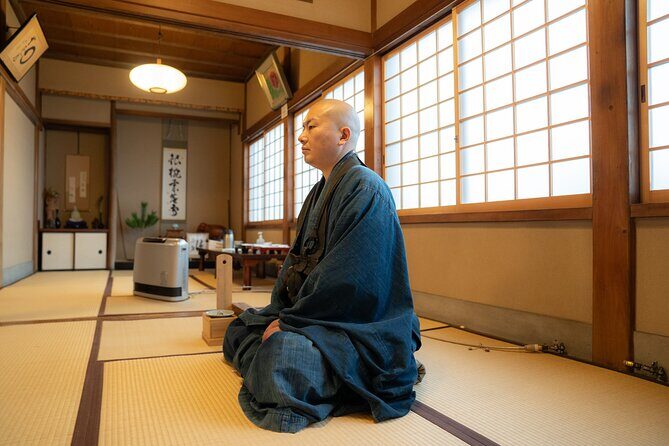
The monk personally lectures on the principles and techniques of zazen, and then you get time to practice. This matters because it turns a spiritual idea into something you can physically understand—how to sit, how to focus attention, and how instruction translates into action.
After the meditation practice, you don’t just file out. You’ll have:
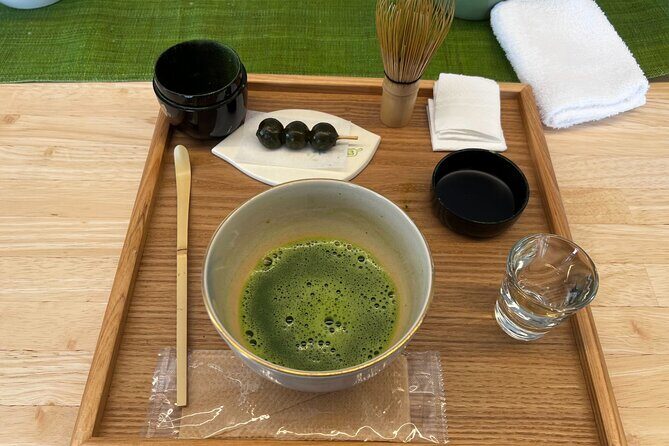
- a matcha tea ceremony
- time for questions in a free talk with the monk
That free talk piece is where the tour becomes more personal. Even if you don’t know Zen vocabulary, you can still ask practical questions about the meditation approach, manners in a temple space, or how the practice fits into daily life.
And because there’s an English-speaking guide, you’re not left stranded. The tour is designed to work even if you don’t speak Japanese, which is a big deal for meditation experiences. A lot of “culture tours” assume you’ll figure it out with vibes. This one tries to meet you where you are.
Meditation instruction that actually helps your body
Zazen can sound mysterious, but the structure here is meant to reduce guesswork. You’ll receive instruction from the monk, including the basics of what to do and how to settle into the practice.
From the types of questions people bring up during the session, it’s clear that many participants are new to meditation. That doesn’t disqualify you—this format is built for beginners. You’re given guidance, you practice with the group, and you can ask follow-ups afterward.
One small but important detail: you’re not practicing in a lecture hall. You’re practicing in the temple environment. That changes the tone. Even if you’re not religious, you’ll likely notice how quiet space, formal behavior, and steady attention make meditation feel more possible.





Calligraphy and sutra copying: Zen practice you can see
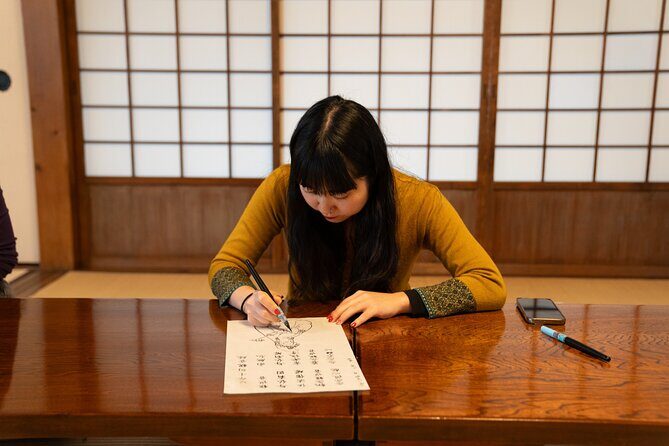
One of the most praised parts is the hands-on activity that often follows the main meditation instruction. Participants have described copying sutras as meditation, and also doing a calligraphy activity and even formal prayer-style participation.
Why this matters: Zen isn’t only “sit and think.” It also includes disciplined physical actions—breathing, posture, and focused repetition. Sutra tracing and calligraphy turn that idea into something tangible. You can feel your attention slow down as your hand moves carefully.
If you like learning through doing, this is the part that makes the hour and a half stick in your memory. If you’re worried you’ll be bored because you don’t know the language, the good news is that calligraphy has built-in structure. Even without reading Japanese, you can follow the steps and do the practice.
Matcha tea ceremony: the calm landing after zazen
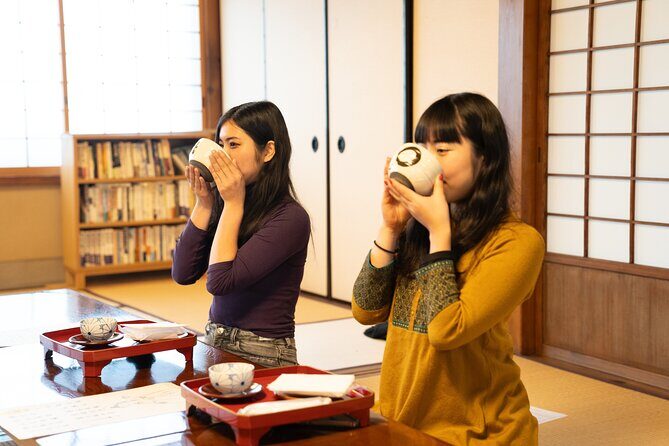
The matcha tea ceremony and snacks come at the end. That’s smart pacing. After sitting and then talking with a monk, the tea ceremony gives you a quiet landing and a cultural ritual you can slow down for.
Matcha also adds a sensory anchor. Meditation can be abstract. Tea makes it concrete: taste, warmth, and the simple act of receiving the moment.
The ceremony is part of what makes the experience feel like a full arc rather than a single activity. You go from mindful sitting to mindful appreciation, and then you leave with more context for what you just learned.
Photos with the monk: get memories without turning it into a spectacle
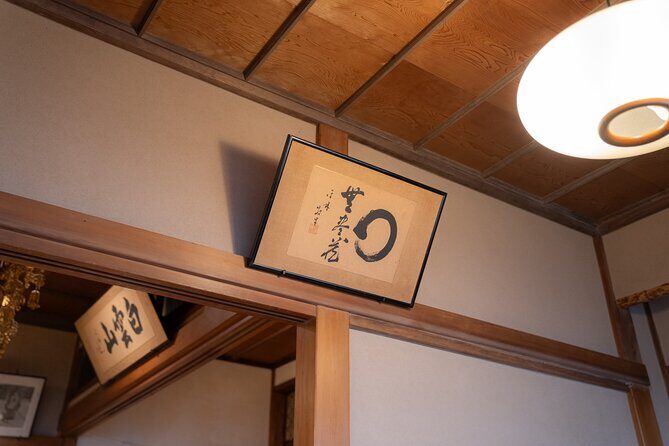
Photography is included, including pictures with the monk, and you’ll have time to take images within the temple.
This is worth planning in your head. Temples aren’t the place for loud, chaotic behavior, and you’ll want to keep a respectful pace when photos happen. The good part is that the experience is structured, so the flow gives you timing for photos without hijacking the spiritual moment.
If you’re the person who always forgets to capture the “I was there” proof on trips, this inclusion is genuinely useful. It’s hard to explain the feeling of a quiet temple visit later. Photos help.
Small group size and the private temple feel
The group maximum is 15 travelers, and it’s offered as a private experience because of the operator’s connection with the temple.
That matters in two ways:
- You get more time with the monk and guide.
- The experience stays calm rather than becoming a production line.
In a larger tour, meditation instruction can become generic. Here, the format makes it easier to ask questions and get clearer guidance.
From the kind of feedback this experience gets, the monks and guides are consistently described as welcoming and open to questions. That makes a big difference if you’re nervous about doing something “wrong” in a religious space.
Who should book this Zen meditation experience in Asakusa
I’d especially recommend this if:
- you want a real Zen practice, not just sightseeing
- you’re curious about what zazen instruction actually feels like
- you want English support for a temple setting
- you care about cultural rituals like matcha tea and calligraphy
- you want a calmer Tokyo activity that doesn’t require deep prior knowledge
It’s also a strong fit for couples and families, because the format is beginner-friendly and the monk conversation can adapt to the questions people bring.
If you’re the type who hates slow, quiet activities, this might feel like a departure from typical Tokyo energy. But if you enjoy stepping away from noise, this is a clean, respectful way to do it.
Should you book Tokyo Zen Meditation with a monk at Kinryu-ji?
Book it if you want a structured, English-friendly Zen experience in a temple setting that most visitors can’t access. The best part is that you don’t just learn about Zen—you practice the centerpiece (zazen) and then you close with the kinds of ritual activities that make the whole experience feel complete: matcha tea and a chance to ask questions directly.
Hold off if you need a lot of free time for wandering or shopping. This isn’t a “hang around the temple at your leisure” setup. It’s a guided program with a specific flow and a short duration, so your best day for this is one where you’re happy to focus.
If you’re deciding between a quick temple stop and something that actually teaches you how to sit, I’d pick this.
FAQ
How long is the Zen meditation experience?
It lasts about 1 hour 30 minutes.
Where does the tour take place?
The experience is at Kinryu-ji Temple in Asakusa, Tokyo.
Is the temple open to the general public?
No. This temple is described as not open to the general public, which is part of why the experience feels special.
Do I need Japanese to participate?
No. The tour includes an English-speaking guide, and it’s designed so you can have an authentic Zen experience even if you don’t speak Japanese.
What’s included in the price?
Included are the Zen experience, entrance ticket, snacks (matcha tea), pictures with the monk, and an English speaking guide.
Is there matcha tea and a tea ceremony?
Yes. Matcha tea and a matcha tea ceremony are included.
Can I take photos during the experience?
Yes. You can capture photographs within the temple, and pictures with the monk are included.
What is the group size limit?
The maximum group size is 15 travelers.
Where do I meet, and does it return to the start?
You meet at Japan, 111-0042 Tokyo, Taito City, Kotobuki, 2-chōme 113 偕楽ビルディング, and the tour ends back at the same meeting point.
What is the cancellation policy?
You can cancel for a full refund up to 24 hours in advance. If you cancel less than 24 hours before the start time, you won’t receive a refund.