REVIEW · OSAKA PREFECTURE
Sakai – Knife Factory and Craft Walking Tour
Book on Viator →Operated by Japan Tour Adventure · Bookable on Viator
Knives and mochi in Sakai: that’s the deal. You’ll step into a working, family-run knife making world in Osaka’s Sakai area, with time at a sharpening station and a craft museum stop.
The two biggest reasons I think this tour is worth your time: a hands-on knife sharpening lesson and the chance to see (and potentially order) a customizable cooking knife made in front of you. You’ll also get a free sweet—cinnamon mochi—plus a guide who can keep the day moving and explain things clearly.
One thing to consider: the city history and explanations may feel more Western-framed to some people. If you’re very strict about how craft history is presented, you may want to mentally prep for that.
In This Review
- Key highlights at a glance
- Why this Sakai knife factory tour feels different
- Stop 1: 八百源来弘堂本店 and Sakai cinnamon mochi
- Stop 2: Inside the knife factory and the sharpening station
- Stop 3: Sakai Traditional Crafts Museum and Knife Shop
- The guide experience: conversation plus practical craft talk
- Group size and how the 3 to 4 hours really works
- Price and value: what $66.05 buys you
- Timing quirks: blacksmith-only dates and the 3rd Tuesday note
- So who should book this tour?
- Should you book this Sakai knife factory and craft walking tour?
- FAQ
- How long is the Sakai knife factory and craft walking tour?
- What’s included in the $66.05 per person price?
- Where does the tour start, and what time does it begin?
- Is there a chance to buy or order a knife during the tour?
- How large are the groups?
- Do I need to speak Japanese to join?
- What if I’m traveling alone?
- What happens on the 3rd Tuesday of the month?
- Is French language support guaranteed?
Key highlights at a glance
- Hands-on sharpening with a professional, not just watching
- Factory access to a real knife-making workflow at Sakai
- Custom knife ordering while you’re there, if you want that option
- 400-year cinnamon mochi at 八百源来弘堂本店, with one sweet included
- Small group size with a maximum of 10 people
- Flex day adjustments on the 3rd Tuesday (possible museum closure)
Why this Sakai knife factory tour feels different
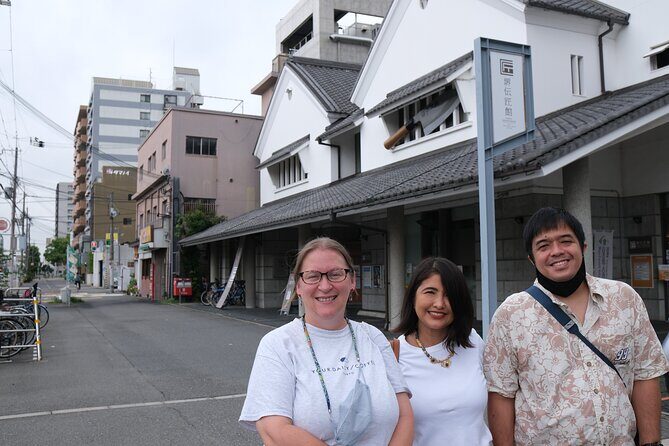
Sakai has a reputation for knives, but this isn’t just a photo-stop. The core value here is that you’re not only learning about metal—you’re seeing how it becomes a proper cooking tool, and then practicing sharpening skills yourself.
The timing matters too. With a 3 to 4 hour pace and a start time of 9:00 am, you get a full morning experience without it swallowing your whole day. That makes it easier to pair with lunch nearby afterward, or to keep exploring Sakai while your brain still thinks about edge geometry and steel.
Also, the pricing is pretty straightforward for what you’re getting: $66.05 per person includes all fees and taxes, the guided visits, and the sharpening instruction. It’s not a bargain tour, but it’s built around real access, not just walking and storytelling.
And you’ll likely hear interesting perspectives from different bilingual guides. Names that show up in the tour experience include Scott, Jean-yves, and Rémi, and the common thread is a friendly, talkable style that helps the technical parts land.
You can also read our reviews of more walking tours in Osaka Prefecture
Stop 1: 八百源来弘堂本店 and Sakai cinnamon mochi
The tour starts with a visit to 八百源来弘堂本店, a shop tied to an origin story you can trace back about 400 years. This isn’t an abstract “local flavor” moment. You’re getting a real Sakai-style traditional sweet, plus a chance to buy more if cinnamon mochi is your thing.
The included snack is one sweet per guest. That small detail matters because it takes the edge off a morning start and keeps the tour from feeling like straight classroom time.
What I like about this stop is the rhythm. You’re not going from jet-lagged walking straight into steel-only content. You ease into Sakai food culture first, then shift gears into craft and tools.
One consideration: the shop visit is only about 15 minutes. It’s enough for one taste and quick browsing, but it isn’t a long market detour. If you want to linger, you’d need extra time on your own after the tour.
Stop 2: Inside the knife factory and the sharpening station
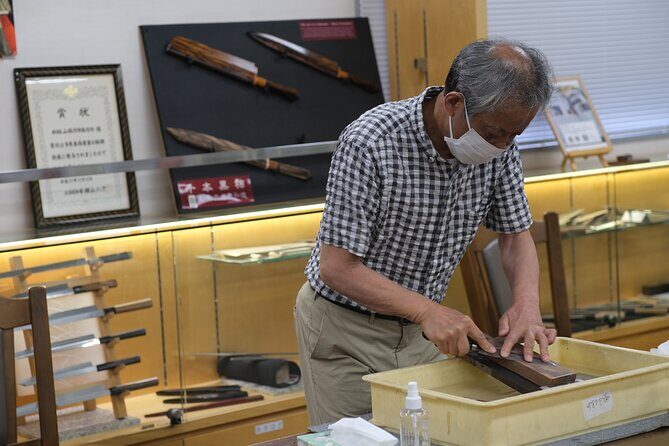
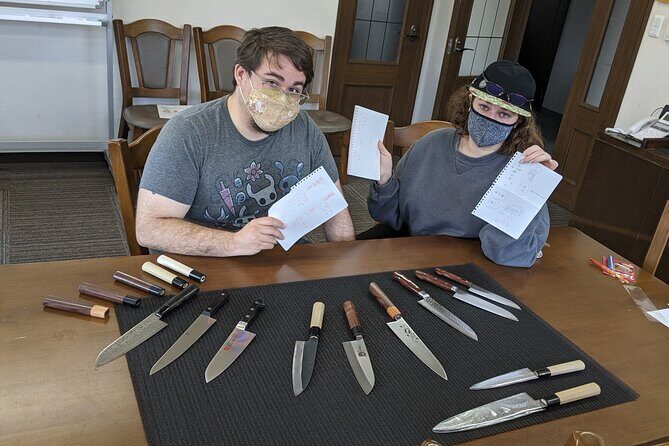
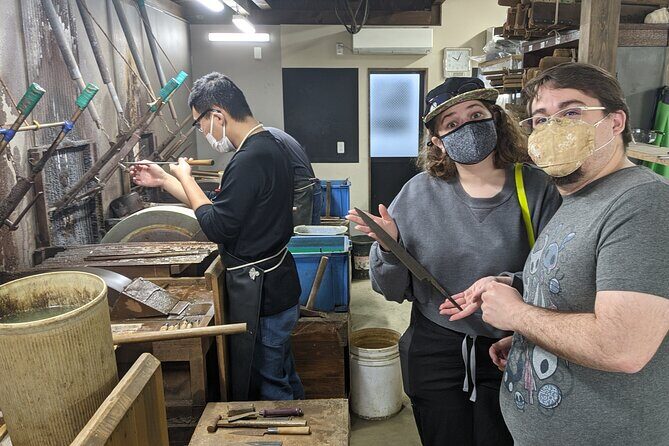
This is the heart of the tour. You’ll visit a traditional Japanese knife factory with over 100 years of family history, and you’ll see the sharpening station plus the main office area. The idea is that raw blades arrive directly from the blacksmith, then get worked into handmade cooking knives.
Here’s why this matters for you: factory access changes how you understand knives. It’s one thing to read about “traditional craftsmanship.” It’s another to watch blades being shaped and handled by professionals, and to see the sequence of steps that turn steel into a kitchen-ready tool.
You’ll also get to learn traditional sharpening techniques with a professional. This is not only demonstration. The tour is designed so you practice the basics during the lesson, which makes the time feel useful rather than passive.
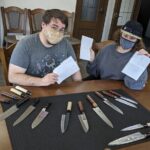
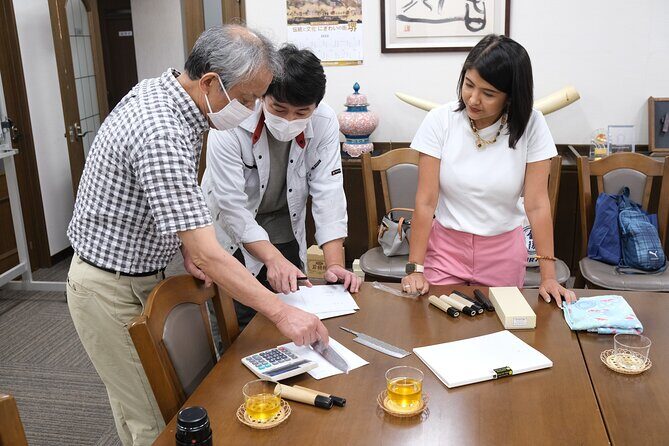
There’s also a chance to order your own customizable knife, with the fun bonus that you can watch the process in front of you. Even if you don’t order, the viewing aspect is the point: you’ll see how customization changes the experience from factory product to personal tool.
Stop 3: Sakai Traditional Crafts Museum and Knife Shop
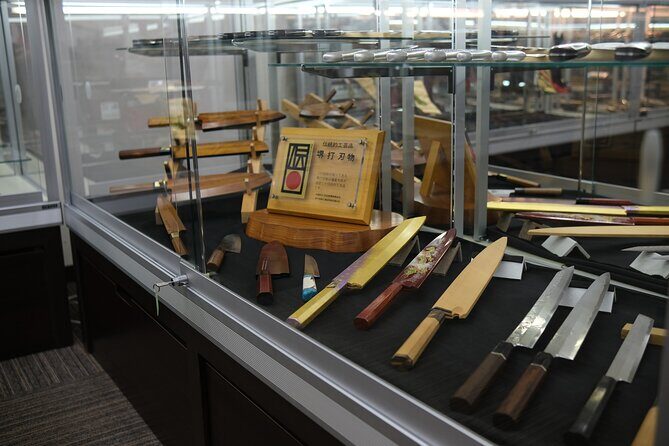
After the knife factory, you shift into broader Sakai context at the Sakai Traditional Crafts Museum and Knife Shop. The museum is designed to introduce what makes Sakai special through local crafts and related products.
One detail that adds meaning here: bicycles and brands like Shimano have ties to Sakai, and the museum context ties local making culture together. In plain terms, this stop helps you connect the knife world to the wider idea of Sakai as a city that produces skilled goods.
The museum and shop visit is about 30 minutes. That’s a comfortable slot: long enough to orient yourself, short enough that you don’t lose the momentum from the factory experience.
A practical note: since the day is built around a real factory visit, the museum part isn’t meant to replace it. Think of the museum as the “why this town cares about making” section, while the factory is the “how the making happens” section.
The guide experience: conversation plus practical craft talk
One reason this tour has such a strong rating is that it doesn’t feel like a rigid script. Guides shown in the experience include Scott, Jean-yves, and Rémi, and the consistent theme across the names is that they make room for conversation and explain what you’re seeing without treating you like you’re just a spectator.
This matters because knife making can sound intimidating. Steel, edges, sharpening angles—those topics can go over your head fast. A good guide keeps it grounded, explains what you’re looking at, and helps you connect the skill to real kitchen use.
Language is also handled as a selling point. The tour includes a bilingual guide, and there’s an option for a French-speaking request. Still, for francophone requests on shared tours, the tour notes that they cannot guarantee French. If you strongly need French, it’s worth checking before booking.





Group size and how the 3 to 4 hours really works
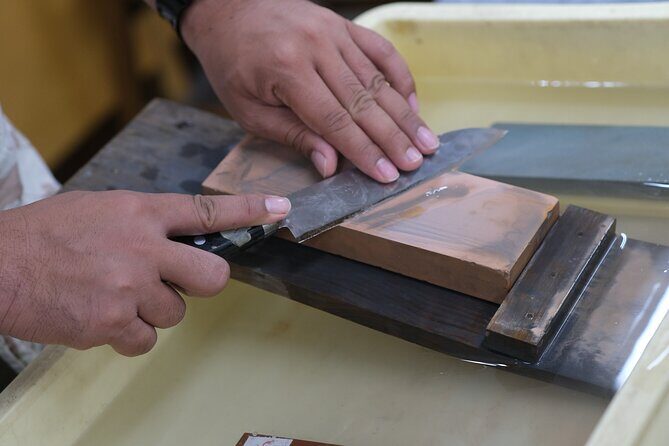
The max group size is 10 people, which is ideal for a hands-on component like sharpening. You can see what’s happening, and you’re less likely to feel lost in a crowd.
The pacing is also intentional. You start at 9:00 am, do a short mochi stop, then spend about an hour at the knife factory area, then wrap with roughly 30 minutes at the crafts museum and shop. Since the tour ends back at the meeting point, you don’t have to plan extra transport just to finish.
Also, the tour uses a mobile ticket. That’s one less hassle the morning of.
The tour location is near public transportation, so you should have an easier time getting there without a complicated taxi plan. (Still, I’d check the closest station to your hotel before you go, because Sakai neighborhoods are walkable but not always intuitive.)
Price and value: what $66.05 buys you
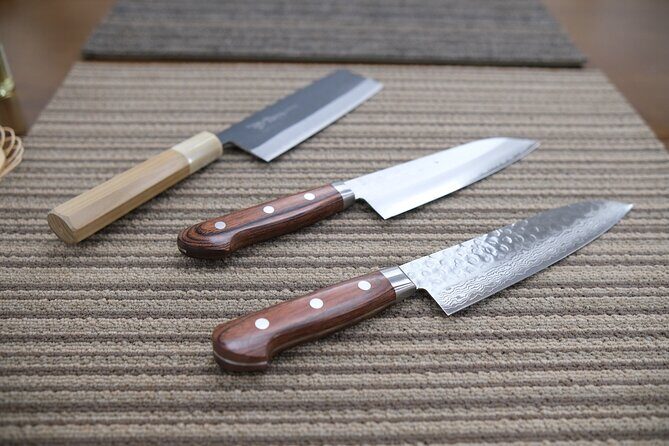
At $66.05 per person, you’re paying for access plus instruction. The included items are more than marketing bullets: snacks (one sweet per guest), all fees and taxes, bilingual guiding, the knife factory visit, and the knife sharpening lesson.
If you compare that to doing this solo, the main cost driver is access. Factory time and professional instruction aren’t the kind of thing you can usually replicate on your own casually. This is the value play: you pay to get into the working space and learn the basics properly.
Could you just buy a knife in Osaka? Sure. But the learning and factory viewing change the buying experience. When you know what sharpening involves and what you’re actually paying for, you’re less likely to regret a purchase later.
One drawback tied to value: the tour doesn’t include extra food beyond the one sweet. If you’re hungry afterward, plan lunch separately. You also won’t get souvenirs included, though you can shop during the museum/knife shop stop and at the opportunity tied to customizing a knife.
Timing quirks: blacksmith-only dates and the 3rd Tuesday note
This tour has a couple of schedule-related cautions you should know before you lock it in.
From March 6 to April 6, 2026, the note says that during this period, blacksmith only is available on Tuesdays, Wednesdays, and Thursdays. If your dates land outside those days in that window, the tour arrangement may differ. The message is clear: those dates are specific, and you should align your expectations to that.
There’s also a recurring pattern tied to the calendar. On the 3rd Tuesday of every month, the museum has inventory and might close without notice that day. If that happens, the guide will take the group directly to the craftsman location instead.
If you’re the type who plans around a very fixed agenda, these details matter. The good news is the tour is set up to handle them with a substitute stop, so you shouldn’t show up and get nothing.
So who should book this tour?
Book this if you want a hands-on, craft-first morning in Sakai. It’s a strong fit for:
- People who enjoy skill-based experiences (watching how something is made matters to you)
- Food lovers who don’t mind switching from mochi to metal mid-day
- Shoppers who are serious about buying a knife, or at least curious about what makes a quality edge
It’s also a good choice if you like small group days. With a maximum of 10, you’re more likely to ask questions and get attention during the sharpening lesson.
If you want a mostly sightseeing tour with minimal craft details, you might find the sharpening and factory time more intense than expected. This is built around knives, not general Sakai wandering.
Should you book this Sakai knife factory and craft walking tour?
If your ideal Osaka-area day includes a working craft experience, I’d book it. The combination of factory access, a real sharpening lesson, and a Sakai food stop (one cinnamon mochi sweet included) hits a nice balance of practical learning and memorable watching.
The main reason not to is if you’re sensitive to how craft history is framed. One comment about an off-putting Euro-centric lens shows that some explanations may not land the way you want. If that concerns you, take it as a heads-up and consider sending questions to the organizer before you go.
Overall, the math works: a $66.05 price with fees, guide support, factory time, and instruction is solid value—especially when you compare it to trying to arrange factory access plus a lesson yourself.
If you’re even a little curious about sharpening or quality kitchen knives, this is the kind of tour that can turn that curiosity into a purchase you actually understand.
FAQ
How long is the Sakai knife factory and craft walking tour?
The duration is about 3 to 4 hours.
What’s included in the $66.05 per person price?
It includes one sweet snack per guest, all fees and taxes, a bilingual guide, a visit to the knife factory, and a knife sharpening lesson.
Where does the tour start, and what time does it begin?
It starts at 3-chōme-22 Ebisujimachō, Sakai Ward, Sakai, Osaka 590-0985, Japan, and it begins at 9:00 am.
Is there a chance to buy or order a knife during the tour?
Yes. The experience includes a chance to order a customizable knife and watch it being made in front of you.
How large are the groups?
The tour has a maximum of 10 travelers.
Do I need to speak Japanese to join?
Most travelers can participate, and the tour includes a bilingual guide.
What if I’m traveling alone?
The tour follows a 2 guests minimum rule. If you book as a single guest, the session might be cancelled, and you would be notified with a chance to reschedule or receive a full refund.
What happens on the 3rd Tuesday of the month?
The museum might close without notice on the 3rd Tuesday due to inventory. If that happens, your guide will take you directly to the craftsman location instead.
Is French language support guaranteed?
French-speaking guide requests can be requested, but the tour states they cannot guarantee French for a shared tour.