REVIEW · NIIGATA PREFECTURE
Sake Blending Experience : Craft Your Own Signature Sake
Book on Viator →Operated by 白瀧酒造直売店 Flow · Bookable on Viator
Making your own sake is easier than you think. In a tucked-away corner of Shirataki Sake Brewery in Niigata, you get a rare look at Chōgō, the post-fermentation blending step most people never see, then you build a bottle that matches your taste.
I especially loved how the session is guided by a WSET Level 3–certified brewery professional (Kumi-san shows up in the reviews as warm and clear). You start with an English explanation of how sake flavor gets shaped, then you taste five sakes that map to different flavor directions.
One thing to consider: this is a 2-hour experience, so you’ll move at a workshop pace. If you want long, slow tasting or lots of extra bottle shopping time, this class is focused—on learning and making, not lingering.
In This Review
- 5 Key Things You Can Expect
- Where Niigata’s snowmelt turns into your blend
- The hidden Chōgō room: why post-fermentation blending matters
- English lesson and tasting: five sakes in plain flavor categories
- Blend workshop: build your signature blend with help that actually helps
- Finish your bottle with kanji: labeling like a craftsperson
- Price and timing: what $117.28 buys you in real value
- Who should book this Shirataki sake blending class
- Quick practical tips before you go
- FAQ
- How long is the sake blending experience?
- Where does the tour start?
- Is this a private tour?
- Will I taste sake before blending?
- What kinds of sake are included in the tasting?
- Is the guide’s session in English?
- Do I get to take something home?
- Is there free cancellation?
- Should you book this sake blending class at Shirataki?
5 Key Things You Can Expect
- Chōgō, the hidden mixing step: you learn how post-fermentation blending shapes flavor.
- English-guided instruction from a WSET Level 3 brewery guide: practical and flavor-focused.
- Five purposeful tastings: including Jozen Mizuno Gotoshi plus styles showing dryness, sweetness, richness, and acidity.
- Blend-building with master brewer support: use sample recipes if you want a starting point.
- A take-home bottle with your own kanji: you physically brush the character onto the label.
Where Niigata’s snowmelt turns into your blend
Niigata is a sake heavyweight, and this experience takes place right at the gateway—at Shirataki Sake Brewery. The brewery has been producing sake for over 170 years, and the water story matters here: they work with soft snowmelt from one of the world’s heaviest snowfall regions. That matters because sake flavor is about more than ingredients. It’s also about the water profile and how the brewery’s methods translate into taste.
What you’re doing in this workshop is not just tasting. You’re learning the logic behind how breweries get consistent flavor, then you’ll get to adjust that logic to match your own palate. The setting helps. This class takes place in a secluded part of the brewery—often described as a hidden lab feel—so you’re not stuck in a generic tasting room.
Another nice detail: you’re not doing this in a huge crowd. It’s a private tour, meaning it’s just your group. That makes it easier to ask questions, and it also makes the tasting and blending feel more like a lesson than a production line.
You’ll start at Shirataki Sake Brewery (Flow) at 2:00 pm, and the whole thing runs about 2 hours. You’ll leave back at the meeting point with a bottle you created and labeled.
You can also read our reviews of more tours and experiences in Niigata Prefecture.

The hidden Chōgō room: why post-fermentation blending matters

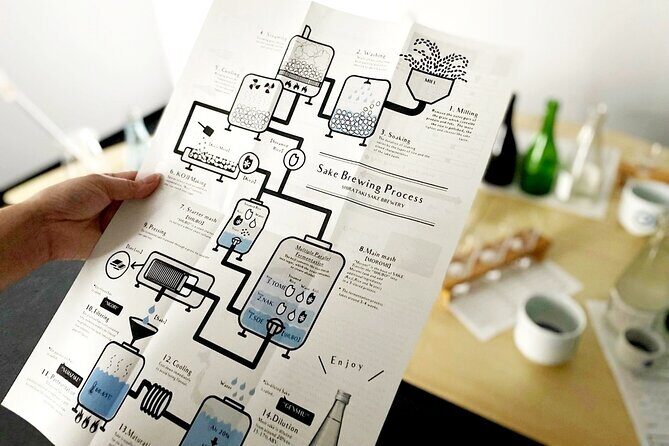
Most sake experiences focus on what happens before fermentation: milling, koji, fermentation, pressing. This workshop goes further into a step that’s rarely shown—even to people who like sake. You’re learning Chōgō, the post-fermentation blending process.
Here’s why that’s such a big deal for you as a visitor: it explains how sake can stay true to a house style while still getting adjusted. Two batches might have differences, and blending is how brewers balance those differences into something intentional. By seeing that process, you start thinking about sake less as a single fixed product and more as something that gets tuned.
In the workshop, you’re guided through the idea that craftsmanship is measurable. One of the most useful takeaways is that flavor isn’t just art-by-feel. You taste, you compare, and you learn what different profiles taste like in practice—then you apply that understanding when you create your own blend.
The whole experience is built around the notion that your preferences can be translated into a blend recipe. You don’t need to know terminology or memorise charts. The guide’s job is to help you connect the dots between what you taste and what the blend is doing.
If you’ve ever wondered why one sake is crisp and another tastes round or slightly sweet even when both are labeled dry-ish, Chōgō is one reason. This is the part where the brewery can correct direction: toward dryness, toward sweetness, toward acidity brightness, toward a richer mouthfeel.
English lesson and tasting: five sakes in plain flavor categories
Before you mix anything, you’ll get an English-guided lecture by a WSET Level 3 brewery guide. The point isn’t to overwhelm you with chemistry. It’s to make sake flavor readable.
You’ll get a walkthrough of how sake is made and how craftsmanship shapes flavor. You’ll also hear what to pay attention to while tasting—so you don’t just gulp and guess. In reviews, people highlight that they learned how flavor is measured and how to describe what they taste in a more structured way.
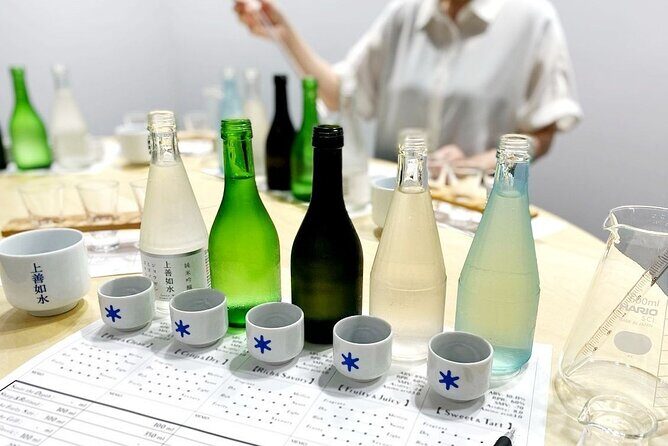
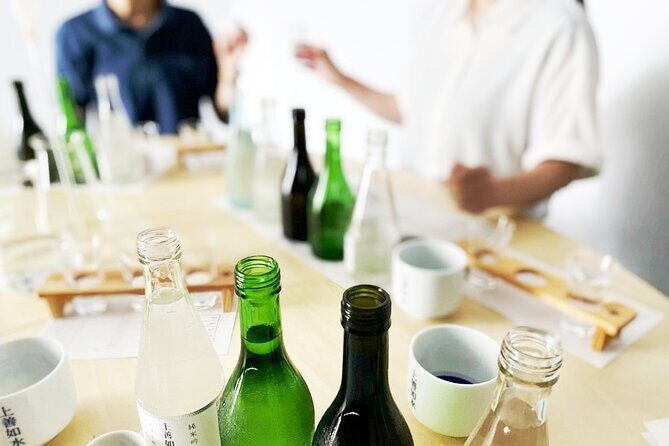
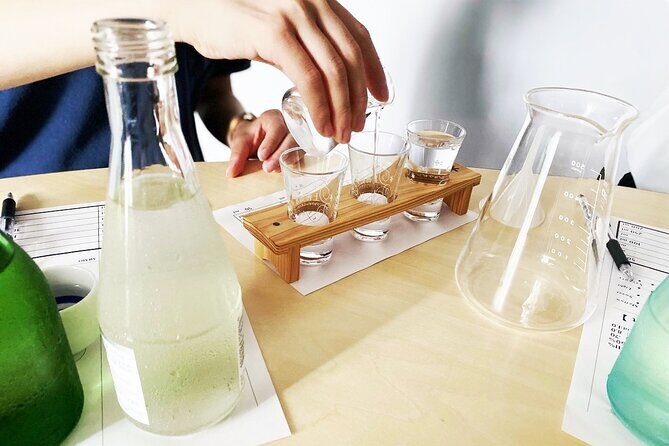
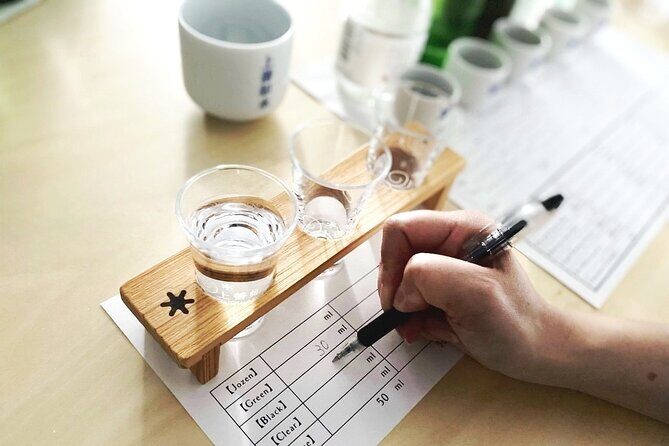
Then comes the tasting portion, and it’s smartly designed. You taste five carefully selected sakes, not a random lineup. The experience includes:
- Jozen Mizuno Gotoshi, the flagship style, known for graceful balance and crisp purity
- Four other sakes representing major flavor directions: dryness, sweetness, richness, and acidity
That matters because it turns the blending session from guessing into decision-making. Instead of staring at blending options with no frame of reference, you’re already tasting the building blocks. You get to decide which directions feel right to you.
A practical tip: during the tasting, slow down enough to separate aromas from taste and finish. Sake can feel different once it hits the palate compared with what you expect from smell alone. If your brain is trying to solve everything at once, you’ll miss the easiest clues.
Also, pacing matters. With five sakes plus blending, you’ll be doing a lot in two hours. If you’re planning other plans afterward, keep the rest of your day flexible, especially if you’re drinking more than a sip or two during tasting.
The best part of this tasting format is that it teaches you how to speak about flavor. Even if you never become a sake critic, you’ll leave able to say what you liked and why.
Blend workshop: build your signature blend with help that actually helps
Now for the fun part. You craft your own signature sake blend based on your palate. This is where the workshop stops being a lecture and becomes a hands-on decision.
The blend process is supported with sample recipes from the master brewer. If you already know you like something dry and crisp, you can start there. If you want something more rounded, richer, or brighter, you can use those sample directions as a framework. The key detail is that the recipes are there for guidance, not to control you.
In practice, you’ll use the taste comparisons from the earlier tasting to make your choices. That’s why this workshop works so well for beginners. You’re not expected to know blending formulas from day one. You’re expected to taste, pick a direction, and refine.
A big highlight from the reviews is that people had a real chance to have fun recreating the flavor they liked—without feeling lost. Guides such as Kumi-san are described as kind and clear, making the whole thing feel manageable even when you start with only a small understanding of sake.
One consideration: because the experience is timeboxed, the blending session is focused on getting you to a satisfying final blend within the timeframe. You’ll get guidance, but you won’t have an all-day lab where you can experiment endlessly.
If you like hands-on workshops, you’ll probably find this part the most satisfying. If you’re just a casual sake fan, the tasting and blending combined might be the first time you feel like you’re participating instead of observing.
Finish your bottle with kanji: labeling like a craftsperson
You don’t just take home a bottle. You take home a bottle with your own personality on the label.
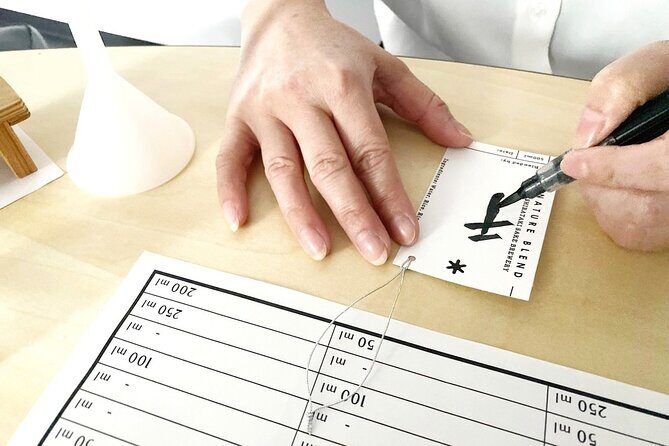
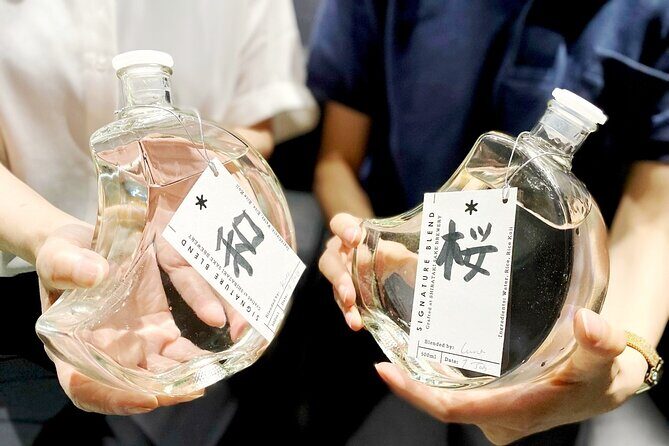
At the end, you’ll choose a kanji character that reflects your blend’s character. Then you brush it onto the label with staff support. This isn’t a quick photo-op sticker. It’s a small craft moment that makes the bottle feel personal.
This step does two important things for you:
- It turns the taste into a memory. The kanji gives your blend an identity, even if you can’t perfectly explain the flavor to friends later.
- It makes the workshop feel complete. After tasting and blending, you’re closing the loop with a physical, human touch.
In a short session, a label detail might seem minor—but in practice it’s the kind of takeaway that actually gets used. And it’s also a gentle reminder that sake isn’t only about production. It’s also about people, style, and intention.
When you leave, you’ll have a one-of-a-kind bottle created by you at Shirataki Sake Brewery. That’s the real value of the workshop compared with a standard tasting flight: your work becomes the product.


Price and timing: what $117.28 buys you in real value
At $117.28 per person, you might wonder if this is just a pricey tasting with a craft label at the end.
Here’s how I’d judge the value. You’re paying for:
- an English lecture by a WSET Level 3–certified brewery guide
- structured tastings of five sakes (including the Jozen Mizuno Gotoshi flagship)
- hands-on blending guidance with master brewer sample recipes
- staff support to finish the bottle with your selected kanji label
- a take-home bottle that’s actually your blend, not just something purchased separately
Many sake experiences concentrate on drinking and learning in theory. This one gives you action: tasting becomes inputs, your preferences become a blend, and your blend becomes a bottle.
Time is also part of the value. At roughly two hours, you get a complete arc: learn, taste, decide, craft. It’s long enough to be meaningful, short enough to fit into a travel day.
One more practical reality: it’s often booked ahead (on average about 45 days), so the class can be in demand. If you’re serious about doing it, it’s smart to plan earlier rather than hoping for last-minute availability.
Who should book this Shirataki sake blending class
This workshop is best for you if:
- you like sake and want to understand why flavors come out the way they do
- you’re a beginner who wants a structured intro, not just a random tasting
- you want a take-home memory that’s not a souvenir fridge magnet
- you enjoy hands-on activities where your choices change the outcome
It’s also a good fit for couples or small groups. Because it’s private, you’re less likely to feel rushed by strangers, and you can compare blending ideas with each other.
If you’re the type who hates tours that feel stiff or overly scripted, this may still work—because the blending is interactive. Reviews repeatedly highlight that it feels engaging, fun, and thoughtfully planned.
If you’re expecting a long, technical seminar or a deep museum-style walkthrough, this isn’t that. It’s a practical craft lesson with tasting and making.
Quick practical tips before you go
You don’t need to study sake terms ahead of time. The workshop gives you the flavor framework and the tasting experience to use as reference.
Still, a few practical moves will help you enjoy it more:
- Take your time during the tasting and identify whether you like crispness (dryness/acidity) versus roundness (richness/sweet impressions).
- Be ready to make decisions during blending. You’ll be guided, but the workshop is designed for a final blend within a couple hours.
- Plan your day with a bit of flexibility after tasting, since it’s a structured drinking experience.
- Bring curiosity, not perfection. The best blends are the ones that match your palate.
FAQ
How long is the sake blending experience?
The experience lasts about 2 hours.
Where does the tour start?
It starts at Shirataki Sake Brewery, 2633ー1 Yuzawa, Minamiuonuma District, Niigata 949-6101, Japan.
Is this a private tour?
Yes. It’s listed as a private tour/activity, and only your group participates.
Will I taste sake before blending?
Yes. You taste five carefully selected sakes before you create your own blend.
What kinds of sake are included in the tasting?
The tasting includes the Jozen Mizuno Gotoshi flagship, plus four other sakes intended to represent key flavor profiles: dryness, sweetness, richness, and acidity.
Is the guide’s session in English?
Yes. The lecture is described as English-guided.
Do I get to take something home?
Yes. You take home a one-of-a-kind bottle created through the blending session, and your chosen kanji is applied to the label.
Is there free cancellation?
Yes. Free cancellation is available up to 24 hours before the experience’s start time for a full refund.
Should you book this sake blending class at Shirataki?
I’d book it if you want a real hands-on sake story in Niigata. The value is strong because you’re not just sampling—you’re learning Chōgō, tasting the key flavor directions, building your own blend, and leaving with a bottle you genuinely made. It’s also beginner-friendly without being dumbed down, thanks to the WSET Level 3 guide and the structured tasting lineup.
Skip it only if you’d rather do a longer, looser tasting session with lots of browsing time. For most people, though, this is one of those rare activities where your effort becomes the souvenir—and the flavor you create is the point of the day.