REVIEW · KYOTO
Kyoto Ramen Noodle Making Class
Book on Viator →Operated by byFood · Bookable on Viator
Want noodles made the right way?
This hands-on Kyoto class turns you into a noodle maker for about an hour at Musoshin in the Gion area, using a professional ramen noodle machine and a two-flour dough. I love the step-by-step instructor-led process (so you’re not guessing with dough that fights back), and I love that you still get to enjoy a full bowl of ramen afterward. One thing to consider: this is mainly a noodle-making workshop, so you focus on the dough and cutting rather than cooking the broth yourself.
You’ll meet at 558-2 Komatsuchō, Higashiyama Ward, Kyoto, and the whole thing runs with a small group size (up to 6). The session is about 1 hour, and you’ll leave with an apron to wear during the class and a bandana souvenir afterward.
In This Review
- Quick hits before you book
- Musoshin in Gion: a small room with big ramen energy
- The one-hour flow: from dough to your own cut noodles
- Noodles from scratch: wheat flour and a two-flour dough
- Broth and toppings: what you eat, and why this isn’t a broth-cooking class
- Dietary needs in practice: vegetarian, vegan, and pescetarian tasting
- Price and value: what you get for $48.27
- Where to meet in central Kyoto and how to time it
- Who this ramen noodle class is best for
- Should you book this Kyoto ramen noodle making class?
- FAQ
- How long is the Kyoto ramen noodle making class?
- How much does the experience cost?
- Where does the class take place?
- What do I do during the workshop?
- Is there an English-speaking instructor?
- What’s included with the class?
- What dietary options are available?
- Are noodles made from wheat flour?
- Is this a large group tour?
- What is not included in the price?
Quick hits before you book
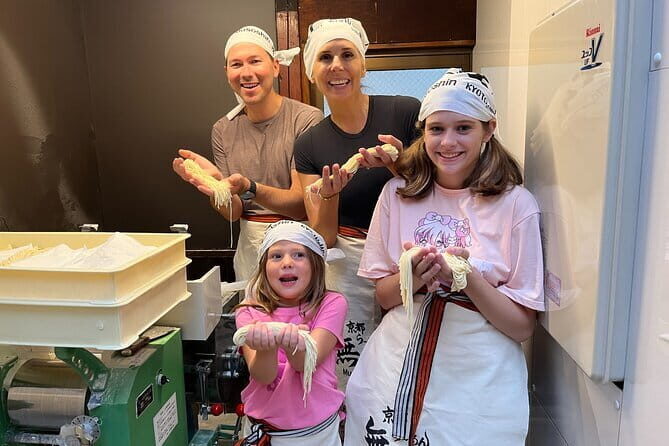
- Hands-on noodle making: pour water, knead, roll, and cut noodles with a ramen noodle machine
- English support: an English-speaking instructor guides the whole process
- You eat ramen at the end: a bowl prepared by the chef, plus a soft drink
- Small group vibe: maximum 6 travelers, so you get attention
- Dietary options available: vegetarian, vegan, and pescetarian choices for the tasting session
- Gion location: Musoshin in central Kyoto, near public transportation
Musoshin in Gion: a small room with big ramen energy
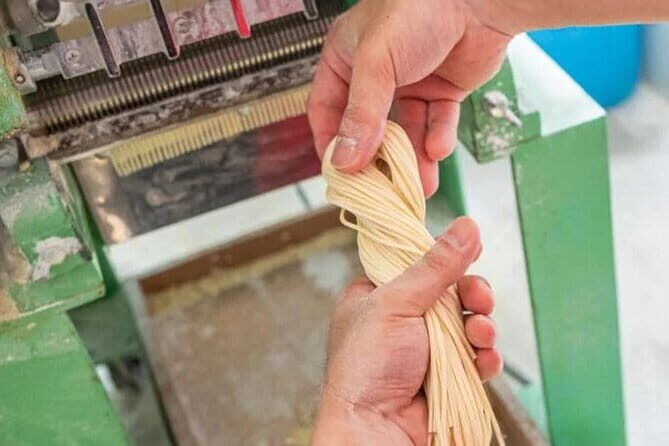
Kyoto’s Gion is the kind of neighborhood where you expect tea shops and quiet lanes, then suddenly you’re in a place centered on ramen. That’s part of the appeal here: you’re not just watching food magic from a distance. You’re working in the kitchen environment while the chef handles the ramen side you can’t reasonably DIY in a one-hour class.
The shop is Musoshin in Gion, not Musoshin Ramen Academy, which matters if you like knowing exactly where you’re going before you set off. With a maximum of 6 travelers, it doesn’t feel crowded or rushed. You can actually see what your instructor is doing and copy it at your station.
And yes, this class has that practical, do-the-work energy. Expect flour on your hands, dough that needs the right touch, and the satisfaction of making something chewy that you’ll eat soon after. It’s one thing to order ramen in Kyoto. It’s another to make the noodles that end up in your bowl.
A few more Kyoto tours and experiences worth a look


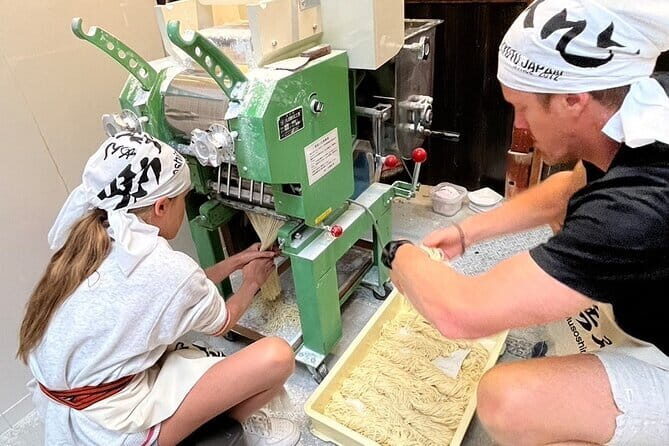
The one-hour flow: from dough to your own cut noodles

The schedule is built to fit inside a tight one-hour session without turning into a long waiting game. You’ll start with the basics: the instructor brings you into the ramen noodle-making rhythm and walks you through each stage.
Here’s how the flow typically works in this kind of class model, and what you’ll likely do during your time:
- You’ll handle the dough prep steps, including pouring water and kneading.
- You’ll learn how to roll the dough into the right thickness using the professional noodle machine.
- You’ll cut the noodles so they’re ready for cooking and serving.
While you’re busy with the noodles, the ramen itself is handled by the restaurant chef. That keeps the class focused and prevents the common problem with food workshops where everything is fragmented across too many cooks. Instead, you get a clear lane: noodles, done well, and then ramen that’s ready for you when you’re finished.
In the end, you sit down for the payoff: a bowl of ramen prepared by the chef.
Noodles from scratch: wheat flour and a two-flour dough
A lot of ramen experiences stop at instruction or show-and-tell. This one is about the actual noodle work. The noodles are made from wheat flour, and the dough uses two types of flour—a detail that matters because it’s part of what gives ramen noodles their texture and bite.
You’ll use the dough and a specialized ramen machine to shape the noodles. The machine isn’t just a gimmick. It helps you roll consistently, which is the difference between noodles that are enjoyable and noodles that are uneven and annoying. The instructor’s job is to guide your hands and help you correct small issues fast—like thickness, tension, and cutting pace.
If you’ve never kneaded dough before, don’t worry. The class is designed around beginners learning a technique in a short time. If you have kitchen experience, you’ll probably enjoy how methodical it feels. Either way, you’ll leave knowing the basic mechanics of ramen noodle texture, not just the final result.
Broth and toppings: what you eat, and why this isn’t a broth-cooking class
Your final bowl is the important part for most people: you want to taste the proof. Here, the ramen chef prepares a rich, savory broth made from a blend of vegetables. That broth is part of the restaurant’s core offering, and it’s what you’re aiming for in your tasting.
The class description also notes that the shop uses high-quality Kyotamba rice and condiments from local makers. You may not be hand-assembling every element, but this kind of sourcing usually shows up in the flavor balance—more regional personality than bland, generic ingredients.
It’s also worth understanding the structure: the workshop is about noodle making, while the broth is prepared by the chef. One drawback for some people is that you might expect a full ramen cooking session (including making the broth yourself). This is different. The point is that you get the hands-on noodle work, then the chef takes care of the rest so you eat something properly made.
That trade-off is actually good value if you’re short on time and want the most memorable learning part: the part you can’t get by just ordering ramen.
Dietary needs in practice: vegetarian, vegan, and pescetarian tasting
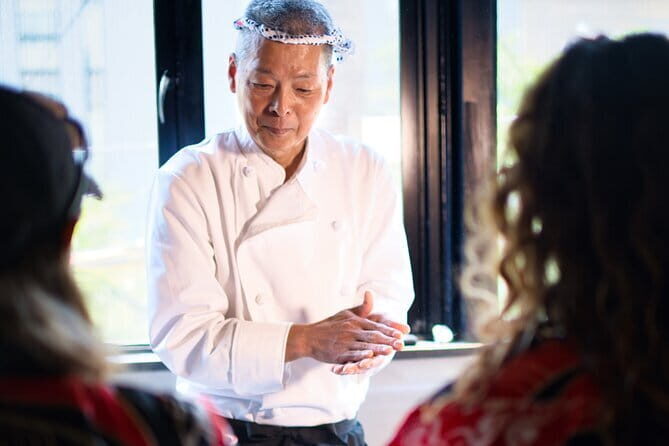
Kyoto ramen is often associated with pork-based broths, so I’m glad this class explicitly handles dietary needs. The tasting session offers vegetarian, vegan, and no meat or fish options. It also states that vegetarian, vegan, and pescetarian diets are able to be accommodated if you inform the provider in advance.
Keep in mind two practical points:
- You’re still working with wheat flour noodles, which is standard for ramen noodles in general.
- The tasting portion changes to match your dietary needs, while the workshop still centers on noodle preparation steps.
If you’re traveling with someone who eats plant-based or avoids meat/fish, this is the kind of class that makes group planning easier. You’re not stuck with a side dish that’s technically included but not satisfying.





Price and value: what you get for $48.27
At $48.27 per person, this class sits in the range of a premium hands-on food experience. The value comes from what’s bundled in, not just the lesson.
Included items make a real difference:
- English-speaking noodle making instructor
- Ingredients and tools for noodle making
- A bowl of ramen and one soft drink
- Rental apron
- Bandana souvenir used during the workshop
For me, the key value driver is that you’re not only learning. You’re also eating a chef-made bowl afterward. If it were only a classroom-style demo, $48.27 would feel heavier. But here, you’re paying for tools, instruction, and the final reward.
Also, group size matters for value. With a maximum of 6 travelers, you’re less likely to get ignored while dough sits on your hands.
And the timing helps, too. At about 1 hour, you can fit this into a busy Kyoto day without giving up half your itinerary.
Where to meet in central Kyoto and how to time it
You start at 558-2 Komatsuchō, Higashiyama Ward, Kyoto, 605-0811, Japan, and the activity ends back at the meeting point. That round-trip setup is a small detail, but it makes your day easier. You don’t need to plan a complicated follow-up.
The venue is in Musoshin Gion, central Kyoto, and it’s near public transportation. If you’re already in Kyoto’s eastern side (or planning to see Gion), you’ll probably find the location convenient. The session uses a mobile ticket, which is helpful if you hate digging through paper in a crowd.
What I’d do: plan to arrive a bit early. Food classes run tighter than normal walking tours, and you’ll want a calm start before flour starts flying.
Who this ramen noodle class is best for
This is a great fit if you:
- Want a hands-on food experience where you do the work yourself
- Like structured learning with an English-speaking instructor
- Appreciate regional food quality (vegetable broth, local condiments, and the restaurant’s approach)
- Need options for vegetarian, vegan, or pescetarian diets
It’s also a solid choice for couples and small groups because the class maxes out at 6. Families can enjoy it too, especially if kids like making something tangible and then eating it immediately.
Where you might want to adjust expectations:
- If you specifically want to cook broth from scratch, this session is not built around that. The chef handles the broth, and you focus on noodles.
- If you’re only interested in ramen flavor and don’t care about technique, the class may feel a little “work-heavy.”
Should you book this Kyoto ramen noodle making class?
Book it if you want the most memorable part of ramen—the noodles—and you’re happy that the chef handles the broth. For the price, you get real instruction, real tools, and a real bowl to eat right after. The class also makes dietary planning simpler than many ramen experiences, thanks to vegetarian, vegan, and pescetarian options for the tasting session.
Skip it (or look for a different workshop) if your main goal is to fully cook ramen soup end-to-end, because this is a noodle-focused experience. You’ll still get great ramen, but your labor is aimed at dough and noodle technique, not soup-making.
If you’re doing Kyoto in a hurry and still want something authentic and practical, this is one of the best ways to spend an hour: learn a skill you can repeat later, then reward yourself with the results.
FAQ
How long is the Kyoto ramen noodle making class?
The class lasts about 1 hour.
How much does the experience cost?
It costs $48.27 per person.
Where does the class take place?
It takes place at Musoshin in the Gion area of central Kyoto. The meeting point is 558-2 Komatsuchō, Higashiyama Ward, Kyoto, 605-0811, Japan.
What do I do during the workshop?
You learn ramen noodle making steps with guidance from an English-speaking instructor, including pouring water, kneading dough, rolling it with a noodle-making machine, and cutting the noodles.
Is there an English-speaking instructor?
Yes. The experience includes an English-speaking noodle making instructor.
What’s included with the class?
You get ingredients and tools for noodle making, a bowl of ramen and one soft drink, a rental apron, and a bandana souvenir used during the workshop.
What dietary options are available?
Vegetarian, vegan, and pescetarian options are available for the tasting session, with no meat or fish options. You should inform the provider in advance of your dietary restrictions.
Are noodles made from wheat flour?
Yes. The noodles are made from wheat flour.
Is this a large group tour?
No. The class has a maximum group size of 6 travelers.
What is not included in the price?
Other personal expenses are not included.
If you want, tell me your travel dates and dietary needs, and I’ll help you decide whether this fits best with your Kyoto day plan (morning vs evening, and what to pair it with nearby).