Shibuya moves fast, but this tour helps you keep up. You’ll hit Shibuya Crossing with a guide, then walk through quieter pockets like Miyashita Park and Nonbee Yokocho. I like that it’s small-group (up to 12) with a guide who can help you navigate, and I also like the mix of modern Tokyo and older street texture. One thing to plan for: there’s some uphill walking, and Shibuya weather can be sticky, so comfy shoes matter.
You also get more than the usual photo stop circuit. The route is designed to connect the famous intersection with nearby shopping streets, historic neighborhoods, and a classic end point at Hachiko. If you’re hoping for a long museum-style stop or super slow pace, this is more of an efficient orientation walk than a sit-and-learn seminar.
In This Review
- Key Highlights You’ll Notice Right Away
- Shibuya in 2 Hours: The Value of a Focused, Guided Loop
- Meeting at Shibuya Mark City East Mall 3F (and Avoiding the Startup Panic)
- Myth of Tomorrow: Taro Okamoto’s Atomic Bombing Mural Inside Shibuya Station
- Shibuya Crossing: Watching The Scramble Like a Pro (Then Crossing It)
- Miyashita Park: A Multi-Level Pause Built for City Life
- Nonbee Yokocho (Drunkard’s Alley): Tiny Lanes and Local Night-Life Energy
- Shibuya Center-gai: Youth Culture on Foot
- Maruyamacho: From Former Red-Light District to Today’s Mixed Streets
- Hachiko: Ending at the Bronze Dog (With a Great Photo Finish)
- The Guides: Why Names Like Loc, Rio, Grey, Zac, and Daichi Matter
- Price and Logistics: $25 for a Small-Group Orientation Win
- Pace, Hills, and Weather: What to Expect When the City Turns Sticky
- Who Should Book This Shibuya Walking Tour
- Should You Book It?
- FAQ
- How long is the Shibuya Crossing & Hidden Streets walking tour?
- How many people are in the group?
- What’s included in the price?
- Where do I meet and where does the tour end?
- Do I need to print a ticket?
- Are tips included?
- Is this tour dependent on weather?
- Are service animals allowed?
Key Highlights You’ll Notice Right Away
- Max 12 people means you can actually hear your guide and ask questions
- Shibuya Crossing plus local streets keeps the photos interesting beyond the scramble
- Free entries at each stop (including a famous mural inside Shibuya Station)
- Miyashita Park gives you a breather in a multi-level urban space
- Finish at Hachiko for an easy, classic Shibuya meetup point later
Shibuya in 2 Hours: The Value of a Focused, Guided Loop
This tour is built for one goal: get you oriented fast in Shibuya and show you the parts that most first-timers skip. At $25 per person for about 2 hours, what you’re really paying for is not admission or a fancy vehicle—it’s time with a guide who can read the neighborhood and keep the walk moving.
The small group size (up to 12 travelers) changes the whole feel. You’re not stuck behind a crowd at every stop, and you can usually ask follow-up questions without shouting. That matters in Shibuya, where the streets are busy and the landmarks can be weirdly spread out even though everything looks close on a map.
Also, the tour uses a mobile ticket, which is one less thing to manage while you’re juggling transit cards, snacks, and the constant urge to stop for photos.
You can also read our reviews of more walking tours in Tokyo

Meeting at Shibuya Mark City East Mall 3F (and Avoiding the Startup Panic)
The meeting point is SABON Shibuya Mark City, East Mall 3F (Shibuya, Dōgenzaka). You’ll finish at the Hachiko Statue outside Shibuya Station.
In a district like Shibuya, the “where do we meet” part can be the most stressful part—because there are lots of entrances, levels, and side corridors that look identical when you’re slightly late. I’d treat this like a mission. Check the exact pin in your map app ahead of time, and show up a few minutes early so you’re not scanning every store in the mall.
If you do get turned around, use a plan B: once you’re within the Shibuya Station area, aim back toward the Hachiko area as your reference point. The tour is designed to end there, so it’s a solid anchor.
Myth of Tomorrow: Taro Okamoto’s Atomic Bombing Mural Inside Shibuya Station
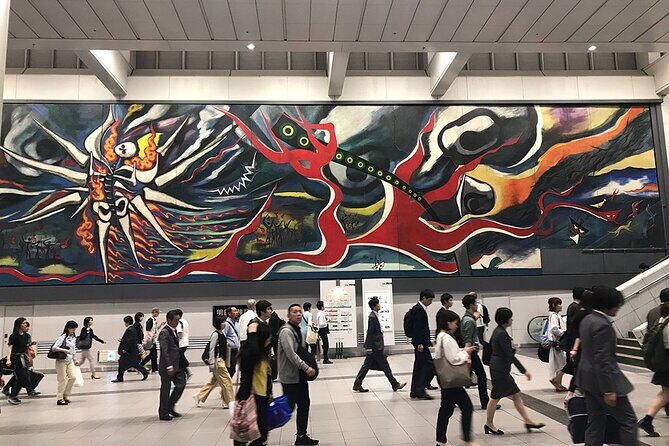
Stop 1 is Myth of Tomorrow, a large mural by the famous Japanese artist Taro Okamoto located in Shibuya Station. It’s free, and the stop is short (about 10 minutes).
This is a great “tone shift” moment. Shibuya is famous for youth, fashion, and motion—but stepping into a major station and seeing a serious, powerful artwork reminds you this city carries heavy history right alongside the neon. If you’re the kind of person who usually rushes through station halls, this forces you to slow down for a moment without derailing the whole trip.
Practical tip: because it’s inside the station, it’s easier to view in most weather. If you’re photographing, keep it respectful and don’t block foot traffic. Think of it as a quick cultural reset before you sprint back to the street scene.
Shibuya Crossing: Watching The Scramble Like a Pro (Then Crossing It)
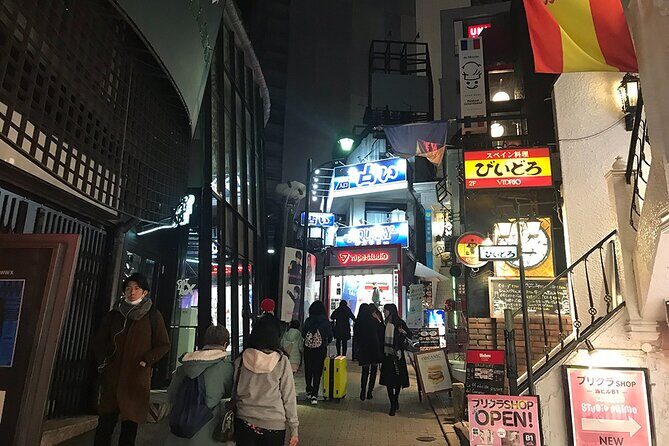
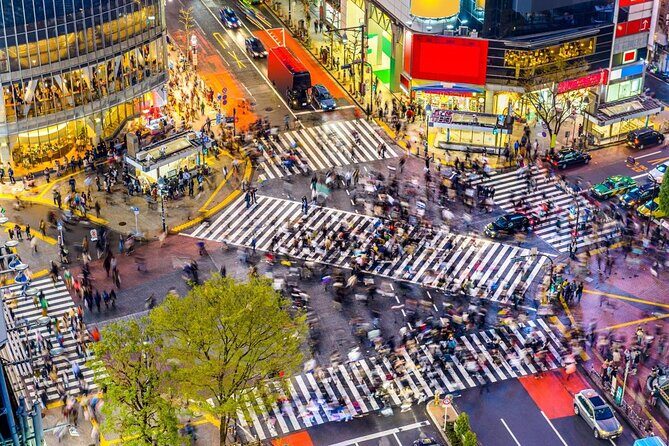
Stop 2 is Shibuya Crossing, often called The Scramble. It’s free and around 10 minutes.
Yes, it’s crowded. Yes, it’s iconic. But the real win of going with a guide is that you’re not just taking the standard standing-still picture. You get help timing it so you can actually watch how the crossing waves move, and you’re set up to cross at a smart moment rather than wandering at random.
If you’ve ever tried to cross at Shibuya Crossing on your own, you know how quickly you can lose your place in the shuffle. This stop is where the guide earns their paycheck: they’re navigating the choreography, not just pointing at the intersection.
Photo tip: if you want the “you’re in the middle of it” look, choose your vantage point and then let the movement come to you. Shibuya Crossing is one of those scenes where trying to chase every angle can lead to blurry photos and a sore neck.
Miyashita Park: A Multi-Level Pause Built for City Life
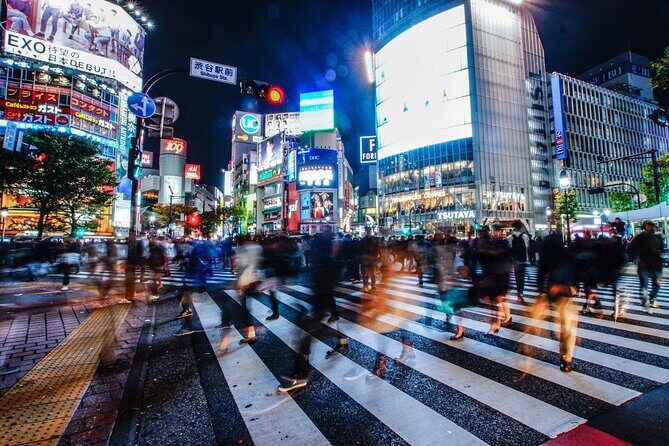
Stop 3 is Miyashita Park (about 20 minutes), also free.
This park is known for its urban renewal design—think a multi-level sports and recreation space rather than a simple patch of grass. In practice, it gives you two things:
1) a breather from constant street-level traffic
2) a chance to see Shibuya’s modern design logic up close
I like this stop because it breaks the pattern. After Shibuya Crossing and the surrounding shopping motion, Miyashita Park feels like a designed “pause zone” where locals actually hang out.
Bring water if you can. Even though the stop is only 20 minutes, this area can feel warm and active, especially in humid weather.






Nonbee Yokocho (Drunkard’s Alley): Tiny Lanes and Local Night-Life Energy
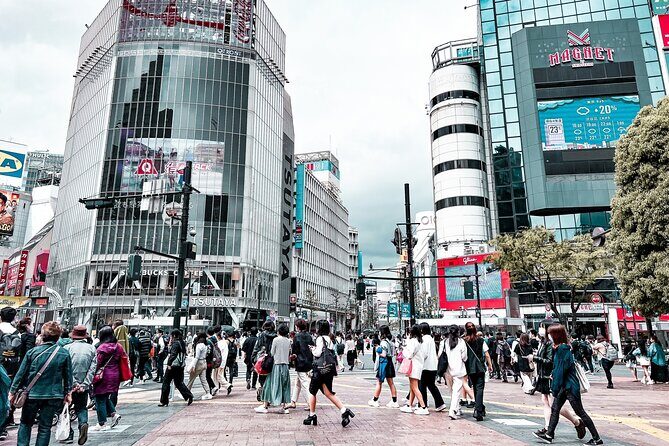
Stop 4 is Nonbee Yokocho, sometimes translated as Drunkard’s Alley. It’s short (about 5 minutes) and free.
This is the kind of place you’d miss if you’re moving too fast or just sticking to the main streets. The lane is narrow, tucked away near Shibuya Station, and known for its small, traditional Japanese spots.
What I like here is that it sets you up for the evening. Guides on this tour are known for pointing out bar and food options nearby, so Nonbee Yokocho becomes more than a photo stop. It’s a taste of the Shibuya side that feels lived-in rather than staged for tourists.
Quick guidance: walk slowly through the lane so you can see what’s around you. And if you’re planning to come back later, notice the general direction so you can find it after dinner without spiraling into Shibuya’s maze.
Shibuya Center-gai: Youth Culture on Foot
Stop 5 is Shibuya Center-gai, a pedestrian shopping street at the heart of Shibuya (about 10 minutes).
This is where you feel the district’s pulse. It’s known for youthful energy and trend-setting shops, and since it’s pedestrian-focused, it’s easy to take in without constantly crossing roads.
I’d treat Center-gai as your “browse and snack” zone. If you want a quick souvenir, a casual bite, or just the satisfying feeling of walking through a place that locals recognize, this stop does the job without turning into a shopping marathon.
One practical thought: store hours can vary. If you’re here during holidays or special dates, some places may be closed, so keep your expectations flexible.
Maruyamacho: From Former Red-Light District to Today’s Mixed Streets
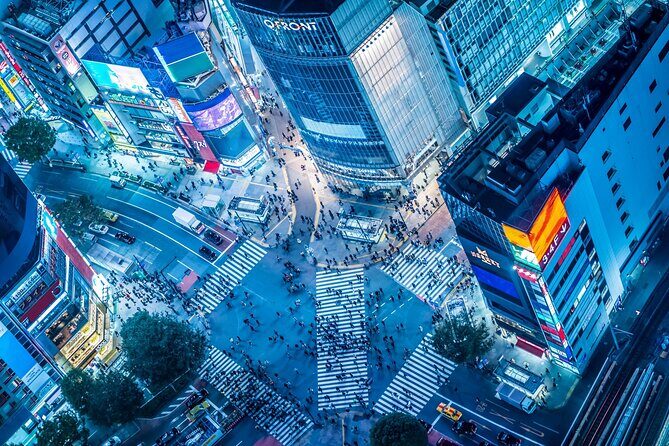
Stop 6 is Maruyamacho (about 10 minutes), a neighborhood that was once tied to Shibuya’s former red-light district. Today, it’s transformed into a trendy area, while still carrying an eclectic mix of old and new.
This stop matters because Shibuya isn’t just brand-new street design. The district has layers. Even if you don’t recognize the past immediately, your guide can help you connect the dots—why the streets feel like they do, and how the neighborhood evolved.
In a short walking tour, Maruyamacho gives you perspective without overloading you with facts. It’s a “context stop,” the kind that makes your later wandering make more sense.
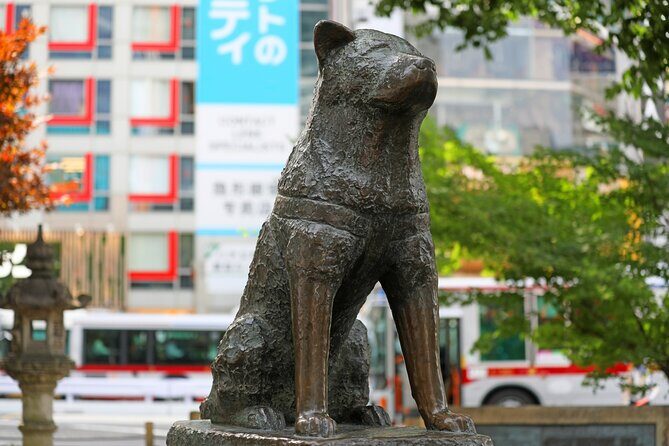
Hachiko: Ending at the Bronze Dog (With a Great Photo Finish)
Stop 7 is the Hachiko Statue near Shibuya Station (about 10 minutes), free.
This is an easy way to end, because it’s one of Japan’s most recognizable meeting points. The statue commemorates Hachiko, an Akita dog famous for unwavering loyalty.
I like this finish because it helps you transition. After two hours of walking, you’re not stuck wondering where to go next. You can head toward transit, grab a late snack, or keep exploring nearby neighborhoods with Hachiko as your landmark.
If you’re planning photos, arrive with a little patience. Hachiko is popular, and the best shots usually come from standing still, waiting for the crowd to shift, and letting your angle settle.
The Guides: Why Names Like Loc, Rio, Grey, Zac, and Daichi Matter
The biggest reason this tour gets such strong feedback is guide quality and engagement. Different guides bring different styles, but the common thread is that they’ll answer questions and share practical context—not just facts.
In the reviews, names that show up include Loc, Rio, Grey, Zac, Daichi, and Dixce. People especially like guides who explain Shibuya in a way that feels like someone showing you their neighborhood. You’ll also hear tips about local spots and nightlife planning, which is exactly what you want when Shibuya is where you go to turn your Tokyo day into a Tokyo night.
Also, guides are known for adjusting pace when needed. One note from past tours: there can be quite a lot of uphill walking in Shibuya, and humidity can slow you down. A good guide keeps things moving but still pauses so everyone can catch their breath.
Price and Logistics: $25 for a Small-Group Orientation Win
Let’s talk value. At $25, you’re paying for:
- a guided loop that links multiple neighborhoods
- small-group attention (max 12)
- all fees and taxes included
- stops where admission is listed as free
Tips are not included, so you should plan to leave them if you had a great guide.
For first-time Tokyo visitors, this kind of structured walk is often worth it. You get the big icon (Shibuya Crossing), plus the streets that make Shibuya feel like a place rather than a postcard collection. For repeat visitors, it can still be useful because Shibuya changes fast, and the “hidden streets” focus helps you avoid repeating the same route.
Pace, Hills, and Weather: What to Expect When the City Turns Sticky
This tour is about walking. Even if the stops are short, the total effort adds up. Based on feedback, expect uphill sections and take the weather seriously—Shibuya can feel humid, and you may want more breaks than you think.
Since the experience requires good weather, plan for the possibility of rescheduling if it’s not ideal outside. If you’re the type who hates walking in heat, choose a cooler time of day and bring water.
What to wear: comfortable shoes that handle uneven sidewalks and station entrances. Also, if you’re wearing uncomfortable sneakers for fashion reasons, this is not the day to test them.
Who Should Book This Shibuya Walking Tour
This tour is a strong fit if you:
- are visiting Tokyo for the first time and want a quick, guided Shibuya orientation
- want photos at Shibuya Crossing but also want the streets beyond it
- like walking tours that lead to food and bar suggestions for later
- appreciate a small-group pace where questions are welcome
It might be less ideal if you:
- prefer very slow walking or lots of sitting time
- struggle with uphill routes
- want a long, museum-heavy experience rather than street-level exploring
Should You Book It?
I think you should book this tour if you want Shibuya in one efficient loop: famous intersection, modern park, narrow alleys, shopping street energy, and a history-tinged neighborhood story—then a clean finish at Hachiko. The small-group size and the guide-driven navigation are the real value here.
Skip it only if uphill walking and humidity would be a deal-breaker for you. Otherwise, it’s a practical way to spend two hours in one of Tokyo’s most confusing-but-fun districts.
FAQ
How long is the Shibuya Crossing & Hidden Streets walking tour?
It’s about 2 hours.
How many people are in the group?
The tour has a maximum of 12 travelers.
What’s included in the price?
The price includes all fees and taxes. Admission at the listed stops is shown as free.
Where do I meet and where does the tour end?
You start at SABON Shibuya Mark City, East Mall 3F and end at the Hachiko Statue.
Do I need to print a ticket?
No. The tour uses a mobile ticket.
Are tips included?
Tips for the guide are not included.
Is this tour dependent on weather?
Yes. It requires good weather. If it’s canceled due to poor weather, you’ll be offered a different date or a full refund.
Are service animals allowed?
Yes, service animals are allowed.
If you tell me what day/time you’re aiming for and where you’re staying in Tokyo, I can help you slot this into the rest of your itinerary.