REVIEW · ONNA SON
Three Japanese cultures experience in one day with simple kimono
Book on Viator →Operated by SASAGIRIAN / 笹桐庵 · Bookable on Viator
Three Japanese arts, one calm afternoon. At SASAGIRIAN in Onna, you’ll rotate through flower arrangement, calligraphy, and a tea ceremony while wearing a simple kimono in a traditional room taught in English or Japanese.
I especially love how practical the lessons feel, not showy. You make something tangible in each class, including a big square poetry card for your writing and the option to take your flower materials home.
One thing to keep in mind: it’s a packed 3-hour schedule. You’ll have time to learn and enjoy, but it’s not built for slow, long practice.
In This Review
- Key things to know before you go
- One Day, Three Japanese Cultures in a Simple Kimono
- Finding SASAGIRIAN in Onna: Location and Getting There
- The Schedule: Flower Arrangement, Calligraphy, Tea Ceremony
- Flower Arrangement 1:00–2:00: Build Balance with a Kenzan
- Calligraphy 2:00–3:00: From Ink Stone to Your Poetry Card
- Tea Ceremony 3:00–4:00: Manners, Sweets, and Making Your Own Tea
- Why This One-Day Format Works (and What It Can’t Do)
- Who Should Book This Experience
- Price and Value: Is $254.10 Worth It?
- Should You Book Sasagirian’s Simple Kimono Culture Day?
- FAQ
- Where is the meeting point for the experience?
- What time does the experience start, and how long is it?
- What is the order of the activities?
- Are the lessons available in English and Japanese?
- Do you provide a kimono?
- Can children participate?
- Can I join if I cannot sit up?
- Can I cancel for a full refund?
Key things to know before you go
- Three crafts in one location: flower arrangement, calligraphy, and tea ceremony happen back-to-back at SASAGIRIAN.
- Small group setting: maximum of 8 travelers, so you get guidance instead of just watching.
- Hands-on steps throughout: you build the arrangement, write letters from scratch, and make tea.
- Photo-friendly keepsakes: you’ll take photos with your arrangement and your calligraphy card.
- Kimono included: you change into a simple kimono first, then you return to normal clothes at the end.
One Day, Three Japanese Cultures in a Simple Kimono
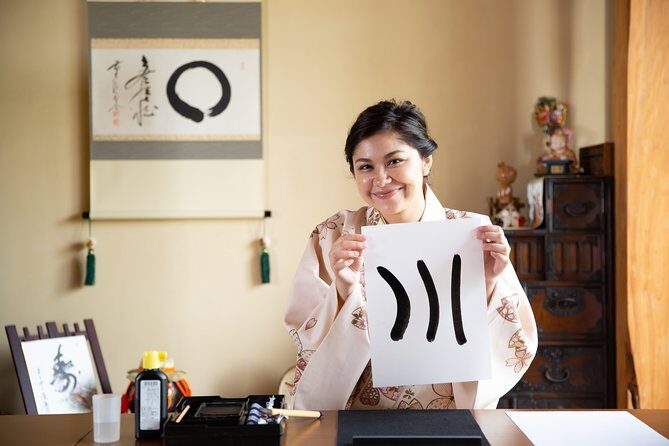
This experience is built around an idea that makes a lot of sense: instead of chasing three separate activities around Okinawa, you do them in one continuous flow. You start by changing into a simple kimono, and that single costume choice quietly ties the whole day together. It’s not about dressing up for a photo; it’s about shifting your pace into a more traditional, seated, attentive mode.
What I like most is that each culture is taught with “do this, then do that” clarity. Flower arrangement has physical steps you can follow. Calligraphy has a repeatable practice structure. Tea has manners plus the practical rhythm of making and tasting. You get the feeling that these arts aren’t just decorative. They’re ways of training focus.
The day is set in a traditional Japanese room, and the instruction includes the spirit of Zen and Japanese culture. That matters because it gives you a framework for why the steps are the way they are. You’re not just copying motions. You’re learning what the motions are trying to cultivate: balance, patience, and calm attention.
You can also read our reviews of more tours and experiences in Onna son.



Finding SASAGIRIAN in Onna: Location and Getting There
You’ll meet at Japanese Cultural Experience Facility Sasagirian (笹桐庵) in Onna-son, Okinawa. The address is 1765-8 Nakama, Onna, Kunigami District, Okinawa 904-0401, Japan. The activity ends back at the same meeting point.
Two practical wins here:
- It’s near public transportation, which takes pressure off your planning.
- Parking is straightforward. One review highlight notes you can park right in front of the building, with a garage door right there. That’s the kind of detail that saves time on a warm Okinawa day.
You’ll also receive a confirmation at booking, and your ticket is mobile. That keeps the whole process simple.
And because it’s capped at 8 travelers, you’re not competing with a crowd for space in a traditional room. You can actually see what your instructor is showing and hear the guidance clearly.
The Schedule: Flower Arrangement, Calligraphy, Tea Ceremony
The day runs in a clear sequence:
- 1:00–2:00 pm Flower arrangement
- 2:00–3:00 pm Calligraphy
- 3:00–4:00 pm Tea ceremony
That order is smart. Flower arrangement comes first because it’s hands-on and visual—you’re warming up your focus and getting comfortable with the space. Calligraphy then shifts your attention to precision: tools, ink, and controlled movement. Tea ceremony ends the day with a slower, more etiquette-focused flow, including tasting and the tea-room manners.
If you’re the type who likes knowing exactly what happens next, this schedule makes it easy. If you’re visiting on a tight itinerary, it also helps you plan the rest of your day around a fixed 1:00 pm start.
Flower Arrangement 1:00–2:00: Build Balance with a Kenzan
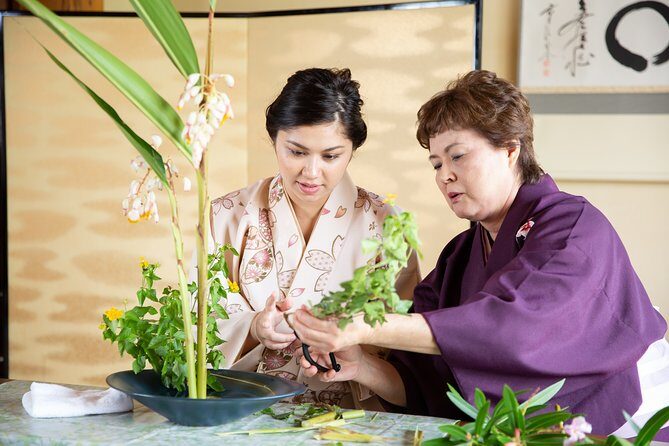
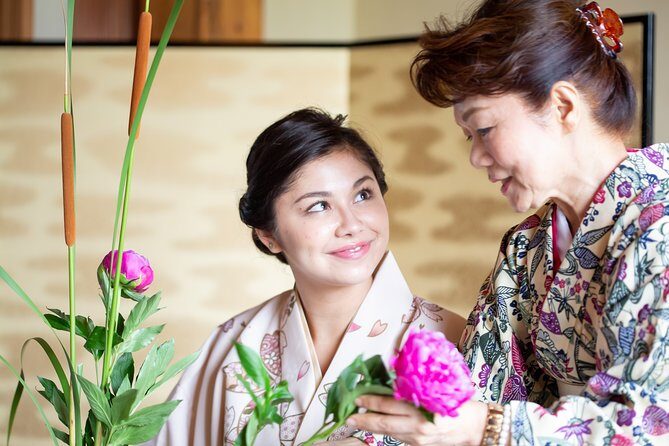
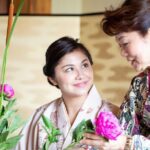
Flower arrangement at SASAGIRIAN starts with you changing into your simple kimono, then moving into the arrangement steps. The lesson has a clear progression, so you’re not just handed a vase and told to wing it.
Here’s what you can expect:
- You place the kenzan into the vase and pour water.
- Your instructor guides you in cutting and arranging flowers, branches, and leaves.
- You step back to check balance from a distance, then you appreciate the final arrangement.
- You take photos with your arrangement. And if you want, you can take the flower materials home.
The kenzan step is the kind of detail that makes this class feel real. It’s not generic “put flowers in a pretty way.” You’re learning a method that supports stability, so your arrangement doesn’t collapse the moment you finish.
Also, the “check the balance from the distance” moment is more important than it sounds. It trains your eye the way Japanese flower arrangement often does: you judge the overall silhouette, not just the pieces up close. That’s a mindset shift you can apply anywhere—art, design, even how you frame a photo.
Practical tip for your photos: aim to step back during the balance check. It’s often the best view, and you’ll already be in the right position for the instructor’s guidance.
Calligraphy 2:00–3:00: From Ink Stone to Your Poetry Card
After flower arrangement, you shift to calligraphy. The tools and steps are explained in a way that keeps you from getting stuck.
What happens:
- You pour liquid ink to the ink stone and place a paper weight on the paper.
- You practice writing letters under guidance.
- You can practice your favorite characters, including kanji, hiragana, katakana, and even the alphabet.
- Then you write your favorite letter on a large square poetry card and take photos with your work.
If you’re worried about not being artistic, this is where the structure helps. You start with guided practice, and then you customize. That “practice first, then personalize” approach is the difference between feeling lost and actually making progress.
The ink-stone setup is also a quiet lesson in attention. It forces you to slow down. You’re not scribbling. You’re placing ink with care, and the paper weight gives you stability to focus on the stroke.
One more thing: it’s a smart souvenir. Your finished poetry card is something you can keep at home as proof you learned more than one craft during your Okinawa day. It’s also great for gifting, since it’s personal to your chosen characters.




Tea Ceremony 3:00–4:00: Manners, Sweets, and Making Your Own Tea
Tea ceremony at SASAGIRIAN is where the day shifts from “make something” to “practice a way of being.” You’ll cleanse your hands and enter the tea room, then learn the manners in that space.
Then comes the part that keeps it enjoyable instead of stiff:
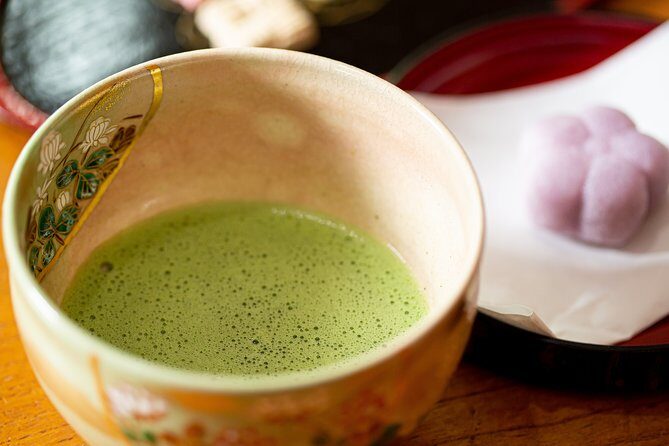
- You enjoy tasting Okinawan and Japanese sweets at the Ryurei-style table.
- You cleanse the tea tools.
- You make your own tea and taste it.
- You take photos and then change cloths.
That tea-room flow matters because it’s not just tasting. It’s a sequence—entering, cleansing, learning manners, tasting, then preparing. You get the full rhythm, not only the final sip.
The mention of Okinawan and Japanese sweets is a nice touch for visitors. Okinawa’s food culture has its own identity, and tasting both styles in the same tea setting helps you notice how tradition adapts locally.
Also, the final “change cloths” moment signals closure. You don’t just leave in a kimono. You finish the experience feeling like you completed a full cycle, not that you started and stopped mid-process.
Why This One-Day Format Works (and What It Can’t Do)
One-day formats have a reputation for being rushed. This one is still short—about 3 hours—but it avoids the worst version of “rushed” by keeping each culture focused on a specific outcome:
- Flower arrangement: build a balanced arrangement you can photograph.
- Calligraphy: practice letters and produce a large poetry card.
- Tea: learn manners, taste sweets, and make tea.
That’s the key to the value here. You’re not wandering through a “cultural sampler.” You’re performing each craft to a finish line.
The trade-off is time. You’re unlikely to reach the level of mastery you might want if you were training for months. But you will leave with a clear understanding of the fundamentals and the feel of each discipline—especially the etiquette side of tea and the precision side of calligraphy.
If you’re coming from a busy Okinawa schedule, this time-boxed structure is actually a strength. You get a meaningful experience without losing an entire day to logistics.
Who Should Book This Experience
This is a good fit if you want:
- A concentrated, hands-on way to experience Japanese traditions in one location
- Instruction in both English and Japanese
- A small-group setting (maximum 8 travelers)
- A kimono experience that’s tied to activities, not just a rental
It’s also a good option for families in the right age range. The data states children under age 3 cannot participate, but children 4 and older can.
One more inclusion note that matters: you can participate even if you cannot sit up. That’s listed as a supported condition, and it makes the experience more accessible than many classic, seated-only activities.
If you love taking home evidence of learning—photos, artwork, and a finished poetry card—this one will likely feel satisfying.
Price and Value: Is $254.10 Worth It?
At $254.10 per person, it’s not a budget activity. The value comes from what you’re getting in that 3-hour window: three distinct arts taught with hands-on instruction, plus a simple kimono, tools, and tasting.
You’re effectively paying for:
- Three guided lessons in separate disciplines
- A structured schedule (flower, then calligraphy, then tea)
- Photo opportunities with your creations
- A calligraphy keepsake (the square poetry card)
- A tea ceremony experience that includes sweets tasting and making tea
For the price, I’d judge it like this: if you like making things yourself and you’d otherwise pay for multiple separate experiences, bundling them into one day can feel fair. If you mainly want sightseeing or casual atmosphere, you might decide to spend less and keep your day more flexible.
Should You Book Sasagirian’s Simple Kimono Culture Day?
I think you should book if you want a structured, small-group cultural day where you leave with real output—an arrangement to photograph, calligraphy you can keep, and tea you helped make. The instructors are described as kind and thorough, and that shows in the way the steps are laid out: you’re never guessing what to do next.
I’d hesitate only if you hate tight schedules. This is a compact sequence from 1:00 to 4:00 pm. You’ll get a lot, but you won’t linger for long practice sessions. If that sounds fine, this experience is a strong use of limited time in Okinawa.
FAQ
Where is the meeting point for the experience?
The experience meets at Japanese Cultural Experience Facility Sasagirian (笹桐庵), 1765-8 Nakama, Onna, Kunigami District, Okinawa 904-0401, Japan.
What time does the experience start, and how long is it?
It starts at 1:00 pm and lasts about 3 hours (flower arrangement, calligraphy, then tea ceremony).
What is the order of the activities?
The order is flower arrangement (1:00–2:00 pm), calligraphy (2:00–3:00 pm), and tea ceremony (3:00–4:00 pm).
Are the lessons available in English and Japanese?
Yes. Each experience is available in English and Japanese.
Do you provide a kimono?
Yes. You will change into a simple kimono as part of the experience.
Can children participate?
Children under age 3 cannot participate. Children age 4 and older can participate.
Can I join if I cannot sit up?
Yes. It is listed as possible to participate even if you cannot sit up.
Can I cancel for a full refund?
Yes. Free cancellation is available, and you can cancel up to 24 hours in advance for a full refund.