REVIEW · KYOTO
Kyoto Fushimi Inari Night Walking Tour
Book on Viator →Operated by GuideMe Japan · Bookable on Viator
That corridor of torii looks different at night. This Fushimi Inari Night Walking Tour takes you through Kyoto’s most famous shrine in the evening, when the light is nicer and the midday crush is mostly gone. You’ll get a guided walk that’s more than sightseeing, with explanations of the shrine’s story and how Shinto and Buddhism show up here.
What I really like is the practical setup: it’s only about 1 hour, so it fits cleanly before or after dinner. I also like the tour’s human scale (up to 15 people) and the fact that you’re walking with an English-speaking guide who can answer questions and point out photo angles. (Past guides on this tour have included Kanami, Mai, Satsuki Morikawa, Moto, and Haruki.)
One thing to consider: it’s not a long, do-everything-by-walking-the-whole-mountain kind of outing. If you’re hoping for hours of wandering, you may want to pair this with extra self-guided time later.
In This Review
- Key Highlights You’ll Actually Use
- A 5:00 pm Start That Changes the Whole Mood
- Meeting at Inari Station and Finding the Daily Yamazaki
- Your Main Stop: Fushimi Inari-taisha Shrine at Night
- What the Guide Helps You Notice (Beyond the Torii)
- Shinto Meets Buddhism: Why That Part Matters
- The 1-Hour Format: Quick, Focused, Not Rushed
- Price and Value: What You’re Really Paying For
- Who This Tour Is Best For
- Practical Tips for Getting the Most Out of Your Night Walk
- Should You Book This Fushimi Inari Night Walking Tour?
- FAQ
- What time does the Kyoto Fushimi Inari Night Walking Tour start?
- Where do I meet the guide?
- How long is the tour?
- Is there an admission fee for the shrine?
- What’s included, and what should I plan for?
- Can I cancel for a refund?
Key Highlights You’ll Actually Use
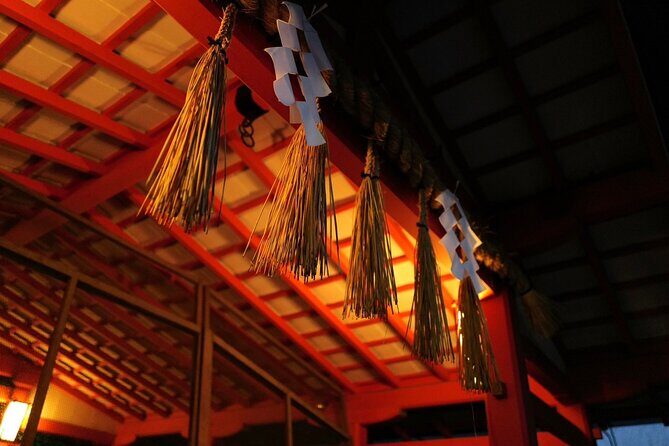
- Evening timing at 5:00 pm to help you dodge heat and crowds
- English-speaking guide who explains what you’re seeing, not just where to stand
- Photo-focused guidance with suggestions on where the views work best
- Shinto vs Buddhism context that makes the torii maze easier to read
- Free shrine admission for the main site, with a guided hour to make it count
- Small-group feel (max 15) so questions don’t get lost
A 5:00 pm Start That Changes the Whole Mood
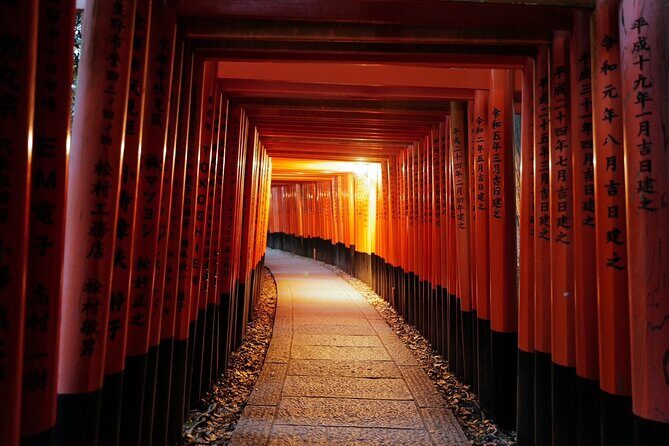
The best trick of this tour is simple: you go when most people are done with daytime sightseeing. Starting at 5:00 pm means softer light on the path, and a calmer feel than you get earlier in the day. It’s a smart choice if your Kyoto days are already packed with temples and trains.
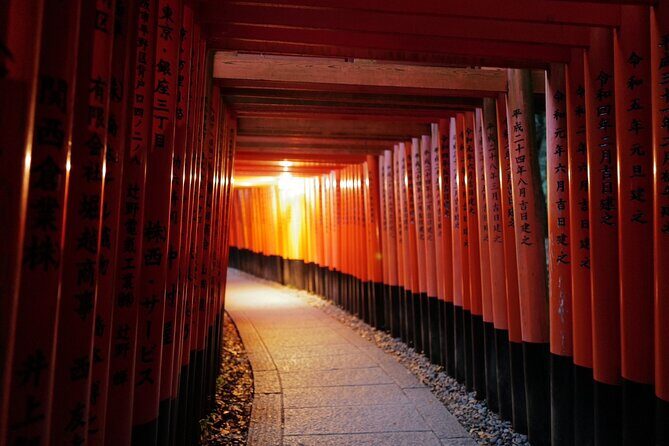
Fushimi Inari is famous for its torii gates, but at night the experience shifts from checklist tourism to a slower rhythm. You still get the iconic tunnel effect, yet you’re more likely to notice details—signs, ritual objects, and the way the shrine grounds are organized—because you’re not fighting peak crowds.
You can also read our reviews of more walking tours in Kyoto



Meeting at Inari Station and Finding the Daily Yamazaki
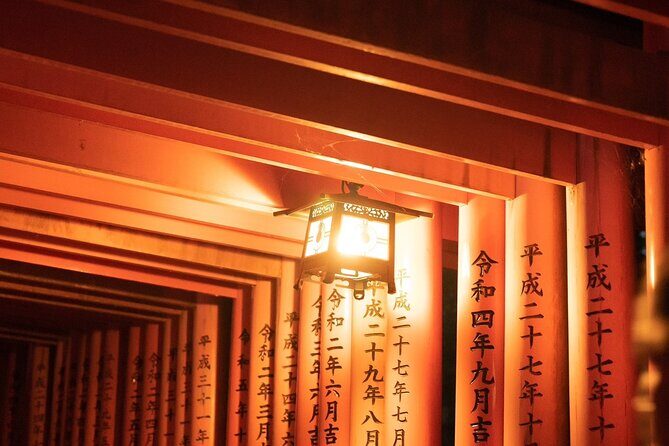
The meetup is very direct, which I appreciate when you’re tired and jet-lagged. You’ll start at the exit of JR Inari Station. When you come out, turn left, and look for a Daily Yamazaki convenience store. The meeting point is in front of that store.
That matters more than it sounds. Fushimi Inari has multiple entrances and station exits, and it’s easy to waste time scanning streets while everyone else drifts toward the shrine. This meeting point setup helps you get oriented fast and actually start walking on time.
The tour ends at Fushimi Inari Taisha (in the same general shrine area). So you don’t feel like you’re being dropped off somewhere weird—you’re finishing right where the action is.
Your Main Stop: Fushimi Inari-taisha Shrine at Night
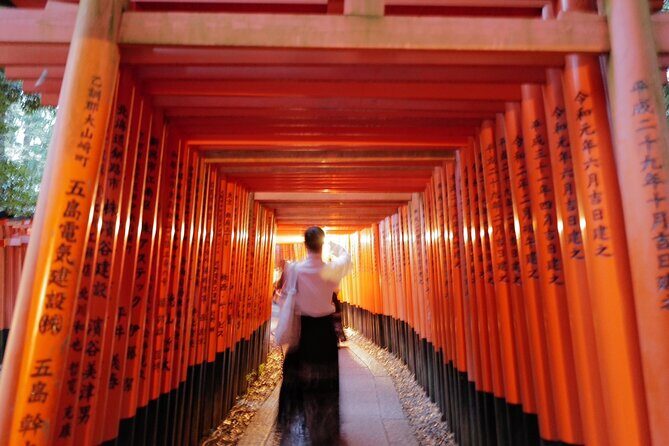
This tour focuses on one place, and it does it well: Fushimi Inari-taisha Shrine. The headline is the torii gates, but the goal here is understanding. You’ll spend about 1 hour on an in-depth walk with your guide, and you’ll learn the shrine’s deeper background along the route.
Expect the tour to feel like a guided “walking explanation.” Your guide isn’t just pointing at big landmarks. They’re helping you connect the dots between what you see and why the shrine looks the way it does. That’s the difference between taking photos and having the place make sense.
Also, admission is free for the shrine itself. You’re paying for the guide time and the structured walk, not an entrance fee. That’s one of the ways this tour keeps its price tied to real value.
What the Guide Helps You Notice (Beyond the Torii)
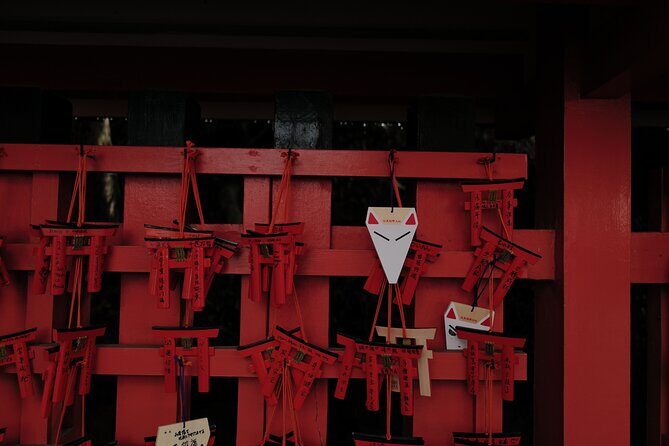
A lot of people go to Fushimi Inari and come away with great pictures—but not much context. This tour is built to avoid that. Your English-speaking guide shares history and explains key points as you walk, including how the shrine is connected to religious practice and tradition.
Here’s what I’d watch for as you go:
- Torii placement and meaning: you’ll hear how these gates fit into the shrine’s story and purpose.
- The rhythm of the path: you’ll learn where to look so the long corridor of gates doesn’t blur together.
- Small details: guides in this tour have been praised for sharing little, useful observations that help you see more than the average selfie stop.
- Photo opportunities: multiple guides (including Kanami, Mai, Satsuki Morikawa, Moto, and Haruki) have been recognized for suggesting good photo angles and helping with shot planning.
If you like asking questions, this is a friendly setup. The walk is short enough that you won’t feel trapped in a lecture, but structured enough that you’re not wandering alone and missing the “why.”
Shinto Meets Buddhism: Why That Part Matters
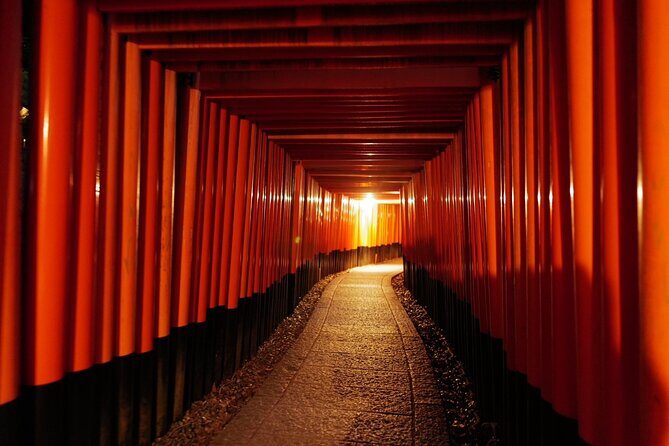
One of the most helpful parts of the tour is the explanation of Shintoism and Buddhism—and how they show up in the same cultural space. Kyoto is full of overlaps like this, and Fushimi Inari is a place where you can easily miss the bigger picture if you only rely on signage.
Your guide will cover differences and also the practical reality: these traditions have influenced each other over time in Japan. That kind of context can completely change how you interpret statues, offerings, and the atmosphere of the shrine grounds.
I like this approach because it gives you mental hooks. After the tour, you’ll be better at spotting what’s what when you visit other Kyoto sites—without needing to research on the spot.
You can also read our reviews of more evening experiences in Kyoto






The 1-Hour Format: Quick, Focused, Not Rushed
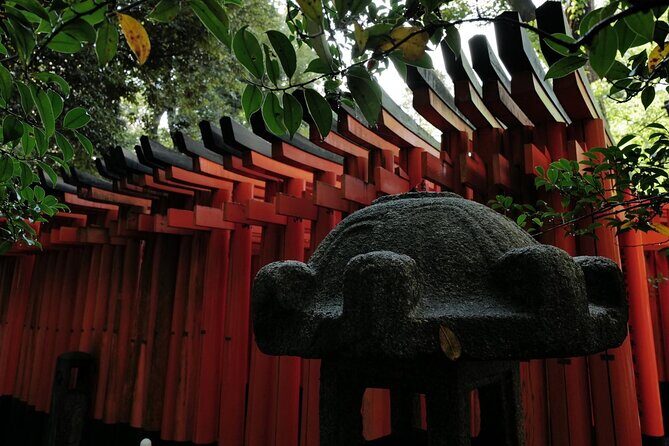
This is an about 1 hour tour, which is exactly the kind of duration that works on real travel schedules. You don’t need to rearrange your whole evening. You can do this as a pre-dinner plan, or follow it up with dinner while the shrine still feels fresh in your mind.
The format also keeps things from getting weird. Longer temple tours can sometimes turn into a slow shuffle where you spend more time waiting than learning. Here, the hour makes the experience feel like a concentrated introduction—get the key ideas, see the essentials, then keep enjoying the area on your own.
That said, because it’s short, it may not satisfy you if your travel style is: I want to walk every step to the top and linger for hours. If that’s you, treat this as a smart launch pad, not the full journey.
Price and Value: What You’re Really Paying For
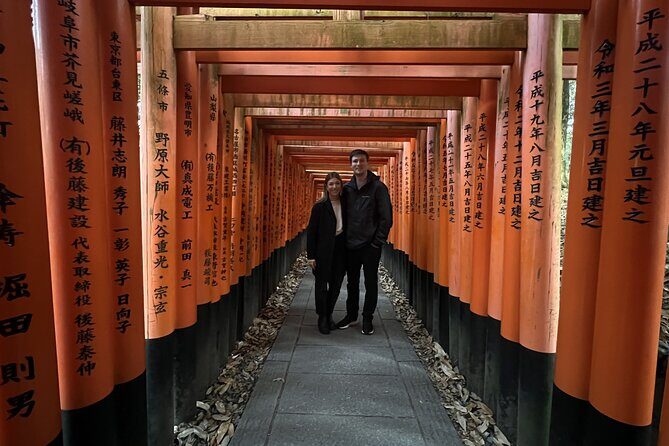
At $35.93 per person, this tour isn’t the cheapest way to experience Fushimi Inari. But it’s also not priced like a private, custom guide. For many people, that’s the sweet spot: you get a professional English-speaking guide and an organized walk, and you avoid spending time figuring out what matters while you’re standing in the middle of a famous shrine.
Here’s the value math that makes sense to me:
- The shrine admission is free, so your money goes toward the guide’s time.
- You’re buying context and navigation, not just “someone walks with you.”
- The small group size (max 15) improves the chance you can ask questions and get real answers.
If you’re comfortable reading on your own and just want photos, you could do this solo. But if you want the place to make sense while you’re there, the cost starts to feel fair.
Who This Tour Is Best For
This tour fits best if you want a confident, efficient Kyoto evening. Specifically, you’ll probably enjoy it if:
- You’re visiting Fushimi Inari for the first time and want a guided orientation
- You want Shinto vs Buddhism context without doing homework
- You’d rather spend your limited time learning than wandering aimlessly
- You appreciate photo help and specific recommendations for where to stand
It can also work well with families. One of the tour experiences shared that their 13-year-old grandson had a great time with a guide who explained things clearly and patiently. That’s the kind of teaching style that makes a short shrine walk feel doable for different ages.
If you prefer deep, self-paced exploration for hours and don’t care about explanations, you might find this format too short. In that case, you could build your own itinerary and add a separate guide later.
Practical Tips for Getting the Most Out of Your Night Walk
A few things will help you enjoy the tour more:
- Wear shoes you can move in. The shrine grounds involve walking and uneven surfaces.
- Plan to arrive at the meetup point a little early, especially if you’re still finding the exit and store area.
- Bring a light layer. Even in warmer months, evenings can feel cooler once you’re walking.
- If you care about photos, ask your guide where to shoot before the best moments pass. The guides on this tour have a reputation for giving photo guidance.
Also, remember what isn’t included: food and drinks. You’ll be out for about an hour, but you’ll want to eat before or after, not during the walk.
Should You Book This Fushimi Inari Night Walking Tour?
I’d book it if you want an easy win in Kyoto: a short, well-structured evening experience that turns a famous site into something you actually understand. The 5:00 pm timing is a big advantage, and the guided emphasis on history plus Shinto and Buddhism makes the torii gates feel more meaningful than just visually impressive.
Skip it if your goal is a long, do-it-all hike with no guidance. This tour is designed to be a focused introduction, not a full day of shrine exploring.
FAQ
What time does the Kyoto Fushimi Inari Night Walking Tour start?
The tour starts at 5:00 pm.
Where do I meet the guide?
Meet at the exit of JR Inari Station. Turn left after you exit, find the Daily Yamazaki convenience store, and meet in front of the store.
How long is the tour?
It’s about 1 hour.
Is there an admission fee for the shrine?
The Fushimi Inari-taisha Shrine admission ticket is free for the tour.
What’s included, and what should I plan for?
Included are an English-speaking tour guide and about 1 hour of guided time at Fushimi Inari. Hotel pickup is not included, and food and drinks are not included.
Can I cancel for a refund?
Yes. You can cancel for a full refund if you cancel at least 24 hours before the experience start time.

![Hiking the Historic Nakasendo Trail [1 Day Tour from Nagoya] - Starting Point in Nagoya: Private Transport That Saves Your Morning](https://images.thejapantraveler.com/wp-content/uploads/hiking-the-historic-nakasendo-trail-1-day-tour-from-nagoya.jpg)